
Implicit Truth by Alexander Lyadov

Once upon a time, I danced to the tune of partners and clients. It usually ended badly for all of us.

For instance, a client would articulate how he envisioned solving his problem. In his perception, the diagnosis was clear, and all that remained was to choose the best response to the question: "How?"

Inside me, protest would rise, but I suppressed it. After all, the client's arguments were clear, tangible, and logical. And my doubts were just a vague sense of "Something's wrong here."

The mistake cost me dearly. But I had to make it many times before the following thought finally dawned on me:

Not everything obvious is true. The real may not yet have a form.

Later, in the works of philosopher Eugene Gendlin, I found an explanation for why this is so. The implicit process of life gives birth to all tangible forms—from rough ideas to sophisticated paradigms.

As the boy in the movie "Amélie" said, "The fool looks at a finger that points at the sky." Alas, we too easily forget that any symbol is merely a pointer to phenomenon X.

So, I started focusing not on the clients' words but on what they are truly suffering from and trying to describe. In 99 cases out of 100, reality is completely different from what they imagined.

But usually, I don't have a clear understanding either. Fortunately, it's not needed. The only thing required is my intention and the client's to unearth the truth at any cost.

That's how my job simplified. The key is to choose partners and clients who have matured enough to question their familiar arguments and cherished beliefs.

Sincerely yours,

-Alexander


About me:
As a business therapist, I help tech founders quickly solve dilemmas at the intersection of business and personality, and boost company value as a result.

How can I help you?
If you've long been trying to understand what is limiting you and/or your business and how to finally give important changes a push, then The Catalyst Session is designed specifically for you. Book it here.



Fractal of Life by Alexander Lyadov

Fractal – it's a set possessing the property of self-similarity.

The whole has the same shape as one or more of its parts.

In nature, fractal properties can be found in:

  • clouds,

  • seashells,

  • lightning,

  • snowflakes,

  • tree canopies,

  • mountain ranges,

  • circulatory systems,

  • Romanesco broccoli heads, and so on.

But it seems that our problems are also part of this set.

In our naivety, we stumble into numerous traps and predicaments.

With experience comes the knowledge of the types of riddles, obstacles, and pitfalls.

Eventually, it dawns on us that the same pattern repeats everywhere.

For instance, someone reveling in the victim role will find an oppressor, and then a savior, anywhere: at work, in the elevator, or at the gym.

You might think that's the end of it, but no.

Exploring an individual's meta-problems reveals their similarity to the problems of a group, society, and humanity as a whole.

Such fractality is disheartening as it immediately brings forth a sense of doom and fatalism, a la Groundhog Day.

But shift the perception a tad, and the sign changes from "-" to "+":

By solving your problems, you get the key to all the locks that exist.

Sincerely yours,

-Alexander


About me:
As a business therapist, I help tech founders quickly solve dilemmas at the intersection of business and personality, and boost company value as a result.

How can I help you?
If you've long been trying to understand what is limiting you and/or your business and how to finally give important changes a push, then The Catalyst Session is designed specifically for you. Book it here.


Intuition's Caution by Alexander Lyadov

You're finalizing a deal, and there's one crucial moment left.

In a dispute, there's a chance to turn it against you.

"Don't you trust me?" persuades your client or investor.

Perplexed, you ponder: "Of course, I trust you, but..."

With that "but," wise intuition tries to protect you.

The difficulty is: Intuition points to something implicit.

Formally, everything is in order:

  • You know this person quite well.

  • You've done business with him before.

  • He's never let you down.

Let me translate what intuition is trying to tell you: "Without a doubt, personally, I trust you 100%. But, in reality, I'm making a deal with your company, not with you. We don't know who will be in your position in 3-5 years. With all due respect, anything can happen to you:

  • Someone else may take your place.

  • Owners, values, and strategies may change.

  • You might burn out, get sick, or even die."

A reasonable person would agree, putting themselves in your shoes.

But what if your vis-a-vis eliminates the chance of such scenarios?

This means your intuition is even more right.

Sincerely yours,

-Alexander


About me:
As a business therapist, I help tech founders quickly solve dilemmas at the intersection of business and personality, and boost company value as a result.

How can I help you?
If you've long been trying to understand what is limiting you and/or your business and how to finally give important changes a push, then The Catalyst Session is designed specifically for you. Book it here.


Analyzing Life by Alexander Lyadov

The beauty of the mind lies in its ability to dissect anything.

Analysis originates from the ancient Greek word ἀνάλυσις, signifying division, dissection, and breakdown. The mind's function is to understand, explain, memorize, and predict phenomena to control them.

Indeed, the secrets of the material world unfold through this process. We learn which elementary particles form its foundation and the cause-and-effect relationships between them.

However, the mind stumbles and painfully falls each time it attempts to analyze humans in particular and life in general.

The problem is that analysis is not arbitrary; it always rests on a certain paradigm explaining the surrounding world. Metaphorically, it's like relatively solid ground, an island wrested from the chaos ocean.

But no matter how great the island is, wherever you look, water surrounds it. At any moment, our knowledge is limited, while ignorance is not. The world is certainly knowable, but never fully so.

This fact is easily forgotten when spending days in the laboratory with a chromatograph or microscope. The problem with intelligence is that it falls in love with its creations and tries to reduce the richness of life only to them.

However, life doesn't fit into a ready-made form, which astonishes or even enrages the mind. And sometimes, a catastrophe occurs. The island is hit by a tsunami, shattering the paradigm that the mind has painstakingly built.

By castrating pride, reality indicates the true place of the mind. Despite all its merits, it cannot be the chief. There must always be someone else above it. When the hierarchy is restored, many positive things emerge:

  • Curiosity and confidence replace fear and anxiety.

  • Intelligence serves correctly, bringing benefit rather than harm.

  • Appreciation extends not only to what exists but also to what can be.

Sincerely yours,

-Alexander


About me:
As a business therapist, I help tech founders quickly solve dilemmas at the intersection of business and personality, and boost company value as a result.

How can I help you?
If you've long been trying to understand what is limiting you and/or your business and how to finally give important changes a push, then The Catalyst Session is designed specifically for you. Book it here.

Entrepreneurial Trait by Alexander Lyadov

In childhood, we'd venture into the woods for mushrooms. Apparently, someone older was a connoisseur, as no one had ever been poisoned.

Today, if I filled a basket with mushrooms, I wouldn't dare eat them. Even butter caps, chanterelles, or porcini would be suspect to me. The forest generously opens its treasures, yet I pass by with a growling stomach.

The same phenomenon unfolds in every aspect of life. A specialist peacefully swims among sharks, while others fear to dip their toes. Tourists stare at random tracks, while a bushman reads the book of the savannah with interest.

Understanding and appreciating such expertise is universal. People find it harder to grasp the specifics of entrepreneurship. They often think that such a person is an expert in a specific industry.

So, they are shocked when an entrepreneur sells a candy factory, then builds a modern medical center, followed by a successful SaaS project management business.

The entrepreneur's strength isn't solely in comprehensive industry knowledge, despite studying how its 'engine' operates. It's not just about business management skills, like a professional CEO.

Founders have the gift of spotting mind-boggling opportunities where none seem to exist. Boldly diving their hands into poisonous slime and nauseating mud, they extract uncut diamonds into the light.

Like sculptors or poets, entrepreneurs see the implicit, holding such colossal value that they can't help but devote all their energy and time to it.

But if you sense the creative impulse even occasionally, the entrepreneurial superpower should be clear to you.

Sincerely yours,

-Alexander


About me:
As a business therapist, I help tech founders quickly solve dilemmas at the intersection of business and personality, and boost company value as a result.

How can I help you?
If you've long been trying to understand what is limiting you and/or your business and how to finally give important changes a push, then The Catalyst Session is designed specifically for you. Book it here.


Disorder Detector by Alexander Lyadov

What happens if you ignore chaos for a while?

It subtly and seamlessly integrates into your familiar context.

To the point where parting with it becomes a challenge.

Any changes feel like disrupting the dear status quo.

Voila! The disorder becomes the new order. We can observe this phenomenon at all levels — from a country to a flat.

Disrupted families and organizations are quite similar. To an outsider, it seems like stepping into a madhouse. People behave oddly but pretend it's normal.

This distortion of reality applies to everyone. What's glaringly obvious to an onlooker, we simply don't see. And when they point out the anomaly, we may even resist at first.

Thus, every "system" needs a tool to detect and fix the inevitable glitch in time. For an individual, it's friends, confession, or therapy. For a company — an audit, advisor, or board.

In other words, the "system" must acknowledge its vulnerability and the need for an external perspective. Individuals, organizations, and nations evolve and excel only by overcoming pride, complacency, and isolationism.

Sincerely yours,

-Alexander


About me:
As a business therapist, I help tech founders quickly solve dilemmas at the intersection of business and personality, and boost company value as a result.

How can I help you?
If you've long been trying to understand what is limiting you and/or your business and how to finally give important changes a push, then The Catalyst Session is designed specifically for you. Book it here.

Who Is the Wizard? by Alexander Lyadov

Unknown artist

Billion-dollar industries are built on one illusion.

It's the founder's dream that someone will build his business for him.

No one will literally tell you these words, of course.

But deep down, the founder secretly believes such a wizard exists.

Alas, many people exploit this insight for selfish purposes:

  • A business trainer promises to turn average sellers into superstars.

  • A consultant vows to create a turnkey lead generation system.

  • HR guarantees swift recruiting and a conflict-free team.

  • A CEO candidate pledges the owner freedom from operations.

  • A business school enlightens that a board is the solution to all problems.

  • An investment banker insists that PE funds will be queuing up.

The founder is tempted, burned, and calms down for a while.

But the dream persists; a new storyteller will knock on the door.

The key is to accept reality as it is.

If the magician exists, it's not someone external; it's you.

The founder's role is to work miracles, extracting Something from Nothing.

Yes, it's sometimes long and hard, but in the end, you achieve your goal.

Inside you, the Spirit of Creation is bubbling; always bet on it.

Sincerely yours,

-Alexander


About me:
As a business therapist, I help tech founders quickly solve dilemmas at the intersection of business and personality, and boost company value as a result.

How can I help you?
If you've long been trying to understand what is limiting you and/or your business and how to finally give important changes a push, then The Catalyst Session is designed specifically for you. Book it here.


The Art of Patient Questions by Alexander Lyadov

At the initial session, I urge the entrepreneur: "Try to formulate your request."

For about twenty minutes, he (or she) shares the story, nuances, and details.

Finally, he looks at me with a questioning gaze, like, "So, what shall I do now?"

Sure, I've got a bunch of ideas itching to be spilled.

But I hold back and ask again, "So, what's the request, exactly?"

The entrepreneur is puzzled. He ponders deeply. Initially, he thought the problem was clear, but now he's not so sure.

Struggling with words, he articulates for the first time what truly bothers him. By asking clarifying questions, I help him better realize why he's here now and what for.

At the end of the session, the entrepreneur warmly thanks me. But why? We haven't even tackled finding a solution yet.

He feels relief and an energy boost for a reason. The precise description of the problem reduced uncertainty. Therefore, his anxiety decreased. Now it's clear where to focus efforts.

"Don't rush to answer an unasked question," my therapist said.

Be patient and reality will unfold before you on its own.

Sincerely yours,

-Alexander


About me:
As a business therapist, I help tech founders quickly solve dilemmas at the intersection of business and personality, and boost company value as a result.

How can I help you?
If you've long been trying to understand what is limiting you and/or your business and how to finally give important changes a push, then The Catalyst Session is designed specifically for you. Book it here.


The Gift and Curse of Non-being by Alexander Lyadov

Are you anxious when facing surgery under general anesthesia?

It’s understandable since there’s no 100% guarantee you’ll wake up.

Yet, the same thing happens every night.

One moment you’re awake; the next, you’re vanishing into non-being.

We embrace the nightly ‘anesthesia’ because we’ve grown accustomed to it. Besides, dreams entertain us.

Dreams are an in-between state where the paralyzed consciousness passively observes whatever someone decides to show us.

Even in nightmares, there’s some pulsation, life, and drama.

Non-existence scares us more because there is nothing, has been nothing, and will be nothing there.

The paradox is that in peak experiences, our 'self' also disappears completely:

  • extraordinary efforts in science, business, sports, or service,

  • mystical experiences,

  • recognizing beauty,

  • unity with nature,

  • enlightenment,

  • childbirth,

  • creativity,

  • love etc.

So, how does a peak experience differ from a dream or anesthesia?

  1. We merge with something much more valuable than ourselves.

  2. Our ego vanishes, yet we become more aware of who we are.

  3. What we are taking part in feels like true life.

Sincerely yours,

-Alexander


About me:
As a business therapist, I help tech founders quickly solve dilemmas at the intersection of business and personality, and boost company value as a result.

How can I help you?
If you've long been trying to understand what is limiting you and/or your business and how to finally give important changes a push, then The Catalyst Session is designed specifically for you. Book it here.


The Vitality of Paradox by Alexander Lyadov

The most challenging problems have paradoxical solutions. Otherwise, someone would have long found the key to the lock.

A paradoxical solution contradicts everything known:

  • common opinions,

  • scientific positions,

  • common sense.

“Παράδοξος” (ancient greek) means “unexpected, strange,” from “παρα” (against) and “δόξα” (assumption). The last word is crucial.

We forget that our worldview is a set of assumptions. Some are explicit, but most have the nature of axioms. We unknowingly absorbed them with the milk of the culture in which we grew up.

One day, reality and our model of it clash. Have you ever traveled with a GPS navigator in a foreign country? If so, you might recall the bewilderment when the program once demanded that you drive straight into an abyss.

It turns out the solution may be right under our nose, but we don't see it because, in our universe, it simply cannot exist by default.

Most often, you need to adjust a couple of hidden assumptions. The veil falls immediately, and the number of your options instantly expands.

But sometimes an individual, organization, or nation denies reality for too long, clinging to a set of false ideologies. Here healing comes through a hard-earned choice: illusions or life.

This explains the exultation when a shift finally happens. The paradoxical solution opens the door to the energy to live and create. Conflict disappears. Now you and reality are in sync.

Sincerely yours,

-Alexander


About me:
As a business therapist, I help tech founders quickly solve dilemmas at the intersection of business and personality, and boost company value as a result.

How can I help you?
If you've long been trying to understand what is limiting you and/or your business and how to finally give important changes a push, then The Catalyst Session is designed specifically for you. Book it here.


Two Sides of Chaos by Alexander Lyadov

"Every startup is a disaster until it is not," entrepreneur and investor ​David Friedberg​ nailed it. It's hard to grasp for those accustomed to cushy conditions – that's most folks. They tackle familiar tasks by grabbing a handy tool off the shelf, that someone else thoughtfully bought for them.

To regular folks, the risk of "crazy" founders would become clearer only if every single day they face:

  • The impossibility of sharing responsibility with anyone.

  • The threat of unjust firing right before triumph.

  • The duty to solve never-seen-before problems.

  • Shame for betraying the trust of many.

  • Public humiliation labeled as "loser."

  • Loss of all personal funds.

No wonder startup founders often swing between ecstatic excitement and borderline paranoid anxiety. So much can go wrong. And it surely will.

Until success unexpectedly lands on one out of ten. Such a high cost and such low odds of victory. What drives them?

Some will say it's the thirst for wealth, control, and power. Others will point to a higher tolerance for risk. The rest will highlight a desire to leave a mark in history and improve people's lives.

I believe the explanation lies in Chaos. Like any phenomenon, it has two sides. The price of uncertainty is visible to the naked eye. But the proximity to catastrophe also completely unleashes human potential. Danger compels a person to reveal hidden or undiscovered abilities. Anything goes in a deadlock.

Thus, it's not the outcome (money, status, influence) but the entrepreneurial process itself that instantly bestows:

  • Participation in achieving the impossible.

  • Absolute freedom to be who you are.

  • Personally crafted meaning.

For founders, such gifts outweigh almost any sacrifice.

Sincerely yours,

-Alexander


About me:
As a business therapist, I help tech founders quickly solve dilemmas at the intersection of business and personality, and boost company value as a result.

How can I help you?
If you've long been trying to understand what is limiting you and/or your business and how to finally give important changes a push, then The Catalyst Session is designed specifically for you. Book it here.

How Living Systems Self-Destruct by Alexander Lyadov

When do countries, companies, or individuals prosper?

They thrive when nothing stands in the way of the free creators.

Their work adds floors and renovates the foundation.

Unfortunately, people often trample the source of the "water of life".

They produce an excess of laws and rules that constrain the creator.

But why?

  1. They are driven by the fear of losing what they already have.

  2. Their arrogant mind thinks it knows everything.

  3. They seek control over the process of creating 1 from 0.

One day, the creator wakes up, unable to move a hand or a foot. Overnight, Lilliputians entangled Gulliver with a million threads.

From this moment, such a "system" will break, wither, and decay.

For a state, this period may take 69 years, as with the USSR. Due to competition, these businesses collapse within a few years. A person drags through existence, filling the emptiness inside with alcohol.

What can be done to prevent this undesirable scenario?

To begin with, analyze the collection of laws and rules.

Then, identify destructive rules and eradicate them.

Finally, repeat this exercise regularly as a ritual.

Sincerely yours,

-Alexander


About me:
As a business therapist, I help tech founders quickly solve dilemmas at the intersection of business and personality, and boost company value as a result.

How can I help you?
If you've long been trying to understand what is limiting you and/or your business and how to finally give important changes a push, then The Catalyst Session is designed specifically for you. Book it here.


Free From Your Myth by Alexander Lyadov

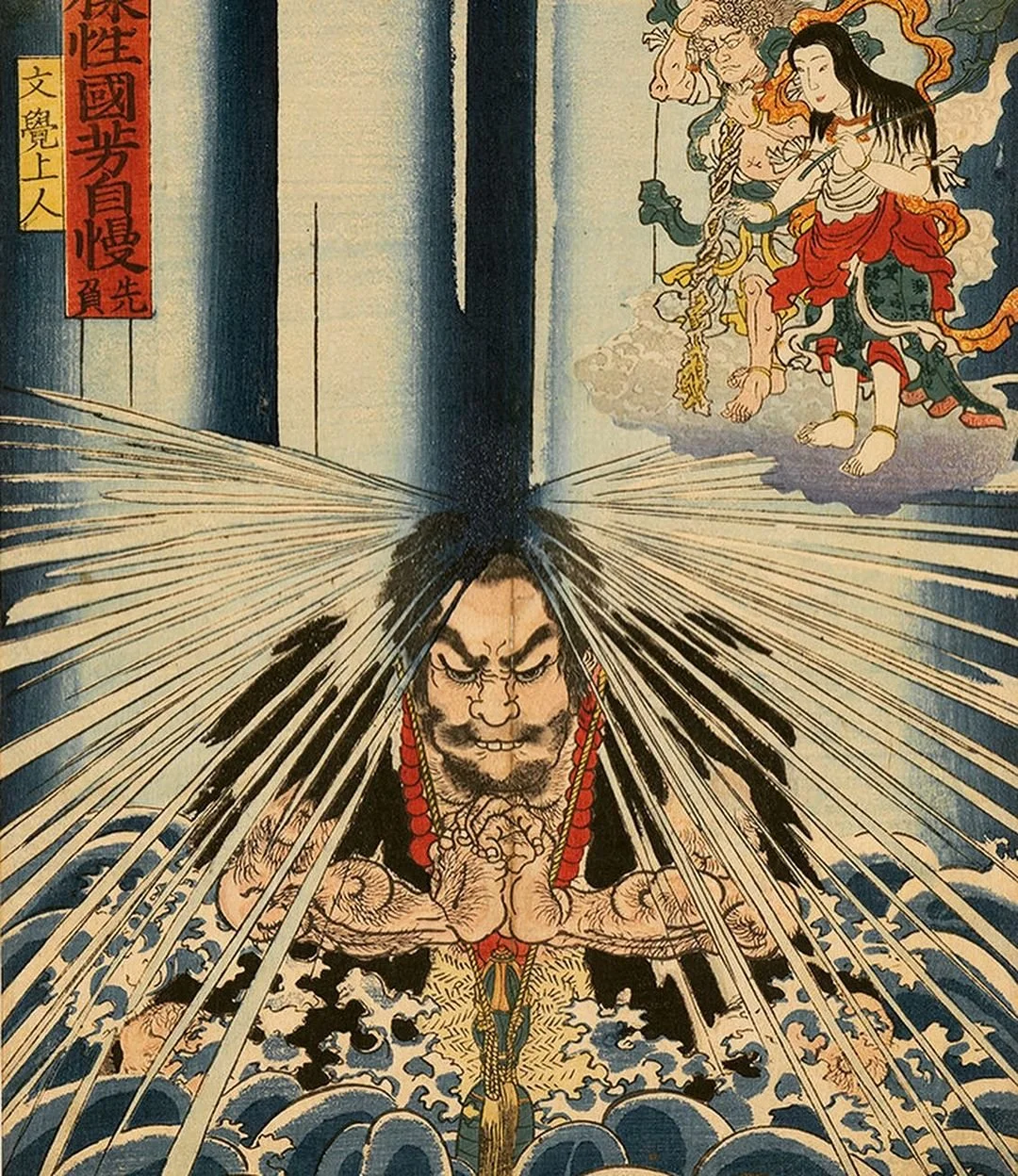
On the canvas, Sisyphus is stubbornly pushing a stone uphill.

People comment on Instagram: "Why isn't the stone black?"

I think the artist chose the perfect color.

Blue is the color of hope.

The gods punished Sisyphus for trying to cheat death.

But the myth doesn't explain why he continued his senseless labor.

My guess - the gods made him believe in the possibility of success.

I often observe this phenomenon in business therapy.

The founder replays the unfortunate scenario over and over.

Why? He (or she) is convinced: This time it will be different.

One false assumption disrupts the entire "system."

In his perception, the stone has the color of the sky, not black soil.

As long as he's in the grip of illusion, resources will be wasted.

Symbolically, my goal is to help the hero of the myth lift the curse.

For that, the founder needs to see reality for what it is.

He's stuck in a time loop, turning his life into torture.

The mistaken assumption is implicit, so the key is to voice it.

Having seen reality, it is impossible to unsee it.

Immediately or after some time, but changes are inevitable.

Sincerely yours,

-Alexander


About me:
As a business therapist, I help tech founders quickly solve dilemmas at the intersection of business and personality, and boost company value as a result.

How can I help you?
If you've long been trying to understand what is limiting you and/or your business and how to finally give important changes a push, then The Catalyst Session is designed specifically for you. Book it here.

Your Sanity in a Crazy World by Alexander Lyadov

Looking around, it's easy to get down. Feels like the world's heading south:

  • In the ashes of religions, ideology weeds sprout.

  • Tech progress speeds up people going backward.

  • Civilized society smashes its own foundation.

  • Democracies turn into dictatorships with surprising ease.

  • Prisoners of war are tortured as in ancient times.

  • Angry crowds burn heretics in digital bonfires.

Hoping that Mars colonization, AI, or universal income will change human life for the better is naive at best.

A millennium of culture is like pollen, not even a beast's skin. One gust of History, and we hear the beast's soul-chilling howl.

Antibiotics, industrialization, and the internet caused a revolution. But human nature stays the same. Despite aspiring to holiness, humans regularly regress to the level of chimpanzees.

But don't rush to be sad — there's good news.

If all attempts to "build our new world" lead to nothing, isn't that a clear sign of better path?

The only things you control are your spirit, mind, and body. And if you're honest with yourself, it's clear how hard it is to change them.

The size of these efforts burn the illusion that someone can be helped from outside, especially if they didn't ask.

But when you manage to untangle the mental "knot," turn a curse into a gift, or kick a bad habit, that victory is yours to keep.

Furthermore, you observe that internal changes "coincide" with positive shifts in your immediate circle.

Conclusion: don't worry about the world's clutter — you have plenty to do within.

Sincerely yours,

-Alexander


About me:
As a business therapist, I help tech founders quickly solve dilemmas at the intersection of business and personality, and boost company value as a result.

How can I help you?
If you've long been trying to understand what is limiting you and/or your business and how to finally give important changes a push, then The Catalyst Session is designed specifically for you. Book it here.

Please Speak by Alexander Lyadov

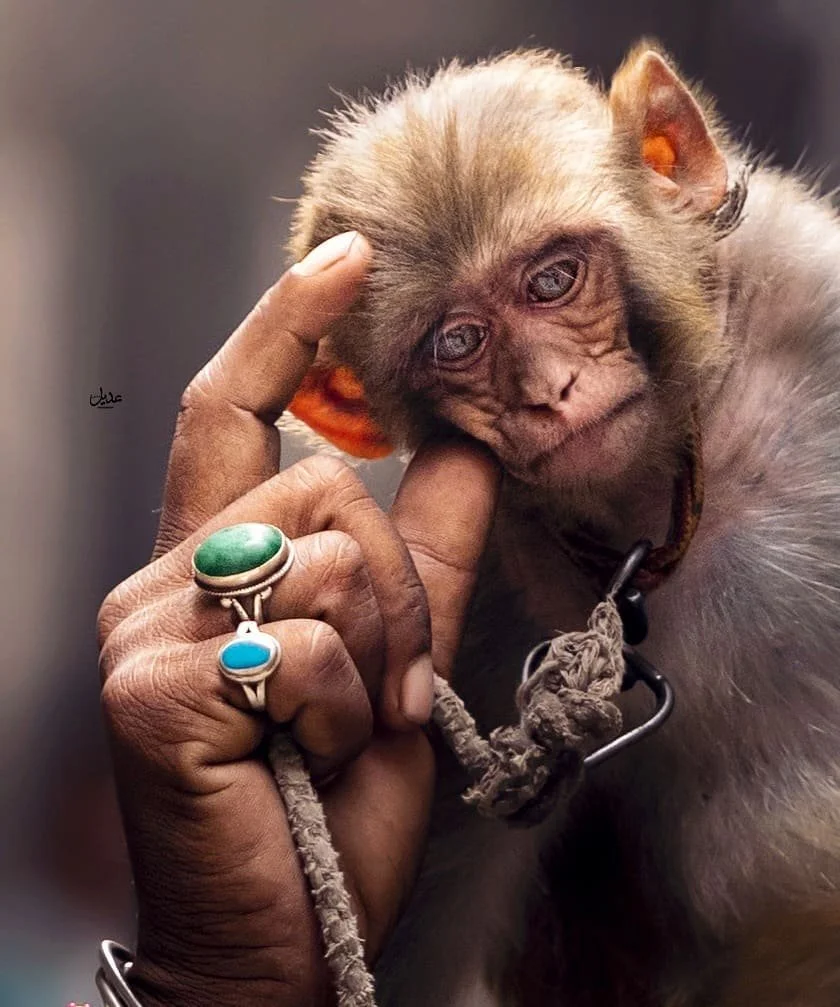
Han Chengli, Inner Mongolian Child, 2003

"In the beginning, there was the word..." That famous idea isn't random.

There are many reasons why this is true. Here's one, for instance.

When people stay silent for too long, conflict arises. If the energy can't find an outlet, the closed system within bursts from within.

Suddenly, a people snap, and their reaction (violence) is excessive.

They got a release, but now it's shameful to recall the incident.

Alas, between the impulse and the action, an important step is missed — the word. The beauty of words is that they're like prototypes, models, and drafts. Implicit meaning transforms into explicit form. Finally, you can grasp it, try it on, and evaluate.

Most importantly, words allow you to receive feedback. Others or even you yourself can now express your attitude toward what was implied in those words.

Thanks to this back-and-forth exchange, you can quickly dispel illusions, correct mistakes, and see the essence. And the cost of this exercise is minimal. In heated debates, there are no life threats.

You probably thought, 'Hmm, this is obvious.' But somehow, when it's not society, but the individual, it's not obvious anymore.

A person repeats like a mantra, 'I am OK, I am OK, I am OK...', even though the temperature and pressure in his 'boiler' is rising. Not only those around him but also their subconscious are genuinely concerned. Excuses, forgetfulness, losses, mistakes, and strange dreams multiply.

Either symbolize the inner conflict in words, or be amazed by its manifestation in actions. Even such a simple step as keeping a diary brings relief. Even better if there's a friendly person in front of you.

Ideally, he or she is a professional who knows how to listen not to what was said, but to what you were trying your best to say.

Sincerely yours,

-Alexander


About me:
As a business therapist, I help tech founders quickly solve dilemmas at the intersection of business and personality, and boost company value as a result.

How can I help you?
If you've long been trying to understand what is limiting you and/or your business and how to finally give important changes a push, then The Catalyst Session is designed specifically for you. Book it here.


Human Under Pressure by Alexander Lyadov

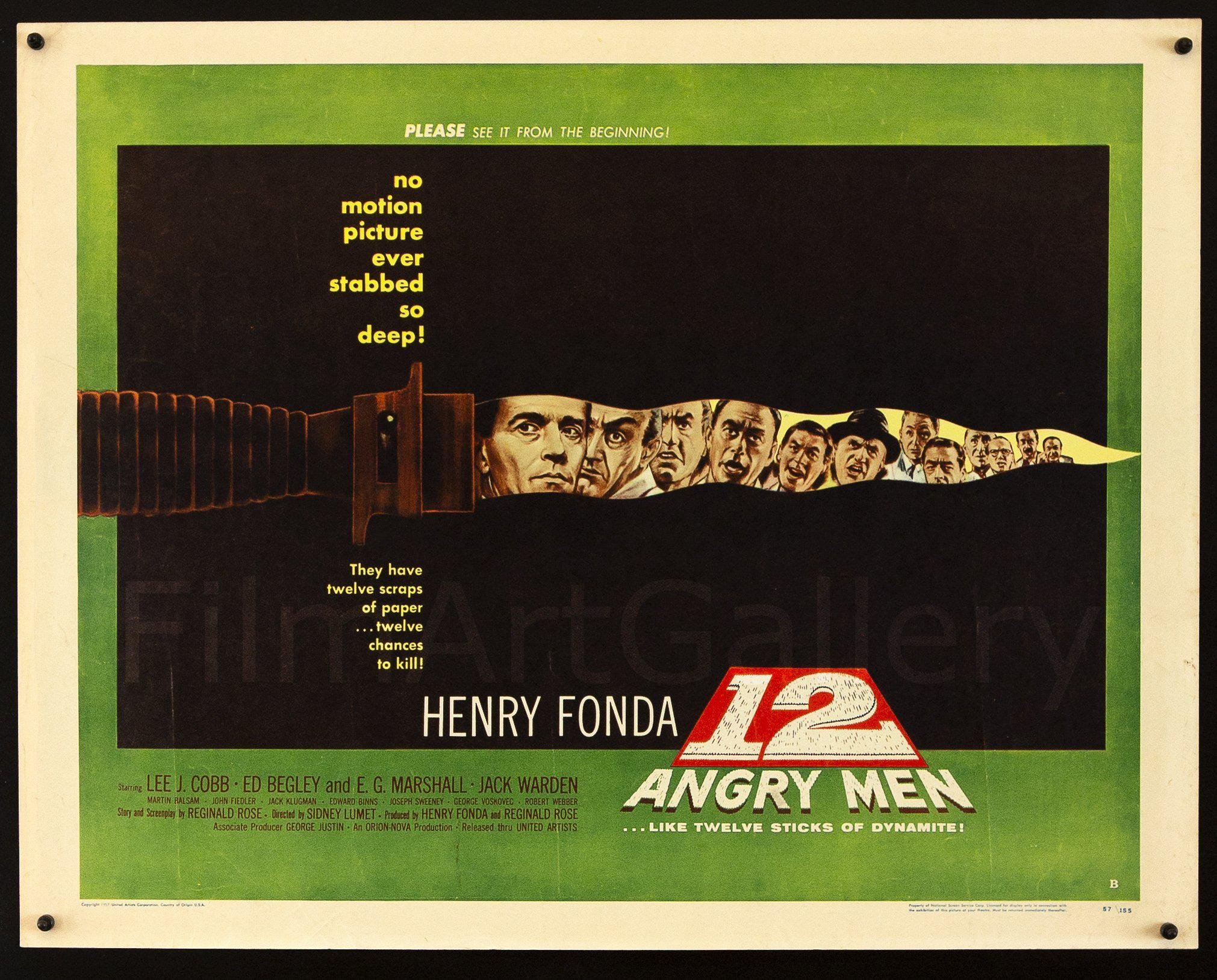
Yesterday, once again, I watched the movie "12 Angry Men."

It's among my top ten favorite films. But why?

The film is black and white. It's been in theaters since 1957. The entire story unfolds in one room, symbolically locked up. A group of jurors must deliver a verdict for an 18-year-old defendant.

Doesn't sound very exciting, right? However, once you start watching it, you're unlikely to pause, even for a bathroom break. You become a witness to a fire, and the drama completely engrosses you.

We first saw it at the Chicago Business School 20 years ago. The professor used it to illustrate decision-making dynamics in a group and the transfer of power in a managerial setting.

But the film offers more insights than a businessman can grasp. A psychologist will notice examples of repression and acting out. A sociologist will relish the stages of conflict development. An existentialist will appreciate the sharp personal choice as a problem of freedom.

Moreover, this film teaches how to withstand societal pressure while remaining true to yourself. With the global rise of Tribalism 2.0 and the leaning towards dictatorship from both left and right forces, the ultimate question becomes how the individual can stay Human.

Sincerely yours,

-Alexander


About me:
As a business therapist, I help tech founders quickly solve dilemmas at the intersection of business and personality, and boost company value as a result.

How can I help you?
If you've long been trying to understand what is limiting you and/or your business and how to finally give important changes a push, then The Catalyst Session is designed specifically for you. Book it here.

The Edge of Freedom by Alexander Lyadov

No matter how bad you feel, there's always someone who's worse off. Looks like hell has no bottom, even on Earth. And if nature has its limits, human malice will break through every floor.

Other people's suffering can shock you and touch you to the core. However, with time, the impression will soften, and your back pain or job loss will be priority #1 again.

In other words, our problems eventually overshadow the problems of others. So, no one is ever comforted by advice like, 'Just think about how bad they had it! You're lucky compared to them.

However, the tough experiences of other people can change us just as profoundly as our own. It's not about the absolute magnitude of suffering but HOW those people endure it.

Do they face their fear head-on? Do they keep themselves together in a moment of disaster? Do they inspire others? Do they find meaning in their pains? Do they keep fighting when chances are slim? Do they radiate light when darkness consumes them? Do they remain Human, against all odds?

Attitude, choices, and actions are what change us. In others' experiences, we discover that creative spirit that's also within us. "What one man can do, another can do," said Charles Morse in my favorite movie "The Edge."

We simultaneously feel inspiration and anxiety. It's one thing to recognize our potential, and another to bring it to life. How we will act when our turn comes, we don't know. But the choice, and therefore freedom, we surely have.

Sincerely yours,

-Alexander


About me:
As a business therapist, I help tech founders quickly solve dilemmas at the intersection of business and personality, and boost company value as a result.

How can I help you?
If you've long been trying to understand what is limiting you and/or your business and how to finally give important changes a push, then The Catalyst Session is designed specifically for you. Book it here.

How to Love a Dragon? by Alexander Lyadov

A big ​alligator rubs​ its snout against a man's cheek.

"Oh, my god, he loves you so much!," the onlookers coo.

"No, he does not," says wildlife biologist Christopher Gillette, "This is not a Disney movie. I love him, he doesn't love me. He would kill and eat me if I were to let him."

"Yea, but right now he is not attacking you. This means he loves you," the tender-hearted insist.

To illustrate, Chris snaps his fingers near the alligator's mouth, deftly pulling away his hand in an instant. "I know how to orient my body in a position so that I didn't get bits. The secret trick is having skills."

It's not what it seems. But only an expert can understand the difference.

We perceive the world through the lens of personal experience and culture. We try to fit new experiences into the molds we already have.

Even if the molds don't fit the specific phenomenon, we won't easily let go of them. After all, we don't have others. And to be left alone, face-to-face with novelty, is a symbolic death.

But clinging to inadequate forms is also dangerous. We're like a child reaching for a bear cub, asking, "​Can I pet this dog​?" Reality harshly punishes ignorance, naivety, and carelessness.

But what if we regularly encounter novelty anyway?

Firstly, don't lie to yourself, i.e., separate the imaginary from reality.

Secondly, be aware of where your competence reaches its limits.

Thirdly, quickly learn a new phenomenon.

Ideally, with the help of an expert who has been there, done that.

Sincerely yours,

-Alexander


About me:
As a business therapist, I help tech founders quickly solve dilemmas at the intersection of business and personality, and boost company value as a result.

How can I help you?
If you've long been trying to understand what is limiting you and/or your business and how to finally give important changes a push, then The Catalyst Session is designed specifically for you. Book it here.


Unlocking Your Shackles by Alexander Lyadov

Our entire life is a series of negotiations with someone:
- competitors,
- colleagues,
- officials,
- partners,
- clients,
- family,
- pets,
- fate,
- oneself.

"Negotiation is won by whoever cares less," noted entrepreneur and investor Naval Ravikant.

Entering into negotiations implies that you need something from the other party. The higher the stakes, the more evident it becomes that the opposing party possesses what you desperately lack.

In the worse case, you forfeit your freedom, becoming dependent on the other. Civilized negotiations turn into a wild confrontation between prisoner and jailer.

As a wise psychotherapist once said, "The victim always dreams of swapping places with the oppressor." This fosters an irresistible and easily justifiable desire to eliminate "evil" by any means necessary.

This explains why long-time business partners may resort to filing criminal charges against each other. Or why spouses, who have raised children together, turn everyone's lives into hell during a divorce. Convinced of its righteousness, "good" goes all the way.

To avoid turning ordinary negotiations into an epic battle of light and darkness, you must protect yourself from yourself. You heard it right— resist the temptation to play the victim.

To achieve this, your counterpart must lose their "exclusive" status. When their offer is met with a viable alternative, your opponent loses all power over you. This alternative can and should be created by you.

For example, you can:
- announce a tender,
- clarify true interests,
- review hidden assumptions,
- form an unexpected alliance,
- break down the whole into parts,
- broaden the horizon of events and relationships,
- separate the essence of what you need from the literal form, etc.

In essence, you always possess both the chains and the keys to unlock them.

Sincerely yours,

-Alexander


About me:
As a business therapist, I help tech founders quickly solve dilemmas at the intersection of business and personality, and boost company value as a result.

How can I help you?
If you've long been trying to understand what is limiting you and/or your business and how to finally give important changes a push, then The Catalyst Session is designed specifically for you. Book it here.


What I Can't Forget by Alexander Lyadov

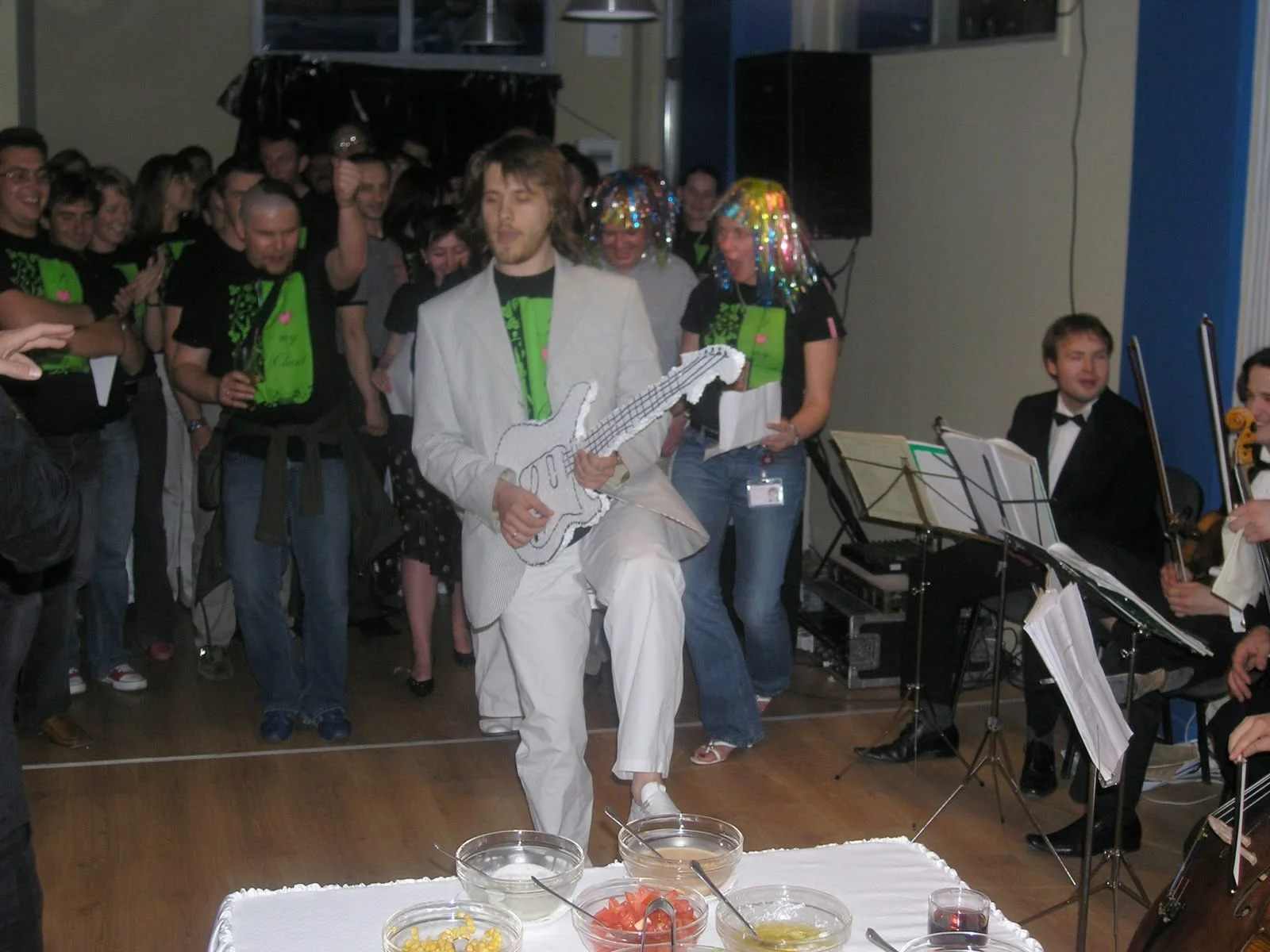
2003-2006

Looking back at the work from XX years ago, what comes to mind?

Challenges? Incidents? Achievements? Rewards?

I instantly recall how excitingly we spent time together.

Yes, our team crafted Wow-brands for daring clients. We made our mark in the advertising industry. And the growing dividends impressed shareholders every year. However, all those ratings and numbers kind of faded over time.

I also need to strain to recall the difficulties, arguments, and dead ends. Of course, there were plenty.

Yet the feeling from the co-creation process in me is still fresh.

I'd think I'm the only one this odd. But my former colleagues regularly admit they can't forget that period either.

Another example is our internet startup, which wasn't exactly a success. Still, every time we meet with co-founders, we reminisce about our wild brainstorming with great warmth.

Why? Because creating Something from Nothing is always a miracle. That experience redeems tears, nerves, and sweat. It's a reward in itself.

In that moment, you forget about yourself and genuinely live 100%. Creativity, even alone, is splendid. And when you do it together, it's nothing short of a blessing.

Sincerely yours,

-Alexander


About me:
As a business therapist, I help tech founders quickly solve dilemmas at the intersection of business and personality, and boost company value as a result.

How can I help you?
If you've long been trying to understand what is limiting you and/or your business and how to finally give important changes a push, then The Catalyst Session is designed specifically for you. Book it here.