
Healing Emptiness by Alexander Lyadov

For some folks, holidays, vacations, and downtime, in general, are a tough nut to crack. (Hi everyone, I'm Alexander, and count me among them).

No matter how hard they toil, new tasks are already breathing down their necks. In good times and bad, they have one excuse: "Not now!"

It is easy to admire and respect oneself for this attitude. Demanding parents, teachers and bosses love it too.

Unfortunately, one day the body says, "Stop!" or falls apart into pieces. In organizations, a crisis unfolds because one specialist carried the entire load. And if it's the founder or CEO, chaos instantly erupts.

What's the remedy? It's what they hate the most.

For the slacker, a "massage course" of discipline is recommended. The workaholic needs a series of injections of emptiness.

It's not about a one-year world tour on a yacht or a winter in a monastery. Simply set aside a day, an hour, or even fifteen minutes. This should become a regular personal ritual. One of my clients, a founder, named it "Silent Day."

The goal is to consciously do nothing. To be precise, eliminate the usual "To-do" list. Create space for what couldn't enter before. For instance:

  • Review family photo albums,

  • Read long-delayed non-business books,

  • Gather information about a mysteriously intriguing subject,

  • "Senseless" daydreaming: "What if I radically..." and so on.

"Leave a child alone with boredom, and each will engage in their talent zone," a therapist once told me.

The adult's task is to regularly return to their roots, recharging and renewing that part of themselves that's trying to become rigid.

Sincerely yours,

-Alexander


About me:
As a business therapist, I help tech founders quickly solve dilemmas at the intersection of business and personality, and boost company value as a result.

How can I help you?
If you've long been trying to understand what is limiting you and/or your business and how to finally give important changes a push, then The Catalyst Session is designed specifically for you. Book it here.


Let's Surprise Ourselves! by Alexander Lyadov


Starting June 4, 2020, I've been firing off this newsletter for the 1208th time.

Usually, I'm so pumped with inspiration that words just pop out. But sometimes, I stare at the blank screen for what feels like forever. Like when the thought hits me: maybe no one really needs this.

On one hand, I can't not write. Unspoken thoughts, like termites, chew away at my "foundation." But on the flip side, it loses meaning without readers. Any musician will tell you there's a difference—performing in front of a mirror versus a live crowd.

Because it's not just about catching deep meaning. It's about skillfully preparing it, setting the table, and savoring it with other enthusiasts. Sharing ideas, stories, or food is an ancient need.

Sure, we don't always know how people react to our words and deeds. But secretly, we believe they might be useful to someone too. It's like reconnecting with something much greater than ourselves.

Then, a letter comes and restores my harmony:

"Thanks, Sasha, for not stopping writing. Your letters are a little island of stability in this world of uncertainty and black swans that pop up here and there :)"

Maybe something similar is happening with you. You've been at your craft for a long time, diligently and passionately. But feedback is nowhere to be found, making you doubt. Be patient.

Those who truly value it notice your contribution. It's just that in the hustle and bustle of life, there's not always a chance to let you know.

By the way, I want to say thank you. You were there when darkness thickened and when dawn broke. There are still many challenges ahead, but together, we'll overcome them. We do not yet know our potential.

I wish you to be pleasantly surprised: 'Wow! It turns out I can do THIS!'

Happy New Year!

Sincerely yours,

-Alexander


About me:
As a business therapist, I help tech founders quickly solve dilemmas at the intersection of business and personality, and boost company value as a result.

How can I help you?
If you've long been trying to understand what is limiting you and/or your business and how to finally give important changes a push, then The Catalyst Session is designed specifically for you. Book it here.

Your Time Machine by Alexander Lyadov

"Get to your studies! The exam is just a month away," says the mother.

"A whole month! There's plenty of time!" protests the youngster.

Perception of time drastically changes with age. The younger the kid, the more they live in the present. What was and what might be rarely bother them.

As the years go by, the past and future gnaw at pieces of the present. One day, they devour all the space inside that exists.

Now, like a pendulum, man swings from the past to the future, back and forth. And only occasionally do they succeed in forgetting about them, dissolving into existence.

For instance:

  • during an extreme situation,

  • emotional intimacy,

  • challenging work,

  • physical activity,

  • engaging game,

  • creativity,

  • orgasm.

It's clear that the present loses ground for a reason. Analyzing the past and preparing for the future not only helps achieve goals but also survive in this unpredictable world.

Unfortunately, the defense mechanism often goes too far, and people begin to suffer from imagined guilt and unlikely fears. In such rocky soil, truly creative ideas don't grow.

Conclusion: a mature people need to master their "time machine." They should travel between the past, present, and future at their will, not getting stuck suddenly in any of them.

Sincerely yours,

-Alexander


About me:
As a business therapist, I help tech founders quickly solve dilemmas at the intersection of business and personality, and boost company value as a result.

How can I help you?
If you've long been trying to understand what is limiting you and/or your business and how to finally give important changes a push, then The Catalyst Session is designed specifically for you. Book it here.


Free the Entrepreneur by Alexander Lyadov

Vitally important to freely discuss what someone forbids. This holds true for society, companies, and each individual. Looking at the individual, it's easy to see why.

The prohibition could be shaped by family or personal experience. Perhaps it once helped someone save or succeed. In other words, the prohibition made perfect sense in those ancient times.

Since then, almost everything has changed: the environment, society, technologies, culture, and of course, the specific person. And what if the prohibition is no longer relevant? Then friction or even contradiction with the environment will inevitably arise. At its extreme, such conflict with life is incompatible.

Adaptation to change implies questioning any taboo. The goal is to preserve and update the useful aspects, letting go of the rot. This requires discussion, debate, dialogue.

What I value in psychotherapy is the opportunity to speak openly about absolutely everything. With each year of our work, mutual trust grew, and with it, the depth of my inner excavations.

I dragged certain experiences like kettlebells for several decades. Their label warned, 'Danger. This will kill you." But once I shared them with a therapist, I was shocked at how much energy was unleashed and how much easier life became.

Likewise, in business therapy, I help founders analyze their experiences and separate the wheat from the chaff. The freer the entrepreneur breathes, the faster the business grows.

Sincerely yours,

-Alexander


About me:
As a business therapist, I help tech founders quickly solve dilemmas at the intersection of business and personality, and boost company value as a result.

How can I help you?
If you've long been trying to understand what is limiting you and/or your business and how to finally give important changes a push, then The Catalyst Session is designed specifically for you. Book it here.


Think Before You Grow by Alexander Lyadov

Thanks to the team, an entrepreneur reaches sky-high heights. However, people can start posing a threat to the business.

It happens when the founder rushes to expand the team while the business model isn't fine-tuned. For example, the ideal customer portrait is still fuzzy, and the sales process isn't outlined.

An energetic new employee will try to prove their worth to themselves and everyone else. In their eyes, the first available customer X is desirable, as long as the deal is done without a loss. The thought that customer Y could have brought in profits ten times greater doesn't even cross their mind.

Quietly and gradually, the company starts accumulating customers it doesn't really need. Servicing them will require more employees in all departments.

Unfortunately, low profits with high turnovers raise risks. The business becomes fragile, cracking at any internal or external hiccup. The founder wonders, "Business for the sake of business. This is nonsense."

But the further it goes, the harder it is to change anything in the company. "Wrong" customers increase the share of "wrong" employees, and they, in turn, strengthen the "wrong" culture.

Of course, people are not to blame. No one explained to them the clear rules of the global game, so for survival and entertainment, they invent their own local games.

Some decisions impose greater responsibility on us. Hiring new people into the team is like buying a home rifle. You can't just leave it on the shelf. You must know how to manage this resource, understanding its danger, not just its benefit.

Sincerely yours,

-Alexander


About me:
As a business therapist, I help tech founders quickly solve dilemmas at the intersection of business and personality, and boost company value as a result.

How can I help you?
If you've long been trying to understand what is limiting you and/or your business and how to finally give important changes a push, then The Catalyst Session is designed specifically for you. Book it here.


Domesticate Fire by Alexander Lyadov

One of the biggest questions in business and life is:

"What's the potential damage?"

Its benefit skyrockets when facing something new.

Imagine stumbling upon fire a million years ago. If you're not just curious but also cautious, playing with this "beast" won't kill you. Well, maybe you'll burn your hands or singe your eyebrows.

But in return for your experiments, you'll be rewarded beyond measure. Now, predators don't scare you, food tastes better and is easier to digest, and children grow up in warmth.

The point is, novelty always has a two-sided nature. As your reward, the numerator is a blessing, and the denominator is harm, the inevitable price. If you limit the denominator, that fraction will enrich you. Why? The numerator can reach as high as the sky.

Unfortunately, sometimes we misread such fractions. We either undervalue the prize or get scared of an imaginary price. As a result, a unique opportunity slips by.

But if we honestly answered the aforementioned question, we'd find that real risks are manageable, and the consequences are okay.

By the way, this explains why some people are discouraged, saying 'There are no opportunities,' while others exclaim, 'Opportunities are everywhere!'

Sincerely yours,

-Alexander


About me:
As a business therapist, I help tech founders quickly solve dilemmas at the intersection of business and personality, and boost company value as a result.

How can I help you?
If you've long been trying to understand what is limiting you and/or your business and how to finally give important changes a push, then The Catalyst Session is designed specifically for you. Book it here.


Winning the Unseen Battle by Alexander Lyadov

Incrediblehistory, Soba noodles deliveryman in Tokio, Japan, 1935.

"Invisible Jiu-Jitsu" may sound mystical, like something out of an old Hong Kong action flick. But in reality, it's all about savvy strategies and techniques that a newbie won't notice or appreciate.

Take it from the champion's coach, ​John Danaher​: "The basis of guard position will always be your ability to off balance your opponent. Learn to constantly threaten your opponents balance first and then attack second."

Now, flip that advice on yourself. Your opponent (competitor, foe) is also hunting for effective strategies. Before they strike, they'll try to:

  • rob you of peace of mind,

  • shake your foundation,

  • disrupt your habits,

  • throw you off etc.

So, your top priority is maintaining inner balance. Once that wavers, you drop everything and patch up the vulnerability. Without balance, even our finest initiatives are doomed.

An outsider won't even notice when you wobbled and risked losing it all. Then, you pull yourself together and regain strength.

Likewise, spectators will wonder why your mighty and menacing enemy suddenly collapses, like a house of cards.

Sincerely yours,

-Alexander


About me:
As a business therapist, I help tech founders quickly solve dilemmas at the intersection of business and personality, and boost company value as a result.

How can I help you?
If you've long been trying to understand what is limiting you and/or your business and how to finally give important changes a push, then The Catalyst Session is designed specifically for you. Book it here.


Look for Lever by Alexander Lyadov

"Give me more resources, and I'll solve this problem."

If your top managers talk like this, things are screwed up. It means they're desperate and don't get the real problem. Most likely, after blowing through another million in six months, managers will just throw up their hands.

Sure, with endless time, money, and people, someday there's a chance to solve everything. But the market won't passively wait for you. Diverting resources will breed other, more dangerous problems.

"There are no solutions. There are only trade-offs," bluntly said Thomas Sowell, an American economist and social philosopher. In other words, everything has a price, and it's good to know and accept it beforehand.

Complaints about a lack of resources are just admitting there's no Big Idea. Back in my advertising days, that's what we called a bright, creative idea that shook up the market with bitty ad spend.

But the skill of finding non-trivial solutions is valuable for top managers too. That's how they ensure high returns for shareholders. And that's why they're worth their weight in gold.

Today in business therapy, my job is to help CEOs find the Lever. It's still the Big Idea, but in a broader context. Ideally, the CEO realizes, "I already have everything I need! And by concentrating efforts on point X, the effect will be 100x for every cent."

Sincerely yours,

-Alexander


You can help Ukraine defend itself and the World from Russian aggression here.


”Who are you and what do you do?"
As a business therapist, I help tech founders quickly solve dilemmas at the intersection of business and personality, and boost company value as a result.

"I have an important business decision to make. Can you help me?
Reserve a time on my calendar that is convenient for you to meet with me. We'll clarify your request and discuss options for how you can help.


CEO Secret: Keep Everyone in Sync by Alexander Lyadov

Let's say shareholders are unhappy with your performance as a CEO.

By trial and error, they can make a replacement N times.

One day, all the stars may align and the company will leap forward.

But there's a risk that competitors will own the market by then.

And what if the problem isn't with the CEO at all?

To double-check that, just ask one question:

"How often does the board mention the company's value?"

If the answer is "Very rarely" or "Never," a lot becomes clear.

Can you become a hockey champion without counting goals?

Speed measurements and successful pass counts are important, but secondary.

Yes, sometimes debt repayment or Q4 profits are a top priority.

But you don't start a business just to survive; you start it to grow.

Are customers getting more value? Okay, the value of the company is growing.

According to Drucker, "What gets measured gets managed."

But if you don't do this, a host of problems arises:

  • Team conflicts,

  • Hiring difficulties,

  • Customer complaints,

  • Decreased CEO motivation,

  • Low return on invested capital,

  • Profit margin reduction, and so on.

To unite their efforts, shareholders and CEOs need a "polar star".

Sincerely yours,

-Alexander


You can help Ukraine defend itself and the World from Russian aggression here.


”Who are you and what do you do?"
As a business therapist, I help tech founders quickly solve dilemmas at the intersection of business and personality, and boost company value as a result.

"I have an important business decision to make. Can you help me?
Reserve a time on my calendar that is convenient for you to meet with me. We'll clarify your request and discuss options for how you can help.


Dissolving Into Life by Alexander Lyadov

Do you feel anxious about the future or regretful about the past?

Personally, I do, and quite often. Like a spoon of tar, they poison the honey of my life. But there are moments when the bad thoughts evaporate, like smoke.

For instance, when I:

  • Write a new article,

  • Open up to a therapist,

  • Immerse myself in an ice bath,

  • Listen to a fascinating interview,

  • Practice techniques with a partner,

  • Help a client find a solution to a tough problem, and so on.

In those moments, I'm like a handful of table salt NaCl. If you throw salt into a glass of water, what happens? It disappears, but at the same time, it remains itself. Instead of solid crystals, there's a uniform solution.

That's how I dissolve into the task (activity, environment) that is greater than me. Even if it takes an extra effort, I feel good. Instead of regrets and worries, I feel:

  • Determination, even a bit of audacity,

  • Openness to novelty,

  • Energy to create,

  • Serenity,

  • Meaning, and so on.

It is as if there's no past or future here, so there's nothing to worry about. 'As if' because the most valuable from everything ever experienced is used in this moment. And paradoxically, such "dissolving" activity is the optimal care for the impending day.

Dissolve into Life – is a clearer hint needed on what must change?

Sincerely yours,

-Alexander


You can help Ukraine defend itself and the World from Russian aggression here.


”Who are you and what do you do?"
As a business therapist, I help tech founders quickly solve dilemmas at the intersection of business and personality, and boost company value as a result.

"I have an important business decision to make. Can you help me?
Reserve a time on my calendar that is convenient for you to meet with me. We'll clarify your request and discuss options for how you can help.


The Signal of (In)Sanity by Alexander Lyadov

Humanity is just starting to grasp the impact of its actions.

Take, for instance, social media and the internet.

The fabric of society held up for 300 thousand years, and now it's tearing at the seams.

Why?

In relationships, the Noise : Signal ratio is changing fast.

According to stats, 13% of the world's population – around 971 million people – deal with some mental disorder.

Today, many of them got hold of a super-powered microphone.

If they've got free time and are fixated on an idea, they team up and passionately broadcast their nonsense to the whole world.

In a small community, it was clear who not to listen to. But now, we're increasingly communicating remotely, sometimes with strangers and often with unknown folks. It's tough to figure out who's who.

Plus, you're in a vulnerable spot from the get-go. Writer Charles Bukowski noted, "The problem with the world is that the intelligent people are full of doubts. While the stupid ones are full of confidence.”

Even worse, by the age of 75, ​half the world's population​ will go through a mental health disorder. And, yeah, you and I aren't immune to that risk.

So, what's the takeaway?

  1. Be even more selective about who speaks on the bullhorn.

  2. Seek, shape, and cherish a circle of sensible people.

  3. Ignore most comments on the social web.

Sincerely yours,

-Alexander


You can help Ukraine defend itself and the World from Russian aggression here.


”Who are you and what do you do?"
As a business therapist, I help tech founders quickly solve dilemmas at the intersection of business and personality, and boost company value as a result.

"I have an important business decision to make. Can you help me?
Reserve a time on my calendar that is convenient for you to meet with me. We'll clarify your request and discuss options for how you can help.


The Burden of Money by Alexander Lyadov

Only a very naive person would envy the rich. If he studied their lives up close, he'd cross himself: 'I am OK.'

Twenty years ago, I was invited into an industry I knew little about. It was wealth management for High-Net-Worth Individuals (HNWIs). I quickly recalled the Chicago Business School courses on investments, finance, and macroeconomics.

But beyond the actual strategies of preserving and multiplying money, I immersed myself in a parallel world where my clients:
- strolled through the pavilions of the Venice Biennale.
- acquired luxury items from the Rob Report list.
- collected contemporary art.
- enjoyed winter rides in Courchevel and summers in Forte dei Marmi, etc.

As a result, I observed firsthand the lives of wealthy families and became intimately acquainted with individuals whose accomplishments were regularly featured in Forbes.

Undoubtedly, the aesthetics of wealth please the eye—the sparkle of Graff diamonds, the purr of a Bentley engine, and the tickle of Dom Perignon bubbles. Like a Chinese screen, they hide the gloomy side of existence.

Alas, suffering remains suffering, even if you throw a Louis Vuitton scarf on top of it. Betrayals, illnesses, and tragedies are experienced by all people equally, regardless of the size of their bank account.

Yes, money lubricates the resolution of many problems. But it cannot bring back a husband's love, reform a spoiled child, or fill the void inside. But there's more.

By adding freedom in one place, money steals from you in another. For example, you must strive to protect your assets from damage, rust, and theft. And it is much harder to believe in the sincerity of other people. Because in the eyes of many, you are the most desired prey, opportunity, and jackpot.

Money is a lever. And vast amounts of money are a massive lever. Special skills are required, like steering a ship. That's why, for instance, heirs usually lose both money and themselves.

My business partner used to say, 'Money is not a privilege but a burden.' It doesn't mean one should refrain from earning money. A larger margin of safety would not hurt in an increasingly chaotic world.

Let's just avoid the illusion that affluence will pave the way to paradise.

Sincerely yours,

-Alexander


You can help Ukraine defend itself and the World from Russian aggression here.


”Who are you and what do you do?"
As a business therapist, I help tech founders quickly solve dilemmas at the intersection of business and personality, and boost company value as a result.

"I have an important business decision to make. Can you help me?
Reserve a time on my calendar that is convenient for you to meet with me. We'll clarify your request and discuss options for how you can help.


Prepare for Surprise by Alexander Lyadov

I remember the times when money poured in like from a cornucopia.

But other times I had no money and no idea where to find them.

In both cases, I was convinced that this state would last forever.

This meant that things could only go:
- better and better in the first case or
- worse and worse in the second.

Of course, I was absolutely wrong.

Each time, life surprised me in a clever way.

Just when I was enjoying life and crafting even more ambitious plans, a black swan would swoop in and topple my house of cards.

And in the darkest moments, when I was at the bottom, light would emerge out of nowhere, and the flapping of white wings could be heard.

The truth is that we are bad predictors of our own future (well, I certainly am).

And not because we lack data or have a low IQ. The problem lies in the proud mind, which is convinced that it has sufficiently understood the world outside and inside.

However, the external world is constantly changing, not only by itself but even by the fact that we observe it. Therefore, we are doomed to be regularly caught off guard.

We also know little about who we are and what we can do. So as long as we are alive, we will continue to surprise ourselves again and again.

Sincerely yours,

-Alexander


You can help Ukraine defend itself and the World from Russian aggression here.


”Who are you and what do you do?"
As a business therapist, I help tech founders quickly solve dilemmas at the intersection of business and personality, and boost company value as a result.

"I have an important business decision to make. Can you help me?
Reserve a time on my calendar that is convenient for you to meet with me. We'll clarify your request and discuss options for how you can help.


Return on Effort by Alexander Lyadov

Every day, there are two things I'm not eager to do.

It's the morning workout (jiu-jitsu, kettlebells, or mace) and the evening ice bath.

Yet, every time, I end up grateful that I overcame the barrier.

Moreover, even what I love doesn't just happen on its own.

For example, it takes some effort to start writing an article.

What do these examples have in common?

The reward comes later in exchange for making sacrifices now.

This is different from leisure, entertainment, and indulging in tasty things.

There, pleasure doesn't require tension and there is immediate reward.

And all would be fine if these pleasures didn't wear off quickly.

So, we're left with only working on either the numerator (reward) or the denominator (price).

Firstly, seek unique opportunities where modest efforts yield colossal results.

Secondly, choose tasks that personally mean a lot to you. Where others falter and give up, some force will pull you forward.

Thirdly, engage in what you are naturally inclined towards. Then, what may seem like torture to others will be manageable work for you.

Sincerely yours,

-Alexander


You can help Ukraine defend itself and the World from Russian aggression here.


”Who are you and what do you do?"
As a business therapist, I help tech founders quickly solve dilemmas at the intersection of business and personality, and boost company value as a result.

"I have an important business decision to make. Can you help me?
Reserve a time on my calendar that is convenient for you to meet with me. We'll clarify your request and discuss options for how you can help.


Saving Simplicity by Alexander Lyadov

Unknown photographer

The more chaos around, the sharper the need for simplicity. Examples include natural disasters, fires, or wars. The "What to do?" guide should be crystal clear.

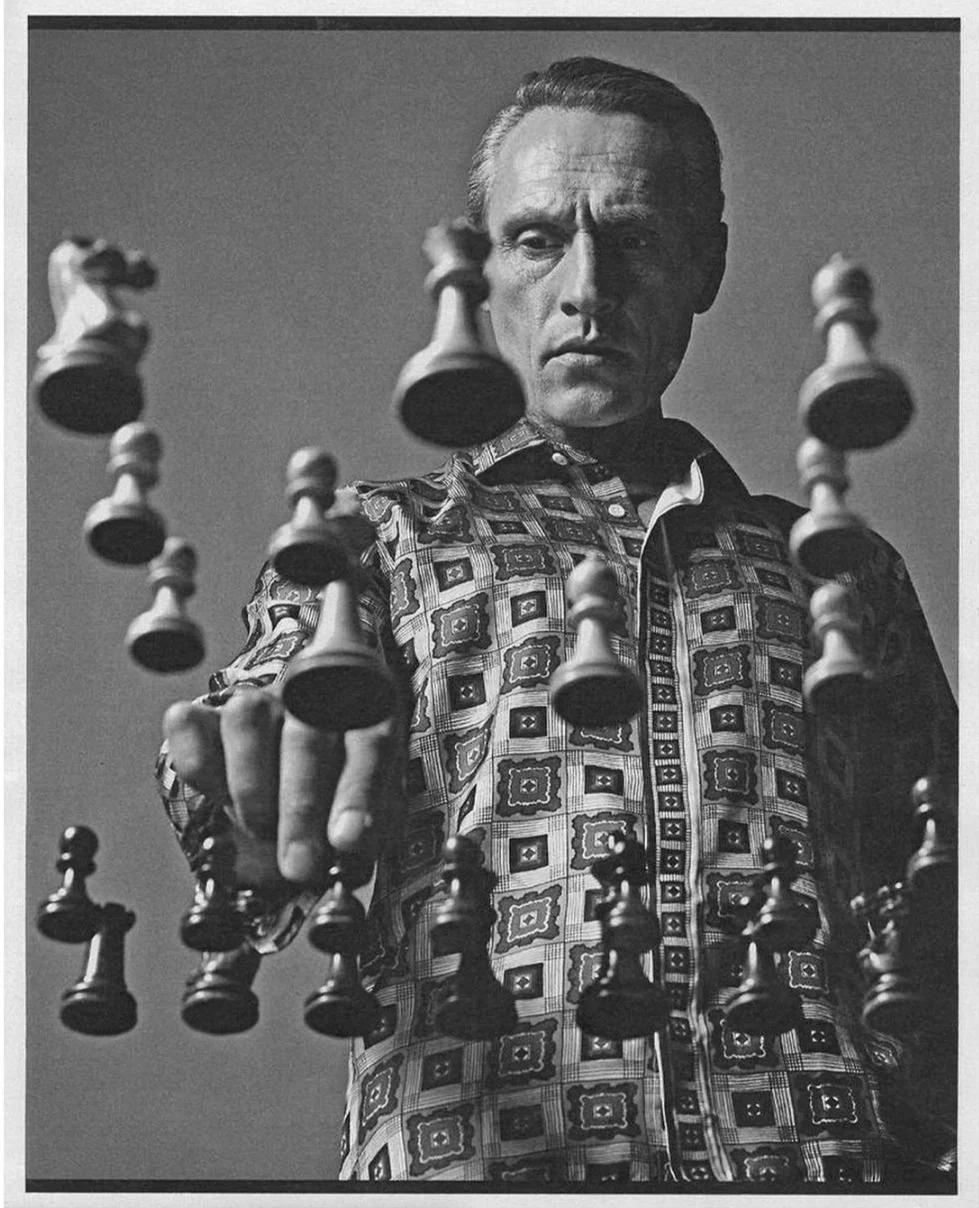
Even making a move like "E2-E4" becomes tough when your mind is drowning in adrenaline. On the flip side, nonsense easily multiplies in safety and prosperity.

It's surprising how many bad decisions managers can hide behind super margins. Natural monopoly or a founder's patent creates a resilience that later generations can't break.

Of course, this holiday won't last forever. So, wise founders willingly limit themselves. They consciously create healthy tension in the company when the rest of the team wants to rest on their laurels.

For instance, they set new super-ambitious goals, withdraw excess money from corporate accounts, and introduce a target return rate for all investment projects.

In doing so, founders move the company to the "cutting edge." It's the border where "terra incognita" unfolds. Taking a voluntary step into chaos sharply raises the stakes. The only chance to survive here is to be clear-thinking, healthy, and strong.

In this way, necessary simplicity inside comes to answer complexity outside.

Sincerely yours,

-Alexander


You can help Ukraine defend itself and the World from Russian aggression here.


”Who are you and what do you do?"
As a business therapist, I help tech founders quickly solve dilemmas at the intersection of business and personality, and boost company value as a result.

"I have an important business decision to make. Can you help me?
Reserve a time on my calendar that is convenient for you to meet with me. We'll clarify your request and discuss options for how you can help.


Beyond Instincts by Alexander Lyadov

The documentary film "​Chimp Empire​" on Netflix is filled with insights. The authors managed to create the effect of your presence in the pack.

Whether the animals were full of trust or simply didn't care about humans, the quality, angles, and intimacy of the footage are beyond praise.

The most astonishing part is our resemblance to chimpanzees.
We share common traits, such as:
- Learning survival skills,
- Craving acceptance in society,
- Climbing to the top of the hierarchy,
- Protecting and expanding our territory,
- Forming alliances in the struggle for power,
- Strengthening trust through caring for each other,
- Tearing apart those we consider outsiders, and so on.

Instead of grooming for fleas, humans use gossip. And for killing, it's technological weapons instead of bare hands.

The only thing that sets us apart is the ability to choose.

Behaving like an animal is instinctive, familiar, and straightforward. Millions of years have carved deep neural pathways in our brains.

However, we possess the capacity to act differently if we so choose.

It's a realm not of survival instinct and calculated advantage but of paradoxical spirit. The same spirit that overcomes the restless mind and fragile flesh.

Life offers us this choice many times every day. As the Austrian zoologist and zoopsychologist Konrad Lorenz said, "I have found the missing link between the higher ape and civilized man; it is we."

Sincerely yours,

-Alexander


You can help Ukraine defend itself and the World from Russian aggression here.


”Who are you and what do you do?"
As a business therapist, I help tech founders quickly solve dilemmas at the intersection of business and personality, and boost company value as a result.

"I have an important business decision to make. Can you help me?
Reserve a time on my calendar that is convenient for you to meet with me. We'll clarify your request and discuss options for how you can help.


Your Roots and Crown by Alexander Lyadov

Trees strive to maintain a balance between their roots and crowns.

So, if groundwater kills some roots, the crown shrinks.

Imagine you like the 'beauty' of fruits, but the 'dirt' of roots repels you.

Then try to eliminate the 'evil' that lurks underground.

Your intentions are good, but alas, you no longer have the tree.

Conclusion: we must be careful not to disturb the invisible balance.

But what's said is true for individuals, meaning you and me.

Inside us, there's what we adore and what we despise.

Of course, we try to deny, distort, and repress the latter.

This struggle not only lacks sense but also harms us a lot.

Instead of Light vs. Darkness, it's Crown vs. Roots.

But if something exists, it means it has a certain function.

True, in our ignorance, we don't even entertain this thought.

And what if, out of scientific curiosity, we change our strategy?

The goal is to study the nature, function, and habits of this 'evil.'

You might be surprised:

  • Underground holds your backup fuel tank.

  • The detested part of your personality sometimes saves you.

  • Self-exploration is not a diminishment, it is an enrichment.

"No tree, it is said, can grow to heaven unless its roots reach down to hell," said the wise psychiatrist Carl Jung.

Sincerely yours,

-Alexander


You can help Ukraine defend itself and the World from Russian aggression here.


”Who are you and what do you do?"
As a business therapist, I help tech founders quickly solve dilemmas at the intersection of business and personality, and boost company value as a result.

"I have an important business decision to make. Can you help me?
Reserve a time on my calendar that is convenient for you to meet with me. We'll clarify your request and discuss options for how you can help.


When Good Ideas Go Bad by Alexander Lyadov

“Social Engineering – The art of replacing what works with what sounds good,” said Thomas Sowell, an American economist, and social philosopher.

An example of his words is the now-popular woke culture in the West. At first glance, all initiatives to “improve society” seem to be motivated by compassion. They appeal to those with a caring heart. Unfortunately, each attempt either ends up going nowhere or destroys the little that has served as a foundation for society.

Elevated to the rank of absolute, any good idea becomes pathological, transforming into its opposite—evil. This happens every time an idea (concept, law) overshadows a living person. “People don’t have ideas. Ideas have people,” wisely noted Carl Jung.

A vivid illustration of this is found in the Bible. Christ repeatedly admonishes the Pharisees: “The Sabbath is for man, not man for the Sabbath” or “Which one of you, having one sheep, if it falls into a pit on the Sabbath, will not take hold of it and lift it out?”

In business, the substitution of what works with what sounds good happens every time a company indulges in a period of rapid growth. Drunk on success, founders suddenly get captivated by ideas like “Making employees happy” and “Improving the world.” For this: - The HR department is expanded, - Training with benevolent names is conducted, - And new KPIs are introduced, leaving the team confused.

It’s hard not to notice the suicidal nature of this step. Whether it’s society, a company, or an individual, at the peak of prosperity, they suddenly begin to self-destruct. Perhaps that’s why many wisemen agree that true life is not about hedonism but asceticism. So it’s easier to truly be, not just seem.

Sincerely yours,

-Alexander


You can help Ukraine defend itself and the World from Russian aggression here.


”Who are you and what do you do?"
As a business therapist, I help tech founders quickly solve dilemmas at the intersection of business and personality, and boost company value as a result.

"I have an important business decision to make. Can you help me?
Reserve a time on my calendar that is convenient for you to meet with me. We'll clarify your request and discuss options for how you can help.


Which Path to Take? by Alexander Lyadov

Some say the key to life is finding what you love. Everything else is secondary and falls into place later, they say.

Others caution, "No, often that's a path to nowhere." It's better, they argue, to become a pro and make decent money.

The reality itself contradicts the first group. Some folks realize their affinity for Activity X not right away, but only over time. Or, having embarked on their "dream pursuit," they suddenly feel disappointed.

The opposite advice is only good for super-conscientious people who are open to immersing themselves in any pursuit. For the majority, it's a path to mediocrity, not Olympus.

To simplify, the first group maximizes pleasure, while the second group maximizes stability. There is an immediate conflict between the two.

In my view, they're all putting the cart before the horse.

There's a meta-goal that stands above them.

It's personal meaning.

A person senses it directly in the body, like an unexplainable pull, a vague signal, or a strange curiosity about Phenomenon X.

Such interest can't be rented or faked. Like laughter or a hiccup, it just arises within you.

You can ignore the pull towards X, but it's challenging. Your subconscious will regularly remind you: "Oh, by the way..." in various circumstances, events, and, of course, dreams.

If you decide, "Okay, I'll try this X," you probably won't experience bliss. On the contrary, discomfort will persist for a long time. But if the inner pull is there, you'll bear these burdens anyway.

Why? Personal meaning redeems much, if not everything.

The paradox is that developing meaning produces by-products - your relevance, your confidence, and the joy of skill growth.

Sincerely yours,

-Alexander


You can help Ukraine defend itself and the World from Russian aggression here.


”Who are you and what do you do?"
As a business therapist, I help tech founders quickly solve dilemmas at the intersection of business and personality, and boost company value as a result.

"I have an important business decision to make. Can you help me?
Reserve a time on my calendar that is convenient for you to meet with me. We'll clarify your request and discuss options for how you can help.


Victorious CEO by Alexander Lyadov

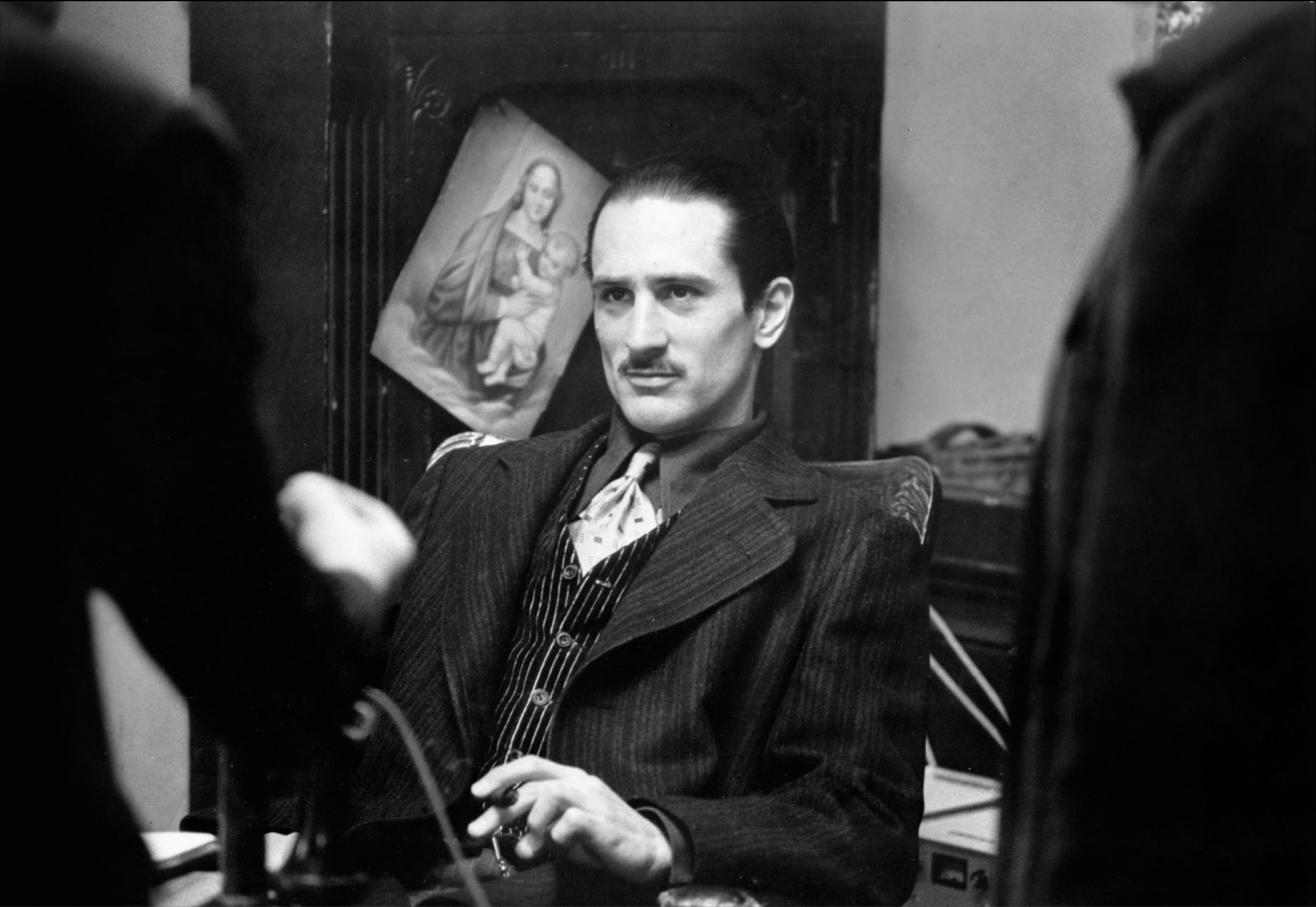
The Godfather Part II, 1974

American historian ​Stephen Kotkin​ once said in an interview that winning in a war of attrition happens in two ways: breaking the enemy's will to fight or their capacity to fight.

For a country, an example of the first is a change in leadership resulting from a coup, and an example of the second is the destruction of factories producing ammunition.

This idea applies to both companies and individuals. That's why Muhammad Ali would get into the opponent's head before the match even started. And Mike Tyson, during a ​staredown​, could already foresee his victory.

When the stakes are high, even a slight disorientation, confusion, or indecision can lead to a catastrophe. Whether it's trading on the stock market, climbing an eight-thousander, or landing on the moon.

But besides willpower, the ability to fight is equally crucial. Jiu-jitsu coach ​John Danaher​ advises applying relentless pressure on the opponent throughout the match. The ideal is to use gravity, fatiguing the opponent below while catching your breath.

In business, much attention is given to the second aspect: expanding the team, acquiring sophisticated tools, absorbing promising startups, etc. It makes sense - the increase in capability is tangible.

The first aspect is often ignored because it's intangible and complex. CEOs find it easier to convince themselves: "Vision is obvious. Goals are clear to everyone. The team is solid. Top managers are motivated and aligned." Unfortunately, when hit by reality, the company suddenly falls on canvas.

If you're a founder or CEO, here's a hint. The team's readiness to fight heavily depends on your will. And that, in turn, depends on your honest answer to the question: "For what?".

Sincerely yours,

-Alexander


You can help Ukraine defend itself and the World from Russian aggression here.


”Who are you and what do you do?"
As a business therapist, I help tech founders quickly solve dilemmas at the intersection of business and personality, and boost company value as a result.

"I have an important business decision to make. Can you help me?
Reserve a time on my calendar that is convenient for you to meet with me. We'll clarify your request and discuss options for how you can help.