
Sprouts of Freedom by Alexander Lyadov

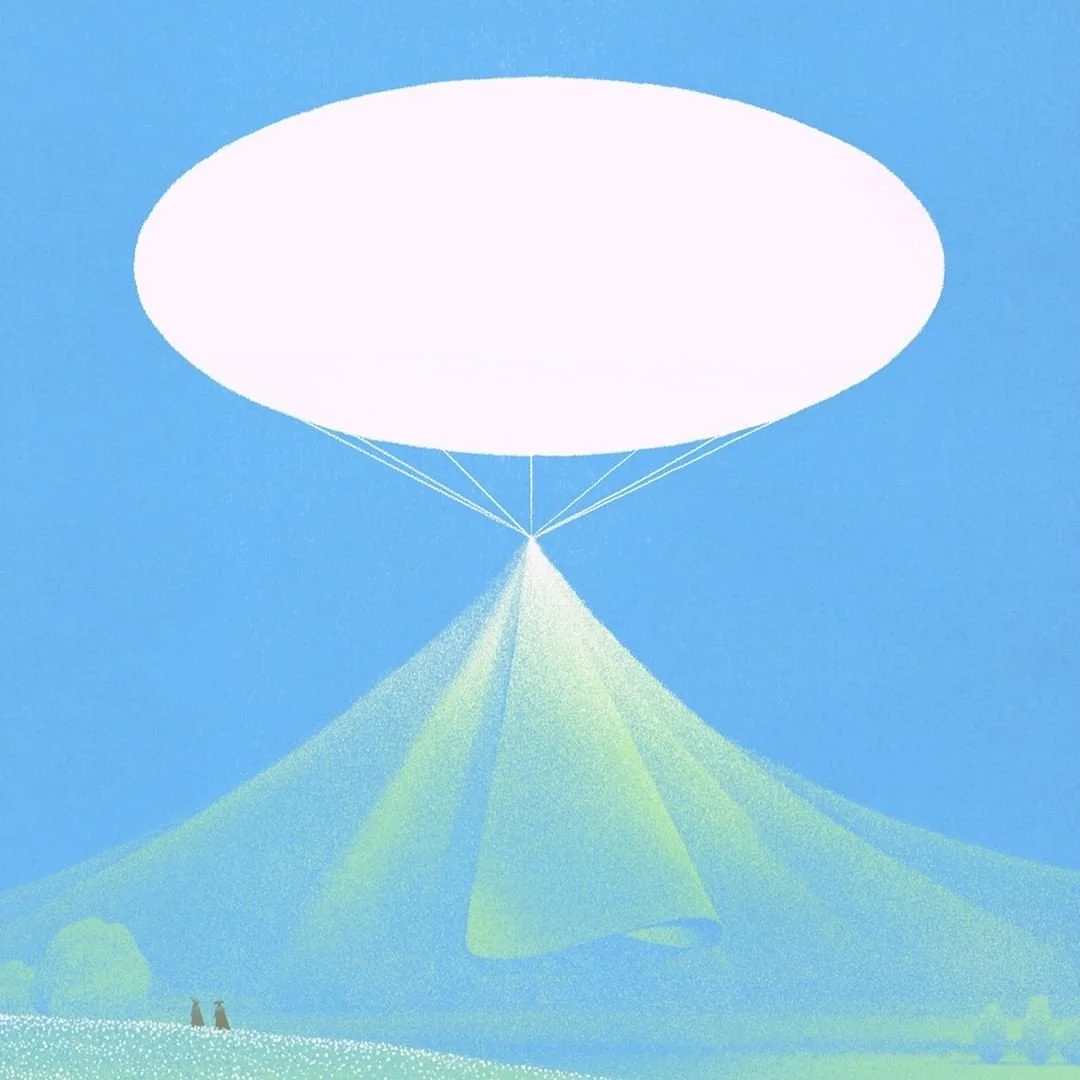
Unknown artist

Sometimes, I look at a sixteen-year-old wrestler and think, "In the next couple of decades, he'll grow in every way. His strength, endurance, and skills will improve every day."

I can't say the same about the prospects for my own body.

Then I remember my life from age 16 to 36 and chuckle: "Man, I was so naive back then! I made so many mistakes. I put obstacles in my own path and missed the most obvious things."

Of course, I still regularly fall flat on my face. But now, at least, I either have a hunch that I'm about to do something stupid, or I immediately realize my screw-up.

Now I live more in reality, whereas before I lived in a dream.

Dreams can be intense, fascinating, and realistic. But they lack a sense of agency—the ability to make conscious and free choices, to act independently, or at least to understand when that's not the case.

Freedom is tightly intertwined with meaning, but personal, not someone else's. Finding it requires an enormous effort. Yet losing it is so easy, with deceivers circling around us with their false ideas.

The power of a seducer lies in the immaturity of the victim. So, to be fooled less often by others, we must start lying less to ourselves. When sweet illusions melt away, what's left is solid ground, even if it's dirty.

I cherish the inner seeds of freedom, truth, and meaning. They are still fragile and barely noticeable. And they might never grow into a mighty oak forest. But compared to these, my youth, strength, power, success, or wealth are such nonsense!

Sincerely yours,

-Alexander


About me:
As a business therapist, I help tech founders quickly solve dilemmas at the intersection of business and personality, and boost company value as a result.

How can I help you?
If you've long been trying to understand what is limiting you and/or your business and how to finally give important changes a push, then The Catalyst Session is designed specifically for you. Book it here.


Mind Garden by Alexander Lyadov

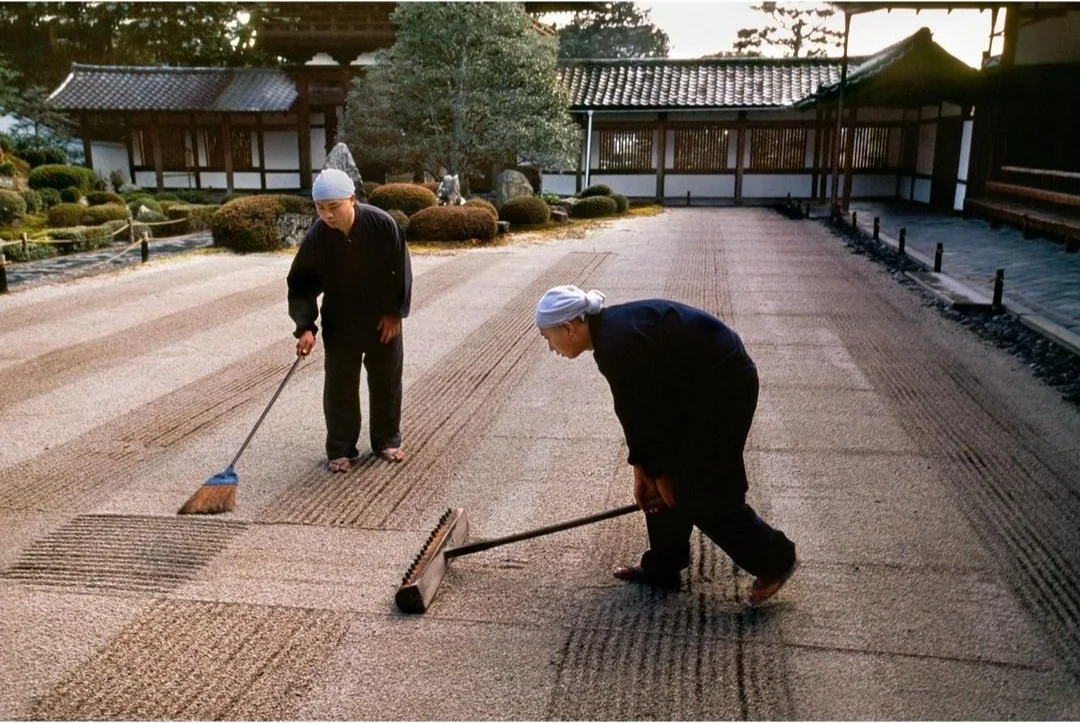
Steve McCurry, Zen garden at Tofukuji Monastery, Kyoto, Japan, 2004

What's in your head—an impenetrable forest or a cozy garden?

You can let everything run its course—listen to anyone, read anything, and let parasitic ideas take over.

In the end, the pushy guests will drive out the host. Like a prince in exile, you'll wander the outskirts of your own kingdom.

The secret is that the forces of Chaos don't care about you. It's nothing personal; they just take over what you let them.

Moreover, this wild power can help you, heal you, and please your eye. But only if you stop seeing Chaos as pure evil and yourself as a helpless victim.

You must establish your symbolic order in your mind. In Jacques Lacan's words, you need to impose the realm of culture onto the realm of nature. A system of laws and rules structures the mess: "This is bad, and this is good."

It's clear that you can't swing from one extreme (anarchy) to another (despotism). There's no prosperity at the extremes, only survival.

The ideal is a Japanese garden, where nature nourishes culture, and order reveals the beneficial side of chaos.

Sincerely yours,

-Alexander


About me:
As a business therapist, I help tech founders quickly solve dilemmas at the intersection of business and personality, and boost company value as a result.

How can I help you?
If you've long been trying to understand what is limiting you and/or your business and how to finally give important changes a push, then The Catalyst Session is designed specifically for you. Book it here.


Battle for Civility by Alexander Lyadov

In relationships with people, zero-sum games are dangerous. That's when one person's gain means another's loss.

I remember, at the beginning of the war, I had to spend the night at the central train station in Kyiv. Everyone tried to avoid sleeping on the cold, hard floor. Everyone tried to avoid sleeping on the cold, hard floor. When the couches were occupied, conflicts over tables began.

Limited resources bring out the worst in people.

What will you do? It's better not to tempt yourself.

Knowing this, it makes sense to avoid antagonistic games as much as possible.But what if fate throws you into one?

There are a few options:

1. You can observe what's happening as a social experiment. Your understanding of people and yourself will deepen significantly.

2. It's better to expand the boundaries of the zero-sum game. Humor helps. About 30 years ago, we got stuck on a cable car in Crimea. It was hot, crowded, children were crying, and, of course, there were quarrels. Someone got yelled at, and his friend whined, "It's his birthday today!" Everyone burst out laughing and then suddenly started singing in chorus: "Happy Birthday to you." Peace immediately prevailed.

3. Or you can take a philosophical approach, thinking that there is a time for fight and aggression, and a time for acceptance and love. Gregory David Roberts described this well in his novel "Shantaram":

"But as soon as the train departs and fighting for seats is no longer a necessity, the passengers become friendly and courteous.

A man opposite me shifted his feet, accidentally brushing his foot against mine. It was a gentle touch, barely noticeable, but the man immediately reached out to touch my knee and then his own chest with the fingertips of his right hand, in the Indian gesture of apology for an unintended offence. In the carriage and the corridor beyond, the other passengers were similarly respectful, sharing, and solicitous with one another.

At first, on that first journey out of the city into India, I found such sudden politeness infuriating after the violent scramble to board the train. It seemed hypocritical for them to show such deferential concern over a nudge with a foot when, minutes before, they'd all but pushed one another out of the windows.

Now, long years and many journeys after that first ride on a crowded rural train, I know that the scrambled fighting and courteous deference were both expressions of the one philosophy: the doctrine of necessity. The amount of force and violence necessary to board the train, for example, was no less and no more than the amount of politeness and consideration necessary to ensure that the cramped journey was as pleasant as possible afterwards. What is necessary! That was the unspoken but implied and unavoidable question everywhere in India.

When I understood that, a great many of the characteristically perplexing aspects of public life became comprehensible: from the acceptance of sprawling slums by city authorities, to the freedom that cows had to roam at random in the midst of traffic; from the toleration of beggars on the streets, to the concatenate complexity of the bureaucracies; and from the gorgeous, unashamed escapism of Bollywood movies, to the accommodation of hundreds of thousands of refugees from Tibet, Iran, Afghanistan, Africa, and Bangladesh, in a country that was already too crowded with sorrows and needs of its own. The real hypocrisy, I came to realise, was in the eyes and minds and criticisms of those who came from lands of plenty, where none had to fight for a seat on a train."

Sincerely yours,

-Alexander


About me:
As a business therapist, I help tech founders quickly solve dilemmas at the intersection of business and personality, and boost company value as a result.

How can I help you?
If you've long been trying to understand what is limiting you and/or your business and how to finally give important changes a push, then The Catalyst Session is designed specifically for you. Book it here.

Natural Authority by Alexander Lyadov

Broken grappler ears signal: “Don’t mess with me!”

In the concrete jungle, a predator prefers an easier prey. Getting twisted into a pretzel or slammed into the pavement is an unnecessary risk.

Aesthetically and functionally, this is obviously sad. After an injury, training is hard, sleeping is painful, and you need to drain blood. Plus, hearing gets worse and forget about using AirPods.

These “califlowers” are so effective for boosting authority that some guys resort to deception. They break their own ears by instruction or pay a “specialist” to do it. The left ear supposedly costs more because another driver sees it through the window.

Here are a few lessons to take away:

1. People desperately want to find a hack in life. The temptation is irresistible when one procedure gives the same effect as years of training. So, verify everything: LinkedIn, reviews, credentials, etc.

2. Among animals and people, intraspecies conflicts rarely end in death. Most are resolved preventively: “This one’s not worth the trouble.” Damaging ears is foolish, but broad shoulders, a confident walk, and a keen eye will save you from many troubles.

3. In society, finding the truth is complex, read: expensive. So, people rely on hints, symbols, and cues. Ideally, valuable signals for you and others will emerge naturally. Your reputation, wisdom, and strength are just derivatives of your being.

Sincerely yours,

-Alexander


About me:
As a business therapist, I help tech founders quickly solve dilemmas at the intersection of business and personality, and boost company value as a result.

How can I help you?
If you've long been trying to understand what is limiting you and/or your business and how to finally give important changes a push, then The Catalyst Session is designed specifically for you. Book it here.


Mono no aware by Alexander Lyadov

Mono-no-aware (Japanese 物の哀れ, “the bittersweet beauty of things”) is an aesthetic principle characteristic of Japanese culture since the Heian period. It can be translated as a life-affirming, bright, tender, yet sad and melancholic contemplation of the world and everything in it. It means being simultaneously saddened and appreciative due to the impermanence of the world and the connection between life and death. Realizing the fleeting nature of all things deepens the understanding of their beauty and evokes a gentle sadness at their passing [​1​].

The combination of sadness and gratitude is quite strange. It sounds like a paradox, unlike most words we use. This means the Japanese managed to describe the pulse of life as it is.

Twenty years ago, I wandered through Barcelona and, on a whim, opened an unusual door. It was a theater hall converted into a restaurant. It was empty and dark. A black-and-white film was playing on the screen. Acid Jazz played. I climbed to the balcony and sat at a table with a white tablecloth.

Out of nowhere, a waiter appeared and took my order as if I had reserved all 300 seats. The food and wine were exquisite. I wondered to myself, “What is happening to me? This is surreal!”

Loneliness, melody, images, a mystical space. It felt like I had stepped through a portal into a parallel world. I felt both gratitude for the beauty and generosity of the world and an inexplicable sadness that I couldn't hold on to this moment and that it, too, would pass.

Now, this almost psychedelic experience feels like a dream. But I learned one lesson—treasures are all around us. Everyday life cleverly hides them. But the seeker will surely be rewarded.

Sincerely yours,

-Alexander


About me:
As a business therapist, I help tech founders quickly solve dilemmas at the intersection of business and personality, and boost company value as a result.

How can I help you?
If you've long been trying to understand what is limiting you and/or your business and how to finally give important changes a push, then The Catalyst Session is designed specifically for you. Book it here.


Buddhist Algorithm by Alexander Lyadov

Buddhism is the universal solution to business problems.

Don't believe it? Here's a simplified algorithm:

  1. Everything is duḥkha, i.e. frustration, anxiety, dissatisfaction.

  2. The cause is tṛ́ṣṇā, i.e. attachment, passionate desire, craving.

  3. There is a way out—nirvāṇa, i.e. liberation from worry.

  4. One needs to understand and accept anitya and anātman, which means the impermanence of all phenomena in the world and the non-permanence of the self.

Requests for help don't come out of nowhere. Either the business is in danger, or it isn't growing well enough.

The root of the problems is almost always clinging to false beliefs. Even if they were once useful, today they hinder the founder’s business like a stick in the wheel.

Intuition tells the founder that a harmonious solution exists somewhere. Moreover, the transformation process will reveal the true potential of both the business and the founder.

To stop clinging to outdated forms, you need to focus on reality as it is—dynamic, changing, decaying, and regenerating before our eyes.

This is possible if you break the vicious belief: "I am X."

Hint: you are not X, Y, or Z. You are the Process.

Sincerely yours,

-Alexander


About me:
As a business therapist, I help tech founders quickly solve dilemmas at the intersection of business and personality, and boost company value as a result.

How can I help you?
If you've long been trying to understand what is limiting you and/or your business and how to finally give important changes a push, then The Catalyst Session is designed specifically for you. Book it here.


Desert's Value by Alexander Lyadov

Sometimes inside myself, I find a static desert with no end in sight.

This is especially inconvenient when I need to create something or get things done.

But in the heat, with no water, nothing new can arise.

Before, I would get annoyed and try to spur myself on. Now, on the contrary, I sit on the dunes and stare into nothingness.

An acquaintance of mine, a city person to the bone, decided to go with a guide to the desert for a few days. There, she suddenly felt that the sands took away all the worries that had plagued her for a long time.

The meaning of the desert is to create emptiness. In fairy tales, this function was performed by dead water. It had to be used first.

In other words, without the dead water, the water of life is useless.

Is music possible without pauses? Inhale without exhale? Light without darkness?

Nothing implies Something. And vice versa. Together, 0 and 1 create the world.

Thus, the “Desert” stop on your route is no accident.

Emptiness has a meaning that you need to uncover, like a gift.

Sincerely yours,

-Alexander


About me:
As a business therapist, I help tech founders quickly solve dilemmas at the intersection of business and personality, and boost company value as a result.

How can I help you?
If you've long been trying to understand what is limiting you and/or your business and how to finally give important changes a push, then The Catalyst Session is designed specifically for you. Book it here.


Invisible Reality by Alexander Lyadov

In the series "Vikings," the shipbuilder Floki explains his gift: "I look into the heart of the wood. In this tree, there are almost two perfect planks. They will curve like a woman's body from hips to shoulders. I will split this tree and take them out."

To an outsider, this sounds like mysticism or madness.

Floki sees what is already there, but cannot be seen.

This is how you recognize a master of his craft:

  • A boxing coach spots a weak but spirited kid.

  • An entrepreneur senses when it’s time to sell the business.

  • A therapist diagnoses a client through one WhatsApp message.

  • A surgeon decides to fight for a patient’s life when everyone else has given up.

They confidently risk their reputations, invest resources, and build the future on a foundation that seems nonexistent.

Most people believe that only what can be scratched with a fingernail or measured with a ruler is real. Their worldview doesn't allow for the emergence of new phenomena.

That's why reality constantly catches people off guard. Nothing was there, and suddenly, bam, a catastrophe—firing, betrayal, divorce, crisis, and so on.

The world around us is like a billion road signs. Their value lies not in the design, the quality of the metal, or the brightness of the paint, but in the message: "Slow down, there's a dangerous turn ahead."

One of the hardest transformations in business and life is to stop focusing on the finger pointing at the moon.

Sincerely yours,

-Alexander


About me:
As a business therapist, I help tech founders quickly solve dilemmas at the intersection of business and personality, and boost company value as a result.

How can I help you?
If you've long been trying to understand what is limiting you and/or your business and how to finally give important changes a push, then The Catalyst Session is designed specifically for you. Book it here.


Stop Exhausting Yourself by Alexander Lyadov

No one can exhaust a man like he can exhaust himself.

External forces may tire or shift to someone else.

But the force within won't stop until it crushes him.

What does this usually look like?

  • Chasing adventures that snowball in risk.

  • Feeling emptiness and meaninglessness amid successful deals.

  • Being obsessed with working non-stop despite a collapsing body.

  • Sacrificing oneself for anyone, anywhere.

  • Staying stuck for years when opportunities are all around.

  • Constant anxiety and frequent checking for disasters.

  • Forming partnerships that end in egal battles and disputes.

  • Starting great projects that never get done due to lack of time.

It's hard not to admire the power that stubbornly achieves its goal.

The problem is obvious. It's the point where the force is applied.

Imagine an Arabian horse trampling its rider in rage or dragging him through thorny bushes. The animal is innocent. The rider must decide if he's a victim or the master.

Moreover, they are not separate. The rider is the horse. Essentially, a Centaur.

Yet the rider believes, "A hostile force is trying to kill me." Denying this force within, he finds its manifestations in the outside world. Defeating such an enemy is like beating a shadow.

Sadly, nothing will help until the pointless struggle bores him.

The good news is this power is available immediately when:

  1. He turns his gaze inward.

  2. He gratefully accepts his unique "design."

  3. He learns to redirect his power towards a worthy goal.

Sincerely yours,

-Alexander


About me:
As a business therapist, I help tech founders quickly solve dilemmas at the intersection of business and personality, and boost company value as a result.

How can I help you?
If you've long been trying to understand what is limiting you and/or your business and how to finally give important changes a push, then The Catalyst Session is designed specifically for you. Book it here.


Useful Catastrophe by Alexander Lyadov

Has anything in your life ever seemed like a complete waste?

Maybe at first, you thought so.

Years passed. Emotions faded. New perspectives emerged.

One day, it hit you: "Oh, that's why!" Negative experiences changed their sign.

It couldn't have been any other way, considering your naivety and circumstances.

Those experiences changed you forever, even if it took years.

Something inside you cracked and shattered into pieces.

Those were your illusions breaking. But you remained unscathed.

Back then, you wanted to forget it all. Now, every shard is precious to you. Why?

First, each "catastrophe" had its secret meaning.

Second, the path to maturity is only over the broken glass.

Thirdly, you turn out to be stronger than insurmountable odds.

Sincerely yours,

-Alexander


About me:
As a business therapist, I help tech founders quickly solve dilemmas at the intersection of business and personality, and boost company value as a result.

How can I help you?
If you've long been trying to understand what is limiting you and/or your business and how to finally give important changes a push, then The Catalyst Session is designed specifically for you. Book it here.


Rediscover Yourself by Alexander Lyadov

When we were kids, we used boxes and blankets to build forts. We made swords from can lids and sticks. If we had chalk, we played hopscotch. If we had nothing, we guessed shapes in the clouds.

We used whatever we had. Function mattered more than form.

We played from dawn to dusk, forgetting food and rest.

The interesting game was the first priority for us.

Then we were taught that there's an optimal tool for everything.

Interest faded. Efficiency became the main focus.

As a result, creators turned into managers.

Society critically needs both. Creating only makes sense if there are people who can pick it up, scale it, and preserve it.

The problem is that the value of the management is obvious, but the value of creation is not always clear and certainly not ASAP.

So, at all levels, the creator's role is undervalued:

  • The state restricts and persecutes entrepreneurs.

  • Companies reward efficiency, not innovation.

  • People are afraid to start new endeavour or express themselves.

For a full life, we all need to rediscover ourselves.

This isn't about regressing to childhood or buying a canvas and paints.

Make time to find meaning, interest, and joy in the Game.

How much a drop of novelty can change your life will surprise you.

Sincerely yours,

-Alexander


About me:
As a business therapist, I help tech founders quickly solve dilemmas at the intersection of business and personality, and boost company value as a result.

How can I help you?
If you've long been trying to understand what is limiting you and/or your business and how to finally give important changes a push, then The Catalyst Session is designed specifically for you. Book it here.


Who Limits You? by Alexander Lyadov

Some people seem to be under a spell, living as if they're in a dream.

They yearn with all their hearts to lift this curse, but can't. It's holding them back and poisoning every part of their lives.

The irony is that they are both the victim and the evil sorcerer.

For example, they believe their secret is so disgusting, dirty, or terrifying that it can't be shared with anyone. They think the listener will start to despise them, fall apart, or scream, "Help!"

Of course, these are fantasies that have grown out of loneliness.

One day, a breaking point comes. They can't drag on with this zombie existence anymore. They pour their soul out on social media. Or, if they're lucky, to someone who has earned their trust.

What makes this listener different from all the others?

Your "monstrous" secret doesn't scare him (or her). He accepts it gently and calmly, just like he would with your sweetest news. More than that, he shows you a different way to look at it.

The key is, your listener shows indestructibility. You've been searching for this for so long. In this moment, the curse weakens or even fades away.

But why is this person unbreakable where others "melt"?

First, he's heard so many "unbearable" secrets that it's hard to surprise him. Second, he's already done the colossal work of taking inventory of every skeleton in his closet.

Finally, he's learned that life, like electricity, only happens when there's a cathode (-) and an anode (+).

"Without a shadow, there can’t be a substance.," said philosopher Alan Watts.

Sincerely yours,

-Alexander


About me:
As a business therapist, I help tech founders quickly solve dilemmas at the intersection of business and personality, and boost company value as a result.

How can I help you?
If you've long been trying to understand what is limiting you and/or your business and how to finally give important changes a push, then The Catalyst Session is designed specifically for you. Book it here.


Nonsense Wisdom by Alexander Lyadov

Imagine you're meeting someone for coffee. She (or he) looks neat, behaves politely, and says all the right things. But after the meeting, you feel uneasy: "Something's off with her."

You might have similar feelings about your health, business, market, or society. Something has changed, but it's unclear what.

Your first reaction might be to dismiss it: "Nonsense, just my imagination!" Don't do that, or you'll throw away gold with the mud.

Everything tangible, understandable, and familiar was once implicit. Moreover, true life always remains that way.

We build our world from discarded snake skins, empty shells, and fallen leaves. Functionally, words, concepts, and traditions are useful bricks. But what they point to has already slipped away.

What we usually call life is like a museum, with photos, fossils, and models behind glass. Every exhibit is neatly labeled. The guard shouts: "Do not touch!"

Sometimes, a messenger of novelty knocks on this kingdom of predictability. We mutter: "Strange..." and feel a mix of emotions — confusion, irritation, excitement, curiosity, anxiety, or fear.

This is how reality reminds us of itself. The best thing to do is pay close attention to the "nonsense."

In the end, there are three possible outcomes:

  1. Your anxiety will fade with a sober assessment of the consequences.

  2. The approaching tsunami won't have a chance to meet you.

  3. You'll learn to skillfully ride the giant wave.

Sincerely yours,

-Alexander


About me:
As a business therapist, I help tech founders quickly solve dilemmas at the intersection of business and personality, and boost company value as a result.

How can I help you?
If you've long been trying to understand what is limiting you and/or your business and how to finally give important changes a push, then The Catalyst Session is designed specifically for you. Book it here.


Reality of Dreams by Alexander Lyadov

Every night, we go to sleep. This experience repeats so often that it's become routine. Yet, we don't know where we spend those 6-8 hours.

"Where? In bed!" the materialist would say. If asked about dreams, he'd scoff, "Trash, gibberish, nonsense." He can't explain this strange experience. A third of his life seemingly wasted.

My view on dreams changed after ​my ayahuasca ceremonies​. On a physical level, not just mentally, I understood: "There is another reality." It was magnificent and terrifying. I can't deny or forget it.

Despite the fantastical form, what I experienced there had deep meaning. It was personally addressed to me. As a result, I changed significantly. This process has continued for seven years now.

Dreams are like a light version of a psychedelic experience. Unpredictable plots, bizarre characters, sincere emotions. Dreams give insights if we want and know how to take them.

I treasure a few dreams. They shook me to my core. In Christianity, there's a concept of grace—a gift purely from God's mercy, which one doesn't earn.

It's ironic that I find treasures not in thick books or wise people's advice, but in ordinary dreams available to everyone each night.

Everything we need, we already have.

Sincerely yours,

-Alexander


About me:
As a business therapist, I help tech founders quickly solve dilemmas at the intersection of business and personality, and boost company value as a result.

How can I help you?
If you've long been trying to understand what is limiting you and/or your business and how to finally give important changes a push, then The Catalyst Session is designed specifically for you. Book it here.


Partnership Priority by Alexander Lyadov

If you're a lone wolf, you might not need to state your goals out loud.

Your inner compass will tell you if a sacrifice is worth it.

But it's different if you're in a partnership, whether in business or sports.

Your joint project is priority number one. You're ready to go the extra mile for its success. Otherwise, why start it at all?

However, if the project's goals aren't clearly communicated or have been forgotten, it's easy to mix up good and bad.

For instance, friendly people focus on their relationship with their partner. To preserve it, they sacrifice themselves. This leads to growing resentment and passive aggression.

What happened? The main point was forgotten: if the business thrives — everyone is happy; if it fails — everyone is doomed.

I advise my founder clients to watch the documentary "​The Last Dance​" about Michael Jordan and his team. It shows that compared to winning the championship, everything else is secondary.

So, it's worth stating the "obvious" things regularly:

  1. What is our desired future?

  2. What are the objective indicators of success?

  3. What price are we willing to pay for it?

Sincerely yours,

-Alexander


About me:
As a business therapist, I help tech founders quickly solve dilemmas at the intersection of business and personality, and boost company value as a result.

How can I help you?
If you've long been trying to understand what is limiting you and/or your business and how to finally give important changes a push, then The Catalyst Session is designed specifically for you. Book it here.


Where is What You Don't Have? by Alexander Lyadov

All we need is already within our reach.

Someone might argue that this is unthinkable and even offensive.

They might say their business or project needs more:

  • time,

  • capital,

  • staff,

  • technology,

  • equipment,

  • opportunities, or something else.

Like in fairy tales, everyone believes the "water of life" is far away, not on their land, but on someone else's.

The problem is, 99 times out of 100, this isn't true.

Intellectual laziness keeps us from seeing the waste of what we already have:

  • Time is stolen by projects we shouldn't have taken on,

  • Opportunities come and go without anyone in the office noticing,

  • Breakthrough ideas aren't proposed because "the boss doesn't care,"

  • Employees lose energy in internal conflicts and arguments,

  • Current technology is used at only 30% capacity,

  • Capital is eaten up by post-payments to clients, and so on.

Those who value little are not worthy to claim anything at all.

This is the Matthew Effect: "...for whoever has will be given more, and they will have an abundance. Whoever does not have, even what they have will be taken from them."

The good news is, your competitors are also desperately searching for treasures in the wrong places. This means you can create a competitive advantage out of nothing.

Start looking within your business, not outside of it.

You just need to adjust your mind to notice function, not form.

Your current resources are more than enough for stable growth.

Sincerely yours,

-Alexander


About me:
As a business therapist, I help tech founders quickly solve dilemmas at the intersection of business and personality, and boost company value as a result.

How can I help you?
If you've long been trying to understand what is limiting you and/or your business and how to finally give important changes a push, then The Catalyst Session is designed specifically for you. Book it here.


Fragility's Gift by Alexander Lyadov

In theory, a company's problems may come from outside.

But in my decades of business, I have never seen that.

Say a disaster hits the world or a specific market. Everyone gets shaken. But one business folds, another drifts, while a third reinvents itself.

Why does chaos crush some but give others superpowers?

Imagine a forest where a bear grows old or a deer breaks a leg. Does it matter if they're taken down by a competitor for food, a drought, or a virus?

The real danger isn’t chaos but the fragility of the "system".

Why does a company become fragile? There are plenty of reasons:

  • A mismatch between responsibility and authority.

  • Conflict between the founder and investors.

  • Punishing initiative and a lack of new ideas.

  • Loss of control and unchecked behavior.

  • Replacing common sense with ideology.

  • Eating away at reserves.

  • Complacent leadership.

  • Lack of vision, and so on.

An external shock doesn’t create problems but highlights existing ones. Blaming chaos means clinging to infantilism.

You have a choice: curse the external factor or be thankful.

Gratitude is the door to maturity from the cage of infantilism.

Moreover, with this attitude, you don’t need to wait for a disaster.

It's better to deal with Chaos's ambassador.

Such a company constantly asks where it is vulnerable.

What seeks to break the system ends up making it healthier.

A paradox.

Sincerely yours,

-Alexander


About me:
As a business therapist, I help tech founders quickly solve dilemmas at the intersection of business and personality, and boost company value as a result.

How can I help you?
If you've long been trying to understand what is limiting you and/or your business and how to finally give important changes a push, then The Catalyst Session is designed specifically for you. Book it here.


Unhooking Desire by Alexander Lyadov

In negotiations, the winner is the one who wants the outcome the least.

How can that be? Isn’t everyone trying their hardest to get what they want?

No. That’s a popular, but not the best, way to make deals.

Fierce head-butting wears both sides out. If you do this often, there's a risk a third party—a competitor—will win.

The ideal negotiation ends effortlessly, almost by itself. But how?

You must eliminate the possibility of being tempted or scared.

Desire is the only thing that hooks you, my therapist explained.

Here’s the dilemma: you need desire to enter negotiations. But you must let go of that desire to win them.

Find one or two alternatives to get what you want either way.

Instead of negotiating, you simply present the reality to your counterpart: "This is how it will be..."

Sincerely yours,

-Alexander


About me:
As a business therapist, I help tech founders quickly solve dilemmas at the intersection of business and personality, and boost company value as a result.

How can I help you?
If you've long been trying to understand what is limiting you and/or your business and how to finally give important changes a push, then The Catalyst Session is designed specifically for you. Book it here.


Encounter with an Anomaly by Alexander Lyadov

Recently, I ​wrote​ that Life never lets us get bored. A vivid example is today's ​news about the attempt​ on Donald Trump's life. People dropped everything to glue themselves to their screens.

The nature of an anomaly is such that it can't be ignored. "What was that?" the brain torments itself. Was it just a lone shooter or a multi-layered conspiracy? Local or international?

An epidemic outbreak in Asia, an investor's prolonged silence, a strange pain in the side—is it nothing or something that will change our fate?

The more surprising the news, the more it shatters our basic understanding of reality. We've overlooked some part of reality. What is it? It's unclear. That's what's unsettling.

Fortunately, over millions of years, Life has knocked humans down so often that we've learned to dodge and regroup. When faced with an anomaly, we're saved by heightened attention and curiosity.

We sniff, touch, and study a new phenomenon from all sides. The goal is either to exhale, "False alarm. Nothing's wrong," or to seriously worry, "Houston, we have a problem."

If our response to an anomaly is measured and inventive, we end up stronger and our understanding of the world more robust.

Sincerely yours,

-Alexander


About me:
As a business therapist, I help tech founders quickly solve dilemmas at the intersection of business and personality, and boost company value as a result.

How can I help you?
If you've long been trying to understand what is limiting you and/or your business and how to finally give important changes a push, then The Catalyst Session is designed specifically for you. Book it here.


Be Generous In Negotiations by Alexander Lyadov

Want to know a negotiation strategy that's reliable now and always?

Give a lot to the other side, and ask little for yourself.

"Wait! That's unfair! Why such an imbalance?" you may cry.

Calm down. I haven’t yet told you how much it will cost you.

The point is, negotiations rarely resemble a tug-of-war.

Yes, participants pull hard, but... each has their own "rope". Sometimes one pulls a reinforced cable, while the other pulls a silk Hermes scarf.

In a deal, there's always an X that’s most valuable to the other side. And you have plenty of that X. The ideal situation is when X costs you nothing. Like oxygen to a plant or pollen to a bee.

So you’re generous: "I’ll give you a lot of X in exchange for a little Y." Your partner immediately agrees, thinking, "What luck!"

The art of negotiation isn’t about manipulation; it’s about understanding all interests: "I value Y. He values X."

Sincerely yours,

-Alexander


About me:
As a business therapist, I help tech founders quickly solve dilemmas at the intersection of business and personality, and boost company value as a result.

How can I help you?
If you've long been trying to understand what is limiting you and/or your business and how to finally give important changes a push, then The Catalyst Session is designed specifically for you. Book it here.