The plasticity of speed by Alexander Lyadov

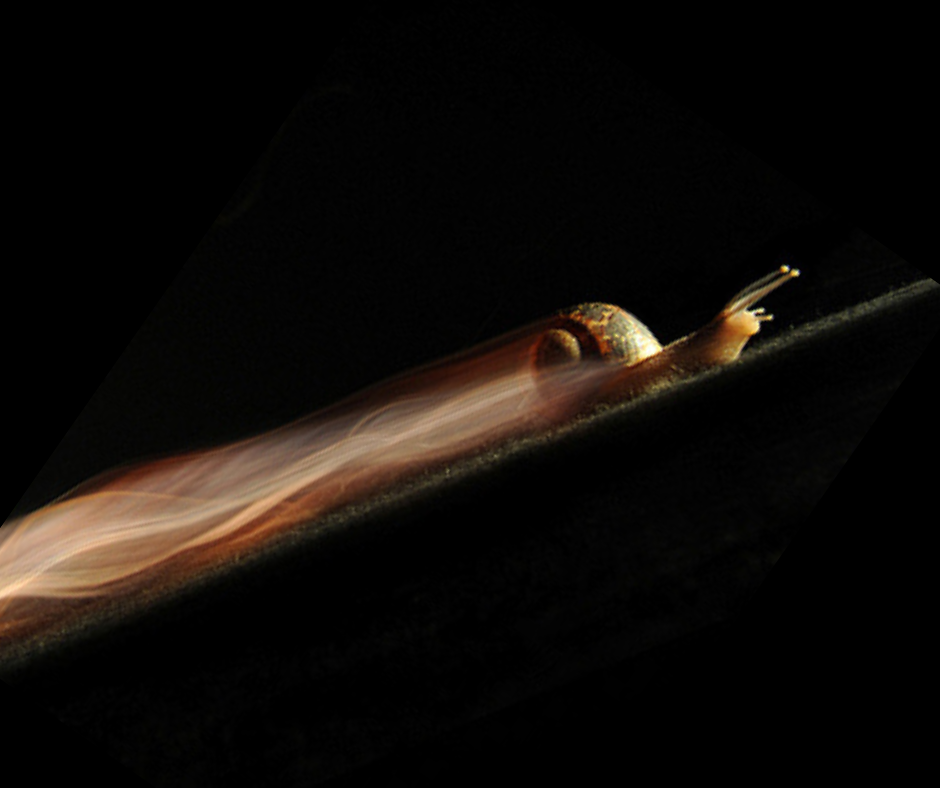
Speed is an amazing thing. You can tell how fast you are, for example, by looking at the dashboard or beating someone at a traffic light. However, outside of such laboratory conditions, speed behaves like a heated caramel, which is shaped into a candy by the hands of a master. It is known that in seconds of extreme situation or hours of psychedelic ceremony a person manages to live a whole life. And when there is a working alliance with the client, the 12-hour session flies by in the same breath: “That’s it? Wow! Thought it was still morning.”

The plasticity of speed is useful to remember when it comes to the transformation of an individual, an organization, or a society. Its numerator and denominator live mysterious lives, either shrinking into a point or stretching into infinity. From the outside, it may seem to the observer that nothing is happening. But in reality there is an intense process of cell division going on under the static shell. The quantity is preparing to change into a new quality. It takes both the mother’s patience to radiate heat and the father’s push for autonomous life. And if in the animal world the timing of the transformation is regulated by an algorithm of instinct, for an individual, a group or a nation, there seems to be no simple instruction. It is not the template and prêt-à-porter that is more appropriate, but the bespoke and haute couture.

However, if this complexity of transformation does not frighten you, you will be rewarded with both the process and the result. When you know that each stage is meaningful, patience and determination emerge on their own. Most importantly, trust in the wisdom of the Process grows, that everything happens just as it should. Then gratitude for what you have naturally arises. This, in turn, helps to put together all the “useless” elements, previously scattered and trampled in the dirt. When literally everything turns out to be the building material, the construction of a skyscraper, observatory or temple takes place at the third cosmic speed.

Sincerely yours,

-Alexander


You can help Ukraine defend itself and the World from Russian aggression here.


”Who are you and what do you do?"
As a business therapist, I help tech founders quickly solve dilemmas at the intersection of business and personality, and boost company value as a result.

"I have an extremely important business decision to make. Can you help me?
Reserve a time on my calendar that is convenient for you to meet with me. We'll clarify your request and discuss options for how you can help.


Entrepreneur vs top manager by Alexander Lyadov

medieval merchants

Unknown author


What is the fundamental difference between the work of a hired manager in a corporation and the work of a self-employed entrepreneur? Here and there one can earn commensurate remuneration, manage similar assets, and have the same power. Whatever parameter you take for a top manager, there is an equivalent for a founder. And yet there is a difference, and it is so colossal that it is even embarrassing to put these two activities side by side.

To use the legendary investor Benjamin Graham’s metaphor, they both make deals with Mr. Market, taking risk and creating value in the process. But while the entrepreneur receives an objective reward directly from Mr. Market, the top manager never does. The latter has a layer between him and Mr. Market in the form of a CEO, board and/or shareholders who subjectively decide whether the top manager deserves the reward or not. Even if he has tamed the Cretan bull and cleaned out the Augean stables, not the gods, but the people will give the verdict: “He’s a hero” or “Lucky. Anyone could have done it.” Thus, in addition to pure market risk, the hired manager has the additional risk of human bliss. Such uncertainty changes everything.

It is enough for a manager to get burned a couple of times without getting what he thinks is a well-deserved bonus from the owners, and he will no longer want to look for the crane in the sky in this company. The best managers will go to a competitor or set up their own business. Many of them will stay, but will try to get a bigger bird in the hand. Some managers will start to cynically fight for power, to become the de facto beneficiary of the business, but to leave the risks to shareholders.

The conclusion? If you are a top manager, work for those shareholders whose main goal is to grow the market capitalization of the company, not to have fun in the spirit of Game of Thrones. If you’re a founder, create the most transparent connection possible for your managers between their efforts and the reward for the value they create.

Yours sincerely,

-Alexander


You can help Ukraine defend itself and the World from Russian aggression here.


”Who are you and what do you do?"
As a business therapist, I help tech founders quickly solve dilemmas at the intersection of business and personality, and boost company value as a result.

"I have an extremely important business decision to make. Can you help me?
Reserve a time on my calendar that is convenient for you to meet with me. We'll clarify your request and discuss options for how you can help.


Strength without injury by Alexander Lyadov

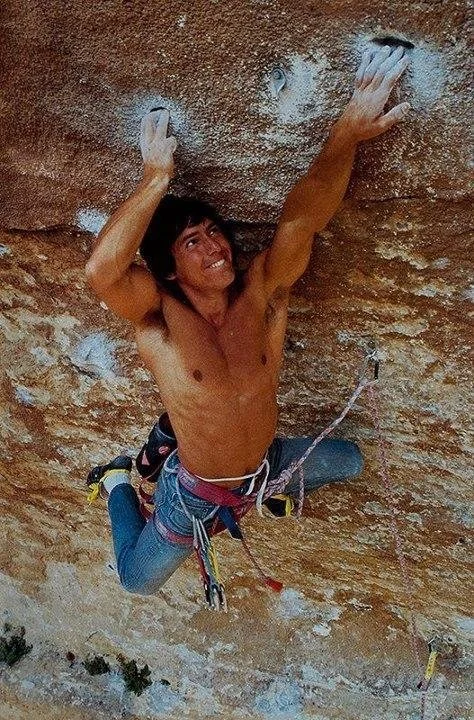
One of the strongest climbers in history, Wolfgang Gullich, said: “Getting strong is easy, getting strong without getting injured is hard.” Intense development occurs at the edge of the zone of competence, when one undertakes ambitious experiments. But it is enough to lose focus or be careless for a moment, and a sprain, tear, or fracture occurs. The recovery period inevitably sets the athlete back, atrophying not only muscles and ligaments. Much worse, the previously knurled neural pathways become overgrown with weeds. Then you have to speed up your way to the master from a beginner again. This is how time is lost. Windows of opportunity are closed forever.

In addition, after serious injuries, functionality is not always fully restored. After all, the scar is different from the smooth and supple skin it was before the cut. Now there is another point of vulnerability on the body, or in the brain. For example, when an athlete subconsciously takes care of a previously dislocated arm and does not risk going for a record. By the way, old age can be considered an excess of the consequences of all kinds of traumas - physical, psychological, mental - which result in such a super-vulnerability that it is simply impossible to live with.

Knowing all this, a seasoned athlete, especially one with a wise coach, arranges the training process so as to have rapid growth, but to make the risk fee feasible. Putting yourself to the point of vomiting at every workout is, of course, epic. But it’s not an option for someone who has an ambitious long-term goal. In fact, true mastery is not only about knowing a particular activity, but above all about the ability to avoid catastrophic injury. It is no coincidence that Warren Buffett reminds us, “Rule No. 1: Never lose money. Rule No. 2: Never forget rule No. 1”. He who has preserved capital (money, health, time) is able to earn income. As opposed to someone who doesn’t value what he has and ends up rightly left with nothing.

Sincerely yours,

-Alexander


You can help Ukraine defend itself and the World from Russian aggression here.


”Who are you and what do you do?"
As a business therapist, I help tech founders quickly solve dilemmas at the intersection of business and personality, and boost company value as a result.

"I have an extremely important business decision to make. Can you help me?
Reserve a time on my calendar that is convenient for you to meet with me. We'll clarify your request and discuss options for how you can help.


The Clue Train by Alexander Lyadov

In 1999 The Cluetrain Manifesto was published, describing the tectonic impact of the Internet on marketing in the future. The title of the manifesto came from a quote from a veteran of a Fortune 500 firm that was in free fall at the time: “The clue train stopped there four times a day for ten years and they never took delivery.” The clue train is a delightful metaphor, isn’t it?

By and large, nothing in life just happens out of the blue. Any fundamental change begins to accumulate critical mass long before the decisive hour. The growth of a new phenomenon, even if quietly, causes a certain tension and discomfort in the environment. Therefore there are always harbingers of revolutionary change, but most people do not notice the clues. Why?

The main reason is pride and fear of the mind. By diligently drawing a map of the world for many years, the mind narcissistically falls in love with its product. So in the end it willingly substitutes a static map for a dynamic reality. Now there is no way to allow even a small crack in the familiar picture of the world. After all, if a tiny corner of the worldview is a lie, chances are that everything else is a mistake, too. It is a disgusting feeling, when the ground falls from under one’s feet, because it is impossible to live in the hell that is unfolding.

Still, the fact that the train with clues regularly comes inspires optimism. So, then the question is only in our skill to catch its specific smell, notice the smoke and hear the noise. It only takes a change of attitude of the mind. Then valuable parcels will reach the addressees, updating our map of the world in time, and, consequently, our life.

Sincerely yours,

-Alexander


You can help Ukraine defend itself and the World from Russian aggression here.


”Who are you and what do you do?"
As a business therapist, I help tech founders quickly solve dilemmas at the intersection of business and personality, and boost company value as a result.

"I have an extremely important business decision to make. Can you help me?
Reserve a time on my calendar that is convenient for you to meet with me. We'll clarify your request and discuss options for how you can help.

Ideal trajectory by Alexander Lyadov

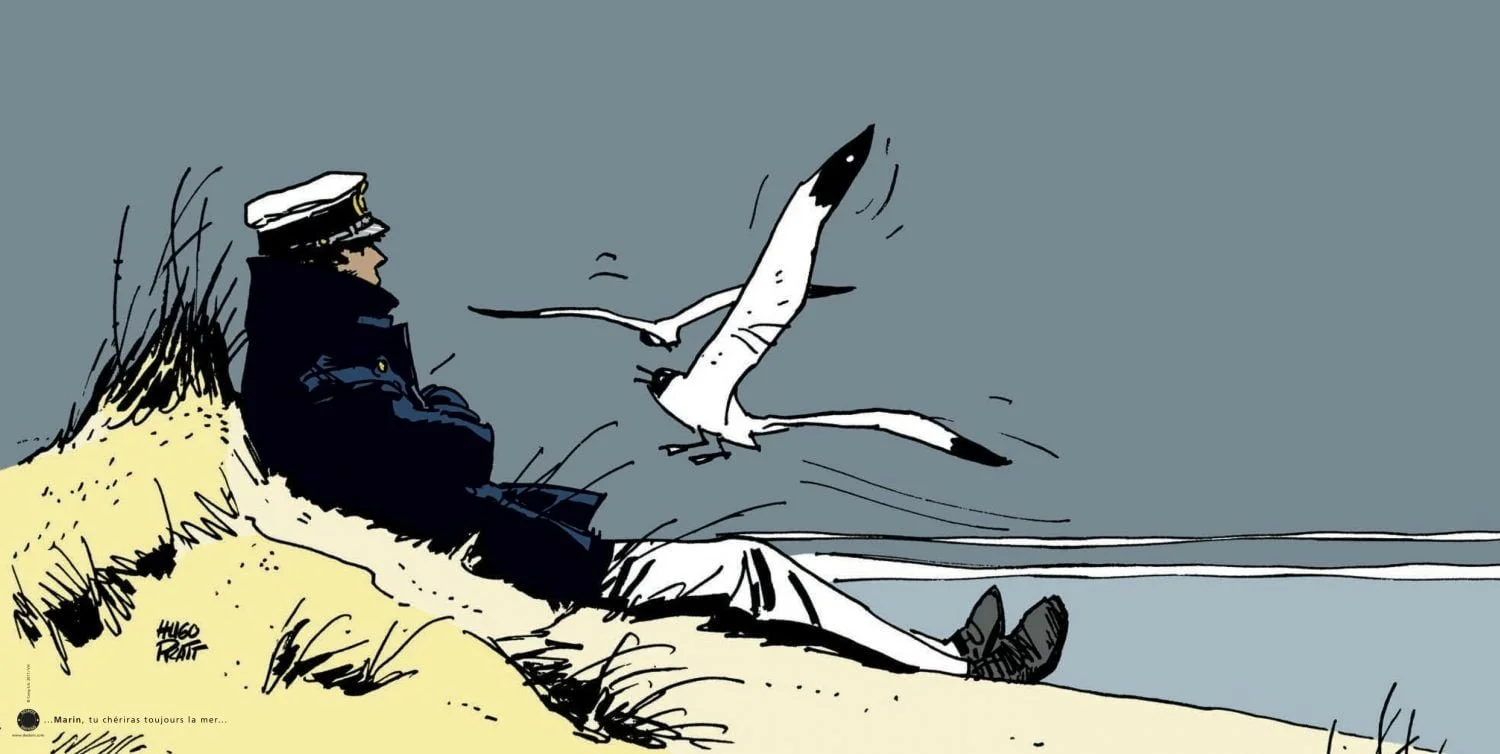
Every action has a perfect trajectory when it is directed toward some goal. The criterion? Achieving the desired result with a resource expenditure tending toward zero. Deviation from the ideal trajectory is a sin because energy is wasted. It is as dangerous as a schooner going out to sea if there is a hole in the bottom.

However, only a professional, who knows by experience what it means to act on the edge when every joule counts, can appreciate such an insight. An uninformed layman is irritated by the “excessive” frugality and discipline of a professional. And a beginner carelessly warms up the atmosphere with his energy, not realizing in which areas it is necessary to push and in which to relax. Moreover, the baggage of past knowledge can be useless. Transferring assets from one area to another is not a quick or obvious process. For example, the endurance of a marathon runner is of little use in wrestling, and the strength of a javelin thrower in butterfly swimming. First we need to understand what is the optimal path, trampled by past generations of professionals.

What is the conclusion? First, in any new activity, immediately look for a medium of expertise to speed up the download. Second, keep the criterion in mind - ideally, energy consumption is close to zero. Third, be sure to be clear, this whole enterprise is for what purpose?

Yours sincerely,

-Alexander


You can help Ukraine defend itself and the World from Russian aggression here.


”Who are you and what do you do?"
As a business therapist, I help tech founders quickly solve dilemmas at the intersection of business and personality, and boost company value as a result.

"I have an extremely important business decision to make. Can you help me?
Reserve a time on my calendar that is convenient for you to meet with me. We'll clarify your request and discuss options for how you can help.


Founder's illusions by Alexander Lyadov

“Of course I know what I want my business to be in a few years.” That’s roughly what the founders’ initial statement sounds like, to summarize a lot of our meetings. Over the course of the conversation, however, it became apparent to both of us that this statement was false. What was internally felt as clarity by the founder suddenly turned out to be vague when trying to express aspects of the vision in numbers and words. To my clarifying questions, I often heard: “Hmm, good question. I have to think about it. I can’t answer right away. I could see that the founder himself was surprised as his confidence turned to confusion.

This insight explains a number of negative symptoms that the company has long suffered from. Co-founder conflicts, suspension of important decisions, squandering of resources, CEO turnover, declining profits and more are happening because all the stakeholders, including the founder himself, are convinced: “Whoever, but he knows exactly where we’re going.” The inevitable contradictions between what was asserted just a month ago and today are interpreted in the spirit of, “I guess I just don’t know something. But, of course, the owner knows best.”

The irony is that the founder’s vision is both present and absent. I realized this phenomenon when I studied the psychotherapeutic technique of “Focusing,” discovered by Professor Eugene Jendlin of the University of Chicago. Although the technique is effective in and of itself, it was important for me to learn its basis, which Eugene called the Philosophy of Implicit. Before something can be expressed in words, images, concepts, structures and other explicit forms, it necessarily exists in the human body in an implicit form. The latter arises as a result of the constant connection of any organism with its environment. Transformation of implicit into explicit does not always happen by itself quickly and easily. In such cases it takes time, a push of fate or someone who knows how to listen in a special way.

Sincerely yours,

-Alexander


You can help Ukraine defend itself and the World from Russian aggression here.


”Who are you and what do you do?"
As a business therapist, I help tech founders quickly solve dilemmas at the intersection of business and personality, and boost company value as a result.

"I have an extremely important business decision to make. Can you help me?
Reserve a time on my calendar that is convenient for you to meet with me. We'll clarify your request and discuss options for how you can help.

Founder's Questions by Alexander Lyadov

If you’re a founder and you’re reading this text, you probably can’t say that the state of your business makes you extremely happy. Some aspect of it is causing you confusion, irritation, or anxiety. Things used to be different, but then something happened and a snowball of problems began to grow that are strikingly resistant to the usual “remedies”.

Although your situation is specific, it probably falls into one of three categories of typical problems. First, it is a lack of resources, from financial capital and talent to your personal time and energy. Second, it is a lack of or missing opportunities to develop your business and you as an individual. Third, it is disorientation, stupor and defocus in you as a leader as well as the rest of the company’s managers.

It looks like the rate of change in the world will increase exponentially every year. Customer needs will change faster. The familiar models and competitive advantages of companies will become obsolete more rapidly, and formerly blue oceans will turn to red ones. The range of competitors’ specialization will expand, and the boundaries between industries will blur. The volume of produced content will increase in an avalanche, worsening the Signal to Noise ratio. At the same time, more opportunities will open up. But they will also close faster.

Every founder will be more and more concerned with the following questions:
1) Where do I find the resources (money, talents, energy, time) to make my business survive and grow ahead of the competition?
2) Which of the opportunities will take my company to the next level?
3) What should be a priority for me and the team today and in the future?

I’m convinced that all the answers are in an unexpected place. More details later.

Yours sincerely,

-Alexander


You can help Ukraine defend itself and the World from Russian aggression here.


”Who are you and what do you do?"
As a business therapist, I help tech founders quickly solve dilemmas at the intersection of business and personality, and boost company value as a result.

"I have an extremely important business decision to make. Can you help me?
Reserve a time on my calendar that is convenient for you to meet with me. We'll clarify your request and discuss options for how you can help.

The secret of solving any problem by Alexander Lyadov

Mundari person with cow by David Dhaen

Mundary people by David Dhaen

In my distant childhood I was struck by a story by V. Bianki about two hunters — a townsman and a forest man. Having killed a bear in the evening, the townsman remembered his friend’s advice that in winter one can have a nice night’s sleep in a bear’s skin. However, disdaining to get dirty with blood, he decided to wrap up warm and soft fur inside. In the morning, the townsman woke up in icy captivity, as during the night the frost had fettered the blood-wet hide outside with “iron hoops”. That would have been the end of him, but a friend found him, rescued him, and instructed him: “The fur should go outside. That way it’s warm on the inside and it doesn’t get cold on the outside.” I remember imagining very vividly how repugnant the choice of the salvation option was and, conversely, how appealing the eventual doom option was.

Perhaps this is the secret to solving any problem. The key to the lock lies literally under one’s feet, but his mind utterly refuses to notice it. Why? The desired function is hidden behind an outward form that disgusts, disdains, hates or fears a person. Each of us has specific topics that we cannot even glance in the direction of, let alone pick up and examine thoroughly from all angles.

If this is true, then no matter how intractable your current problem in business or life may seem, you can be sure that its solution is not outside, but inside you. Then the question is not at all where to go, where to find and how to get VIP access to supposedly Secret Knowledge. The main question is what kind of transformation of yourself is needed to discover behind the unacceptable form exactly what will set you free here and now.

Sincerely yours,

-Alexander


You can help Ukraine defend itself and the World from Russian aggression here.


”Who are you and what do you do?"
As a business therapist, I help tech founders quickly solve dilemmas at the intersection of business and personality, and boost company value as a result.

"I have an extremely important business decision to make. Can you help me?
Reserve a time on my calendar that is convenient for you to meet with me. We'll clarify your request and discuss options for how you can help.

Founder's Dilemmas by Alexander Lyadov

Usually my business therapy begins with a diagnostic session, for which the founder and I set aside one intensive day. After the session, I prepare a detailed analytical report in which, among other things, I describe the founder’s dilemmas that I was able to discover. Some dilemmas are glaringly obvious, while others have to be deduced from the anxieties that deprive the founder of harmony and peace. As a rule, dilemmas count in the dozens. Yes, that’s right — not one or two, but dozens.

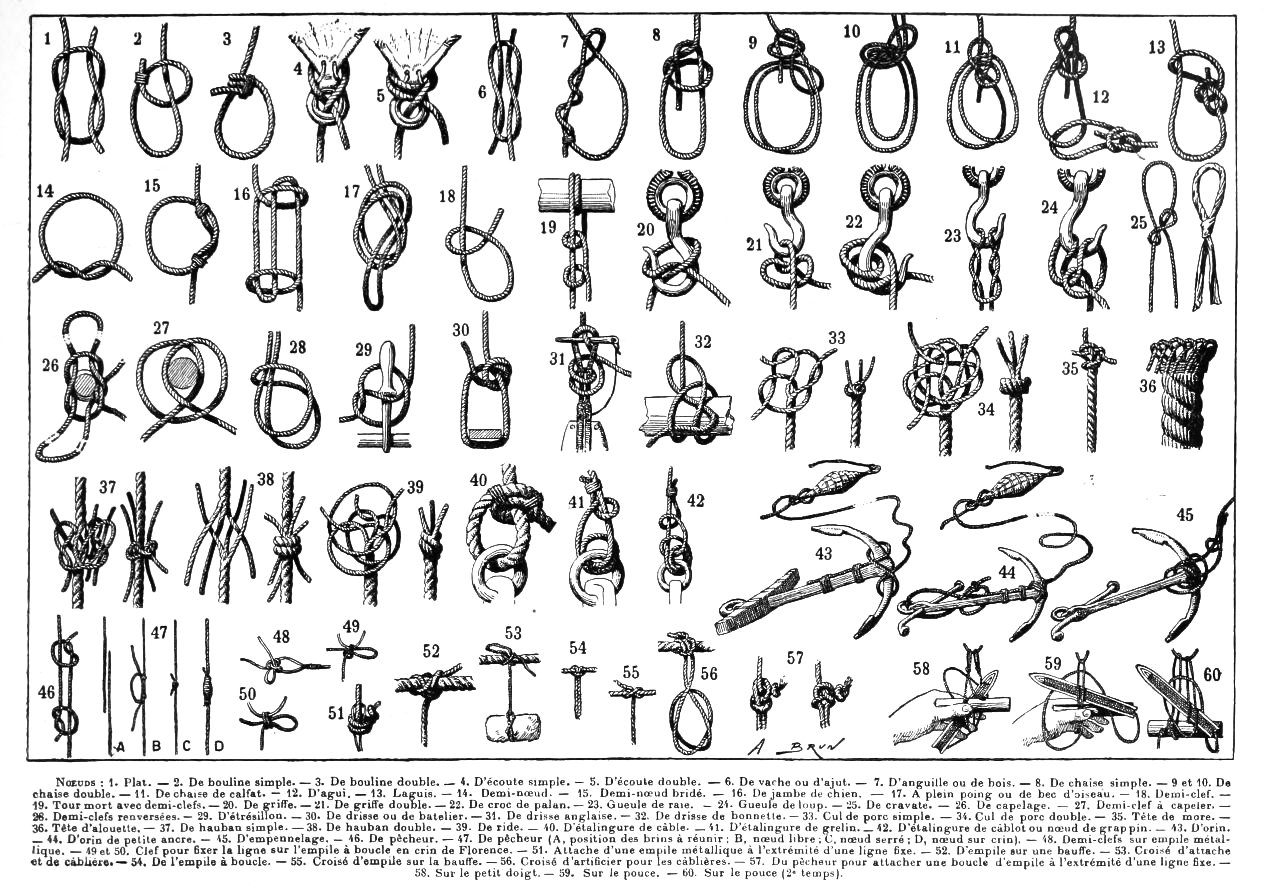
Subsequent analysis reveals the implicit connection between most dilemmas, which allows us to develop a strategy for solving them all. Each dilemma has a “face,” though the word “grimace” is more appropriate. A dilemma resembles a knot-some simpler, like a bow on a sneaker, and some more complex, like a knot of salt and time. Functionally, the knot greatly limits the degrees of freedom of the parts it has tied together. Both parts of the dilemma pull in different directions, but their desperate jerks only tighten the knot further. Alas, there is no forward motion. Efficiency tends to zero. Energy is dissipated into the void.

Every knot restricts the movement and steals the life resource. And if there are thirty or fifty such knots in the mind of the founder? Together they swaddle the person, as in hojojutsu, the Japanese martial art of tying an opponent with a rope. And that would be all right, but a medium-sized private business reflects its owner like a truce mirror. The bottleneck of such a business is not the market, the team, or the competitors, but the founder himself. If the entrepreneur, and consequently his business, lose speed in making and implementing decisions because of a critical mass of knots, the more dynamic and volatile the industry, the more vulnerable the business is. The good news is that untying the knots triggers a reverse process that unleashes a tremendous amount of opportunity and resources.

Sincerely yours,

-Alexander


You can help Ukraine defend itself and the World from Russian aggression here.


”Who are you and what do you do?"
As a business therapist, I help tech founders quickly solve dilemmas at the intersection of business and personality, and boost company value as a result.

"I have an extremely important business decision to make. Can you help me?
Reserve a time on my calendar that is convenient for you to meet with me. We'll clarify your request and discuss options for how you can help.

Entrepreneur Magnet by Alexander Lyadov

The prudent founder seeks to maximize the market value of his company. It does not matter whether he makes this calculation explicitly or simply feels with his backbone that capitalization increases non-stop. The entrepreneur has no illusions that he can get everything for nothing. Reality expects sacrifice from man. Despite the call of hunger, a handful of seeds must be buried in the ground today in order to have a chance of a harvest in the future.

In the first approximation, the more money invested in seed, fertilizer, water and man-hours, the more significant and predictable the result. But only as long as each seed falls into the black earth, not the rocks. Otherwise, it is not scaling and not even an experiment, but squandering resources, that is a crime in terms of business morality. Reality punishes this with a change of ownership or bankruptcy.

Although a sane entrepreneur does not expect to be rewarded for free, this does not mean that he is a fan of the idea: “More investment is the only possible way to increase the company’s capitalization.” To the founder’s intelligence, such an idea is an insult, for it denies him his entrepreneurial essence. “Inventing solutions for absolutely impossible problems” is what reads under the microscope on the DNA of a true entrepreneur’s spiral. But what super-target is worthy of his spear? When the capitalization of a business is skyrocketing with no investment at all.

Yes, in its pure form the ideal is unattainable. But it is not the ideal itself that is valuable, but the pursuit of the ideal. The entrepreneur attracts other people’s capital when it is impossible not to attract it. The founder also invests his own money very reluctantly. Like a compass, his arrow is always parallel to the direction of the Earth’s magnetic field line. That is, his mind is looking for a way, having invested less, to get more. Mathematically, his investment X tends toward zero, while his return Y stretches into infinity.

Yours sincerely,

-Alexander


You can help Ukraine defend itself and the World from Russian aggression here.


”Who are you and what do you do?"
As a business therapist, I help tech founders quickly solve dilemmas at the intersection of business and personality, and boost company value as a result.

"I have an extremely important business decision to make. Can you help me?
Reserve a time on my calendar that is convenient for you to meet with me. We'll clarify your request and discuss options for how you can help.

Common sense in business by Alexander Lyadov

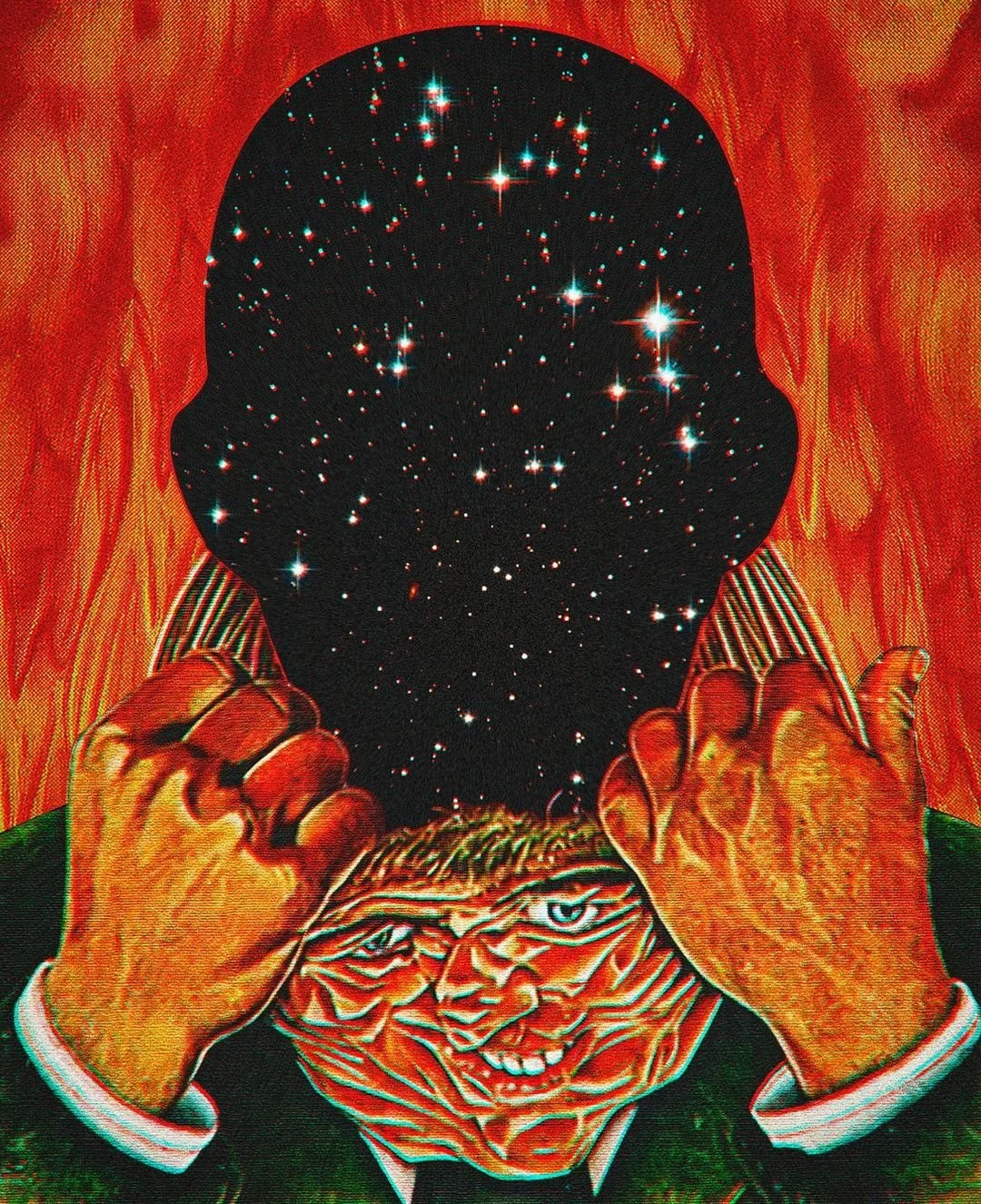
Any slacker can solve a problem with an unlimited budget. Even a fire will go out if you dump a ton of cash on it. Clearly, there are situations where all the money in the world won't save you anymore. For example, the Titanic. But in other cases, indeed, the speed of its solution to a complex problem is proportional to the amount of investment made. So the first impulse of many people is to try to solve the problem with more money when standard ways don't work.

The non-standard nature of the problem means there is a high degree of uncertainty about what it really is. Perhaps by increasing the usual budget by 20%, we will get the desired breakthrough. Or maybe we will pour investments indefinitely, trying to concretize the abyss. In fact, such unfortunate initiatives can regularly be observed when leaders obsessed with "good" intentions waste colossal public resources for the sake of some ideology. In terms of psychology, their pleasure is super-valuable and therefore has no bottom. Like a drug addict, they will not stop until they have zeroed out all their reserves.

Fortunately, business is one of those areas where common sense can be measured. The function of business is to create and multiply value, which is indicated by an increase in market capitalization. This is how the criterion of right and wrong emerges. If a company's value has grown, it is good; if it stagnates or falls, it is bad. You can assess whether a particular initiative effectively corresponds to the main function. It's about ROI, which is the return on investment of funds in project X versus project Y. So the business has a limiter that protects against crazy initiatives. Provided, of course, that the business owners prioritize common sense and not something else. After all, even a strong team of top managers is powerless to prevent the owner from destroying his business.

Yours sincerely,

-Alexander


You can help Ukraine defend itself and the World from Russian aggression here.


”Who are you and what do you do?"
As a business therapist, I help tech founders quickly solve dilemmas at the intersection of business and personality, and boost company value as a result.

"I have an extremely important business decision to make. Can you help me?
Reserve a time on my calendar that is convenient for you to meet with me. We'll clarify your request and discuss options for how you can help.


Flamboyant dreams by Alexander Lyadov

Some people simply ignore their dreams. They don't see any benefit in them. Others, when they wake up, rush through a dream interpreter in an attempt to find the common meaning of the symbols. My relationship to dreams is different from both. I benefit greatly from dreams, but only on the basis of my personal interpretations.

Carl Jung viewed curiosity as a way of communicating in time of self to self, that is, the future Alexander to the Alexander of today. We are often unable to explain why we are suddenly pulled in some direction like a wind sail. Attempts to resist this call end up generating longing, apathy, and hatred for ourselves and people. On the contrary, when we surrender to it, months or years later we are grateful for the priceless gift. Likewise, I perceive dreams as a coded message to me from the future self. Like the prototype, the dream seems to anticipate what is about to materialize in my life.

The only difficulty is that, for mysterious reasons, the "director" likes to give dreams an excessively vivid, flamboyant, and dramatic form. My hypothesis is that otherwise it is impossible to get around the rigid attitudes of the mind, which takes everything too literally. So the future Alexander strains his imagination to the limit in order to break through to me today with the help of strange symbols. An important message turns out to be encrypted. But the key to it cannot be found in popular dreambooks. Each symbol is intimately personal.

For example, today I had a hard time unraveling that the fantastic creature I saw at night was a person who had greatly influenced my life in my youth. Instantly, everything — the dream's plot, the other characters, and the objects — found a deep meaning, connecting the past, present, and future in one thread. I did not understand the message with my mind, but with my gut, or hara, as the Japanese would say. And now I am very grateful to the sender, for I know a little more about myself.

Sincerely yours,

-Alexander


You can help Ukraine defend itself and the World from Russian aggression here.


”Who are you and what do you do?"
As a business therapist, I help tech founders quickly solve dilemmas at the intersection of business and personality, and boost company value as a result.

"I have an extremely important business decision to make. Can you help me?
Reserve a time on my calendar that is convenient for you to meet with me. We'll clarify your request and discuss options for how you can help.


Why are there so few entrepreneurs? by Alexander Lyadov

Unknown artist

Why are there so few entrepreneurs?

It is believed that an entrepreneur must sacrifice everything.

What he has and what he doesn’t have by borrowing money.

This is an unfortunate and dangerous misconception, I must say.

Sacrificing material assets is not easy, of course.

But fortune demands something more, and by an order of magnitude.

To give up illusions is the true price of success.

It is those illusions that are more precious to man than anything else in the world.

They are so precious that to get rid of them is like taking off one's own skin.

There are too few people in any society who are willing to do that to themselves.

No wonder fortune favors them in return.

Having thrown off illusions, the founder sees reality as it is.

And what is reality like? Forever spouting opportunities, one better than the other.

The entrepreneur is left to scoop up this water of life with his hands.

There, right in front of his eyes, from zero emerges one.

What about capital? It is secondary.

There is always plenty of money in the market. In good times and bad.

If you can make something out of nothing, it’s up to you to choose whose capital to accept.

Yours sincerely,

-Alexander


You can help Ukraine defend itself and the World from Russian aggression here.


”Who are you and what do you do?"
As a business therapist, I help tech founders quickly solve dilemmas at the intersection of business and personality, and boost company value as a result.

"I have an extremely important business decision to make. Can you help me?
Reserve a time on my calendar that is convenient for you to meet with me. We'll clarify your request and discuss options for how you can help.

Sign of Innovation by Alexander Lyadov


“It’s impossible to get new technology without having both sides. It’s hard to develop a tool that can only be used for good,” said Mark Andreessen, co-founder of the venture capital firm Andreessen Horowitz. In this interview Mark and Joe Rogan discussed the possibility of an apocalypse, due to the invention of nuclear fusion, artificial intelligence, etc. Every innovation — fire, railroads, electricity, computers, or the Internet — at first or later has been feared by the potential disasters it has brought to people.

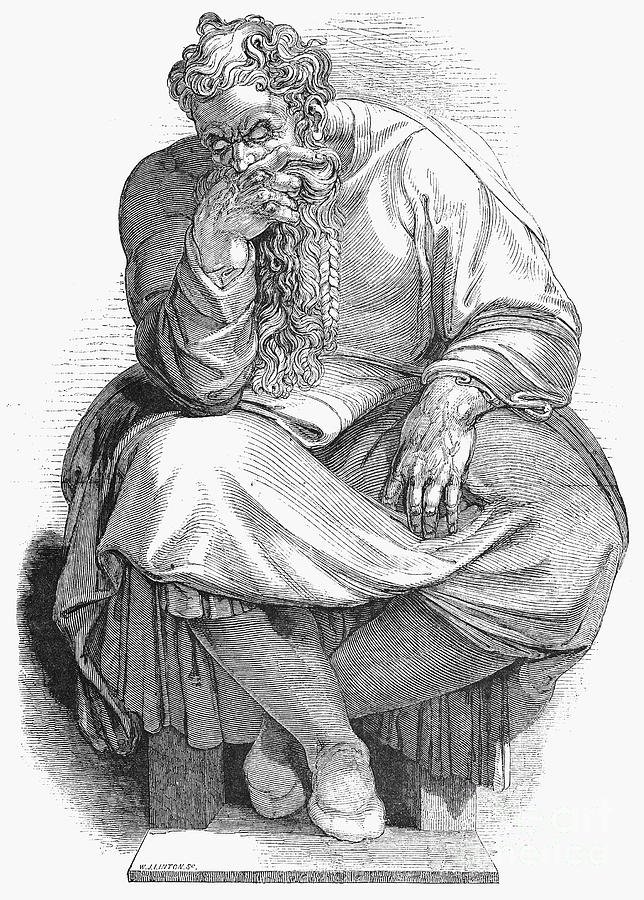
The peculiarity of innovation is that it allows us to create additional value through the successful implementation of a new idea. However, value, that is, significance and usefulness, are not inherent to anything by nature. The value of a phenomenon or object is given by society, a group of people or a person. This means that depending on the power that drives people, any innovation — contraception, antibiotics, social networks, or AI — will turn into such a mark.

After all, if we don’t lie to ourselves, there are two beginnings within each individual: the “plus” and the “minus. It is no coincidence that in the Bible the first truly earthly people, the children of Adam and Eve, were the shepherd Abel and the farmer Cain. Both worked in the sweat of their brow, both offered a sacrifice to God. Offended that God would not accept his sacrifice for some reason, Cain hated his brother and committed the first malicious murder of a man by a man in history. Symbolically, this age-old drama is playing out within each of us. Work hard or cheat? Sacrifice the most dear or hold back? Be jealous of another or change yourself? Difficult choices have to be made all the time.

Therefore, the greatest uncertainty is not in progress as such, but in man himself. His decisions will determine the future. It is worth remembering this when you are carried away with the next “saving” idea for your business, much less for all people on earth.

Yours sincerely,

-Alexander


You can help Ukraine defend itself and the World from Russian aggression here.


”Who are you and what do you do?"
As a business therapist, I help tech founders quickly solve dilemmas at the intersection of business and personality, and boost company value as a result.

"I have an extremely important business decision to make. Can you help me?
Reserve a time on my calendar that is convenient for you to meet with me. We'll clarify your request and discuss options for how you can help.

Road Hypnosis by Alexander Lyadov

Empty road photo

Unknown photographer


Road Hypnosis is a type of trance state in which the driver can drive for a long time and react acceptably to external events, but then cannot remember what he was doing. His consciousness is absorbed in some other task, but manages to drive like autopilot. While in an altered state of consciousness, the driver is unable to react quickly and adequately to unexpected situations. When novelty catches him by surprise, an accident happens. Today, the expression “road hypnosis” is increasingly being replaced by the term “Driving Without Attention Mode.”

I remember the speedways in France when, driving a rented BMW, I drifted off into a parallel world where I had to crack an important cipher. Good thing my wife Marina was my vigilant navigator: “Sanya, look at the speedometer - it is already 180 km/h”. Otherwise, instead of La Manche, cheeses and Pommeau, we would have studied the Normandy ditch deeply, but once. By the way, the French prudently sow the edges of the highway with metal balls, which create a lot of noise if the driver has already moved out of the lane, but the ditch has not yet attacked.

In business, the same phenomenon is observed. The founder seems to have a firm grip on the steering wheel, his foot is pressing the gas pedal, and his eyes are watching the road. But his “processor” is absorbed in a problem he has been trying unsuccessfully to solve for a long time. “Why does my business never get to the next level?”, “Why do I create a lot with one hand, but then destroy it with the other?”, “Why have I been pulling this suitcase without a handle for so many years?”, etc. Everyone’s central question is different. More precisely, the root dilemma on whose horns the founder and his business are stuck. The problem, however, is not just the missing market potential. Driving in an unattended mode is known to lead to disaster, once something abnormal happens in the environment. Is there someone near you who will keep you awake behind the wheel?

Yours sincerely,

-Alexander


You can help Ukraine defend itself and the World from Russian aggression here.


”Who are you and what do you do?"
As a business therapist, I help tech founders quickly solve dilemmas at the intersection of business and personality, and boost company value as a result.

"I have an extremely important business decision to make. Can you help me?
Reserve a time on my calendar that is convenient for you to meet with me. We'll clarify your request and discuss options for how you can help.

Investor Problem by Alexander Lyadov

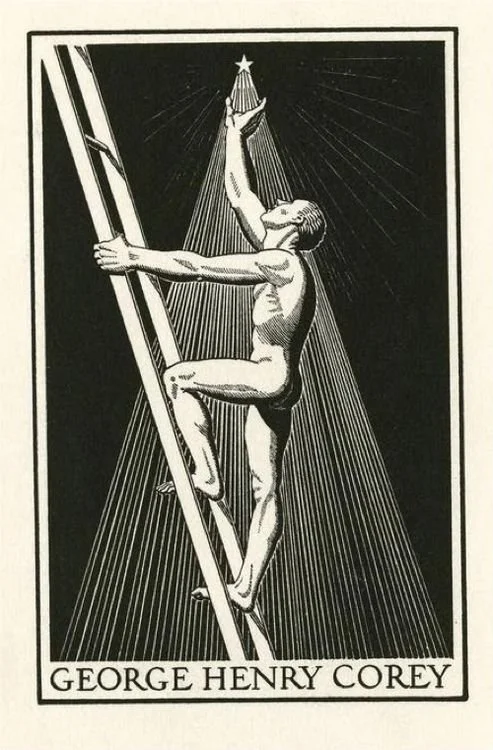
Illustration: The Prophet Jeremiah

The Prophet Jeremiah


What does an investor need to be successful? To answer this, we need to analyze what his main problem is.

By definition, the investor has a surplus of money resources available to put into projects managed by someone else. Therefore, at first glance, the investor has the problem of choosing which company to give funds to and which not. In other words, the investor's main task is to distinguish the signal from the noise.

The investor relies not on the company's past merits, but on the possible increase in its capitalization, that is, on its future cash flow. But, as we know, the world around us is volatile and unpredictable. For a beginner it is still forgivable to dream about King Midas' gift to turn any object into gold. A mature investor, on the other hand, has no illusions that he is guaranteed to pull out the winning ticket in the lottery.

Instead, the investor focuses on what is within his sphere of influence and competence. On the one hand, he needs to eliminate the possibility of catastrophic losses and, on the other hand, to have in his portfolio companies that in principle have a chance to hit the jackpot.

However, any investor's personal resources are extremely limited. Even if he has all the necessary skills for that, the investor simply can't afford to spend a long time fighting over assets, fixing the company's operations or inspiring a burned-out founder-CEO. The investor needs to create an environment where he doesn't have to spend his precious time on all these issues at all.

This is possible if you build up the inbound deal flow correctly. The best companies don't just have a professional team, a competitive advantage, or a profitable business model - they are able to solve complex problems on their own, without expecting a wizard-investor to save them.

If the projects with the highest potential come to you as an investor on their own, the expected return on your capital tends to infinity, and the cost of your most valuable resource - your personal time - tends to zero. For an investor, this is the ideal.

Yours sincerely,

-Alexander


You can help Ukraine defend itself and the World from Russian aggression here.


”Who are you and what do you do?"
As a business therapist, I help tech founders quickly solve dilemmas at the intersection of business and personality, and boost company value as a result.

"I have an extremely important business decision to make. Can you help me?
Reserve a time on my calendar that is convenient for you to meet with me. We'll clarify your request and discuss options for how you can help.

Ambivalence of the environment by Alexander Lyadov

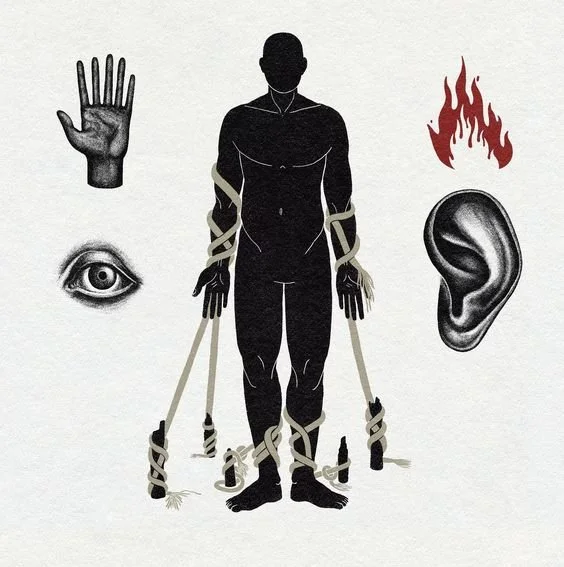
People with different professions, aspirations and achievements, as well as from different social strata, come to the pool. As they take off their clothes, they erase it all from themselves like a pencil eraser. Wearing a swimming cap, swim trunks and goggles, they look like creatures of another species whose function, at least temporarily, is to exist in an aquatic environment.

Here very specific skills are of value, and all other “assets” — money, acquaintances, status or knowledge from other spheres — become superfluous or even drag them to the bottom. The person finds himself alone with an environment that is alien to him, and therefore hostile. As soon as one makes a mistake, breathes liquid instead of air, the body is filled with panic: “I’m drowning! SOS!”. Of course, there are swimmers on nearby lanes, and somewhere above is a coach. So everyone gets rescued in time. But the amygdala doesn’t care about that, it senses the real danger correctly. Everyone must learn to survive in this strange environment by himself. Otherwise, water will kill a man — either instantly, when he falls overboard once, or gradually, due to fear, which pushes him to avoid lakes and rivers.

But when the problem of survival is solved, then the hitherto hostile environment opens its other, benevolent side. It turns out that water gives a unique in its uniformity load on the whole body, is a kind of meditation, and, according to the senses, a person comes out of it renewed. For a good swimmer, the phrase "like a fish in water" may not use the word "like," for it is true. It no longer matters whether he succeeds on land, whether he graduated from Stanford, or whether he limps when he walks. Water accepts man as he is, but on one condition — he is willing to interact with his environment in a humble, efficient and harmonious way.

Replace the water in the text with the market and the swimmer with the entrepreneur. The comparison illustrates why one gets choked by the first wave, while the other turns all change to good.

Sincerely yours,

-Alexander


You can help Ukraine defend itself and the World from Russian aggression here.


”Who are you and what do you do?"
As a business therapist, I help tech founders quickly solve dilemmas at the intersection of business and personality, and boost company value as a result.

"I have an extremely important business decision to make. Can you help me?
Reserve a time on my calendar that is convenient for you to meet with me. We'll clarify your request and discuss options for how you can help.

What limits a manager’s growth? by Alexander Lyadov

There are individual and universal answers to this question. The first involves an analysis of the strengths and weaknesses of a particular person, his or her long-term goals and time horizon.

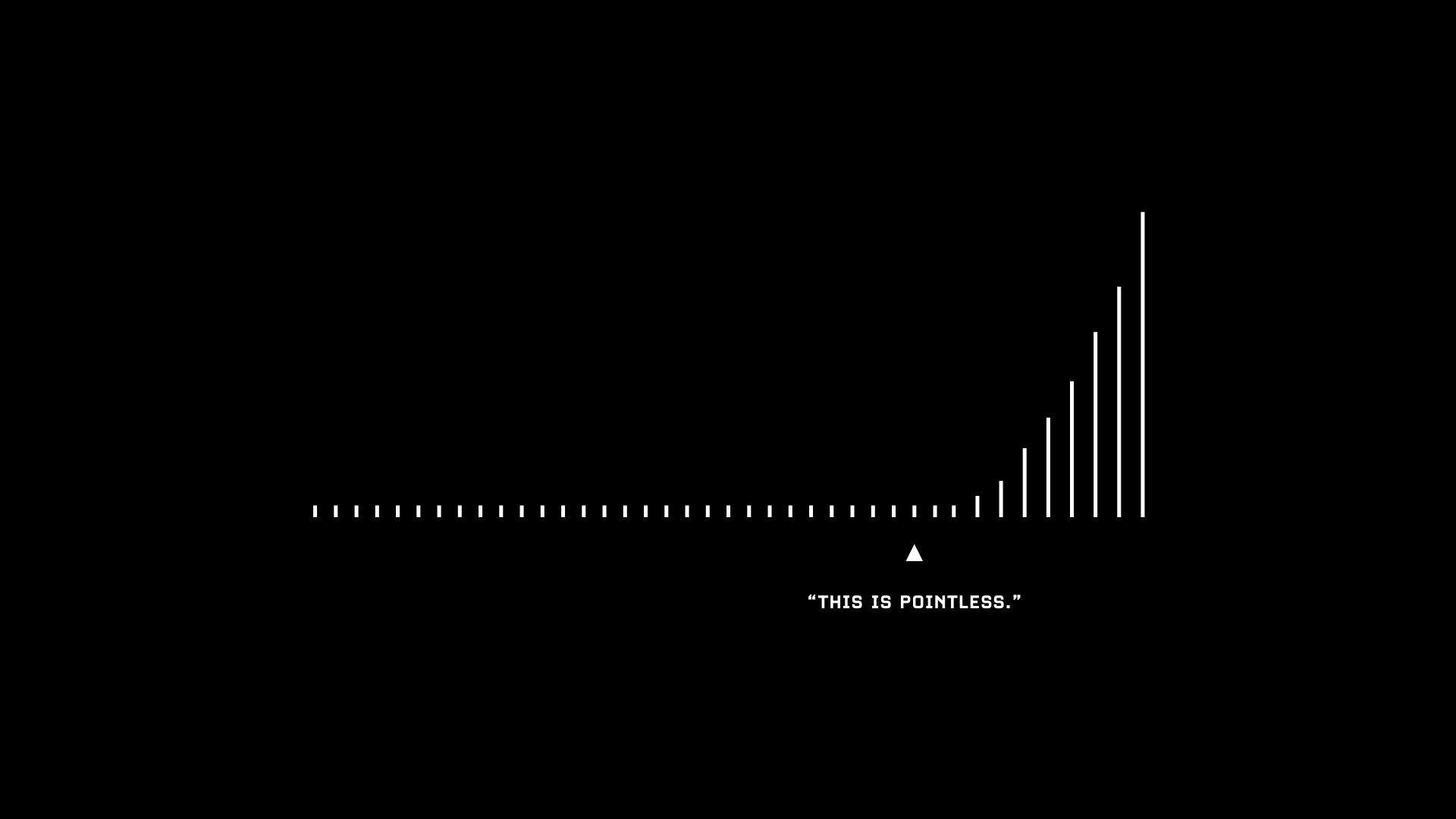
The universal answer is useful for many businessmen in different situations: The growth of a manager is mostly limited by what he does not consider his own limitations. Figuratively speaking, the blind spot, Latin punctum caecum, is an area on the retina, which has no photoreceptors, is not sensitive to light, and therefore a person does not see anything in this area.

You can’t solve a problem that doesn’t seem to exist. One must first take the trouble to describe it, and then to take hold of it. Without a precise formulation of the problem, any, even heroic efforts to find a solution are useless.

But what is to be done? For it all sounds like a dead end. Unlike the design of the eye, the blind spot in our minds is not the design of nature. In fact, it is a learned blindness, that is, our refusal to see that which, for whatever reason, frightens us, disgusts us, or hurts us.

So there is a reliable rule of thumb — you must turn your gaze to the darkest corner of your life. A saying of the medieval alchemists stated: “In the dirt you will find everything.” What you feel is right, but what makes you uncomfortable, is the limitation you are looking for, that is, the area of personal investment for future growth.

You can also seek help from others to speed up the process. If the eye does not see itself, it will be helped by a mirror in the form of feedback from others. The only thing to remember is that the quality of the response is determined by the quality of your question. It is a special art how to get valuable feedback.

Besides, it makes no sense and is even dangerous to ask for feedback from everyone. Too few people are able to separate their attitudes toward you from their personal traumas and childhood projections.

To sum it up: if a manager wants to grow professionally, he or she should:

1) Recognize the inevitable existence of his or her blind spots;

2) Look for the “blind spots” by voluntarily facing his fears;

3) Ask for feedback about himself from mature people, whose experience, objectivity, and kind attitude the manager trusts.

Sincerely yours,

-Alexander


You can help Ukraine defend itself and the World from Russian aggression here.


”Who are you and what do you do?"
As a business therapist, I help tech founders quickly solve dilemmas at the intersection of business and personality, and boost company value as a result.

"I have an extremely important business decision to make. Can you help me?
Reserve a time on my calendar that is convenient for you to meet with me. We'll clarify your request and discuss options for how you can help.


Saying Goodbye to False Beliefs by Alexander Lyadov

I remember an experienced entrepreneur confessing after a transformational session that it was my vivid metaphors, hyperboles, and humor that helped him see and accept the important things that his mind was otherwise very resistant to. I understand him very well, since as a client in psychotherapy I often experience the same inner struggle. Some belief has been a part of me for so long and is so dear to me that to part with it is like a yakuza to do jubitsume (Jap. 指詰め), that is, to voluntarily cut off a phalanx of one’s finger.

Reexamining one’s core assumptions and beliefs really feels like an earthquake when the ground suddenly drops out from under one’s feet. No wonder so few people are willing to subject themselves to such “torture” on principle, let alone as a ritual once a quarter or a week. However, reality doesn’t care about people’s feelings - it hunts tirelessly and ferociously destroys all lies. If a belief is wrong, sooner or later a person will collide with reality. If a minor belief collapses, a person gets off with a minor scare. But the sudden and forced destruction of an axiomatic assumption a person may not survive. Or turn into a vegetable, become a monk, or go to the islands, forgetting about business, family, and friends.

Once one has experienced a non-fatal collision, an intelligent person chooses between two evils in favor of the lesser one. Is it worth avoiding what’s coming anyway? Isn’t it then better to enter into contact with the unknown, but on your terms? After that, all that remains is to shake up the monolith of false assumption with metaphors, explode it with hyperbole, and cool it down with jokes. When the dust settles, one is surprised to discover that having lost something, one has gained much more in return. New degrees of freedom take one’s breath away.

Sincerely yours,

-Alexander


You can help Ukraine defend itself and the World from Russian aggression here.


”Who are you and what do you do?"
As a business therapist, I help tech founders quickly solve dilemmas at the intersection of business and personality, and boost company value as a result.

"I have an extremely important business decision to make. Can you help me?
Reserve a time on my calendar that is convenient for you to meet with me. We'll clarify your request and discuss options for how you can help.


Non-linearity by Alexander Lyadov

In life, many good things happen non-linearly.

Nothing happens for a long, long time, and then — bam! Get the prize.

And the longer the search and the deeper the well, the higher the column of oil up.

But there is no guaranteed reward for the sacrifice made.

This uncertainty is a systemic risk that cannot be avoided.

One refuses to play the “unfair” game at all.

Another is filled with hatred that his super effort is “not appreciated.

And only a third stubbornly moves forward, in spite of everything.

When one realizes his function, meaning redeems sweat, tears and blood.

At worst, he learns something new. At best, he’ll win it all.

That’s what a true entrepreneur is.

Sincerely yours,

-Alexander


You can help Ukraine defend itself and the World from Russian aggression here.


”Who are you and what do you do?"
As a business therapist, I help tech founders quickly solve dilemmas at the intersection of business and personality, and boost company value as a result.

"I have an extremely important business decision to make. Can you help me?
Reserve a time on my calendar that is convenient for you to meet with me. We'll clarify your request and discuss options for how you can help.