
Warm up and cool-down in business by Alexander Lyadov

Experienced athletes tend to do the warm-up routine. Experience has taught them that the cost of this insurance covers many times the risk of injury, after which recovery can take years. If you’re lucky enough to have a wise coach, he’ll remind you that the cool-down is just as much of a priority. It takes time for the body to switch from turbo to normal mode. Heart rate, body temperature, and respiratory rate need to drop smoothly. For example, for a biker, it is not as scary to fall off a motorcycle and slide across the asphalt as it is to encounter a stationary object along the way. The example is radical, but you get the idea - it’s bad for the body to start or brake too sharply.

In addition, I learned from a  podcast  by Stanford neuroscientist Andrew Huberman that immediately after training it is useful to sit with eyes closed for a few minutes to absorb new material. It turns out that the brain scrolls backward through recent experiences, which allows the new knowledge to fit in optimally. After all, the point of training is not in the training itself, that is, not in practicing techniques or sparring, but in the growth of the necessary skills. An injury sets the athlete back on the learning curve. Therefore, warming up and cool-down are insufficient, but necessary conditions for progress. Similarly, if the gut microflora is disrupted, no matter how much you eat, only crumbs will be digested. If a few minutes of “meditation” after training significantly increases the efficiency of training, then immediately running away from the tatami to the shower is, as they say, leaving money on the table.

All of this, of course, is applicable in business, although not as obvious, since here it is not a physiological but a mental process. There is often a temptation to take on a project immediately, especially if it is desirable, ambitious, or urgent. Or, having completed one project, to switch instantly to another, then a third, etc. Everyone knows about the risk of burnout, which is characteristic of passionate and responsible people. It is less common to notice the consequences of not “warming up” when the stage of fundamental questions is missed: “What problem are we trying to solve? How shall we think about it? Where are we aiming?” and others. Also, companies often neglect the "cool-down" and thus miss the chance to learn at least something from the experience. Not surprisingly, without reflection, organizational mistakes tend to recur. But instead of reflecting for a couple of hours after the project is over, the CEO complains about the lack of resources and rushes to investors to raise a new round.

How do you resist the temptation to skip all the important steps? For example, have an experienced coach, whose job is to keep you from slacking. Or, build processes in the company in such a way that no new project can start without a “warm-up” with answers to initial questions and a "cool-down" with analysis of the past project, no matter how bad or good it was.

Yours sincerely,

-Alexander


You can help Ukraine defend itself and the World from Russian aggression here.


”Who are you and what do you do?"
As a business therapist, I help tech founders quickly solve dilemmas at the intersection of business and personality, and boost company value as a result.

"I have an extremely important business decision to make. Can you help me?
Reserve a time on my calendar that is convenient for you to meet with me. We'll clarify your request and discuss options for how you can help.



Where to look for resources? by Alexander Lyadov

By virtue of my profession, I am constantly dealing with delusions of all kinds.

My attitude toward them is a strange mixture of dislike and admiration.

It hurts to see a founder entangled in a web of false beliefs.

No one intended any evil against him - his mind built the trap itself.

As a result, opportunities either slip through the cracks or are not noticed at all.

I cannot deny the power of delusion, but my being rebels.

However, the moment of complete liberation from these shackles is a true celebration.

The transition from minus to plus is too rapid and far-reaching.

Obviously, the harder the bowstring has been drawn, the more powerful the shot.

But every time I see such a transformation, I never cease to marvel.

It takes my breath away to realize the potential hidden within each of us.

Is it worth seeking resources outwardly until the riches are explored within?

Sincerely yours,

-Alexander


You can help Ukraine defend itself and the World from Russian aggression here.


”Who are you and what do you do?"
As a business therapist, I help tech founders quickly solve dilemmas at the intersection of business and personality, and boost company value as a result.

"I have an extremely important business decision to make. Can you help me?
Reserve a time on my calendar that is convenient for you to meet with me. We'll clarify your request and discuss options for how you can help.

Are you a good salesman? by Alexander Lyadov

Everyone knows that in business the ability to sell is super important.

However, not all business founders are sales gurus.

At least, that is their sincere self-assessment.

This is a popular misconception, a kind of prejudice.

Our culture assumes that sales is a one-time transaction.

Like, after the transaction, the buyer and seller will never see each other again.

When there is no shared future, greedy purpose makes violence appropriate.

No wonder the creative person doesn’t think of himself as a seller.

Manipulating, pushing back, and taking another by the throat-not me!

The fundamental mistake is the horizon compressed into a point.

In reality, it’s the other way around - the greatest value comes from a long-term relationship.

A repeat customer, as a generated lead, comes at no cost.

Deep integration into the client’s business increases margins many times over.

Expertise grows by observing feedback loops over and over again.

In other words, in business, the priority is an infinite number of transactions.

In that case, what is the true role of sales?

To get the maximum match between your service and the customer’s pain.

This doesn’t require blackmail and guile, but curiosity and questions.

Is that the kind of salesperson you agree to be?

Yours sincerely,

-Alexander


You can help Ukraine defend itself and the World from Russian aggression here.


”Who are you and what do you do?"
As a business therapist, I help tech founders quickly solve dilemmas at the intersection of business and personality, and boost company value as a result.

"I have an extremely important business decision to make. Can you help me?
Reserve a time on my calendar that is convenient for you to meet with me. We'll clarify your request and discuss options for how you can help.

Are you a Vendor or an Expert? by Alexander Lyadov

In the service business, the Expert receives the highest reward.

The reason is simple: he creates maximum value for the client.

The benefit of the services of even the most reliable and diligent Provider has a limit.

Why? The Provider believes that the client has diagnosed his problem correctly.

Unfortunately, this is not the case with truly complex problems.

For you can’t solve a problem within the system that caused it.

It requires an outside perspective, knowledge of patterns, and a focus on the truth.

The hallmark of the Expert is that:

  1. he knows how to pull both to a meta-level over the problem.

  2. He understands the non-obvious patterns of industry and human behavior.

  3. he cares more about the truth than his client’s comfort, his own convenience, or his fee.

Not surprisingly, in any industry, Vendors will be in the majority.

This is great news if becoming an Expert is your goal.

Such a high barrier means you have no real competition.

Yours sincerely,

-Alexander


You can help Ukraine defend itself and the World from Russian aggression here.


”Who are you and what do you do?"
As a business therapist, I help tech founders quickly solve dilemmas at the intersection of business and personality, and boost company value as a result.

"I have an extremely important business decision to make. Can you help me?
Reserve a time on my calendar that is convenient for you to meet with me. We'll clarify your request and discuss options for how you can help.


You are here for a reason by Alexander Lyadov

A manager complains about the limited opportunities for development in a corporation: “Eh, if it weren’t for the CEO (shareholders, board of directors), I would…”. He looks enviously at the entrepreneur, who seems to be free to do whatever he wants. This is true, but only in part. In fact, the founder meets just as many, and some would say more, barriers along the way. I think it’s just different barriers.

In a large corporation many things may be arranged stupidly, weirdly and even crazy, but at least there is some structure there to lean on. Like a medieval castle, the organization protects its citizens with a stone wall and moat against a number of dangers, like barbarians, wild beasts, etc. In this metaphor, the founder acts far beyond the city wall and wanders alone where sometimes no other man has set foot. He is supported by his entrepreneurial instincts, his experience of past mistakes, and his tools, mostly mental models.

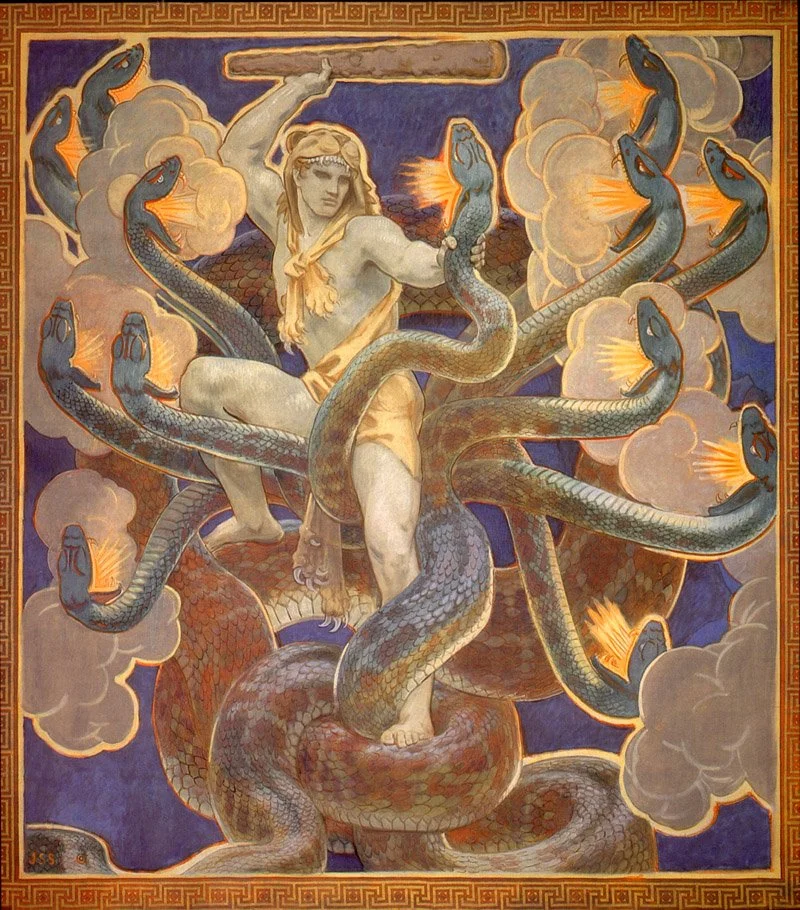
Even the most reasonable structure inevitably deteriorates over time and becomes inadequate to the changed environment. Unfortunately, corporate rulers often notice and recognize problems too late, when the castle wall has already been breached and the Hun crowds have made their way in. All of this could have been avoided if there had been someone who perceived the growing negative signals in the organization differently than everyone else. The company is like a whale caught in fishing gear, begging with all its might to be released. Perhaps you are in this company here and now for a reason. Maybe you are the one destined to defeat the Lernaean Hydra. All you have to do is research at your own pace the problems of your organization, find accomplices, develop a plan for step-by-step change, and then take responsibility for implementing it. If you do this exercise carefully and wisely, you will be surprised at how grateful corporate management will be to you in every way. Congratulations, you are now not a manager, but an intrapreneur, i.e., an entrepreneur inward.

Yours sincerely,

-Alexander


You can help Ukraine defend itself and the World from Russian aggression here.


”Who are you and what do you do?"
As a business therapist, I help tech founders quickly solve dilemmas at the intersection of business and personality, and boost company value as a result.

"I have an extremely important business decision to make. Can you help me?
Reserve a time on my calendar that is convenient for you to meet with me. We'll clarify your request and discuss options for how you can help.


Why prune grapes? by Alexander Lyadov

You, like me, are hardly an agronomist, but you have probably heard that grapes are regularly pruned. Although the bush looks tidier after this procedure, the point of pruning is not beauty at all. The main purpose is to maintain an effective balance between the top and bottom of the bush. This prevents the bush from being overloaded, prevents it from getting too big, speeds up the growth of the desired shoots, and increases the yield. In addition, pruning rejuvenates the plant, making it less vulnerable to external stimuli. In other words, you absolutely cannot do without pruning grapes.

Let’s imagine a beginner grape grower who is in a stupor, unable to decide which young shoots to cut off and which to keep. They are all equally precious to him, for each shoot represents a potential opportunity. And if the neophyte is endowed with a vivid imagination, impressionability, and empathy, he simply cannot have the hand to "take a life", depriving a vine shoot of the chance to realize its "unique mission on earth". Sounds absurd, doesn't it?

But that’s how the founder feels about the many new ideas that promise to dramatically grow his business. Similar feelings are felt by an entrepreneur when, due to a shocking change in the market, it becomes necessary to downsize the team that he has been gathering for years piece by piece. Or an inexperienced investor who guesses that zombie projects suck too much blood, i.e. attention, but does not dare to kill them: “But there is hope? They hardly lose any money." Yes, but it’s not growing either. And investor attention is an even more limited resource than capital.

In order to properly, timely and confidently prune the "shoots", at any given moment you need to remember what the physical meaning of your business is. It all starts with answering the question, “Заради чого? ¿Para qué? What for?”.

Sincerely yours,

-Alexander


You can help Ukraine defend itself and the World from Russian aggression here.


”Who are you and what do you do?"
As a business therapist, I help tech founders quickly solve dilemmas at the intersection of business and personality, and boost company value as a result.

"I have an extremely important business decision to make. Can you help me?
Reserve a time on my calendar that is convenient for you to meet with me. We'll clarify your request and discuss options for how you can help.


Looking for the trail by Alexander Lyadov

The instructor hides my dog’s favorite toy for him to find. Observing the pet’s actions, I involuntarily draw parallels with human behavior. Everything happens in exactly the same way. At first he searches enthusiastically, but superficially, looking in familiar places, obviously relying on luck. When it turns out that there is no low-hanging fruit, the level of anxiety increases greatly. His movements become more chaotic, he paces from side to side and searches again where he was already looking. It’s becoming clear that there will be no tribute or clue, so he can only rely on himself. At last the search becomes real. The nose sticks to the ground, thoroughly exploring every inch of it. Primal instincts awaken that he may not have known he had. The whole organism turns into a super-sensitive nose, which catches not even traces, but the slightest hint. Such total immersion in the process cannot but be rewarded. Sooner or later the desired target is sure to be discovered.

Recently I talked to a founder who managed to sell one of his projects, while another project was frozen by the war. He was seriously puzzled about what to do next. The past had lost relevance, and the future had not yet given a clear sign. I know from my own experience this suspended state, when the energy to live and create is corked, like a genie in a bottle. Trying to take on project X, Y and Z is only discouraging: “Eh, it’s all wrong.” The stress of trampling in one place builds up inside. The man continues to search diligently for something, but the poison of doubt creeps into his heart. The entrepreneur confessed, “What if nothing ever resonates in me? A similar fear is sometimes felt by writers looking at a blank screen with an impatiently blinking cursor: “What if new lines never arise in me again?”

Of course, that’s not the case. As soon as a molecule of the right scent touches the dog’s nose, the whole body rallies and optimizes the search in the spirit of the children’s game of cold-hot. My dog doesn’t doubt himself. You, too, trust more in the wisdom of your subconscious. Keep searching.

Yours sincerely,

-Alexander


You can help Ukraine defend itself and the World from Russian aggression here.


”Who are you and what do you do?"
As a business therapist, I help tech founders quickly solve dilemmas at the intersection of business and personality, and boost company value as a result.

"I have an extremely important business decision to make. Can you help me?
Reserve a time on my calendar that is convenient for you to meet with me. We'll clarify your request and discuss options for how you can help.


I believe by Alexander Lyadov

When electricity, food, water or wifi disappear in a city, I first of all believe in the Armed Forces of Ukraine, for their unstoppable power is the starting point for what we have today and in the future. The next thing I believe in is entrepreneurs, the most proactive and creative force of capitalism.

Business founders need not be persuaded, inspired, much less forced to work. Their “plant settings” are such that, when they see a keen demand for a service or product, they simply cannot physically do nothing. It is like trying to suppress a yawn at a boring presentation or not to laugh at a good joke. So if a product suddenly disappears from the shelves that a lot of people need, I don’t make a fuss. In the few days or weeks while others are worrying, “What if the empty shelves are forever?” I know that plenty of entrepreneurs are rolling up their sleeves and doing important, but so far invisible, work. Alternative routes all the way down to the goat trail are being explored, more responsive suppliers are being found, new supply chains are being invented. Acting independently of each other and even competing at times, the drips of entrepreneurs eventually flow into a turbulent mountain stream that can crush, erode, or bypass any obstacle. Sooner or later, customer demand is sure to be met. Betting on entrepreneurship is as reliable as saying that the sun will rise again tomorrow.

In a general sense, this means that I believe in people’s creativity - in their ability to find a solution to a problem, no matter how catastrophic. As long as man lives, he will conquer anything and everything. Do you agree?

Yours sincerely,

-Alexander


You can help Ukraine defend itself and the World from Russian aggression here.


”Who are you and what do you do?"
As a business therapist, I help tech founders quickly solve dilemmas at the intersection of business and personality, and boost company value as a result.

"I have an extremely important business decision to make. Can you help me?
Reserve a time on my calendar that is convenient for you to meet with me. We'll clarify your request and discuss options for how you can help.


Barrier to start by Alexander Lyadov

I don’t remember once regretting my decision to go to training.

But every other time I have doubts about whether or not to go today.

Often in the process I start to get satisfaction.

And afterwards, 99 times out of 100 I am grateful to myself that I went.

What does this tell you?

It is difficult to invest, even when the return is assured.

After all, the conditions here are almost perfect.

A favorite sport, a comfortable gym, a reliable sparring partner - what else?

Still, every time I have to overcome a barrier.

Sleep deprivation, stress, colds, injuries, and discouragement only raise the barrier.

Now let’s imagine the situation reversed.

You are forced to train under conditions: nasty, expensive, far away.

Now the barrier is too high for the investment to ever get back.

Our wise body will not allow such a waste of resources.

Conclusion: you want to train efficiently, passionately, and for a long time?

Lower the barrier.

By the way, that’s true about business and anything else, not just sports.

Yours sincerely,

-Alexander


You can help Ukraine defend itself and the World from Russian aggression here.


”Who are you and what do you do?"
As a business therapist, I help tech founders quickly solve dilemmas at the intersection of business and personality, and boost company value as a result.

"I have an extremely important business decision to make. Can you help me?
Reserve a time on my calendar that is convenient for you to meet with me. We'll clarify your request and discuss options for how you can help.

How many prisms do you have? by Alexander Lyadov

Have you ever noticed how a husband and wife can tell the same event differently?

It is worth listening to the opinion of three luminaries to clarify the diagnosis of a serious disease.

The FTX exchange turned out to be a Ponzi scheme because, among other things, it lacked a board.

What do such different examples have in common?

No matter what one’s IQ is, one’s sight is a little or a lot off.

How, then, can one bring one’s imagination and reality closer together to avoid disaster?

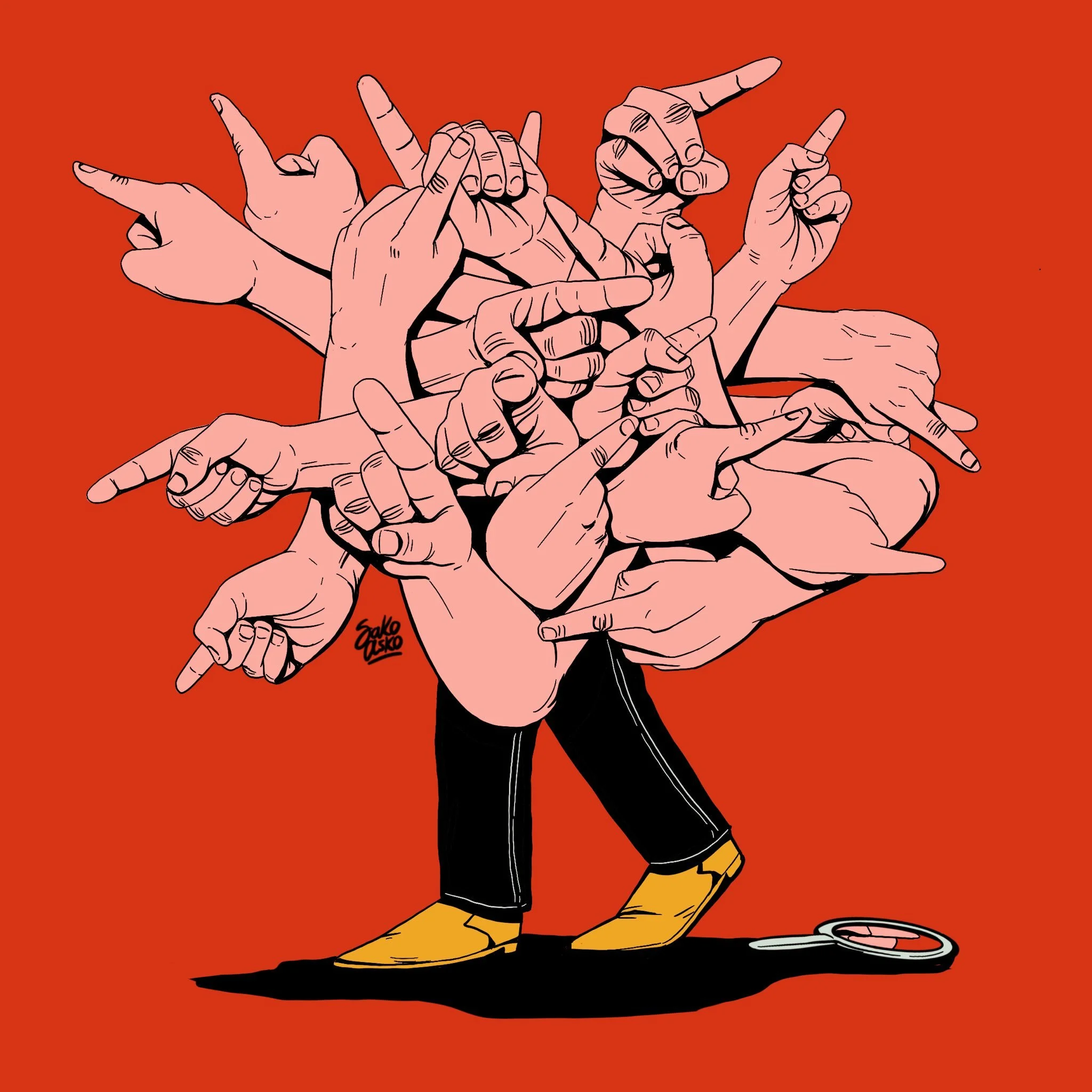
Any phenomenon needs to be shed light on through different prisms.

100% congruent opinions with yours are irrelevant, whether there are 10 or 100 of them.

Even a black-and-white photograph is not a reduction of a color photograph, for it allows you to see something else.

So when you have to make a meaningful decision, make sure that you are not alone.

It may be several mature people who value the truth over your feelings.

Or someone who carries a lot of prisms of different sizes in his professional valise.

In business, your goal is not so much to grab reality by the tail.

Rather, the goal is to have far fewer illusions than your competitors.

Yours sincerely,

-Alexander


You can help Ukraine defend itself and the World from Russian aggression here.


”Who are you and what do you do?"
As a business therapist, I help tech founders quickly solve dilemmas at the intersection of business and personality, and boost company value as a result.

"I have an extremely important business decision to make. Can you help me?
Reserve a time on my calendar that is convenient for you to meet with me. We'll clarify your request and discuss options for how you can help.

Side effect by Alexander Lyadov

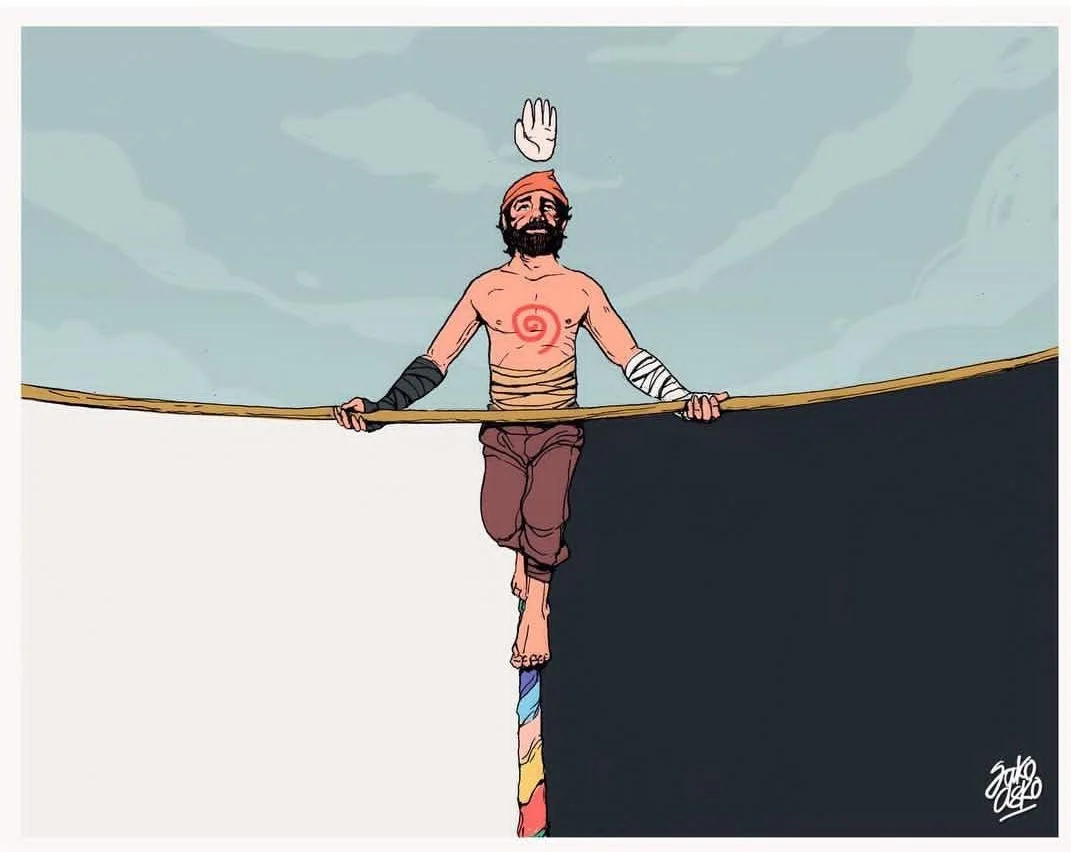
Psychoanalysis has a side effect that I in no way expected. In the process of better understanding myself, of course I regularly get bursts of dopamine from “Aha!”-moments. It’s reminiscent of that important word rolling around on the tip of your tongue and the elation when you finally remember it. But even if the resulting insight takes your breath away, “How did I not see this before?” it doesn’t mean an instant change for the better in your life. This is where the agony begins.

While I was blissfully ignorant, getting into stupid situations and dangerous traps, I didn’t reflect, I just suffered, and then I tried my best to get out of them. I would say to myself, “It was an unfortunate accident,” “Bad luck this time,” or “There are idiots, crooks, and evil people around. Working with a therapist in person and in a group convinced me that if not all, then the overwhelming number of problematic situations I create myself. Now I have a better understanding of the root causes and scenarios of how this usually happens. And if they say about the dog, that he understands everything, but does not speak, then I can also say that I understand everything, but I do not prevent it. More precisely, I don’t have the time. Sometimes my life is like a dream, where an unwanted scenario unfolds and I either move like in jelly or watch like a dazed spectator. Admittedly, I was much more comfortable blaming other people and fate for my problems. Alas, insidious psychoanalysis has robbed me of such a convenient excuse.

I only record the blunders: “Here we go again! My own fault. How much there?”. Sometimes I feel so stupid, ridiculous and ashamed that, right, I want to go back to the original state, when I was supposedly innocent. However, this is only in moments of moping. The rest of the time I keep the belief that all really important changes in nature occur non-linearly. For a long time it seems that nothing happens, and then, bang, a new quality sprouts. Finally!

Sincerely yours,

-Alexander


You can help Ukraine defend itself and the World from Russian aggression here.


”Who are you and what do you do?"
As a business therapist, I help tech founders quickly solve dilemmas at the intersection of business and personality, and boost company value as a result.

"I have an extremely important business decision to make. Can you help me?
Reserve a time on my calendar that is convenient for you to meet with me. We'll clarify your request and discuss options for how you can help.

Consensus? by Alexander Lyadov

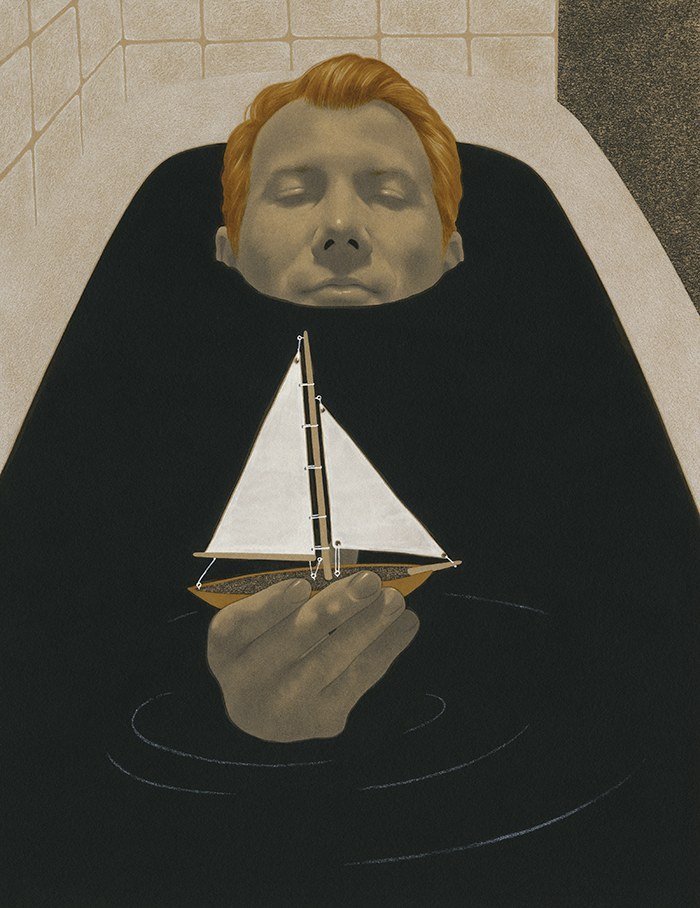
If we see a friendly founder, for whom human relations are very important, it is very likely that he involves too many people in the decision-making process. Of course, this looks inspiring and humanistic, and there are plenty of fashionable managerial theories on this topic today. After all, the more people have a say, the more diverse the opinions, the higher the quality of decisions? Not really.

The thing is that decisions are rarely made once and for all. More often than not, it’s an iterative process of the market testing hypotheses put forward. Which more often than we would like, are far from perfect, or even turn out to be outright error. So the problem is not so much to get together, brainstorm and decide something, as it is to take responsibility for what has not worked. And this is where it turns out that groups are very rarely able to admit they are wrong. And the more people involved, the more painful the process of remorse. As history shows, some nations need the humiliation of losing a war in order to come to their senses, realize their errors, and apologize to the world for all their sins. Of course, it is also hard for an individual to accept his mistake, but alone, the chances are much higher than in a group. Especially if the person has the necessary prerequisites, external motivation, and an inner drive to work on himself.

This does not mean that the founder should ignore the opinions of others. This is another dangerous problem characteristic of proud people with high intelligence. The decision-making process in the company must be properly structured so that it is divided into functionally different stages. Accordingly, at a certain stage it is wise to collect opinions, but again, not from all in a row, but from the specialists competent to solve this type of problems. You can ask everyone: “Who is willing and able to be personally responsible for mistakes? (i.e., the process of educating the company about novelty).” If the question is not about rights, but about responsibility, then you would be surprised how few are suddenly willing to share this burden with the founder.

Yours sincerely,

-Alexander


You can help Ukraine defend itself and the World from Russian aggression here.


”Who are you and what do you do?"
As a business therapist, I help tech founders quickly solve dilemmas at the intersection of business and personality, and boost company value as a result.

"I have an extremely important business decision to make. Can you help me?
Reserve a time on my calendar that is convenient for you to meet with me. We'll clarify your request and discuss options for how you can help.


Power and responsibility by Alexander Lyadov

In business, the founder bears ultimate responsibility for anything. No matter what happens, only he will be guilty of not having foreseen, not reacting immediately or, on the contrary, not restraining the emotional outburst. The only thing that balances the weight of this burden is the complete freedom to do anything. And if authority is a limited right, the founder’s authority in a private company is maximal. In this way power and responsibility are maximized but matched, making entrepreneurship one of the most fascinating social games. Wealth, recognition, and fame are certainly important, too, but they seem to be by-products of activities that reward some people in the process.

The founder does not think about the balance of power and responsibility, just as he does not think about the ratio of oxygen to carbon dioxide in the air–he simply breathes it. However, I have often seen entrepreneurs violate this parity when it comes to their employees. For example, with the help of an executive search agency, a promising CEO is brought into the company with ambitious goals: “Come on, we’re waiting for a miracle!”, and if successful, he is promised the proverbial million. The new CEO rolls up his sleeves and enthusiastically plunges into the work, but quickly notices that his hands and feet are tied. It turns out that, in his words, the founder has delegated authority to the CEO, but in reality he does not let him make a single step on his own. Despite the fatigue of the operating routine, the long thinking and the high costs of hiring a professional, the fear of losing control over “his baby” takes over. Employees instantly read this dissonance and rush with all questions to the one who has the real power. From this point on, the hired CEO is doomed.

If he is naive, he will try to fight the resistance, which will only make his inevitable outcome more painful and humiliating. If the CEO is smart, he will leave the company at the first sign of actual sabotage of his authority, even if the shareholder warmly assures him otherwise. A wise CEO will never agree to any generous salary and bonus unless the owner explicitly confirms the transfer of specific powers. Or if the CEO suspects that the owner is cheating himself.

Yours sincerely,

-Alexander


You can help Ukraine defend itself and the World from Russian aggression here.


”Who are you and what do you do?"
As a business therapist, I help tech founders quickly solve dilemmas at the intersection of business and personality, and boost company value as a result.

"I have an extremely important business decision to make. Can you help me?
Reserve a time on my calendar that is convenient for you to meet with me. We'll clarify your request and discuss options for how you can help.


Take care of your interest by Alexander Lyadov

There is nothing more dangerous for a founder than to lose interest in his business. It’s like closing your eyes and letting go of the steering wheel on a busy highway. Thanks to inertia, a business can even keep moving fast, but only until an obstacle comes along or the road makes a sharp turn. It is naive to assume that the context will remain the same. Change is the only constant of our time.

The worst thing is the company’s staff. The owner does not announce loudly: “I’m fed up with everything!”, but every employee feels in his back: “There’s something wrong in our kingdom.” The cornerstone of the company’s foundation has disappeared. It was the drive that pushed the business relentlessly, upward and forward. When an airplane’s engine has stalled, the striking silence and smoothness of the flight may be admirable, but only for the first second. Soon a chilling realization will dawn upon you: “We’re only a few minutes away from hitting the ground.” The smart man will jump off early, the greedy will seize power, the naïve will deny reality to the end. And it doesn’t matter how many days, months or years the business has left to exist. Without the fertilization of the spawn of market opportunities by the creativity of the founder, the business is doomed.

What’s the solution? Always have a fallback parachute, that is, a real chance to sell your business. I emphasize — you don’t have to rush to sell it, but it’s essential to have the freedom to do so when you decide. Someone will ask: “When is the best time to start getting ready?” Ideally, when you’re just thinking about starting your own business. Or at the first signals that you are losing interest in the business. Try to plan for 3 years to prepare for the sale. This is short enough to keep your motivation high, but also long enough to implement all the necessary changes in the company. By the way, there’s a bonus — through methodical progress, you’ll grow calm, determined, and optimistic inside.

Yours sincerely,

-Alexander


You can help Ukraine defend itself and the World from Russian aggression here.


”Who are you and what do you do?"
As a business therapist, I help tech founders quickly solve dilemmas at the intersection of business and personality, and boost company value as a result.

"I have an extremely important business decision to make. Can you help me?
Reserve a time on my calendar that is convenient for you to meet with me. We'll clarify your request and discuss options for how you can help.


The Art of Distinction by Alexander Lyadov

If you’ve ever learned to swim the crawl, you probably remember that in order to maximize streamlining, you should keep your head facing down, not looking forward. But another problem arises - how to avoid colliding with other people who are swimming ahead of you at a different pace. At first glance, the dilemma seems unsolvable, and the beginner is paranoid about turning his head up and down. But at some point you notice that a second before contact with another swimmer, your body picks up a faint but unmistakable signal. Although the water in the pool is always bubbling from someone else’s paddles in your lane or neighboring lanes, the feet of the swimmer in front of you create specific swirls that your radar instantly reads.

Whether your mind pays attention to this signal and trusts the readings is another matter. In any case, the body has warned you in time. I suspect that professional water polo players, who have spent their entire childhood and youth in a crowded pool, develop the ability to differentiate between water vibrations, though not to the same extent as the sharks, but enough not to bump into someone in a scramble. You might say that an acute need activates your latent ability, which has always been potentially at hand.

A similar phenomenon is observed when you are confronted with novelty. It takes time and a number of iterations for your peripheral vision to pick up the movement of some shadows. These are subtle patterns, like underwater currents, obvious to the expert, but inaccessible to the beginner. If you have reached Mastery in a specific field, then you do not even need to look, listen or touch anything - you just feel the invisible movement of tectonic plates with your gut. Such knowledge is expensive because it allows you to draw the threads of meaning out of the chaos of uncertainty one by one in order to weave them into strong and understandable fabric of structures. By the way, it is a criterion for finding out if you are a neophyte or a Sensei.

Yours sincerely,

-Alexander


You can help Ukraine defend itself and the World from Russian aggression here.


”Who are you and what do you do?"
As a business therapist, I help tech founders quickly solve dilemmas at the intersection of business and personality, and boost company value as a result.

"I have an extremely important business decision to make. Can you help me?
Reserve a time on my calendar that is convenient for you to meet with me. We'll clarify your request and discuss options for how you can help.


What is your pace? by Alexander Lyadov

Moderation is a word that has been stubbornly coming to my mind lately. What are the first associations with it? Laziness? Slowness? Boredom? After all, in today’s culture, super-effort and quick success are the most extolled. People are too desperate, too tired, and in too much of a hurry to dig deep, prepare carefully, and implement methodically. Moderation is an inadmissible luxury; everything is already needed for yesterday. In response to such an intolerable itch, the market willingly offers snake oil. In fitness — it’s magical challenges, in nutrition — a miracle diet, in business — another managerial fad, guaranteeing a quick 10-fold growth.

Reality demonstrates a paradox. Fast acceleration is the way not to the finish line, but to the ditch, not to the gold medal, but to the surgical table. On the contrary, progressive movement toward a clearly defined goal only seems like an annoying waste of time, but in the end gives high predictability of the result and control in the process. For example, the coaches of elite athletes unanimously assert that progress in jiu-jitsu is determined not by knowledge of secret techniques, but by the amount of work done on the tatami, the main condition of which is zero absences due to injuries. Victory is ensured not so much by physical attributes, as by technology. The latter creates the effect of a Lever, not limited in length. And for technology to grow into the body, it is not enough to understand it with the mind - you need to work it out with the body in sparring and drills.

Instead of chaotic attempts to become a king in checkers in one fell swoop, it is more reasonable to focus on systematic advancement, carefully fixing each micro-victory. You have to “just” come to the gym every day, write a new article, do another iteration of the product, and do it without any strain, stimulants, or motivational yelling. Interestingly, over time, you realize that the process itself from “E2-E4” to “Сheck and mate” turns out to be just as rewarding as the result. A moderate pace, without jumps, jerks and somersaults, drop by drop fills the glass of your life with the nectar of autonomy, confidence, and most importantly, meaning.

Sincerely yours,

-Alexander


You can help Ukraine defend itself and the World from Russian aggression here.


”Who are you and what do you do?"
As a business therapist, I help tech founders quickly solve dilemmas at the intersection of business and personality, and boost company value as a result.

"I have an extremely important business decision to make. Can you help me?
Reserve a time on my calendar that is convenient for you to meet with me. We'll clarify your request and discuss options for how you can help.


The importance of perception by Alexander Lyadov

“People who do not believe in human goodness rarely encounter its manifestations,” said psychologist Carl Rogers. They have ample evidence to prove conclusively that people are deceitful, wicked, and vicious. In fact, each of us can attest to this from personal experience. Over the course of 20, 30, much less 50 years, our social body has become littered with the scars of bites, burns and cuts. Somewhere I heard the idea that man is capable of enduring any tragic twist of fate or natural cataclysm. But what really knocks you down and sucks the life out of you is the evil of people-strangers, acquaintances, and especially loved ones, directed against you personally.

It’s easy to become a cynic. Only it makes little sense. I recall a business owner convinced that literally every employee is trying to cheat him - to steal something, to get away with responsibility, or to take a free ride. Needless to say, he did not have a strong management team. At the first opportunity, the most talented ones preferred to leave. Which, according to the founder, only confirmed their black ingratitude. I remember another owner complaining either about the “betrayal” of another partner, or about the difficulty of scaling the business alone. But for some reason he could not see the connection between one symptom and another.

There’s anything in the world around us. What the eye concentrates on, the hand reaches for. The fingers would touch one phenomenon out of a billion. Why this one? The sieve of perception delays G, passing by A, B, C, etc. If the mind is the processor, perception is the software. And like software, perception needs regular upgrades to synchronize with reality and clean up the bugs. The latter are assumptions that once helped us a lot, and therefore are dear to us, but then have lost relevance, that is, have become false.

Evil lurks within each of us, as does good. At any moment they are ready to reveal themselves. Which one will? Let it not always and not everywhere, but often enough it depends on our initial perception of the other - the employee, investor or business partner.

Sincerely yours,

-Alexander


You can help Ukraine defend itself and the World from Russian aggression here.


”Who are you and what do you do?"
As a business therapist, I help tech founders quickly solve dilemmas at the intersection of business and personality, and boost company value as a result.

"I have an extremely important business decision to make. Can you help me?
Reserve a time on my calendar that is convenient for you to meet with me. We'll clarify your request and discuss options for how you can help.


Demiurge by Alexander Lyadov

The alchemist who has achieved illumination

Unknown artist


A coffee aficionado appreciates the process of brewing coffee as much as the result.

The Chinese name for the tea ceremony “茶艺” translates as “the art of tea”.

Obviously, the taste and tonic effect is not the only goal.

What is?

“An adoration of the beautiful among the sordid facts of everyday life” [1].

It is a superpower to extract beauty and meaning from banality.

Whoever possesses it will be invincible under any circumstances.

After all, for him the squalor of life is the supplier of building materials.

Give him lead, he will turn it into gold.

When he is passionate about the process, the result arises by itself.

In antiquity he was called the Demiurge.

In the Middle Ages he was known as the Alchemist.

Today, his name is Entrepreneur.

Yours sincerely,

-Alexander


You can help Ukraine defend itself and the World from Russian aggression here.


”Who are you and what do you do?"
As a business therapist, I help tech founders quickly solve dilemmas at the intersection of business and personality, and boost company value as a result.

"I have an extremely important business decision to make. Can you help me?
Reserve a time on my calendar that is convenient for you to meet with me. We'll clarify your request and discuss options for how you can help.


The Hateful Claw by Alexander Lyadov

Today I received a succinct metaphor as a gift. Imagine a crab that, for some reason, hated its claw. Like, one creature has a fast fin, another has flexible tentacles, and the third is quite lucky - he has a multifunctional arm. But here, you see, a trivial claw, that’s the trouble. If someone had offered to trade, I would have traded with him without looking. And now I have to live with this ugliness, to suffer and endure.

Sounds absurd, doesn’t it? Evolution didn’t punish the crab with a claw, but created the most valuable tool especially for it. Some species even have claws of different sizes. The smaller one is for cutting food and the bigger one is for smashing and breaking. Considering that the earliest fossils of this group date to the Jurassic period, that is 200-145 million years ago, it is unlikely that claws are a boon or a mistake of nature. On the contrary, the grasping organ was designed this way and no other. And if the particular crab in our fictional example does not yet understand this meaning, then the question should be put to its thinking, not to the claw at all.

Now look around you to see how many people deny, struggle, try in vain to change, and become depressed over aspects of their personality, mind, or body that they think are harmful and therefore unnecessary. But often the problem is simply a mismatch between reality and the desired image of oneself. For some reason, I, a descendant of a crab, imagined myself to be Dumbo the octopus, the gray heron, or the sea devil, and thus doomed myself to suffer in the trap of my own mind.

Now we understand why the net of the imagination is so difficult to untangle–the one who has woven it must unravel it. But at the same time it’s clear why the things that have been stealing energy, hindering creativity, and dragging us down for decades can disappear instantly. All solutions are not outside, but inside us.

Sincerely yours,

-Alexander


You can help Ukraine defend itself and the World from Russian aggression here.


”Who are you and what do you do?"
As a business therapist, I help tech founders quickly solve dilemmas at the intersection of business and personality, and boost company value as a result.

"I have an extremely important business decision to make. Can you help me?
Reserve a time on my calendar that is convenient for you to meet with me. We'll clarify your request and discuss options for how you can help.


Old shoes by Alexander Lyadov

Fans of long wilderness trips have a rule — never wear new shoes on a hike. Let’s say you made a long choice, paid a lot of money and finally got mountain boots with more NASA technology inside them than the rocket sent to the moon in 1969. When you put on such a technological marvel for the first time, you feel as if you were born wearing them. The shoes are so comfortable that the aforementioned rule may seem like a prejudice and the temptation to ignore it is great. The next two weeks of hiking are likely to turn into torture for you. Instead of admiring the scenery, you’ll be focused on pain points and dreaming of the next resting place to put another Band-Aid on.

Microscopic discomfort, multiplied by 20-30,000 steps a day, can easily wipe away the epidermis of your skin into blood. There is no time for wounds to regenerate while hiking, and the risk of infection is much higher. A person begins to slow everyone else down. Food, water, and fuel can be scarce. In short: “Houston, we have a problem.”

Our mind adequately assesses danger when the potential damage is great and the effect of the stimulus is immediate. But when there are many repetitions to come, and over a long period of time, it is very difficult to imagine disaster as a result. And it is impossible to predict at what exact step it will occur. If you throw pins into a glass filled to the brim with water, thanks to the forces of surface tension, nothing happens for quite a long time. And then, from the next pin, the mass of water suddenly spills over the edge. Such is the nature of nonlinear processes.

It is useful for the founder to keep this phenomenon in mind, because there are many such processes in business. Small pointless expenses, trifling disagreements between partners, and tiny frictions in the team methodically undermine the foundation of the company like termites. And if it were only one symptom, but, as a rule, they are growing like piles of redshirts. After all, ignoring such “trifles” can mean something more - the indifference of the owners, non-systemic processes, lack of resources, etc.

However, the phenomenon can also work to the advantage. When tiny improvements in different places, through repetition and flocking together, create a nutrient solution in which everyone wants to live and create.

Yours sincerely,

-Alexander


You can help Ukraine defend itself and the World from Russian aggression here.


”Who are you and what do you do?"
As a business therapist, I help tech founders quickly solve dilemmas at the intersection of business and personality, and boost company value as a result.

"I have an extremely important business decision to make. Can you help me?
Reserve a time on my calendar that is convenient for you to meet with me. We'll clarify your request and discuss options for how you can help.