
How to Secure a Strong Exit? by Alexander Lyadov

The essence of business lies in the ability to create value.

With your involvement in the project, there's a "before-after" delta. It's one thing—thousands of dollars, another—billions. It's clear when you're flying off the shelves.

Soon, it becomes evident that being a value generator isn't enough.

You need to not only grow but also harvest the crop. Otherwise, you remain the author while the beneficiary is always someone else.

Sure, you can hone tough negotiation skills to avoid getting squeezed out during the final split. But usually, creators abhor the very paradigm of transactional relationships, zero-sum games, and so on.

Negotiations are ideal when unnecessary, while their function is self-attained. For this, you must be in the strongest position possible. You have it only once—BEFORE the project begins.

Remember—strong exits are crafted at the entrance.

Sincerely yours,

-Alexander


About me:
As a business therapist, I help tech founders quickly solve dilemmas at the intersection of business and personality, and boost company value as a result.

How can I help you?
If you've long been trying to understand what is limiting you and/or your business and how to finally give important changes a push, then The Catalyst Session is designed specifically for you. Book it here.


Activation Energy by Alexander Lyadov

Unknown photographer

I don't know about you, but I can get into anything. Even if it's the dullest, scariest, or most unpleasant activity. Sounds like a superpower, huh?

No, because I haven't told you about the cost yet.

A chemical reaction won't kick off until molecules overcome the energy barrier. To get the system into a transition state, you need activation energy. It's measured in joules per mole.

For some tasks, I have to invest an insane amount of those joules. For instance:

  • Dealing with a psycho or a bore.

  • A problem that's either too basic or too convoluted.

  • Memorizing gibberish or conjuring a Wow-idea on the spot.

In those moments, it's like staring into the abyss. I know there's a chance to leap over it, but it takes a complete surrender to the challenge.

What's the way out? Always ask yourself: "What's it all for?".

It's not about the cost at all. You can give up a lot. But is the sacrifice justified? Or is it just another attempt to tie legs to a drawn snake?

Nobody finds your meaning in anything but you.

Sincerely yours,

-Alexander


About me:
As a business therapist, I help tech founders quickly solve dilemmas at the intersection of business and personality, and boost company value as a result.

How can I help you?
If you've long been trying to understand what is limiting you and/or your business and how to finally give important changes a push, then The Catalyst Session is designed specifically for you. Book it here.


Pro In Chaos by Alexander Lyadov

What to do when you fall off board while big wave surfing? When you can neither see the bottom nor the sky? When you are a grain of sand being played with by massive waves?

Gather yourself and wait patiently for the ocean to release its grip. That's what a seasoned surfer once told me.

The problem is that you never know when the ocean will show mercy. But the supply of oxygen in your lungs is guaranteed to vanish before your eyes. In that sense, both pros and rookies risk suffocation and drowning. So, what sets them apart?

The pro's got a strategy. He stretches his oxygen reserves. He endures the reef's blows. He knows what he is waiting for.

Amidst the chaos, he spots order and purpose. His coordinates haven't shifted. Sky and land remain present yet unseen.

He must grit his teeth and hold on a little longer.

As soon as the ocean loosens its grip and a glimmer of the surface appears, he bolts for the exit without delay.

That's why the pro stays cool. He's got stuff to do. He gives it his all, ditches stupid risks, leaving the rest to fate.

A strategy doesn't guarantee success, but it seriously ups the odds. Why? Because the pro knows the ocean inside out, and he knows himself just as well.

No illusions mean no surprises for the pro. The ocean's both a cold-blooded killer and a nurturing farther. And pro himself is both a helpless grain of sand and the one-who-is-at-one-with-the-mighty-ocean.

Sincerely yours,

-Alexander


About me:
As a business therapist, I help tech founders quickly solve dilemmas at the intersection of business and personality, and boost company value as a result.

How can I help you?
If you've long been trying to understand what is limiting you and/or your business and how to finally give important changes a push, then The Catalyst Session is designed specifically for you. Book it here.

The Key to True Partnership by Alexander Lyadov

True partnership is accepting the other's difference.

It's naive to change someone's personality and way of being. When you meet a river, you either use its power or bypass it. Only the USSR could afford to turn rivers. And where is it now?

Want to know why there are so few successful partnerships?

Before accepting the other's difference, you must first accept your own.

It means considering the thought that everything that irritates, saddens, and drives you crazy about yourself has some hidden meaning.

It's definitely not a defect. Not evil. Not an extra detail. You are made with good intentions and a wise plan. By whom? When? How exactly?

You have a whole life to find answers.

Exhaustive self-knowledge is not a prerequisite for partnership. But readiness to explore yourself—yes.

Moreover, therein lies the secret of a stable partnership's prosperity.

Focusing on the unknown guarantees that any daunting phenomenon will reveal its positive side to you.

Sincerely yours,

-Alexander


About me:
As a business therapist, I help tech founders quickly solve dilemmas at the intersection of business and personality, and boost company value as a result.

How can I help you?
If you've long been trying to understand what is limiting you and/or your business and how to finally give important changes a push, then The Catalyst Session is designed specifically for you. Book it here.


The Founder's Faith by Alexander Lyadov

In the beginning, there's nothing. Just the Founder.

He's not self-obsessed like the others. He's open to the world but keeps his inner connection intact.

In other words, a founder is "and-and," not "either-or."

The fisherman fades away. All that remains is the float, sensitive to the slightest signals. In the market chaos, the founder tries to spot the new trend in time.

He hooks the Big Idea.

But its magnitude is clear only to him. For a long time, everyone around will consider him a fool, an adventurer, or a dreamer.

Nothing explicit yet. You can't present or touch It. Sometimes the founder even has to invent a new language so the most astute would exclaim, "Ah, that's how? That's intriguing."

Imagine the trust one must have in the world and in oneself? Surroundings, experts, and even his senses scream that value is zero. But the founder "unfoundedly" believes the value is colossal.

Before a string of zeros, he inserts a one, which changes everything.

Nothingness turns into Something.

Essentially, it's an Act of Faith. That is, an auto-da-fé-a public burning at the stake of heretics during the XIII-XVIII centuries.

Do you understand why there are so few founders in any society?

Sincerely yours,

-Alexander


About me:
As a business therapist, I help tech founders quickly solve dilemmas at the intersection of business and personality, and boost company value as a result.

How can I help you?
If you've long been trying to understand what is limiting you and/or your business and how to finally give important changes a push, then The Catalyst Session is designed specifically for you. Book it here.


Mastery's Path by Alexander Lyadov

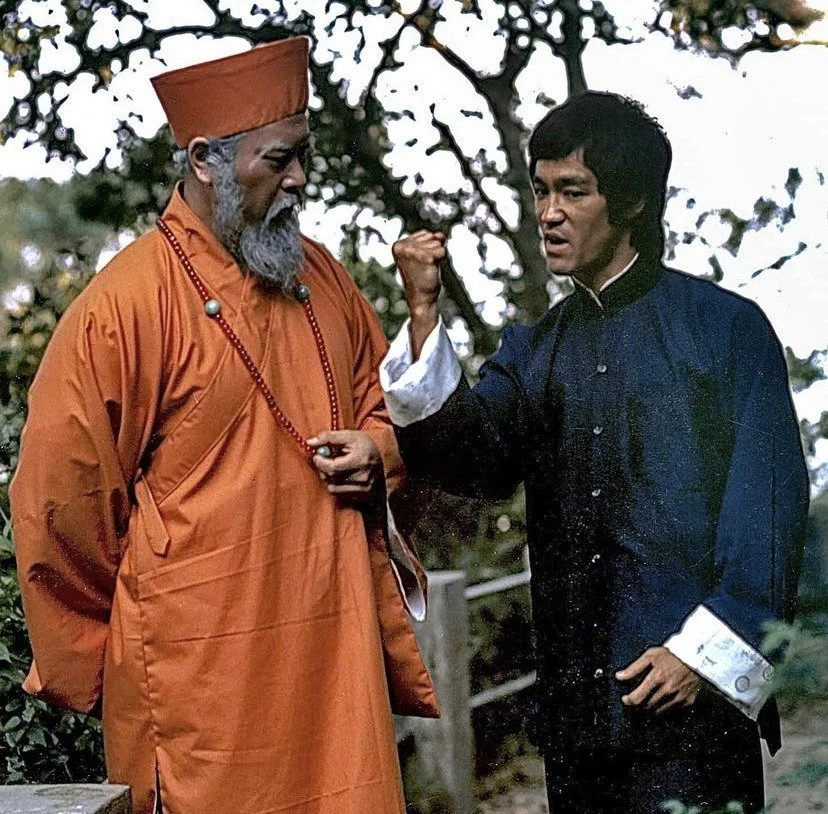
Enter the Dragon (1973)

In the iconic 1973 movie "Enter the Dragon," there's an ​intriguing dialogue​ between the teacher and Bruce Lee:

Teacher: I see your Talents go beyond the mere physical level. Your skills are now at the point of spiritual insight I have several questions. What is the highest technique you hope to achieve?
Lee: To have no technique.
Teacher: Very good. What are your thoughts when facing an opponent?
Lee: There is no oppoenet.
Teacher: And why is that?
Lee: Because the word I does not exist.
Teacher: So, continue.
Lee: A good fight should be like a small play but played seriously. A good martial artist does not become tense but ready. Not thinking yet, not dreaming. Ready for whatever may come. When the opponent expands I contract. When he contracts, I expand. And when there is an opportunity I do not hit. It (fist) hits all by itself.

We tread the same path in our endeavors. Initially, we master many unfamiliar techniques, learn strategy and tactics, and distinguish grains from chaff.

Over time, as the samurai Musashi expressed it, all these swords-tools become extensions of our hands. Achieving our desired goal becomes as easy as smiling.

But to the same extent that our mastery grows, our "I" must dissolve. As long as we cling to the Ego, we cannot merge with being. So the reality of what's happening remains closed.

Only at the beginner level can external factors like the absence of a teacher or the complexity of the subject limit progress. But if you've managed to climb high, the only limitation is you.

This is a universal problem of all entrepreneurs. As they grow their businesses, they keep bumping into themselves. The more they want to unlock the hidden potential of their business, the less likely they are to delude themselves.

No matter how big your problem, as always, you'll find the solution yourself. Sometimes, all you need is a gentle push. One touch, and the ripe fruit falls into your hands.

Sincerely yours,

-Alexander


About me:
As a business therapist, I help tech founders quickly solve dilemmas at the intersection of business and personality, and boost company value as a result.

How can I help you?
If you've long been trying to understand what is limiting you and/or your business and how to finally give important changes a push, then The Catalyst Session is designed specifically for you. Book it here.


Healing Truth by Alexander Lyadov

Unknown photographer

In working with clients, it can be scary to tell them the truth. It's a risk. If a person has lived in illusions for a long time, your words can burn.

It's a conflict between what the cliens need and what they want. If the goal is genuinely to help, their need takes priority. This is where your professionalism shines in risky moments.

But I've noticed when people willingly accept the truth about themselves. In your eyes, they should read warmth, interest, and, dare I say it, love.

Twice they took blood from my vein. The first nurse was in a rush , so she wasn't present. The injection was painful, even though she followed the checklist. The second one worked with a person, not just a patient. It even lifted my mood.

Loving someone else requires honesty with yourself. Otherwise, you'll find yourself either forcing their rescue, watching from a distance, or scolding them for their mistakes.

During your work, you should disappear but be actively present. Then the client will feel like they're the center of a mini-universe. In ordinary life, such an experience is rare. Changes happen on their own.

Sincerely yours,

-Alexander


About me:
As a business therapist, I help tech founders quickly solve dilemmas at the intersection of business and personality, and boost company value as a result.

How can I help you?
If you've long been trying to understand what is limiting you and/or your business and how to finally give important changes a push, then The Catalyst Session is designed specifically for you. Book it here.


Founder's Test by Alexander Lyadov

A company is the mirror reflection of its founder's personality. At least until there's a real board, and the owner is essentially the CEO.

What today's business represents is built upon the virtues of the founder, despite his or her flaws. All the responsibility and power lie in the founder's hands. Over the years, he can change absolutely everything in the business.

So when the company hits another glass ceiling, it's not about competitors, the government, or the market. It means the founder has stumbled upon another constraint within himself.

That's fate testing how much of an entrepreneur you are. If you cling too tightly to old beliefs, the business will stagnate. If there's any growth, it'll always be less than others'.

But perhaps the thought of your business's potential going untapped is unbearable. You feel like the world's best jeweler, summoned by the queen to cut a 3000-carat diamond.

If your future business means something to you, you'd willingly sacrifice yourself. Or more precisely, that part of your ego hindering a quantum leap. As a result, you'll change. Your personality grows alongside the business.

Sincerely yours,

-Alexander


About me:
As a business therapist, I help tech founders quickly solve dilemmas at the intersection of business and personality, and boost company value as a result.

How can I help you?
If you've long been trying to understand what is limiting you and/or your business and how to finally give important changes a push, then The Catalyst Session is designed specifically for you. Book it here.


Less Is More by Alexander Lyadov

Listen​ to the marvelous tale of an engineer's child. In their game, they built a Lego bridge, but it needed fixing. While the father searched for an extra piece, the son removed the spare one.

The astonished engineer replicated the experiment with colleagues. No one fixed the bridge as elegantly as the child did. He concluded, "People seem programmed to add, add, add."

What do people in business usually say when problems escalate?

  • "We're severely understaffed in accounting."

  • "The only way out is to hire an expensive foreigner."

  • "In our industry, the only way to grow is through M&A."

  • "If we don't raise a new round of investment, we're done."

  • "What can I do when competitors have twice the budget?"

  • "Delay the project by a quarter, and we'll finish construction."

If business therapy needed a slogan, I'd pick: "Less Is More." All I do is help founders see the essence by freeing themselves from nonsense, illusions, and lies.

Around us and within us are many fears and temptations. They tug at our attention and throw off our aim.

The main thing in business is to keep focused on the main thing.

That's why decluttering isn't a one-time thing. It needs to happen regularly, at least once a quarter.

Sincerely yours,

-Alexander


About me:
As a business therapist, I help tech founders quickly solve dilemmas at the intersection of business and personality, and boost company value as a result.

How can I help you?
If you've long been trying to understand what is limiting you and/or your business and how to finally give important changes a push, then The Catalyst Session is designed specifically for you. Book it here.


Indicators of Progress by Alexander Lyadov

Imagine an F-1 pilot who couldn't care less about winning the Grand Prix. He doesn't give a hoot about race outcomes, perfecting those turns, or how quick pit stops are.

Yet, he goes on and on about his passion for racing. He's amazed by the cars' power, the crowd's roar, and the team vibe.

Sounds odd, right? You can't be the best racer worldwide without knowing what you're doing right and wrong. Kids racing in the backyard don't need this, but in Monaco, it's pros going head-to-head.

Sometimes, though, I meet founders who can't say how much their company's worth. They admit they've never even thought about it.

Some of them have to search through files just to find out how much profit the company made in a year. So, numbers aren't their decision-making tool.

There were even times when founders passionately explained why money isn't their top priority. They care more about making customers, employees, or society happy.

"In business... money... isn't a priority... for you," I echoed.

Are you surprised these companies weren't market leaders, lacked stability, and had a host of chronic problems?

The road is rough for tourists who don't appreciate a compass.

Surely, business isn't just about profit, just like hockey isn't just about scoring goals. Jiu-jitsu isn't only about winning fights or snagging gold at the European Championship.

Feedback is vital for growth of anything. Through indicators, reality shows the value your business creates.

Sincerely yours,

-Alexander


About me:
As a business therapist, I help tech founders quickly solve dilemmas at the intersection of business and personality, and boost company value as a result.

How can I help you?
If you've long been trying to understand what is limiting you and/or your business and how to finally give important changes a push, then The Catalyst Session is designed specifically for you. Book it here.

Self-Selection of CEO by Alexander Lyadov

Picture this: You're the founder of a company, and it's time to hire a CEO. How do you pick the right one? Look at how they handle bonuses.

For instance, a candidate fights hard for a fixed salary but easily agrees to a variable one without fuss.

That's a red flag. Their discount rate is colossal. In other words, he sees the company's future as too bleak.

Why? Maybe he thinks your idea is too risky and he can't figure out how to make it work. Or he might not fully understand your business yet but wouldn't mind learning on your dime for a year or two.

By hiring him, you'd essentially be building two very different businesses. Get ready for clashes, conflicts, and an inevitable split.

To test your suspicions offer him a trade-off. Ask: "If we cut your salary by another $50K, what extra bonus would make up for it?"

If he says "$100K," that's one thing. But if it's "$1M," that's a whole different story. This question quickly reveals his pH-nature, like litmus test.

This is even more important when choosing a co-founder.

Sincerely yours,

-Alexander


About me:
As a business therapist, I help tech founders quickly solve dilemmas at the intersection of business and personality, and boost company value as a result.

How can I help you?
If you've long been trying to understand what is limiting you and/or your business and how to finally give important changes a push, then The Catalyst Session is designed specifically for you. Book it here.


The Forgotten Purpose by Alexander Lyadov

Why is the German Shepherd breed degenerating?

The dog's working qualities became unimportant to breeders. Now, looks are priority #1.

Sadly, people put the horse before the cart. They forgot what made the German Shepherd famous and turned it into the standard for security dogs.

Similarly, businesses degenerate when people forget why they came together. For example, when a CEO wants to look progressive and implements one trendy management fad after another.

Or when infantile employees endlessly assert their rights and expect care, viewing the company as a mother's breast.

Or when owners refuse to share power with top managers. Losing control is scarier to them than business stagnation and collapse.

What happens in all these cases?

The local triumphs over the global. Form replaces function. Seeming is more important than being.

Is it different for your business? I hope so.

Sincerely yours,

-Alexander


About me:
As a business therapist, I help tech founders quickly solve dilemmas at the intersection of business and personality, and boost company value as a result.

How can I help you?
If you've long been trying to understand what is limiting you and/or your business and how to finally give important changes a push, then The Catalyst Session is designed specifically for you. Book it here.


Beyond IQ by Alexander Lyadov

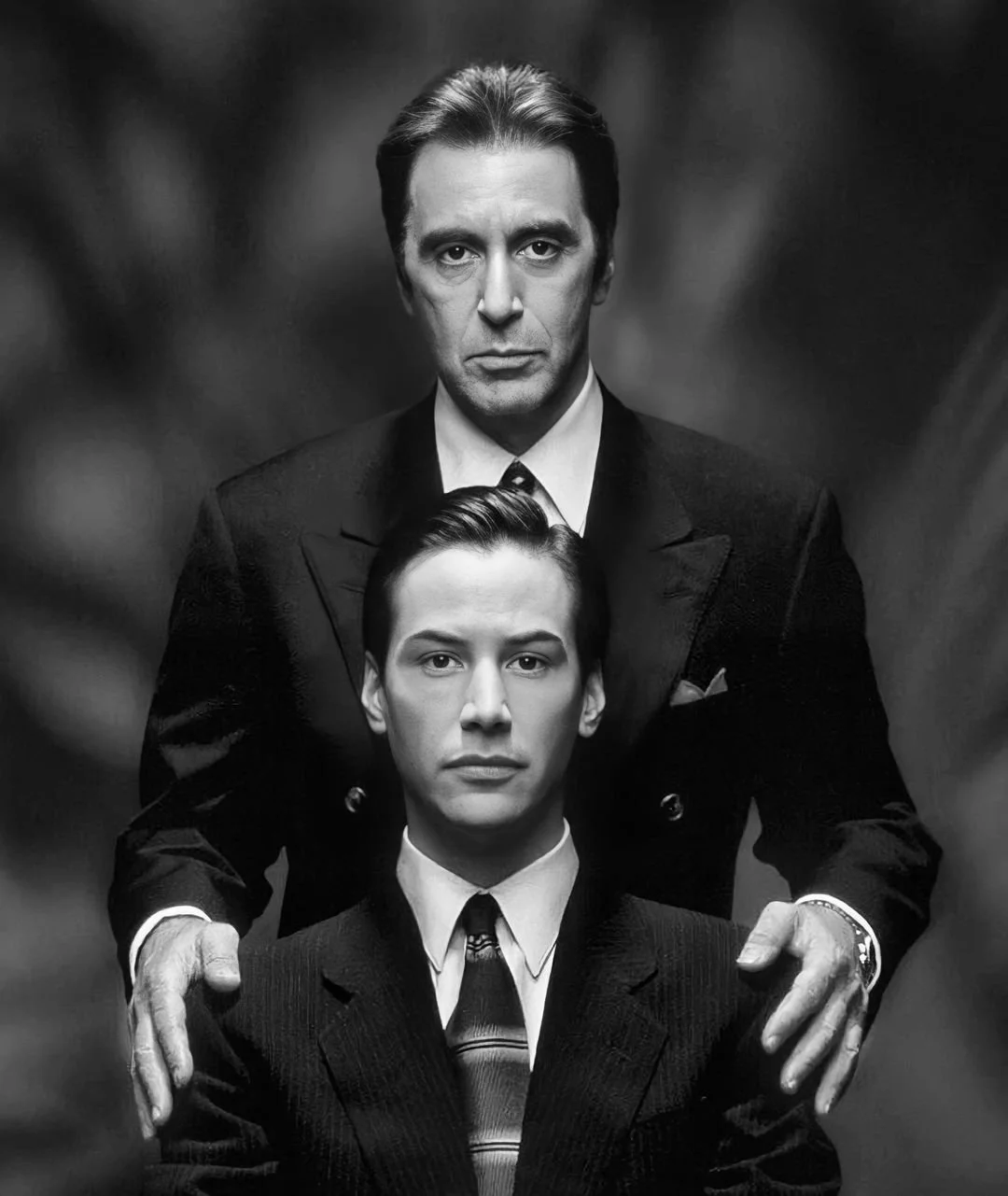
Al Pacino and Keanu Reeves, "The Devil's Advocate", 1997

Many factors influence success in business and life. It's long been known that ​consciousness and intellect​ stand out.

Unfortunately, mishandling any gift can turn it into a curse.

Consciousness means responsibility, orderliness, and organization. Admirable qualities. But if there's an excess in a person or group, we get burnout, intolerance, and despotism.

Developed intellect can achieve what most people can't. The problem is that this privilege is not enough. They easily fall into pride, thinking themselves smarter than the market, nature, fate, meaning God.

Ancient mythology hints at the destiny of the overly confident leaders. First, they suddenly lose their luck in their endeavors (peripeteia), then the gods' punishment catches up with them (nemesis).

Hence, there's something even more valuable than IQ and consciousness. It's elusive as the wind, so you won't catch it in data or put it under a microscope.

It's ​knowing thyself.​

Sincerely yours,

-Alexander


About me:
As a business therapist, I help tech founders quickly solve dilemmas at the intersection of business and personality, and boost company value as a result.

How can I help you?
If you've long been trying to understand what is limiting you and/or your business and how to finally give important changes a push, then The Catalyst Session is designed specifically for you. Book it here.

The Speed Trap by Alexander Lyadov

Brazilian Jiu-jitsu is a contact Sport. It grinds bodies against the tatami and each other. Hence, your best friends are the orthopedist and the dermatologist.

"What should we pay attention to?" I try to figure it out.

The dermatologist offers insight: "Don't worry about what develops slowly over the years. It's normal—nature, age, and so on."

He continues: "But you can't ignore what changes in days or weeks. Any rapid growth, change in shape or color."

This advice applies in business. It forces a different view on the speed of growth, which everyone wants to maximize.

Any swift changes are a sign of novelty. You find yourself in a territory where familiar laws, approaches, and norms don't apply. The likelihood of errors and their costs exponentially increase.

Would you speed up at night in an unfamiliar forest? Hope not. You need not every growth, but only the controlled one, meaning safe.

Otherwise, novelty will disappoint you as suddenly as it pleased you before. The gift will turn out to be a curse.

Self-check question: "Do I understand the meaning and mechanics of the process?" If not, it's too early to uncork the champagne.

Sincerely yours,

-Alexander


About me:
As a business therapist, I help tech founders quickly solve dilemmas at the intersection of business and personality, and boost company value as a result.

How can I help you?
If you've long been trying to understand what is limiting you and/or your business and how to finally give important changes a push, then The Catalyst Session is designed specifically for you. Book it here.


When Conflict Is Good? by Alexander Lyadov

Humans are wired to seek conflict everywhere. But sometimes, finding it is tough. Like when life's stable and comfy because the basic problems are sort of solved.

Then folks invent conflict out of thin air.

In families, a trivial thing sparks serious drama. In business, a co-founder suddenly decides, "All success is because of me." Society goes on a witch hunt.

Sometimes, behavior looks suicidal. People are ready to risk wrecking their cozy world just to avoid boredom.

So, what's the conflict's secret? Why do people crave it?

Because conflict is life itself. Remember those physics and chemistry lessons? The potential difference between the cathode and anode creates a directed flow of charged particles, aka electric current.

Despite today's chaos and mess, conflict promises movement, growth, and development in the future. Nature abhors a vacuum. Life will sprout anew from the ashes in different forms.

Why is conflict harmful sometimes and helpful other times? It depends on who found the conflict first—our subconscious or ourselves.

In the first case, we end up as victims. Someone or something is to blame. It happened to us against our will. If we survive, there's a chance to become a bit wiser. Not because of, but despite it.

The alternative? Willingly choose the conflicts where you'll find the most meaning and growth.

That's why wise founders don't start changes when the business is going down, but when it's going up.

Sincerely yours,

-Alexander


About me:
As a business therapist, I help tech founders quickly solve dilemmas at the intersection of business and personality, and boost company value as a result.

How can I help you?
If you've long been trying to understand what is limiting you and/or your business and how to finally give important changes a push, then The Catalyst Session is designed specifically for you. Book it here.


Align Intentions First by Alexander Lyadov

Suppose your business needs a specific individual's input. It could be a top manager, a business partner or a consultant.

The tougher the problems they solve, the less control you have over what exactly they can offer you. What sacrifice they considered but changed their minds about, you'll never know.

Top managers will hide behind formalities. Consultants will hold onto their expertise. Business partners will shift focus to other projects. Blaming them would be hard. And frankly, pointless.

So what to do? Think about how to align your intentions with theirs.

The hallmark of mature, competent, and driven people is understanding their life goals. They're as autonomous as a nuclear submarine. They seek the optimal path.

See how simple it all is? If you take the time to understand them, it's easy to see how to help them get where they want to go. They'll gladly join you on the project or for many years to come.

The only condition? You must first articulate your business and personal desired outcomes. Sadly, many founders don't bother.

Now you know why only a few companies can leverage exceptional individuals to create colossal value.

Sincerely yours,

-Alexander


About me:
As a business therapist, I help tech founders quickly solve dilemmas at the intersection of business and personality, and boost company value as a result.

How can I help you?
If you've long been trying to understand what is limiting you and/or your business and how to finally give important changes a push, then The Catalyst Session is designed specifically for you. Book it here.


Love of Life by Alexander Lyadov

Buddha and Demon by an unknown artist

Life is a hundredfold more inventive than any human fiction. With dark humor as the goddess Kali likes. Just listen to the tale spun by ​MrBallen​. You can't tear yourself away.

So when a friend from US asked about my forecasts for the future, I replied: "Right now, anything's possible. Seriously, everything."

In the theory of self-organization, there's this thing called a "bifurcation point." It's when a system is on edge, super-sensitive to fluctuations. It can plunge into chaos or leap to a new level of orderliness. All scenarios are equally likely.

My take? The human population is walking a tightrope. Not the first rodeo for Homo sapiens, right? So, there's hope it won't be the last.

Immunity against the viruses of ideologies lasts only a generation or two. Then, the mass consciousness has to catch the bug all over again.

This time, though, technology took a giant leap. But humanity's moral growth moves slower than a plate tectonics. Teenagers used to toy with a pocket knife, now it's a laser in their hands.

I don't know why I'm at peace. After all, there's still a chance for a constructive scenario. Last night, I reread Jack London's "​Love of Life​."

"He travelled in the night as much as in the day. He rested wherever he fell, crawled on whenever the dying life in him flickered up and burned less dimly. He, as a man, no longer strove. It was the life in him, unwilling to die, that drove him on."

See? I believe deep down humanity loves life.

Sincerely yours,

-Alexander


About me:
As a business therapist, I help tech founders quickly solve dilemmas at the intersection of business and personality, and boost company value as a result.

How can I help you?
If you've long been trying to understand what is limiting you and/or your business and how to finally give important changes a push, then The Catalyst Session is designed specifically for you. Book it here.


The Motivation Puzzle by Alexander Lyadov

Motivating people is a strange concept when it comes to employees. Especially the key ones. Particularly the CEO.

After all, no one motivates the wind to fill the sails. Element acts according to its nature. You just need to harness its power for good. To regulate and guide. And, of course, not block it.

So why then are volumes written about the nuances of motivation systems? And what do extensive HR departments do? Where's the glitch?

Companies hire unmotivated people.

It's like gathering wet firewood for a campfire, then frying your brain trying to light it. Unnecessary challenges waste a lot of resources.

Curious why companies create problems for themselves? It's simple—motivated candidates aren't lining up for them. Except perhaps the completely inexperienced and young. But they run away quickly.

The company offers money, entertainment, perks, you name it. However, motivated people need something else:

  1. A goal worthy of their efforts.

  2. A critical mass of charged people around.

  3. Spirit over letter, and function over form.

  4. Conditions for the best from individuals and groups.

  5. Understanding their work creates real value for clients.

Do you know many such companies? There you have it.

Sincerely yours,

-Alexander


About me:
As a business therapist, I help tech founders quickly solve dilemmas at the intersection of business and personality, and boost company value as a result.

How can I help you?
If you've long been trying to understand what is limiting you and/or your business and how to finally give important changes a push, then The Catalyst Session is designed specifically for you. Book it here.


An Entrepreneur's Contribution by Alexander Lyadov

Do you know what mistake some entrepreneurs make? They rush to invest their personal money in a promising project.

You might ask: "Hmm, isn't that the essence of entrepreneurship?"

No, they shouldn't do that. But not because they're stingy with money. Many can provide money. But the creator's impulse? Few indeed.

The founder turns vague ideas into tangible value. The value of a business is reflected in its high price. Financial or strategic investors willingly pay for it. If the business is good.

The rest can only perform the reverse trick—turn tangible value into fleeting ideas. Just give them a budget. Such magicians are all over LinkedIn.

A wise investor understands this well. So, they confidently offer to a true entrepreneur, "I don't need your money. Just create value XXX. I'll generously share it with you."

Sincerely yours,

-Alexander


About me:
As a business therapist, I help tech founders quickly solve dilemmas at the intersection of business and personality, and boost company value as a result.

How can I help you?
If you've long been trying to understand what is limiting you and/or your business and how to finally give important changes a push, then The Catalyst Session is designed specifically for you. Book it here.


Angelic Errors by Alexander Lyadov

What mistake do rookie business angels make? They believe that by watering many beds with capital, a new TikTok will surely sprout somewhere.

They don't realize that statistics work only if every project in the portfolio has the DNA of Canva or Dropbox. It happens only if you've managed to create a pipeline of Wow tech projects.

But why would talented programmers queue up for the uncle who struck it rich in real estate or selling soda?

More likely, an excess of capital will meet a deficit of integrity. One might get a little smarter, another a little richer. The "investor" will sigh and forget angel-investing like a bad dream.

Transferring your expertise from one field to another is inherently difficult. Especially when it's the skill of snagging government contracts or warding off competitors while perched on a gas pipeline. Better to invest in your realm of expertise.

"Only play games when you have an edge," said Ed Thorp, a math professor, author, hedge fund manager, and blackjack researcher.

"Do I have an edge?" That's a question relevant always and everywhere.

Sincerely yours,

-Alexander


About me:
As a business therapist, I help tech founders quickly solve dilemmas at the intersection of business and personality, and boost company value as a result.

How can I help you?
If you've long been trying to understand what is limiting you and/or your business and how to finally give important changes a push, then The Catalyst Session is designed specifically for you. Book it here.