The X Factor: How One Unknown Element Can Transform Your Business by Alexander Lyadov

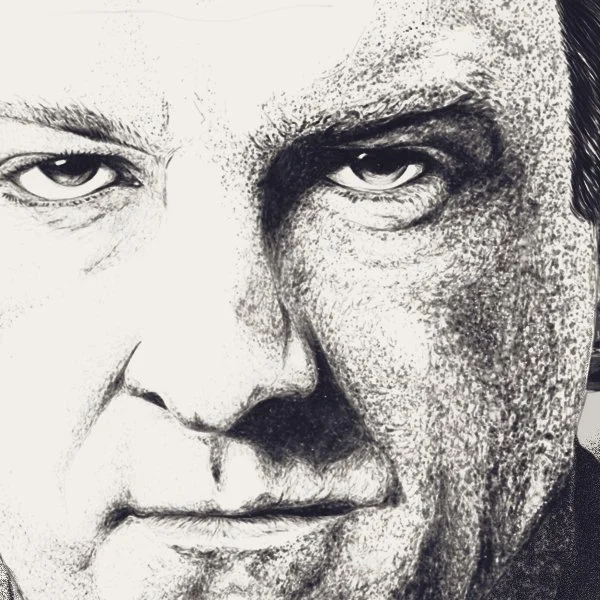
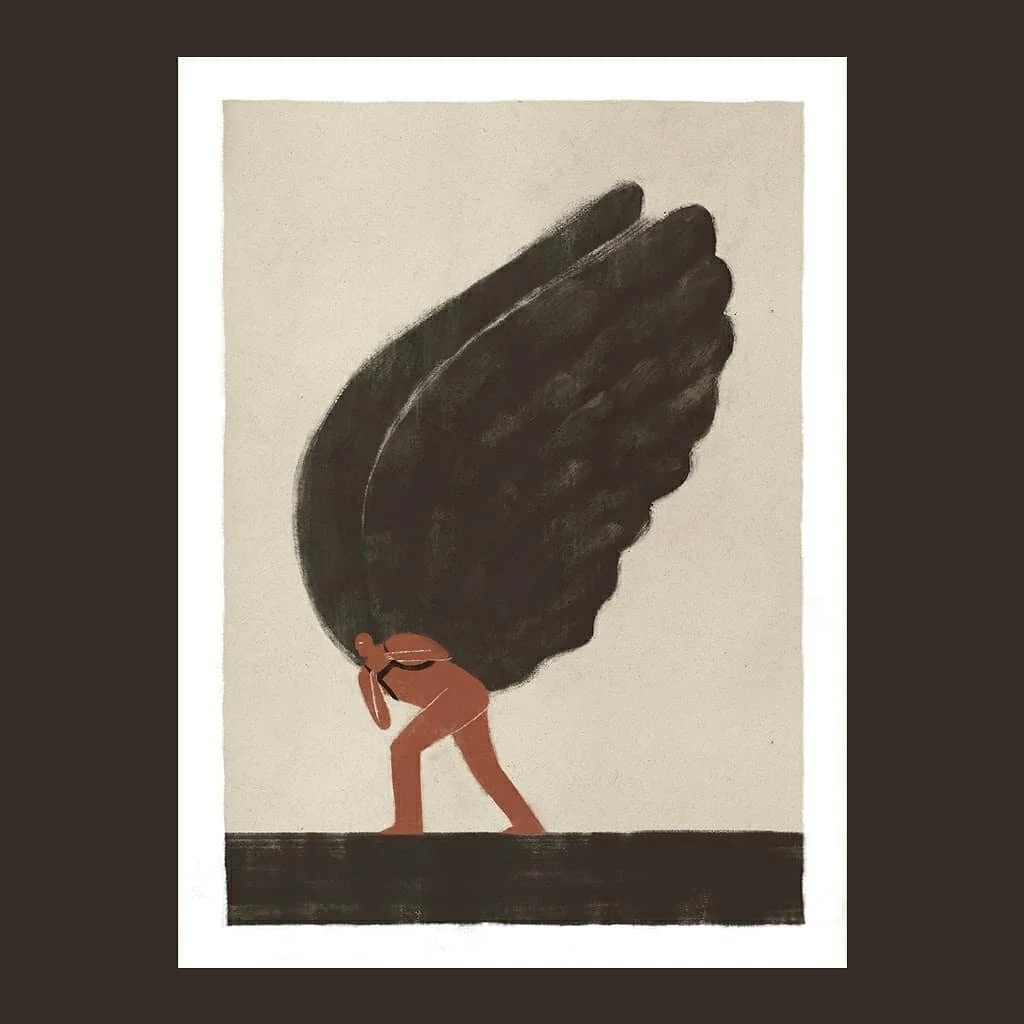
"Depression is rage turned inward," explains a smart psychotherapist to the head of a mafia clan in the tragicomic TV series " The Sopranos ." One could say that anger is energy that should flow freely and with direction. But what if the object of the anger is under a sacred prohibition? In that case, the impulse is constantly present, but there is no way to act on it. All that power begins to erode, destabilize, and explode the system from within. Realizing that your own energy is working against you is doubly frustrating. It's impossible to resist, but it's also impossible to overcome yourself. One thing is clear – in such a struggle, resources are wasted in vain, dissipating into space.

If you're an experienced entrepreneur, you know what we're talking about. You've either seen something like this happen to a business partner or struggled with it yourself. In addition to being harmful to the owner's health, the "unsolvable paradox" inevitably harms everyone around him (or her) - family, partners, employees, and of course, customers. Since a part of his resources is lost, the founder gives the business everything he has, but it's just crumbs. Yes, the leader is still shaking hands with clients, smiling at investors, and sitting at the head of the table, but one cannot help but feel that instead of him, there's only a shadow, a hologram, a ghost. Over time, this mischief infects the entire company, turning it into a zombie. The attempts of the most stubborn employees to change something are admirable, but they usually have no effect. The intervention of an investor is also unproductive, unless the business has become large, and the investor is a resolute Private Equity fund.

But you know what strikes me the most when I see this bouquet of symptoms once again? The mismatch between the hopelessness with which the situation appears to all participants before X and the freedom that appears immediately after X. It seems that it will require a tremendous amount of time and money to build a bridge over this chasm. But no, it's not about the magnitude of the effort, it's about its point of application. This is what X is. By the way, according to one unconfirmed version, in 1637, Descartes introduced the variable X as a transcription of the Arabic letter ش, the first letter in the word شيء‎, which means "something".

Yours sincerely,

-Alexander


You can help Ukraine defend itself and the World from Russian aggression here.


”Who are you and what do you do?"
As a business therapist, I help tech founders quickly solve dilemmas at the intersection of business and personality, and boost company value as a result.

"I have an important business decision to make. Can you help me?
Reserve a time on my calendar that is convenient for you to meet with me. We'll clarify your request and discuss options for how you can help.
The Power of Pressure: How System Edge Drives Clarity and Efficiency by Alexander Lyadov

An increase in temperature of 3 degrees or 10% seems insignificant in the abstract. But when it comes to the temperature of your body, such a change feels like you've been put in a centrifuge. Headaches, muscle aches, chills, and weakness are unpleasant but bearable. The bigger problem is the loss of energy and confused thought process. When the flu virus is dangerous, all the body's energy is diverted to fighting it, making it impossible to do any mental or physical work. Even if you muster all your willpower, it won't help because instead of a clear stream of consciousness, there's a muddy, dirty pond inside you. The product of your work will inevitably have a high percentage of catastrophic defects. That's why, for example, it's not possible to drive a car with a temperature of 39°C.

Extreme situations are useful because they help separate the wheat from the chaff. While everything in the system is more or less fine, it seems complicated and there appear to be a thousand important things. But as soon as the system is pushed to its limits, it becomes clear that its entire function depends only on one factor or two.

Knowing this allows you to focus on what really matters and stop wasting resources on anything else. For example, there are many frameworks for analyzing a company, and as a founder, you regularly try to study and apply each of them. It's all interesting, but it doesn't seem to lead to a breakthrough, does it? Perhaps it would be more beneficial to honestly answer two questions on a scale of 1 to 10: 'How energized is my organization?' and 'How effective is our decision-making process?' Although every company is afflicted by different energy-draining "viruses," one thing is certain: they don't infiltrate from outside.

Yours sincerely,

-Alexander


You can help Ukraine defend itself and the World from Russian aggression here.


”Who are you and what do you do?"
As a business therapist, I help tech founders quickly solve dilemmas at the intersection of business and personality, and boost company value as a result.

"I have an important business decision to make. Can you help me?
Reserve a time on my calendar that is convenient for you to meet with me. We'll clarify your request and discuss options for how you can help.

The Power of Observing: Discovering Your Path to Mastery by Alexander Lyadov

I've been wearing glasses for so long that I can't even remember. However, I have recently discovered that I don't know the correct way to put them on and take them off. An old master explained to me that I should pick them up with three fingers instead of two and take them off forward, not sideways. My beloved titanium glasses have lasted through rough handling for many years, but one day even their super-strong temples gave out.

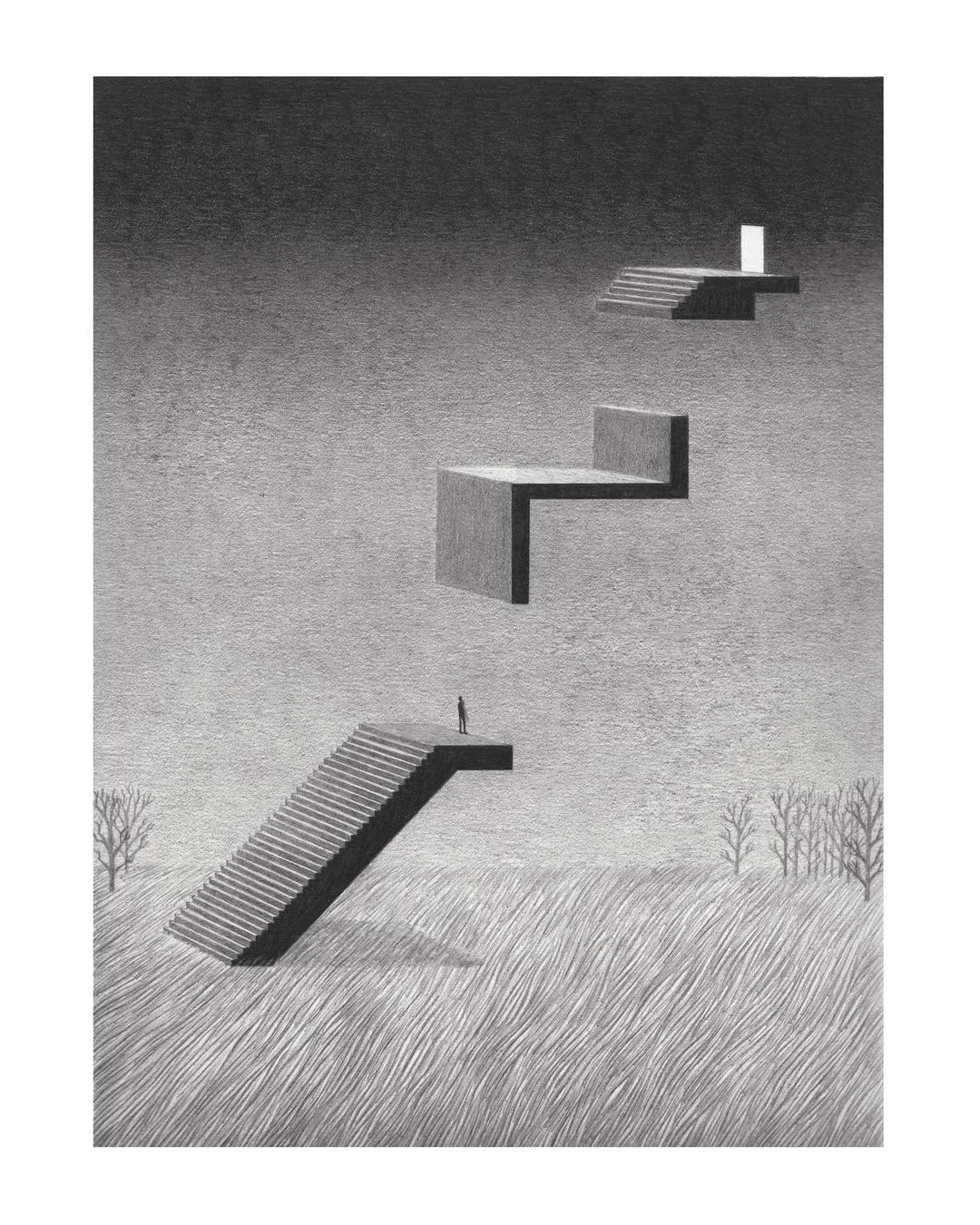
Expertise doesn't just come from repetition. A pattern of behavior must be observed for a long time by an inquisitive, not passive, mind. And what stimulates curiosity the most? There is no better motivator, than mistakes, oversights, and miscalculations — your own or others'.

It might seem simple -- just pass through your consciousness a multitude of mistakes and you'll become an expert in your chosen field. But there's a catch -- dedicating years to this exploration inevitably sacrifices an alternative path. All that time, instead of observing patterns, you could have been doing something else. For example, becoming a champion in all weight categories and entering the Hall of Fame. Or creating a new business, building it and selling it successfully.

One path does not automatically transform into another. Not every Olympic champion becomes an outstanding coach. However, it's also true that the best BJJ and MMA trainers in the world, like John Danaher and Firas Zahabi, don't have walls adorned with gold medals and belts. Sooner or later a person has to choose their own path.

The earlier a person recognizes their tendency, the easier their path will be. But sometimes these paths are inscrutable, and expertise is formed through observation-in-action, as it was in my case. I've worked in various roles in business: as a hired employee, department manager, CEO, co-founder, investor, and board member. Looking back, I fondly recall the whispers from my intuition that told me, "Aren't you tired of being in the middle of things? You're an Analyst. Your calling is to notice the hidden patterns that determine whether or not a founders business will grow rapidly or not."

Yours sincerely,

-Alexander


You can help Ukraine defend itself and the World from Russian aggression here.


”Who are you and what do you do?"
As a business therapist, I help tech founders quickly solve dilemmas at the intersection of business and personality, and boost company value as a result.

"I have an important business decision to make. Can you help me?
Reserve a time on my calendar that is convenient for you to meet with me. We'll clarify your request and discuss options for how you can help.

Ignored Miracle: Regeneration and Entrepreneurship by Alexander Lyadov

We tend to admire the talent of doctors and the strength of new drugs, but rarely do we give credit to the organism. If you catch a virus, cut yourself, or break your arm, after the medical procedures, all you need to do is wait. The body will do the incredible work of bringing us back to order. Isn't it a miracle how systematic the healing process of a wound is? During the inflammation stage, the damaged tissue is cleared of harmful microorganisms and dead cells. During the proliferation stage, collagen is deposited, and the wound granulates and shrinks. Finally, during the epithelialization stage, excess collagen is removed, the wound matures, reshapes and completely heals. All this time, our mind doesn't do a thing. We take the fundamental process of regeneration as a given. I don't dispute that there are injuries and diseases when the body is helpless without doctors. But in the overwhelming majority of cases, the main work is modestly done by the organism itself.

There are similarities between regeneration and entrepreneurship. When a business becomes big, it suddenly has many mothers and fathers. Top managers, investors, creditors, consultants, and investment bankers all tout their involvement in LinkedIn, creating the impression that they are the ones who made the business a success. I've even heard these people make condescending comments, saying how much effort they had to put in to straighten out the chaotic business and civilize the founder-wild man.

It's often forgotten that all the services they offer are meaningless if there isn't a business to begin with. Someone had to take big risks, sacrifice sleep, and do things they never thought possible just to break through the asphalt and reach the sun. Furthermore, people don't realize how many managers were useless and actually harmed the company. Or how often business consultants gave good advice but only for other companies in different circumstances. Or how every force majeure caused nervous breakdowns among investors, threatening to ruin the business with inadequate decisions. Meanwhile, the entrepreneur was busy with regeneration - looking for new top managers, ignoring stupid advice from smart consultants, extinguishing investor hysteria, and doing a million other important but unnoticed tasks.

Just as regeneration is crucial for the survival of any organism, entrepreneurship is equally important for the survival of a society. I'm deeply concerned when I hear people dismiss entrepreneurship, whether it's at the government level or in everyday life. On the other hand, I feel reassured about a society where a founder is a role model.

Yours sincerely,

-Alexander


You can help Ukraine defend itself and the World from Russian aggression here.


”Who are you and what do you do?"
As a business therapist, I help tech founders quickly solve dilemmas at the intersection of business and personality, and boost company value as a result.

"I have an important business decision to make. Can you help me?
Reserve a time on my calendar that is convenient for you to meet with me. We'll clarify your request and discuss options for how you can help.


Mastering BJJ: 13 tips that determine whether you grow fast in your new activity or quit by Alexander Lyadov

I began practicing Brazilian jiu-jitsu at the age of 43 and went on to become a two-time European Champion in my division. Recently, one of my former clients, a serial tech entrepreneur, asked me an unexpected question: 'Sasha, hi. Can you give me advice on how to start practicing BJJ the right way so that I won't quit quickly and can achieve something in a year or two? Thank you” This question illustrates the way a seasoned founder thinks. The request was well thought out and specific - how to avoid the most common problem and predictably get to a desirable future within a reasonable timeframe. With his permission, I am publishing an extended version of my answer. I think many points are applicable to different activities, beyond BJJ. There are even parallels with building one own business.

  1. Meaning. If not explicitly, at least at a gut level, find out why you need it. Otherwise, it's hard to endure the discomfort of an adult's ego being challenged, close physical contact, micro-traumas, etc.

  2. Survival. Accept that the first 6-12 months of training are not about domination, but simply survival. So the priority should be working on escape from bad positions, not attacks.

  3. Hygiene. While at work you are more likely to catch the flu, at the gym you can get a fungal infection of the skin - ringworm. That's why it's essential to wash with special shampoo, like Defense Soap or Head&Shoulders, after training and treat any cuts immediately with hydrogen peroxide.

  4. Smooth start. Treat warm-up (and cool-down) as a sacred ritual. Its absence is the cause of many pointless, and therefore disappointing, injuries.

  5. Vulnerability. Be paranoid in protecting your own and others' joints and ligaments: neck (top-down stacking), shoulders (kimura lock), elbows (armbar), and knees (leg locks and twisting the fixed leg around the axis). During grappling, pay attention to adjacent pairs, as unexpected danger comes from them.

  6. Recovery. If you are injured, give yourself time to recover (avoid fights). However, don't stop exercising other muscles, even if it's a different activity - swimming, yoga or walking.

  7. Core. Regularly strengthen your core muscles and joints (abs, lower back, press, spine, shoulders) using weights, resistance bands, or dumbbells. Simultaneously, increase your range of motion through stretching, especially for your hips. This helps prevent overuse injuries to your joints and muscles.

  8. Coach. Pick a gym based on the chemistry with the head trainer (and their right hand). Gym cultures can vary greatly, but always reflect the personality of their founder, i.e. their understanding of good and evil.

  9. Risks. Identify the "club psychopath" (1-2% in each community) and only fight them just before important competitions. During regular training sessions, politely but firmly say No.

  10. Insurance. Consistently train to willingly tap out often and early in compromised positions. Injuries set you back far. Also, BJJ is a lifestyle, not a million-dollar UFC fighter career.

  11. Moderation. Learn to roll, not fight like bulls every time. Your explosive movements are dangerous for all participants and speak more of desperation and technique deficiency than strength. The goal should be to maximize not the intensity of training sessions, but the amount of work done over a period (month, quarter, year).

  12. Partners. Find like-minded individuals within the club with similar goals and a reliable sparring partner. In BJJ, one necessarily needs another to progress.

  13. Horizon. Forget about the local result — who won or lost today — and remind yourself of the big picture — what you want to achieve in a year or two. This allows you to downplay what's happening in the present and focus on the long-term process of continuous improvement of your mastery.

Yours sincerely,

-Alexander


You can help Ukraine defend itself and the World from Russian aggression here.


”Who are you and what do you do?"
As a business therapist, I help tech founders quickly solve dilemmas at the intersection of business and personality, and boost company value as a result.

"I have an important business decision to make. Can you help me?
Reserve a time on my calendar that is convenient for you to meet with me. We'll clarify your request and discuss options for how you can help.

Surprising Unanimity Between Buddhist Monk and an MMA Coach: Business Insight by Alexander Lyadov

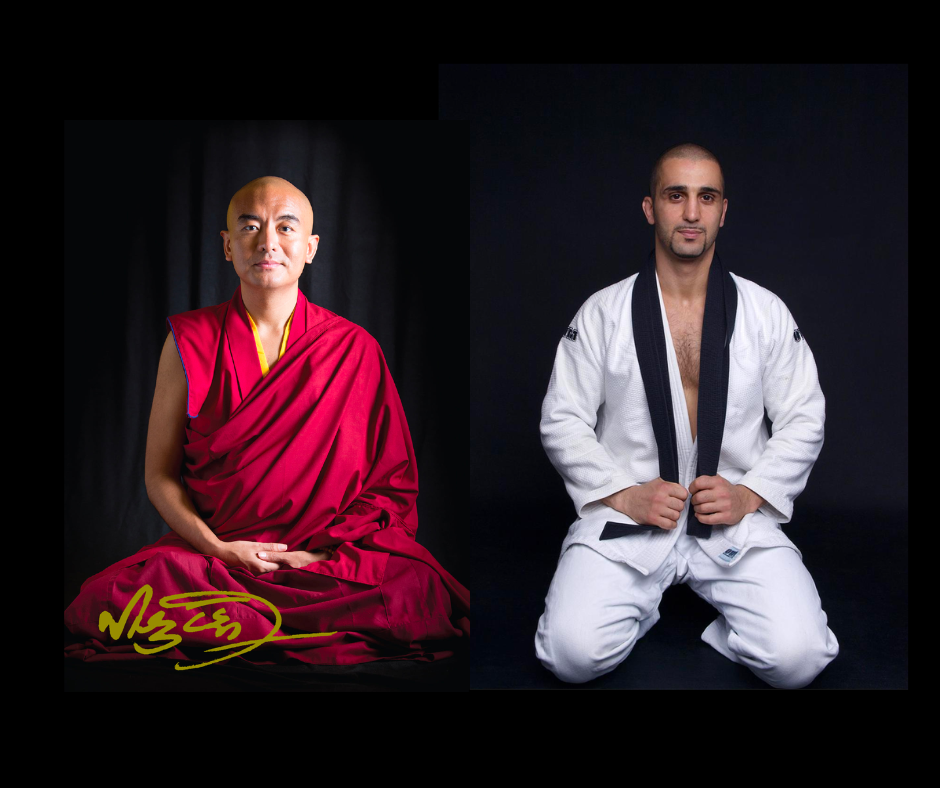
Yongey Mingyur Rinpoche writes: "...I found that many students who were just starting out in meditation tended to set unrealistic goals for themselves. They felt that in order to meditate they had to sit in perfect meditation posture for as long as humanly possible. ...My father emphasized again and again to all of his students in a way that would make it easy for us to remember: Short periods, many times." Coach Firas Zahabi says: "I am a big believer in consistency over intensity. You can't go to your max every day. There's a cost of going to your max. You should train and wake up the next day feeling good. ...If you add up at the end of the year who trained more, I've trained way more that you."

The goal should be the volume of work done over a period of time. The higher the volume, the better the result in technique, endurance, speed, or strength. A new skill is nothing but a well-trodden path in the neural forest. However, Rinpoche and Zahabi's approach contrasts with the popular belief in society that a future master or champion should be non-stop pushing to the fullest. I think the reason is the absurdification of the idea of hacking-cheating, or the desire to get everything with one strike. Like, "I'll tense up short and max and boom, hit the jackpot in the lottery." Those who try to follow this inevitably get injured and give up on everything. Others, who have fallen on their own or someone else's experience, prefer to sit on the couch, watch epic motivators, and dream of starting someday.

It seems that people find themselves in an imaginary dilemma: to push themselves to the limit or do nothing at all. The same thing happens in business, both at the organizational level and at the individual level. If your goal is to continuously increase the value of your company and/or your professional mastery, then focus inward - on how to avoid succumbing to the temptation of promises of quick success. All you need to do is change the period of return on your investments, from X months to X years. In this way, you will confidently, systematically, and relentlessly arrive from point A to your desired point B.

Yours sincerely,

-Alexander


You can help Ukraine defend itself and the World from Russian aggression here.


”Who are you and what do you do?"
As a business therapist, I help tech founders quickly solve dilemmas at the intersection of business and personality, and boost company value as a result.

"I have an important business decision to make. Can you help me?
Reserve a time on my calendar that is convenient for you to meet with me. We'll clarify your request and discuss options for how you can help.


Hidden narcissism and the importance of boundaries in business by Alexander Lyadov

British psychologist and psychopathology specialist Kevin Dutton made a fascinating remark in a podcast interview: interview: "An inability to say 'No’ is actually a form of narcissism. You are thinking in your mind that you say No is going to be way more important to that person, is gonna have a really bad effect on them. But are you really that important to them? Is that what you think? That you say No is going really upset them? Who are you? You probably no one to them. So when people have trouble saying No is often an inverted form of narcissism, when you overinflate your sense of importance for that person. So actually a lot of the time saying No won't affect that person at all. They just: "OK, fair enough". What an unexpected twist, right? The people-pleaser who embodies other people's desires in both their and other people's eyes may look like a victim or a savior, but definitely not a narcissist.

In business, the ability to say "No" is invaluable. So many resources are wasted just because people do things they are not inclined to do. The CEO can't say no to excited investors who persuade him to accept excessive investment in order to fuel unnatural, dangerous growth. The boutique consultant is confused that the high-profile client does not see her as an expert in the contract negotiation process, but convinces herself that the client will somehow manage to change their mind afterwards. The business partner's actions increasingly irritate the co-founder, but he remains silent, building up anger over growing suspicions only to one day explode and destroy the business they have built up over a decade.

The loss of time, energy, nerves and money could have been avoided if the question of where the boundary lies had been raised in time. You would be surprised how often investors, customers and employees respond to your 'no' with respect and calm. Clear boundaries facilitate co-operation and make you a predictable and therefore trustworthy partner.

Yours sincerely,

-Alexander


You can help Ukraine defend itself and the World from Russian aggression here.


”Who are you and what do you do?"
As a business therapist, I help tech founders quickly solve dilemmas at the intersection of business and personality, and boost company value as a result.

"I have an important business decision to make. Can you help me?
Reserve a time on my calendar that is convenient for you to meet with me. We'll clarify your request and discuss options for how you can help.


Why is the desired transformation not there? by Alexander Lyadov

Can a trainer take on your pet to transform it from a source of chaos to a predictable and obedient dog? Yes, but there's a catch. He'll be a perfectly obedient dog with a trainer, but when you're alone your dog will be a completely different animal. Why? An inanimate object is static, no matter how you look at it. But a living being cannot be separated from its surroundings. What qualities it exhibits depends on who interacts with it. A wizard can tune your computer, but not even Sigmund Freud could fix your life for you.

Nevertheless, it is not uncommon in business to hear investors complain about the unpredictability of the prima donna-CEO. Or a founder's irritation with an HR director who has taken on too much power in the company. Or the owner's complaints about an infantile, conflict-prone and irresponsible management team. Often followed by an assignment to an external expert, the meaning of which is: "Can you fix him/her/them?". Many consultants, coaches and trainers willingly accept the challenge, but as Buddhists say, it's like putting legs on a drawn snake. There is usually no tangible impact on the business, other than the enjoyment of the new experience, i.e. the break from routine.

A subsystem problem can never be solved within itself. Its current form is by no means accidental. The subsystem meets the expectations of the supersystem, even if the request was not explicitly made. In fact, the current status quo in the company fulfils some important role for the leader and shareholders, even if they complain about it and claim otherwise. Many consultants, coaches and trainers willingly accept the challenge, but as Buddhists say, it's like putting legs on a drawn snake. There is usually no tangible effect on the business, except for the participants' delight in the new experience, read switch from routine.

A subsystem problem can never be solved within itself. Its current form is by no means accidental. The subsystem meets the expectations of the supersystem, even if the request was not explicitly made. In fact, the current status quo in the company fulfils some important role for the manager and shareholders, even if they complain about it and claim otherwise. Anyone who has had experience in psychotherapy knows that a passionate desire to change is not enough. It is important to understand why you stubbornly cling to what you have now. Otherwise, all attempts at change will be a false start and the wheel will inexorably return to the rut. That is why effective examples of company transformations are few and far between. All supersystems dream of ambitious change, but few are willing to start with themselves.

Yours sincerely,

-Alexander


You can help Ukraine defend itself and the World from Russian aggression here.


”Who are you and what do you do?"
As a business therapist, I help tech founders quickly solve dilemmas at the intersection of business and personality, and boost company value as a result.

"I have an important business decision to make. Can you help me?
Reserve a time on my calendar that is convenient for you to meet with me. We'll clarify your request and discuss options for how you can help.


How do you overcome the Earth's gravity? by Alexander Lyadov

In any unfamiliar endeavour, the hardest part is getting it off the ground. Subjectively, without knowing what to expect, the imagination paints the bleakest possible outcome. But also objectively, novelty involves a series of barriers, bumps and holes. All this, in the initial phase, requires excessive physical, psychological and mental strain, lest the irreparable happen.

Stress, fatigue and doubts will accompany a person until the chaos is structured. It makes sense why the impulse to resist change and cling to the status quo is so strong. In order to endure such discomfort for a long time, you first need a clear answer to the question: "Why do I need all this?

What if the investment horizon is 3, 5, 7 or 10 years? And with no guarantee of success? Most people would snort, "No way, that's stupid. It is stupid, but not for those who, as they say in jujitsu, love the Game itself. The satisfaction of solving riddles and neutralising obstacles partly redeems anxiety, pain of loss and sleepless nights.

You've probably guessed that we're talking about business founders, though not exclusively. However, being resistant to discomfort does not mean striving to experience it unnecessarily. The best entrepreneurs I observe optimise the process so that they get the maximum return on every unit of effort they invest. To do this, they try to launch a new business not by pushing it, but by coasting. Remembering how much energy was consumed by their first business, they build their next project on what they have had so far. The first project gives an impetus to the second one, which in turn gives an impetus to the third one, and so on, speeding up. The serial entrepreneur eventually becomes irrelevant to the "forms" - industries, geography, market cycle, business models, etc. At the third cosmic velocity, the founder overcomes the Earth's gravity and expands into space.

Yours sincerely,

-Alexander


You can help Ukraine defend itself and the World from Russian aggression here.


”Who are you and what do you do?"
As a business therapist, I help tech founders quickly solve dilemmas at the intersection of business and personality, and boost company value as a result.

"I have an important business decision to make. Can you help me?
Reserve a time on my calendar that is convenient for you to meet with me. We'll clarify your request and discuss options for how you can help.


Appreciate what you have by Alexander Lyadov

Yesterday I did a stupid thing that caused my lower back to jam. In the morning I wrote to the wonderful neurologist at the Time+ clinic, he found a window in the schedule and saw me the same day. Every time you get a service in Ukraine promptly, whether it's by Nova Pochta, Privatbank, M24 or Medicom, you tend to take it for granted. But when I talk to my family who have been in England because of the war, it is immediately clear that this is not the case everywhere. When we traveled around England on holiday, we always marvelled: "Ah, how cleverly everything is arranged. I wish we could live here!". But unlike short-term tourism, permanent living reveals another side to life in England where you can't get a dentist by day, CT appointments take up to 12 weeks and a 90 year old English lady has to wait eight hours in a hospital waiting room. The railway workers are on strike all the time, there is red tape and paperwork is everywhere. However, our priority right now is family safety, the rest is unimportant.

Of course, England is a civilized, strong, rich and welcoming country, admirable in so many ways, it would take hours to list them all. But nothing in this world is perfect, and more importantly, everyone is imperfect in their own way. It follows that everyone has something to offer others. But there is one condition: that this value is recognised and acknowledged by oneself. It is all too easy to habitually devalue oneself: "Who are we? Nobody. A developing market. Corruption, unfair courts and now war. Unlike us, England, America and Germany have...". In reality it is not quite like that, and on the individual level it is not true at all.

Among my clients, there are entrepreneurs who were forced by the war to make business expansions to the USA, for example. They have always dreamed of doing it, but never had the time or, to be honest, were afraid of it. It is one thing to be a leader in Ukraine for many years, but it is another thing to prove again on someone else's territory that you are the best. And what if you are not? They were astonished to find that their professional expertise and entrepreneurial flair were in high demand in other markets. I am sure that after a while, they will wonder why they did not launch businesses in the USA, Europe, the Emirates and Asia a decade earlier. Moreover, even those who never considered themselves entrepreneurs will probably start their own business, because the contrast is too great: "Why is there no service X here like in Ukraine? It's so convenient!". Or, having explored another country for a couple of years, they will go back and launch Wow service at home.

The fact is that our people are now able to produce a synthesis of two very different worlds, which is a prerequisite for a creative breakthrough in any field.

Yours sincerely,

-Alexander


You can help Ukraine defend itself and the World from Russian aggression here.


”Who are you and what do you do?"
As a business therapist, I help tech founders quickly solve dilemmas at the intersection of business and personality, and boost company value as a result.

"I have an important business decision to make. Can you help me?
Reserve a time on my calendar that is convenient for you to meet with me. We'll clarify your request and discuss options for how you can help.


Should The Founder Get an AI Tattoo? by Alexander Lyadov

Some may recall or have read that during the dot-com bubble, companies greatly increased their market value by simply adding ".com" to their name. Fear of missing out on the opportunity among inexperienced investors was so great that every founder probably felt an irresistible urge to rebrand.It was like an investment banker buying a Harley and getting tattooed - a little effort to make it look like he was one of the Hell's Angels.

Then, of course, the bubble burst and most pseudo-businesses collapsed. Only a few survived the investment winter, those who had iron discipline in their finances and whose business model offered real value to users, not in the distant future, but there and then. It is hard to imagine life without the internet today, but only those who focused on function rather than form made a fortune.

Every few years a new hot trend emerges - Mobile, Social Web, Cloud Computing, Blockchain, Big Data, etc. There is currently, for example, a rush among investors on AI. So over the next two years, we can expect to see a wave of rebranding and Artificial Intelligence tattooed on corporate bodies in all verticals. Then history will repeat itself as investors flock to the next popular trend. Only a few start-ups will make a breakthrough in AI, and for most large companies, AI will prove not to be a competitive advantage, but only a hygiene norm.

The social pressure in the form of temptations and threats is strong at any given moment. So each founder must decide what is more important to him or her — to appear or to be.

Yours sincerely,

-Alexander


You can help Ukraine defend itself and the World from Russian aggression here.


”Who are you and what do you do?"
As a business therapist, I help tech founders quickly solve dilemmas at the intersection of business and personality, and boost company value as a result.

"I have an important business decision to make. Can you help me?
Reserve a time on my calendar that is convenient for you to meet with me. We'll clarify your request and discuss options for how you can help.

Can Anyone Really Hear You? by Alexander Lyadov

Unknown photographer

Entropy will steadily increase in a closed system, as established by thermodynamics. This applies to a corked boiler heating up and to a person who keeps all their emotions and thoughts to themselves. Eventually, any system will reach its limit and explode in some form, whether it's a social media outburst, workplace conflict, or a physical illness. Energy will always find a way out, taking us, as usual, by surprise.

No matter how strong our willpower, patience, or habit of self-control, we need at least one hole in the lid to release the steam. Knowing that there's a way out significantly soothes the system. Yes, there's no solution yet, but I know for sure who can help me find it. In other words, I'm not alone and can be truly heard and understood.

Unfortunately, the role of an attentive and trusting listener is not suitable for everyone. You have to be a strong person, not physically or intellectually, but in terms of the courage to explore and accept the darker side of yourself. While a weak personality clings to illusory but simple and therefore lulling explanations of a frightening phenomenon, a strong personality is able to endure ambivalence in the self and therefore in the other. How many people do you know who genuinely reach for the multi-factorial dynamics of truth rather than the flat statics of dogma? I am not talking about spiritual giants - hermits in mountain hermitages, but lay people living ordinary lives who are half a head taller than you and me.

With ultimate responsibility for the business and everyone it feeds, the founder is regularly under intense internal stress. The wicked irony is that there are even fewer in his (her) immediate environment whom he considers strong and whom he can trust. So what to do? Invest more in the search. Whether it is an entrepreneurial community, an advisory board, a coach or a psychotherapist, the main thing is to go beyond your system.

Do you have someone you can be very open with about anything?

Yours sincerely,

-Alexander


You can help Ukraine defend itself and the World from Russian aggression here.


”Who are you and what do you do?"
As a business therapist, I help tech founders quickly solve dilemmas at the intersection of business and personality, and boost company value as a result.

"I have an important business decision to make. Can you help me?
Reserve a time on my calendar that is convenient for you to meet with me. We'll clarify your request and discuss options for how you can help.


The Power of Inner Light by Alexander Lyadov

One day, while strolling in the park, I stumbled upon a small library in a monastery and had a chance to speak with the librarian, a humble and soft-spoken woman in her seventies. I was struck by the peaceful aura that radiated from her and I felt immediately at ease. Although the books on the shelves were all related to Christianity, our conversation did not touch on religious matters at all. I cannot recall exactly what we talked about, but I remember feeling uncommonly relaxed in her presence. I took a book out of the library as an excuse to return and see her again in a week.

Bright people like this librarian are not often encountered in our daily lives, but they exist outside of monasteries as well. Think back and you might remember meeting similar people in various places and situations - perhaps the owner of a rural French hotel, a wise and kind doctor, or even a fellow traveler on a journey. Regardless of where you met them, you cannot deny the special significance of these encounters. In their presence, you feel like you're warming up after being in the cold. Their magnetism goes beyond mere communication and even their attention feels therapeutic. It's a kind of magnetism to have light inside.

What makes these individuals so magnetic? I'm not sure, but I've noticed that they are authentic, meaning they are at peace with themselves. They do not expect anything from you and they truly listen and see you during the conversation. In other words, they put aside their own thoughts and focus solely on you. While the first characteristic may be difficult for many people to achieve, the second and third are attainable for almost everyone, even if only for an hour.

This idea has direct relevance to the topic of this newsletter - business and entrepreneurship. When people truly listen to each other, deals are struck, conflicts are resolved, and innovative ideas flourish. The best sales pitches don't feel like sales pitches at all. You just need, as the philosopher and psychotherapist Eugene Gendlin said, to take a short vacation from yourself in order to place the other person at the centre of your world. Then they will feel relieved to openly share their pain with you, and the solution will naturally come to light if you are the expert.

Sincerely yours,

-Alexander


You can help Ukraine defend itself and the World from Russian aggression here.


”Who are you and what do you do?"
As a business therapist, I help tech founders quickly solve dilemmas at the intersection of business and personality, and boost company value as a result.

"I have an important business decision to make. Can you help me?
Reserve a time on my calendar that is convenient for you to meet with me. We'll clarify your request and discuss options for how you can help.


The Wonders of ChatGPT by Alexander Lyadov

I've been using ChatGPT for a few days now and I should say I am very impressed. The interface is user-friendly, its knowledge is deep, and its arguments are logical. It feels like talking to a wise and calm being. It even apologizes, if I ever find its answers boring. But what really stands out to me is its endless patience. In conversations with human beings, such as with tech support, friends, or doctors, there always comes a point when they will impatiently let you know, "That's enough, the conversation is over." ChatGPT, on the other hand, calmly continues to clarify and provide examples, as if my questions were #1 priority for it.

To have someone be 100% focused on you is a rare experience. It's like being with your grandparents as a child, falling in love, receiving therapy, or having the undivided attention of your beloved dog. ChatGPT's willingness to assist is almost uncanny, and it makes it an ideal partner for tasks where a second mind comes in handy, such as in business, research, study, music composition, or thinking. The prospect of where it can be applied is breathtaking.

Unfortunately, ChatGPT is not without its flaws. Its creators have reportedly biased it with left-wing ideology, which is why it may provide distorted answers on sensitive issues. The more useful it becomes as a tool, the greater the danger of it falling under the influence of a manipulator with a hidden agenda to liberate people regardless of their consent. But I have faith that common sense will eventually prevail, as it has throughout history.

In the meantime, I encourage you to try ChatGPT on any topic of importance to you. You might be pleasantly surprised by what it can do. If it isn't yet available in your country, you could ask friends in the US or Europe to help you set up an account with OpenAI and use a VPN.

Sincerely yours,

-Alexander


You can help Ukraine defend itself and the World from Russian aggression here.


”Who are you and what do you do?"
As a business therapist, I help tech founders quickly solve dilemmas at the intersection of business and personality, and boost company value as a result.

"I have an important business decision to make. Can you help me?
Reserve a time on my calendar that is convenient for you to meet with me. We'll clarify your request and discuss options for how you can help.

The Angle of Attack In Problem Solving by Alexander Lyadov

Attacking a problem head-on ain't always the best move. It can be tough, time-consuming, and therefore costly.

A seasoned wrestler or boxer knows that it's more advantageous to attack your opponent from the flank. Ask yourself: is it easier to defend when the opponent is directly in front of you or coming from behind? Or another example: it's easy to lift the weight straight above your head, but doing it at 45 degrees is torture.

So the defender's objective is to turn to face the danger. The attacker's aim, on the other hand, is to gain an advantage through angle of attack and surprise.

The issue seems insurmountable when it suddenly takes you by surprise and advances towards you along its own path. But take a step to the side and you have room to manoeuvre and time to think. The point is the step doesn't require any physical exertion or investment, it all takes place in the mind.

Sometimes the insight comes suddenly on its own. Or, the change in perspective comes from a coach, therapist, or business partner asking the right questions. So before making a full-fledged attempt to solve a problem, it's more helpful to ask yourself: "Hmm, how do I approach this?"

Sincerely yours,

-Alexander


You can help Ukraine defend itself and the World from Russian aggression here.


”Who are you and what do you do?"
As a business therapist, I help tech founders quickly solve dilemmas at the intersection of business and personality, and boost company value as a result.

"I have an important business decision to make. Can you help me?
Reserve a time on my calendar that is convenient for you to meet with me. We'll clarify your request and discuss options for how you can help.


What Kind of Risk Do You Love? by Alexander Lyadov

The best entrepreneurs I know love risk and are willing to take it. At the same time, they are paranoid about risk avoidance. How so? The term "risk" can encompass a wide range of meanings, and the distinction between them is crucial. Agree that it is very different to cold call a potential client or to borrow from a mob.

The former can be intimidating and uncomfortable, particularly for introverted entrepreneurs. But even a rude rejection can be forgotten in a matter of days and even come to be loved through repetition. A loan from a criminal, however, welcomes the founder to hell. Now any misfortune or misstep will be ruthlessly used against him by masters of all violence.

The difference between these risks lies in the magnitude of the consequences. The first is similar to a minor cut - unpleasant, but easily treatable. The second is like a punch from Mike Tyson - if it lands, it can be fatal. Figuratively speaking, the body of an experienced entrepreneur is marked by scars. But knowing Mike, they would never step in the ring against him. The rest of the people, on the other hand, lose sleep over of speaking at a conference. Then they get in a fight with a stranger in a queue for no reason, or get on a motorbike without a helmet. Then they get into a fight with a stranger in a queue for no reason, or get on a motorbike without a helmet.

As Nassim Taleb has  written , "One can be risk-loving yet completely averse to ruin...In a strategy that entails ruin, benefits never offset the risks of ruin...Rationality is avoidance of systemic ruin.

Sincerely yours,

-Alexander


You can help Ukraine defend itself and the World from Russian aggression here.


”Who are you and what do you do?"
As a business therapist, I help tech founders quickly solve dilemmas at the intersection of business and personality, and boost company value as a result.

"I have an important business decision to make. Can you help me?
Reserve a time on my calendar that is convenient for you to meet with me. We'll clarify your request and discuss options for how you can help.


Defying death and impermanence: The Entrepreneur's Mindset by Alexander Lyadov

While reading a book by Buddhist teacher Yongey Mingyur Rinpoche I came across a phrase that succinctly summed up what I was vaguely feeling: "But they were the most likely environments in which to find a great master, who had overcome his or her fear of death and impermanence — two of the fearful conditions that keep most people locked in the samsaric conditions of attachment to what is and aversion to what might occur." Anyone who has tried to change something drastically knows the power of resistance to leave things as they are. Scale and scope are unimportant as the dynamics are similar in relation to self and family, individual and group, one's profession and clients' businesses.

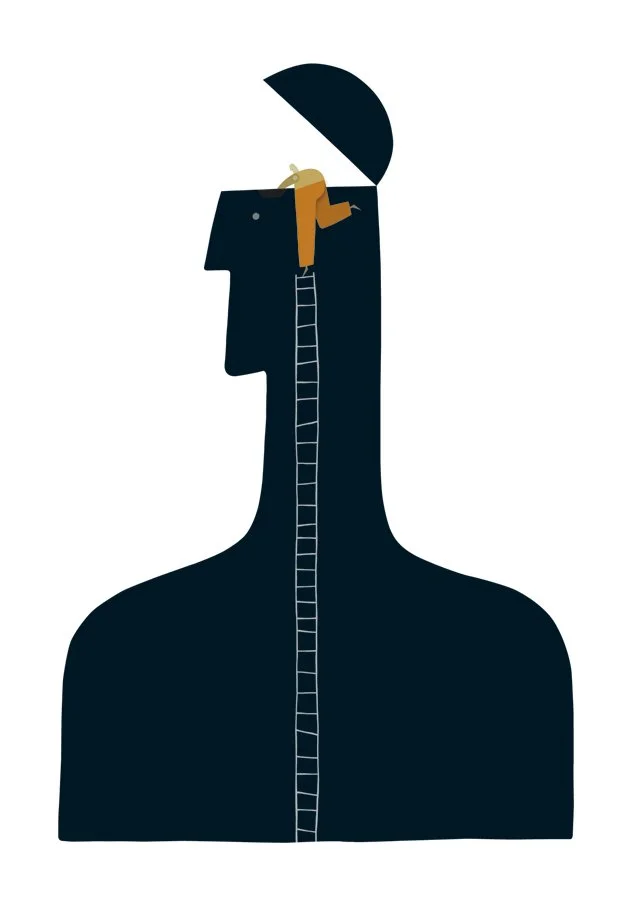
I haven't finished the book yet, but my hypothesis is that the root of man's problems lies in mistaken identification with X instead of Y. This can be viewed through the lens of philosophy, religion, or science, but for the purposes of this newsletter, the business perspective is more appropriate.

For example, a local company may be big and profitable today, and the owner proudly looks down on everyone. But investors and strategic buyers would value it extremely low if a global leader announced plans to conquer the same market. The value of a company is based on its discounted future cash flow, and the threat of disruption drives the value towards zero. On the other hand, a loss-making technology start-up may be highly valued by investors because users are benefiting and the number of users is growing exponentially every day. In other words, in business, the current form means something, but little. More important is the potential of a company that has yet to be unlocked.

But isn't it madness to rely on what doesn't yet exist? On the contrary, it's wise. Investors are betting on function, on someone who can turn the implicit into the explicit. In other words, the market values those who identify not with any form but with the process itself. And who is that? An entrepreneur, of course. In his (or her) private life he (or she) can be anything, but at least in business the founder overcomes the greatest fears — death and impermanence — by consciously choosing to be an agent of change.

Yours sincerely,

-Alexander


You can help Ukraine defend itself and the World from Russian aggression here.


”Who are you and what do you do?"
As a business therapist, I help tech founders quickly solve dilemmas at the intersection of business and personality, and boost company value as a result.

"I have an important business decision to make. Can you help me?
Reserve a time on my calendar that is convenient for you to meet with me. We'll clarify your request and discuss options for how you can help.

The ass and the heart by Alexander Lyadov

Each of us feels the gap between what we have and what we desire. In this, all human beings are absolutely the same. The only difference is how one perceives this fact. For example, in the West it is becoming more and more popular to convince oneself and society that a person is a helpless victim of genetics, other people’s intentions or circumstances. Like heroin, such a move guarantees relief as the weight of responsibility for the status quo instantly falls off one’s shoulders. Except that the gap between what is desired and what is available remains the same, or rather increases every day.

I see the opposite attitude in company founders. No matter how brutally and unfairly their fortunes may have kicked them, they do not point the finger at it. Rather than scratching the itch of self-pity, they take a deep breath and then get on with rebuilding the business or setting up a new one. Instead of brushing off the itch of self-pity, they take a short breath and then start rebuilding the business or launching a new one. If the prey is the object of the predator’s hunt, the entrepreneur is always the hunter of the beast himself, i.e. he is the subject.

Moreover, it’s not about the availability of resources, for founders act this way even when they are deprived of everything and driven to a dead end. It is purely a matter of the attitude of the self-in-situation, i.e. the initial attitude of the mind. Psychologically, it’s hard at the moment, but in the long run, the entrepreneur is inexorably successful. Why?

According to Stanford neuroscientist Andrew Huberman, in a fight between two animals, both are stressed and excited. However, the one that converts this into a greater number of forward movements per unit time wins. In other words, to triumph you simply have to move forward physically against all odds. Or, as Steven Pressfield, the American author of historical novels and popular science books aptly put it, ‘Put your ass where your heart wants to be’.

Yours sincerely,

-Alexander


You can help Ukraine defend itself and the World from Russian aggression here.


”Who are you and what do you do?"
As a business therapist, I help tech founders quickly solve dilemmas at the intersection of business and personality, and boost company value as a result.

"I have an important business decision to make. Can you help me?
Reserve a time on my calendar that is convenient for you to meet with me. We'll clarify your request and discuss options for how you can help.


In search of lost energy by Alexander Lyadov

The problem of professional burnout is everywhere. I too have experienced burnout a couple of times. I’ve also seen it regularly in managers, CEOs, entrepreneurs, athletes and artists. The usual advice in such cases is to take a break or change the context. In mild cases this does help. But what do you do when it’s like a scorched earth inside a person? When not only is the fuel tank empty but the battery is dead (or maybe ruined?). Outwardly the Founder may look fine looking and move forward like a gliding aeroplane when both its engines have failed. The form remains, but the essence, i.e. the vitality is gone. He who has been in that state would not wish it on anyone.

But what is vitality? Why is this vital energy pouring out of some people like a fire hose, while others have it only in the morning, like dew on the lawn? Why one is vigorous even when he gives out a lot, and the other loses energy even when he saves every drop? My hypothesis is that Vitality is proportional to Interest. It’s not about what seems important, sensible, cool, worthy or useful to you. It’s about your personal underlying interest in something, which sometimes you don’t even understand yourself. But it’s not about the reasonableness or relevance of the interest, it’s about its existence. It can be felt unmistakably in the body, like a hunger or a sneeze. Either you have interest (in a wide range of values) or you don’t.

As long as a man is alive, interest is capable of manifesting itself in him. Yes, if you force yourself for ten years to do a boring or annoying job in a society of people alien to you, your soil will burn out several meters deep. Your black earth becomes a wasteland where nothing else can grow. This means that it may take years for nature to repair the damage you’ve done to itself. But even when nothing seems to be happening, and only the wind is chasing the tumbleweed, it is not so, for the process of soil regeneration is happening non-stop inside you.Surely it is better not to sit sadly on a stump, but to go and help nature. Your lost interest must be found. And immediately your vitality will begin to flow.

Yours sincerely,

-Alexander


You can help Ukraine defend itself and the World from Russian aggression here.


”Who are you and what do you do?"
As a business therapist, I help tech founders quickly solve dilemmas at the intersection of business and personality, and boost company value as a result.

"I have an important business decision to make. Can you help me?
Reserve a time on my calendar that is convenient for you to meet with me. We'll clarify your request and discuss options for how you can help.


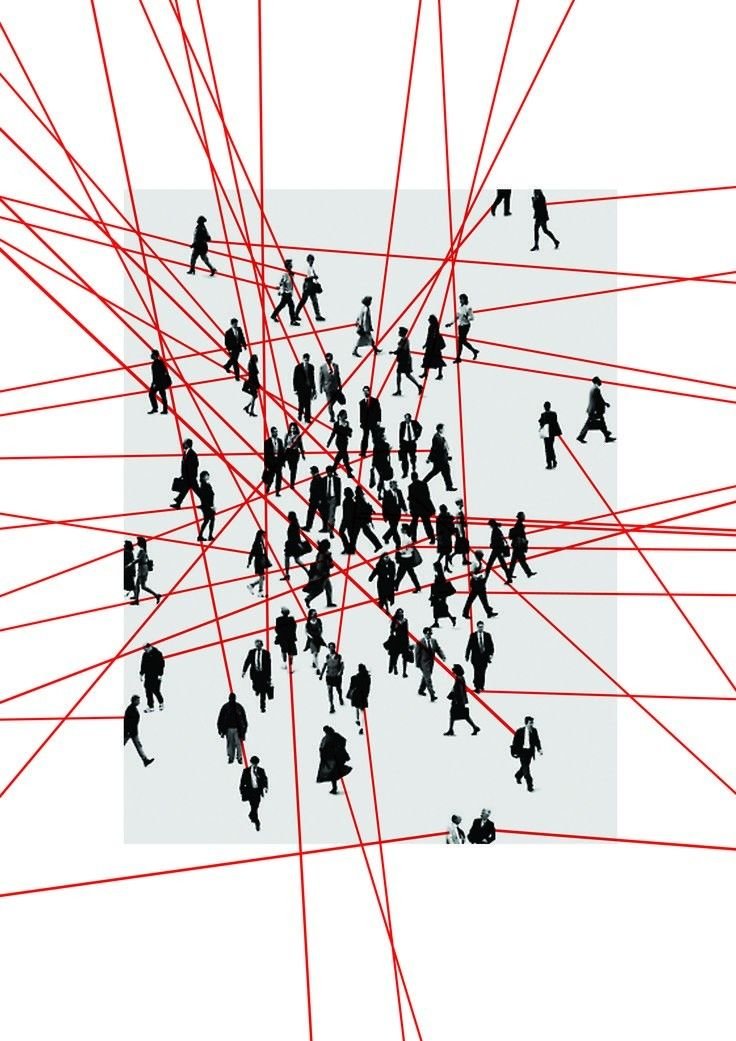
Strategy: red flag #1 by Alexander Lyadov

Many people and red lines

Unknown artist

How do you know if a company is not taking strategy seriously? Look at who is responsible for the process. For example, if the selection of the strategy session moderator is handled by the HR manager or assistant, this is a red flag. Why?

The very name “strategic” implies the fundamental nature of the decisions made during the session, through which the company will make a dramatic U-turn or breakthrough. That is, it is about identifying rare opportunities that can propel the business into a new orbit and neutralising the highest risks that could kill it. In essence, strategy determines whether the value of a business will go up or down. And who in the company is ultimately responsible for the increase in market capitalisation? Correct, the hired CEO if there is a board and/or shareholders, or the founder himself if he is the CEO. Delegating one of the most important processes to a lower level or two, the CEO de facto admits that the strategy is not important to him personally. At least he does not care much about the product that the group of assembled managers will come up with.

Thus there is a substitution of notions and the planned event should more correctly be called a tactical session, brainstorming, mediation or debate, but it is a laugh and a sin to call it a strategic session. After all, confusing the basic concepts is extremely dangerous because it creates a collective illusion that the company has a strategy and that employees are supposedly included in the process. It is a kind of self-gaslighting — a form of psychological abuse, as a result of which the individual (here the collective) is tormented and doubts the adequacy of their perception of the reality around them. Employees are forced to achieve real results in the realm of crooked mirrors. Obviously, the efficiency of their work will be low. And this is inevitably reflected in inflated costs, low profits and slow growth. It may seem like just a game of words, but there's a price to pay. Sooner or later the reality will punish you harshly for lying, especially to yourself.

Yours sincerely,

-Alexander


You can help Ukraine defend itself and the World from Russian aggression here.


”Who are you and what do you do?"
As a business therapist, I help tech founders quickly solve dilemmas at the intersection of business and personality, and boost company value as a result.

"I have an important business decision to make. Can you help me?
Reserve a time on my calendar that is convenient for you to meet with me. We'll clarify your request and discuss options for how you can help.