Why is it so hard to aim high? by Alexander Lyadov

Sam Altman, co-founder and CEO of OpenAI, posted a tweet, “Aim high and do it faster." Both parts of the statement illustrate what most people do the opposite.

When I ask an entrepreneur what he wants his business to be in the future, he often paints either a low-key picture in gray tones or nothing at all. Like, what is the point of dreaming about something that is obviously not feasible. Humanly it is understandable, because such thoughts are trying to poison me, too. After all, if the gap between the desired future and the unacceptable present is enormous, then this fact alone is depressing. At the same time, the entrepreneur admits that despite the daily operational hassles, all the really important decisions in the company are taken with great delay, and then often get bogged down when subordinates are assigned to execute them. As a result, new products are launched late, exits to other markets are choked, a successor to the CEO role is not found, profitability is not improved, and the capitalization of the business does not really grow. You could describe it as: “Aim lower and do slower.”

Not surprisingly, the popular “motivational” approach, which calls for inspiration with overambitious goals, leads to nothing but fatigue and cynicism. The situation will be a dead end as long as the cycle time from making a key decision to receiving feedback from its implementation is not drastically reduced, that is, by orders of magnitude. How to achieve this is the topic of a separate article, because the stumbling block here is not a difficult market, not lack of capital or weak team, but false beliefs in the founder’s head. They were formed for a reason, because they were once extremely useful. But since then, everything-the environment, the company and the people-has changed, but the beliefs have remained the same because no one has questioned them. Eventually, of course, reality will force those beliefs to change, but it will charge too high a price for the lesson. From an investment standpoint, it is far more advantageous for the founder to take the initiative and regularly, quarterly or at least once a year, declare a hunt for his false beliefs. This is where the tools of corporate governance come in handy.

Sincerely yours,

-Alexander


You can help Ukraine defend itself and the World from Russian aggression here.


”Who are you and what do you do?"
As a business therapist, I help tech founders quickly solve dilemmas at the intersection of business and personality, and boost company value as a result.

"I have an extremely important business decision to make. Can you help me?
Reserve a time on my calendar that is convenient for you to meet with me. We'll clarify your request and discuss options for how you can help.

Who can be forgiven much? by Alexander Lyadov

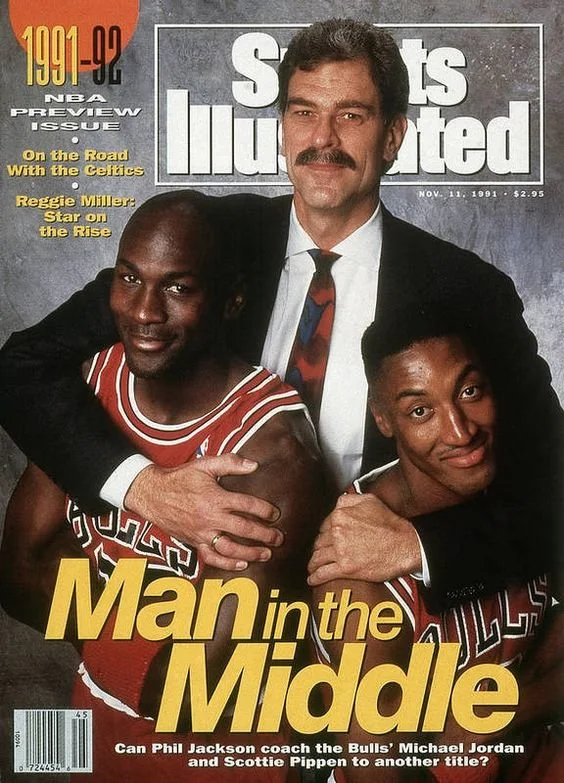
Chicago Bulls Coach Phil Jackson, Michael Jordan, And Sports Illustrated Cover art print by Sports Illustrated.

Sports Illustrated Cover Art Print


A client can be forgiven a lot for his willingness to work honestly on himself.

A sports coach, business therapist or psychoanalyst can attest to this.

Trying to help someone who resists change with all his or her might is torture for everyone.

A declaration of intent is not enough - you need a willingness to sacrifice Y for X.

Many people lie to themselves as if they are mature, but an experienced coach can smell them a mile away.

Frequent mistakes in the past taught him that it is necessary to water only what grows itself.

This is the only way to maximize the ROI, i.e. the return on investment of the athlete and coach’s resources.

Moreover, it is a crime if a fireman directs the foam jet past the fire.

But when the fruit is ripe, then from one touch it falls into the hand from the branch.

In addition to results, such work gives joy and meaning to all participants in the process.

It is like a winch mechanism - systematic advancement toward the goal without backsliding.

Once you have had such an experience, you want to repeat it over and over again.

“Yes! Yes! But…how?” - you ask.

Start by defining your Ideal Client.

Yours sincerely,

-Alexander


You can help Ukraine defend itself and the World from Russian aggression here.


”Who are you and what do you do?"
As a business therapist, I help tech founders quickly solve dilemmas at the intersection of business and personality, and boost company value as a result.

"I have an extremely important business decision to make. Can you help me?
Reserve a time on my calendar that is convenient for you to meet with me. We'll clarify your request and discuss options for how you can help.


How to be? by Alexander Lyadov

There are two fundamentally different modes of action. The first is when you are confused and don’t know what to do. The second mode is when the entire path ahead is fundamentally clear to you.

The very fact that you are disoriented by the situation indicates that there is something important you did not know about the context, people, or yourself. No wonder you were caught off guard. Accordingly, in the first case, you need to turn into a solid organ of the senses and begin to scrutinize the phenomenon that shocked you. You clearly have a deficit of critical information. Of course, you can satisfy this deficit only from the outside. So you are maximally motivated to respond with interest to any news source, even if it sounds strange and the chance of getting an insight is low. It is as if the way you act encourages the world around you to give you Something. What exactly is it? You don’t know yet, but it is this Something that will eventually restore the harmony and peace you have lost. The price you pay is a kind of omnivorousness, low efficiency of efforts and discomfort from contact with things unaccustomed to you. You willingly pay the check because, compared to the hell of an unrelenting plunge into the mire of chaos, the price is quite bearable.

It’s quite different when you know exactly what you want and how it can be predictably achieved. In this case, you already have almost all the information that significantly affects the outcome. I say almost, because the world never stands still, especially now. Not keeping track of potentially dangerous changes would be careless and foolish. But, in general, your model of anything, like business, is relevant, reliable and accurate. Which allows you to lean on it confidently to move inexorably toward your desired goals. How will you take most offers, invitations and news? At the very least, without enthusiasm, probably with irritation, if not with anger. After all, “they’re all” really trying to tear you down, undermine you, and distract you from what is of self-evident value to you. Here, too, you pay a price, but of a different kind. You have to constantly say, “No!” to virtually all the outside stimuli that try to push your fear, greed, and so on. A lot of people (including you) will find themselves upset by your rejection. But if you were able earlier to find the answer to the question, “For what?” then you pay the price for the trick willingly and in full.

Why does it all matter? Depending on what situation you’re in now, the strategy you take should be completely different. Everything will be different - priorities, indicators of success, what to consider a hindrance and what, on the contrary, an asset, and so on. Try not just reading it, but applying it to your business and/or yourself. You may be pleasantly surprised at how much your decisions and actions will improve.

If your business situation is too complicated and you need advice or an intelligent sparring partner to clarify where you are, where you really aspire to go, and what the best way for you is, then you can book a meeting with us through the link in the calendar.

Yours sincerely,

-Alexander


You can help Ukraine defend itself and the World from Russian aggression here.


”Who are you and what do you do?"
As a business therapist, I help tech founders quickly solve dilemmas at the intersection of business and personality, and boost company value as a result.

"I have an extremely important business decision to make. Can you help me?
Reserve a time on my calendar that is convenient for you to meet with me. We'll clarify your request and discuss options for how you can help.


Our Interest Tags by Alexander Lyadov

When you publish an article on Medium, you can choose five tags to describe its essence. When the 1,000-article mark is approached, a pattern emerges all by itself. My most frequent tags are Business, Entrepreneurship, Psychology, Self-Improvement and Self-Awareness. If you read my articles for a long time, then, it turns out, these tags characterize your interests, too. But why choose these particular words?

Business is one of the most exciting and realistic games, the rules of which allow you to pursue your interests while satisfying the needs of others. Each of us is capable of producing a specific value to then make an exchange with other players. It doesn’t matter so much whether you are a company owner, an investor, an employee or a freelancer. In this game you can achieve anything, try on different roles, and most importantly, constantly build your skills. Unlike other fields, the meaning in business is difficult to distort, lose or substitute because it is easy to measure.

Entrepreneurship is appealing by the act of creation, when some brave person pulls the threads of a new order out of a tangle of frightening emptiness. Importantly, creativity is not just an unexpected combination of known things, but one that provides tangible benefits to people. Perhaps business is the most effective mechanism for getting a fair reward for real breakthroughs, even taking into account all the reservations about force majeure, immorality of some players, local system failures, etc.

Psychology is important because problems are solved by people, not machines or algorithms. A particular individual or group is extremely vulnerable, but at the same time has infinite potential to protect itself and everyone else from anything. To be sure, society itself today is a purveyor of new problems, in addition to those presented, as at all times, by nature. But despite humanity’s regular slide to the brink, I believe in man’s ability to let go of false beliefs and to steer back on the path of truth.

Without self-improvement, life would be dull, if not impossible. Just as the difference in potential between the cathode and anode conditions the flow of charged particles, so we move forward only because there is a gap between what we really want and what we currently have. The inner world of man resembles a Big Hole, in the kimberlite pipes of which there are tons of diamonds, ready to be cut.

However, without self-awareness, all the above is meaningless, or at least ineffective. Thousands of years ago our wise ancestors noticed that the bottleneck is not somewhere out there, but exclusively inside each of us. Since then, the rapid growth of technology and the vector of cultural development make this insight even more evident, poignant and irrefutable.

And what five tags would you choose to describe this newsletter?

Yours sincerely,

-Alexander


You can help Ukraine defend itself and the World from Russian aggression here.


”Who are you and what do you do?"
As a business therapist, I help tech founders quickly solve dilemmas at the intersection of business and personality, and boost company value as a result.

"I have an extremely important business decision to make. Can you help me?
Reserve a time on my calendar that is convenient for you to meet with me. We'll clarify your request and discuss options for how you can help.

In which direction to stretch? by Alexander Lyadov

“Lie down!” - I give my dog a command in the hallway before I feed him in the kitchen. It’s stamina training because he longs to be near food. Not daring to break my command, the dog does the hack. Lying on his side, he turns his face in my direction so he doesn’t miss the bowl being filled with food.

If you’ve seen documentaries about African animals, you’ll remember the special hyper-focused stare that predators get into their prey long before the final attack. Instead of eyes, the cheetah now has a telescopic sight, and the body has been transformed into an arrow of a Mongolian bow. In that moment, the world around the predator collapses into a single object, and all other desires and problems recede to the periphery. Is the target hit? Yes and no. The boar is still carelessly nibbling on the grass, while the leopard is already greedily consuming its information body.

When it comes to something vital, there is not much difference between a lion, a dog and a man. The body is self-targeting the target, investing resources with the right priority. Is there nothing in the way? The arrow arm fires to nail the object. Are there obstacles? The mind ingeniously solves them one by one. No opportunity to get closer? The body strives at least to lie in the direction of the target. If the ideal is kept in sight, sooner or later ways to achieve it will be revealed.

However, unlike animals, driven by a wise instinct, humans are adept at hindering themselves. First, by constantly being distracted by temptations and squandering their invaluable resource. Second, by devaluing their ability to achieve anything ambitious. Well, and most importantly, not bothering to openly and explicitly admit to themselves what they are really striving for.

Sincerely yours,

-Alexander


You can help Ukraine defend itself and the World from Russian aggression here.


”Who are you and what do you do?"
As a business therapist, I help tech founders quickly solve dilemmas at the intersection of business and personality, and boost company value as a result.

"I have an extremely important business decision to make. Can you help me?
Reserve a time on my calendar that is convenient for you to meet with me. We'll clarify your request and discuss options for how you can help.


Why is everything so difficult? by Alexander Lyadov

Unknown artist

Sometimes you may hear from an entrepreneur: “Well, why is it so hard to make money?” When every day is like juggling under a circus dome without a safety rope, any reserve of energy, will and optimism will sooner or later be exhausted to zero.

As a rule, such a question arises when Product-Market fit has not yet been found or when the usual business model has lost relevance due to tectonic shifts of market plates. After all, the entrepreneur has no complaints when customer demand exceeds the company’s ability to meet it many times over. Managing rapid growth isn’t easy either, but it’s a qualitatively different type of problem. Growing twice instead of three times in one year is certainly frustrating, but agree that this bitterness can’t be compared to the torment of bankruptcy.

Nothing wears people down like endless uncertainty. Like high radiation, it invisibly generates a multitude of derivative problems. So what makes a business predictable? People, processes, IP, laws, or maybe capital? Sure, but there’s something more important. I think the key is the value of your service as perceived by customers. If the value isn’t there yet or isn’t there already, nothing can compensate for that deficit. On the contrary, if your users need and value your product very much, even if it’s far from perfect, they will graciously forgive you the inconvenience and help you cut and polish it.

I once heard advice from a seasoned black belt: “If in the chaos of a fight you are disoriented and don’t know what to do, straighten your posture by looking up." Straight posture creates the structure you need to more easily withstand your opponent’s pressure and then begin to counterattack. Similarly, if your head is spinning from an overabundance of self-initiated company fires, focus on the compass question, “What value does my ideal customer get?”

Yours sincerely,

-Alexander


You can help Ukraine defend itself and the World from Russian aggression here.


”Who are you and what do you do?"
As a business therapist, I help tech founders quickly solve dilemmas at the intersection of business and personality, and boost company value as a result.

"I have an extremely important business decision to make. Can you help me?
Reserve a time on my calendar that is convenient for you to meet with me. We'll clarify your request and discuss options for how you can help.


Thick-skinned professional by Alexander Lyadov

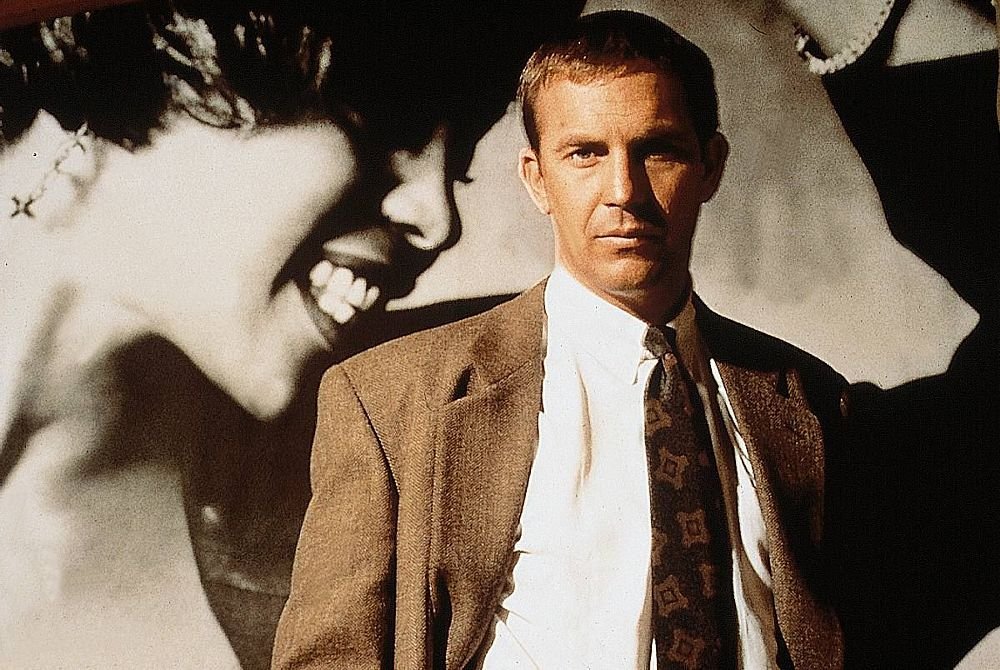
Yesterday I rewatched the 1992 Hollywood classic The Bodyguard, with Kevin Costner as Frank Farmer, Carter and Reagan’s former bodyguard, a cold-hearted professional, and Whitney Houston, playing the spoiled popular singer Rachel Merron, a bitch as she describes herself when introduced. The bodyguard is surprised, to say the least, by the carelessness of the singer and her entourage amid death-threatening letters and even a maniac’s secret break-in at her house. After formally agreeing to security, the star and her managers go out of their way to help the villain. Frank’s attempts to streamline this chaos and hide Rachel from the predator behind a “wall” are ignored, sabotaged and ridiculed, saying, “Your paranoia is annoying." In parallel, Rachel tests Frank’s professional boundaries by trying to turn the bodyguard into a servant.

As is usually the case, the reality is the best teacher for someone who is deaf to advice. The singer needs to survive a series of dangerous incidents for her bodyguarding to rise to the top of the list of priorities. What emerges is what I call an actualized request. It means that the person has lost all illusions and has finally realized what a dead end she or he is in. Standing in a quagmire up to her or his neck, the only wish is to get out of it by any means necessary. The sole function becomes important, and no one cares about the form anymore. At this point there is a chance for an alliance between the client and the pro to emerge.

It is interesting to see how decently the bodyguard endures the devaluing attitude of others toward his work, while continuing to move forward. They are like drunks behind the wheel who are annoyed by the warnings of sober people. Or rookies who are bored listening to instructions on how to open a backup parachute. Or people who complain: “I wasted my money on insurance. The accident didn’t happen”. They take avoiding a crash through good luck as proof that the professional is paranoid and nothing bad can ever happen to them.

In the film, Frank admits that it took a lot of effort for him to stop reacting to amateurs’ attempts to humiliate, devalue, and hurt him. One of the characteristics of a professional is a thick skin. Thanks to it he is able to achieve his goals for the benefit of the client, disregarding any secondary factors, even if they cause him pain or discomfort. On the journey from novice to Master, much of the training involves practicing the willingness to endure almost any “How?” in order to realize a clearly understood “For what?”. In other words, the Law for the professional is Meaning.

Yours sincerely,

-Alexander


You can help Ukraine defend itself and the World from Russian aggression here.


”Who are you and what do you do?"
As a business therapist, I help tech founders quickly solve dilemmas at the intersection of business and personality, and boost company value as a result.

"I have an extremely important business decision to make. Can you help me?
Reserve a time on my calendar that is convenient for you to meet with me. We'll clarify your request and discuss options for how you can help.

Together by Alexander Lyadov

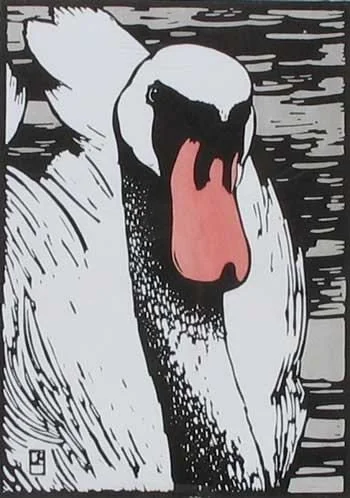
Jacques Hnizdovsky, Sunflower. Woodcut. This work was in John F. Kennedy's office

Looking back on the past year, I want to say thank you. The readers of the newsletter give me an opportunity to write. Fish need to let the oxygen dissolved in the water flow through their gills. And my need is to catch new meaning in an ocean of chaos with a net of texts. Through articles I think, learn, and solve dilemmas. How fortunate that the product does not lie on the shelf, but meets your lively eyes.

It is not symbiosis, for we are free to choose a partner. We have a cooperative, noncommittal relationship for everyone’s benefit. With you I have had an easier time with the difficulties of which 2022 was rich. Judging by the return emails, the newsletter is valuable to you as well. Some find answers, some find questions, and some find food for thought.

Beyond the obvious, I want to wish you in 2023 to be at peace with yourself. After all, you are the cornerstone, the point of reference and the beginning of coordinates. And not in the abstract cosmic sense, but specifically here and now. Family, friends, colleagues and clients read the state of your mind. And then, amplifying it many times, transmit it further down the chain. Let it be steadfastness, endurance, and determination. While the enemy fills with entropy and rolls toward decay, our power grows with each day we live under the blows.

Kyiv has stood for 1540 years, it has seen things, it will stand for more. And this, what is it, I forget, you know - today it is there, and tomorrow it is not. Because the real life is in the place where there is Spirit, but not fossil fuel bloated form. The Spirit is in Ukraine. Everyone has realized this reality.

Yours sincerely,

-Alexander


You can help Ukraine defend itself and the World from Russian aggression here.


”Who are you and what do you do?"
As a business therapist, I help tech founders quickly solve dilemmas at the intersection of business and personality, and boost company value as a result.

"I have an extremely important business decision to make. Can you help me?
Reserve a time on my calendar that is convenient for you to meet with me. We'll clarify your request and discuss options for how you can help.


The Entrepreneur Stereotype by Alexander Lyadov

The stereotypical image of the entrepreneur is a kind of energetic, self-confident and daring narcissist who can sell snow in the Antarctic, bewitch a oligarch in the elevator, and open any VIP-doors with his foot. Of course, statistically, the percentage of such people in the population of entrepreneurs, too, but they are not the main part, and, rather, inclined to adventurism on the edge or outside the law. Most founders are located in a very wide range of values on the Curiosity-Cautionary, Organized-Haotic, Empathy-Rational, Nervousness-Extravert and Introvert-Extravert axes. Even within the same IT industry there is a wide range of psychotypes of entrepreneurs, let alone real estate, investment banking, energy supply and clean-tech. In my business therapy practice I constantly meet founders who break the above stereotype.

Why is this so? My hypothesis is that to create a growing and profitable business, especially in emerging markets or new industries, it is not necessary to have a stunning competitive advantage, but only to make fewer mistakes than the closest competitor. If you compare yourself to Jeff Bezos, Ilona Musk, or Naval Ravikant, it is easy to get discouraged, quit the business, and go to a monastery. But in reality, each of us is probably competing against the guys in the other league, not them. When I fought at the European Brazilian Jiu-Jitsu Championships, I knew that Gordon Ryan, currently the No. 1 athlete in the world, wouldn’t come out against me on the mat. But that didn’t make my defeat any less offensive or injury-prone, nor did it make my hard-won gold medal worthless.

That is why in business, more often than it is commonly thought, it is not charisma, creativity and proactivity that are important, but what is called judgment - the ability to make sensible guesses about a situation and to make considered decisions about what to do next. The technology available to everyone only adds to the importance of “judgment” because today every decision you make has a huge leverage that can multiply the effect, positive or negative. If you’ve managed to protect yourself and your business from catastrophic mistakes, make fewer blunders and extract valuable meaning from them more quickly, it’s only a matter of time before the next low tide reveals which of your competitors have bathed naked, while your perfectly equipped business crosses the winning finish line.

Yours sincerely,

-Alexander


You can help Ukraine defend itself and the World from Russian aggression here.


”Who are you and what do you do?"
As a business therapist, I help tech founders quickly solve dilemmas at the intersection of business and personality, and boost company value as a result.

"I have an extremely important business decision to make. Can you help me?
Reserve a time on my calendar that is convenient for you to meet with me. We'll clarify your request and discuss options for how you can help.


Ugly Duckling, really? by Alexander Lyadov

The drama of the ugly duckling is that he does not know who he is. These words of a wise psychotherapist capture the essence of what a lot of people on earth suffer from. The questions "Who am I?" and "What is this all about?" are directly related. Like a brigantine sailing with a hole gaping in the bottom, it is absolutely impossible for man to live without these answers. At best, it will be misery and unsettlement, at worst, self-destruction and even suicide.

Even if you think you remember Hans Christian Andersen's wonderful tale from childhood, I strongly advise you to reread it now. I think it alone can replace tons of motivational youtube videos, TED Talks lectures and self-help books. Why? The brilliant Andersen succeeded in amazingly vivid, succinctly and realistically describing the archetypal path that many people, if not all, must go through.

History is silent as to how among the hatching duck eggs one strange egg suddenly turned up, but it is symbolic. After all, the child does not choose his family and environment, but, like orphan Dorothy, is thrown into the unfamiliar land of Oz by a hurricane. Characteristically, the parents, represented by the mother goose, have contradictory feelings toward the ugly duckling, both pity and shame for not conforming to the social template. And the rest of the inhabitants of the barnyard are glad, if not to change the bad boy, then at least to kick, peck and shower mockery on him. He could not lay eggs like a hen or purr like a cat, but yearned to dive and swim with pleasure, which, in the opinion of the know-it-alls, was a whim from idleness.

To find existential answers, the ugly duckling goes through a bunch of tests and is even willing to die. “I will fly to those royal birds,” he exclaimed, “and they will kill me, because I am so ugly, and dare to approach them; but it does not matter". What is this but a rite of initiation? The problem is that modern society has invented many useful technologies, but has carelessly brushed aside invaluable ancient rites. In the meantime, people's longing to discover their identity has not gone away, it just languishes in the depths of their souls.

I was lucky to meet kind people who taught me where and how to find these answers. I wish it had happened 30 years earlier, but I am still eternally grateful to fate. Now, as part of my business therapy, I often encounter entrepreneurs asking, "Who the hell am I?" even though it is not always so explicitly realized and said.

Yours sincerely,

-Alexander


You can help Ukraine defend itself and the World from Russian aggression here.


”Who are you and what do you do?"
As a business therapist, I help tech founders quickly solve dilemmas at the intersection of business and personality, and boost company value as a result.

"I have an extremely important business decision to make. Can you help me?
Reserve a time on my calendar that is convenient for you to meet with me. We'll clarify your request and discuss options for how you can help.

Is this laziness? by Alexander Lyadov

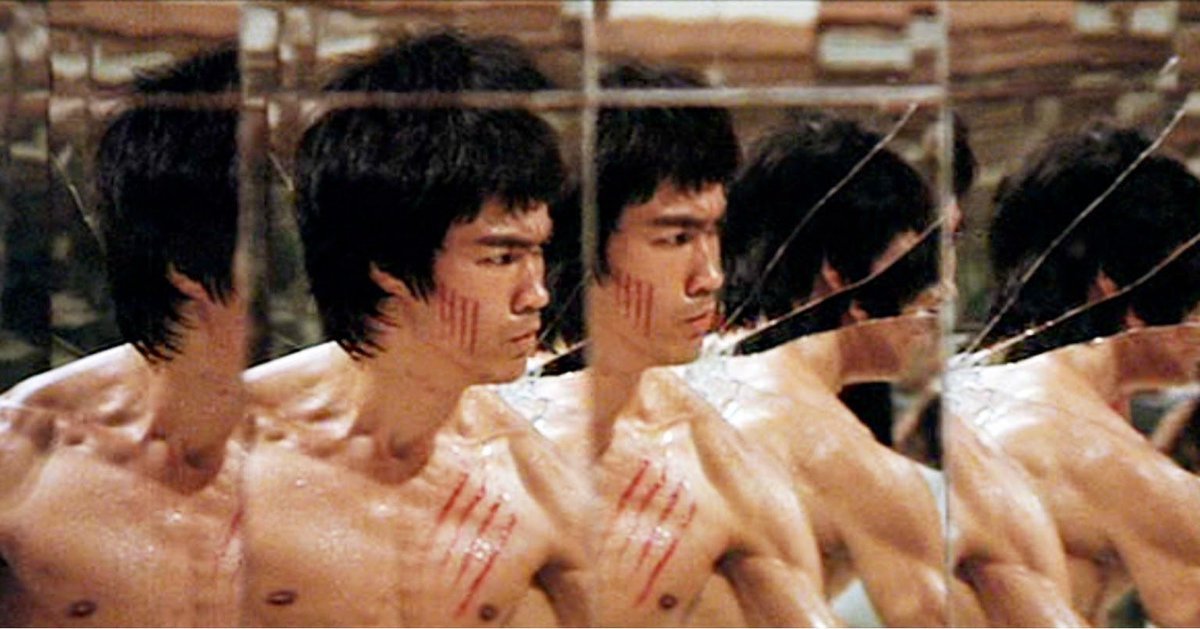
Unknown photographer


Ever since high school I’ve had a phrase from a physicist told to my parents: “Sasha is a bright head, but so lazy. Only years later I realized how poorly she understood me (as did I myself). At that time I hated the school that was foreign to me, which happened after we moved to Kiev from my native tiny town Desna. But such is the way a young man’s mind that the words of an adult are capable of poking a splinter to poison him for a long time afterwards. Her words were true, but they were lies.

Looking back at my childhood, I can see how eager I was to immerse myself in a subject if I found it genuinely interesting. Once I got my curiosity hooked on the caption under the illustration, I was devouring Jack London, Mein Ried, and the Library of Adventures volume after volume. During such periods, the main problem is the inability to stop, not laziness at all. The same phenomenon manifested itself later every time again. When I was fascinated by advertising, I studied before, during and after work 24/7/365. The same frenzied thirst for knowledge possessed me during my studies at the Chicago Business School, then during the period of passion for investments, psychotherapy, TRIZ, Brazilian jujitsu, etc., etc.

But if you don’t know about these fruitful periods, skip them or devalue them, then yes, you can say that I demonstrate apathy, passivity and indifference. What many people are vividly interested in, I find boring, trivial, and bland. Exactly until a miraculous “click” occurs, the place and time of which are impossible to predict. The paradox is that what seemed to the physicist and the others to be laziness in me actually meant the opposite - I am a fantastically efficient person, but only if something has a deep personal meaning for me.

Are you familiar with that voice rebuking you for not wanting to do something supposedly important?

Yours sincerely,

-Alexander


You can help Ukraine defend itself and the World from Russian aggression here.


”Who are you and what do you do?"
As a business therapist, I help tech founders quickly solve dilemmas at the intersection of business and personality, and boost company value as a result.

"I have an extremely important business decision to make. Can you help me?
Reserve a time on my calendar that is convenient for you to meet with me. We'll clarify your request and discuss options for how you can help.

Gone with the wind by Alexander Lyadov

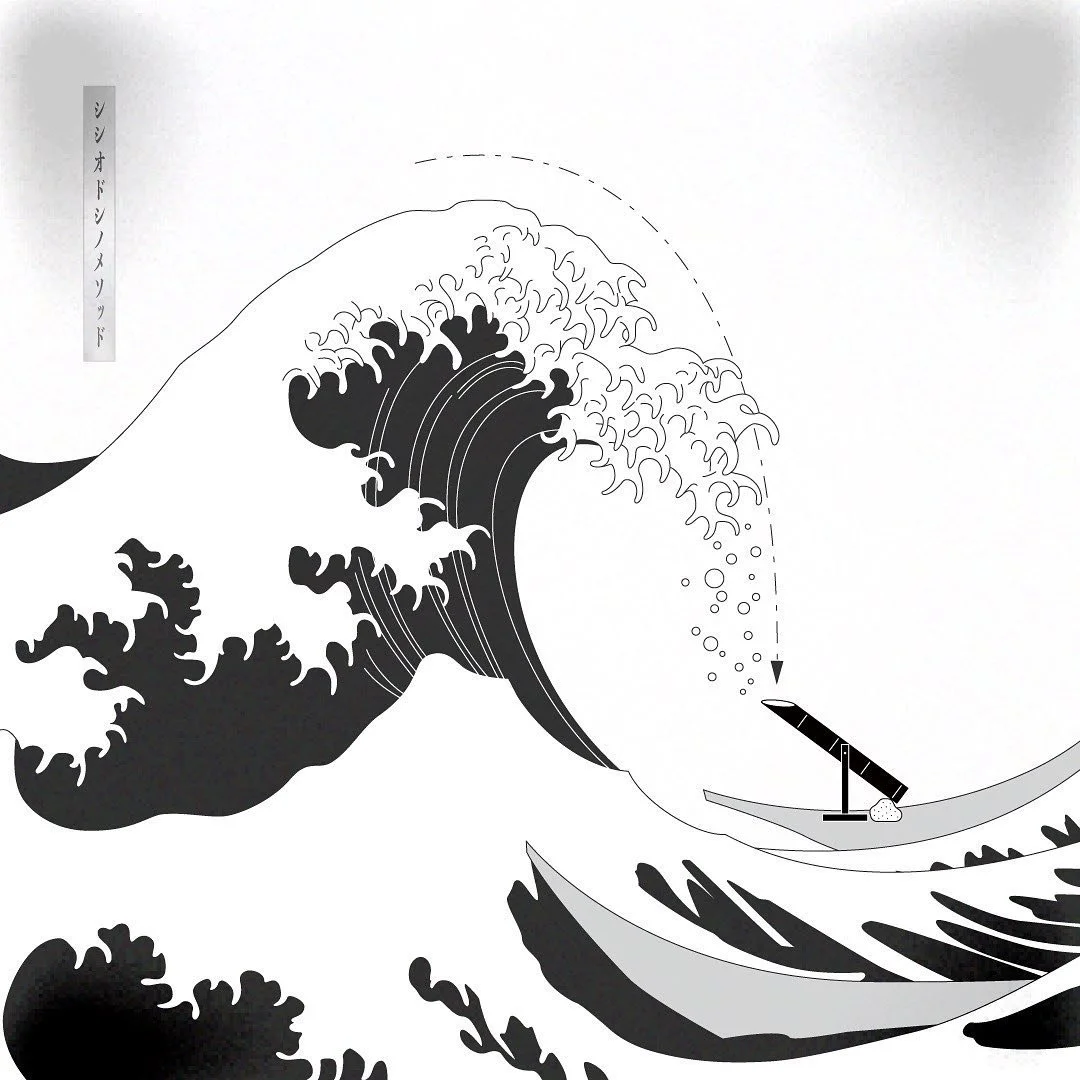
What would happen if a handful of seeds and fruits of different wind-dispersed plants (anemochoria) were thrown high into the air? The wings of the field maple will fly tens of meters, the willow will fly hundreds of meters, and the South American plant of the Compositae family, Heurelia ranosifolia, is able to set a record up to 7,500 km. Miniature weight, wings, plumage, crests, aerostats and turbines - each species has some design feature that affects the distance between points A and B. Common is the desire to expand the range of its species, that is, even the plants nature does not let sit in place, forcing the entire population to move forward.

A similar phenomenon can be observed at the level of society, companies, and even individuals. Some extreme event takes place that pulls a person out of his usual ground and, like a catapult, shoots him high up. The events are different - a war, a pandemic, a raider attack, the betrayal of a business partner or health problems - but the result is the same. Instead of a smooth flow of life - chaotic somersaults in the air currents, from which disorientation and horror arise in the head, and in the body - a gag reflex.

Sooner or later, nature comes to the rescue. Without noticing it or wishing to, his glider takes a unique path along a complex trajectory, ending up not somewhere, but in a certain place. Of course, random gusts of wind play a role, but something guides the man when he chooses for a new pattern those and not other found threads. Observing the progress of clients, I see that it is during such nomadic periods that it is possible to rapidly approach the state one has always desired. Having lost his former stability, even if against his will, the individual has suddenly found the freedom to realize what, languishing, has long matured within him. This realization sometimes comes after the fact, when the new territory is mastered and his business has again begun to boom.

Yours sincerely,

-Alexander


You can help Ukraine defend itself and the World from Russian aggression here.


”Who are you and what do you do?"
As a business therapist, I help tech founders quickly solve dilemmas at the intersection of business and personality, and boost company value as a result.

"I have an extremely important business decision to make. Can you help me?
Reserve a time on my calendar that is convenient for you to meet with me. We'll clarify your request and discuss options for how you can help.


The Kingdom of Crooked Mirrors by Alexander Lyadov

The more one achieves in business, the harder it is to maintain an adequate perception of oneself-in-context. I know, it sounds like a paradox. After all, he’s supposed to have many more sources of quality information to buy. The problem is that as he ascends, a number of forces begin to work against him.

First of all, it’s pride. It is very difficult to distinguish which part of the success is due to the favorable wind and which part is due to his ability to steer the ship. As ambitious plans are realized, confidence in one’s genius grows as well. All it takes is a series of profitable trades and the founder is overflowing with euphoria that one touch of him turns any trivial object into gold.

In addition, the view from the next summit reinforces the belief that his way of perceiving the world and acting is the only correct, effective and infallible. There are so many losers around, burned by this and that, and he, look, has overcome all obstacles. And as you know, you shouldn’t fix what’s not broken. This is all true, except that the world around us is constantly transforming, nullifying the adaptations that have served us reliably so far. Over time, even the perfect system begins to slip and stumble. This is the signal of a growing mismatch with the context. If the software is not updated in time to restore balance, a hard landing is inevitable.

Finally, the founder’s immediate environment is distorting his orientation. A strong leader makes the hunt predictably abundant again and again, increasing both the number of followers and the dependence of all those people on him. It is too easy for them to turn their chief into an idol and too difficult to place the adequacy of his plans. As a result, the founder may find himself, without noticing it, in a kingdom of crooked mirrors. Being overly busy, he is forced to rely on professionals whose duty it is to prepare him an assessment of what is happening and an analysis of alternatives. After all, it is often more important not who made the decision, but who prepared it. But like gravity, the above forces work tirelessly to ensure that the founder hears from his environment what he wants to hear and not what is actually there.

The founder has to work really hard, and repeatedly, to pull himself and the business horse out of this warm and sweet swamp by the pigtail, just like Baron Munchausen. How does it work? He finds those whose sole function is to highlight precisely those places in the founder’s business and personality where he himself is least wants to look.

Yours sincerely,

-Alexander


You can help Ukraine defend itself and the World from Russian aggression here.


”Who are you and what do you do?"
As a business therapist, I help tech founders quickly solve dilemmas at the intersection of business and personality, and boost company value as a result.

"I have an extremely important business decision to make. Can you help me?
Reserve a time on my calendar that is convenient for you to meet with me. We'll clarify your request and discuss options for how you can help.

The science of creativity by Alexander Lyadov

I spent the first decade of my career working for international advertising agencies. Our most common method of stimulating creativity, besides whiskey, was group brainstorming. Later on, I began to use this tool less frequently and more selectively, but in those days we held brainstorms on any occasion and several times a day. The sacred rule was to separate the two stages of idea generation and decision-making. The skill of separation had to be specially trained, because at the first stage a beginner cannot help but stomp on someone’s strange, and therefore supposedly useless, idea. Similarly, it was important to learn how to turn off your fountain of ideas in time when the stage of separating the grains from the chaff arrived.

Today, on the podcast episode of The Science of Creativity, Stanford neuroscientist Andrew Huberman talked about how to increase creative output. New ideas arise from two types of thinking, divergent and convergent. The first type is when, pushing off the shore of a single stimulus, one swims freely in the current of the ocean, openly and gratefully accepting whatever comes in the way. The second type is to choose several free ideas and synthesize them into a certain structure.

Research has shown that open monitoring meditation is useful for stimulating divergent thinking: you sit for 5 minutes with your eyes closed and just let your thoughts flow in and out. This allows you to access your memory bank and free yourself from your previous ideas about the combination of things. And to enhance convergent thinking, try the focused attention meditation: you sit for 5 minutes with your eyes closed or open, focusing on a particular object, sound or point. It’s helpful to practice these two meditations before you begin an important task.

Hearing this, I suddenly realized that I intuitively do so when I sit down every morning to write a new article for you, my dear readers. At first, I sit in front of a blank screen, absent-mindedly watching a variety of thoughts come and go in response to the question, “What is it today that I can’t help but write about?” So five or ten or thirty minutes pass as I go deeper into the slumbering woods, moving farther and farther away from home. Finally I find a hot trail of outlandish prey, sneak up and release the bowstring. Like a soju (添水) bell in a Japanese garden, my mind overflows with new meaning and topples over with a sharp sound, pouring it into the article. My only mistake is that coffee is better not drunk immediately, but later. Focus is needed at the synthesis stage. And if the stupor is at the first stage of generating ideas, then, instead of the popular sip of whiskey in my advertising past, it is better to just walk through.

Yours sincerely,

-Alexander


You can help Ukraine defend itself and the World from Russian aggression here.


”Who are you and what do you do?"
As a business therapist, I help tech founders quickly solve dilemmas at the intersection of business and personality, and boost company value as a result.

"I have an extremely important business decision to make. Can you help me?
Reserve a time on my calendar that is convenient for you to meet with me. We'll clarify your request and discuss options for how you can help.

Executor or expert? by Alexander Lyadov

Unknown artist

What chance does the janitor have of making your day unforgettable?

That’s right, they are negligible, and you don’t expect them to.

Just like a cab driver should just get you from point A to point B.

And not ask why you want to go there, instead of, say, to finish the report.

If it’s hard for the doer to make you happy, it’s easy to make you sad.

Something always goes wrong in the world, both objectively and subjectively.

It is rare, therefore, that anyone would sing odes to a post-office clerk or a cashier.

Performed their duties quietly and inconspicuously? Good for them.

But complaints about their laziness, unfriendliness or boorishness - always a ton.

The opposite of this - cardiac surgeon, especially the luminary.

Even a brief contact with his scalpel dramatically improves people’s lives.

The value of his work is so great that he is forgiven for rudeness and cynicism.

Before a session with a psychotherapist, a person could suffer from a problem for 20 years.

And the Master makes an accurate diagnosis by watching the client open the door.

What’s the point? Try not to be just an executor in your business.

Move toward Mastery, where experience, creativity, and intellect fuse.

When clients receive extraordinary value from you, they willingly turn a blind eye to the little things.

Sincerely yours,

-Alexander


You can help Ukraine defend itself and the World from Russian aggression here.


”Who are you and what do you do?"
As a business therapist, I help tech founders quickly solve dilemmas at the intersection of business and personality, and boost company value as a result.

"I have an extremely important business decision to make. Can you help me?
Reserve a time on my calendar that is convenient for you to meet with me. We'll clarify your request and discuss options for how you can help.

Mentor — is there or not? by Alexander Lyadov

Conceptually, mentoring is a mystery to me so far.

It looks like a one-way game because there is no exchange.

In 1951 a young Buffett asked investor Graham to be his apprentice, offering to work for him for free.

Graham replied, “You are overpriced.

This is understandable - tuning insights to the personality is complicated, and therefore expensive.

The expert has to melt down all of his experience and then mold it into a unique form.

Moreover, a reluctance to pay often indicates an unwillingness to appreciate.

After all, if something is desperately needed, resources are mysteriously found.

Especially since in 99% of requests, tuning can be done by yourself.

Technology makes top-end expertise dizzyingly affordable.

Right now I’m listening to an insanely interesting All-in podcast.

Four of the smartest investors, worth $60M, $200M, $1.0B and $1.2B, argue about important issues to the hilt.

Being invisible during their conversation is already a privilege for me.

I gratefully take their insights for education, business and life.

Though at times I strongly disagree with the opinions expressed.

Chamath, Jason, and the two Davids have no idea, but they are my mentors.

They can be yours, too, if you know how to cut minerals into diamonds.

Yours sincerely,

-Alexander


You can help Ukraine defend itself and the World from Russian aggression here.


”Who are you and what do you do?"
As a business therapist, I help tech founders quickly solve dilemmas at the intersection of business and personality, and boost company value as a result.

"I have an extremely important business decision to make. Can you help me?
Reserve a time on my calendar that is convenient for you to meet with me. We'll clarify your request and discuss options for how you can help.

When, at last? by Alexander Lyadov

Like all people, I long unbearably for the desired future to come sooner.

For example, when I start to do something new in business and not only.

But everywhere you turn, the path from Beginner to Master is long, tedious and thorny.

That’s why the 10,000-hour rule has become such a popular meme.

New patterns of behavior are the laying of highways in the neural jungle.

An organized person digs methodically throughout the entire term.

It’s harder for someone who is open to novelty by psychotype, because routine kills him.

So there is a temptation to break the rules, hack the system and get a cheat code.

Fortunately, the dilemma - to bore yourself or break the law - is false.

Investor Naval Ravikant amends, “10,000 iterations, not 10,000 hours.”

And immediately the dull routine is transformed into a fascinating experiment.

More precisely, into a string of laboratory experiments, where each one feeds your brain with something new.

With the right attitude, the process itself becomes rewarding.

Without even noticing it, the neophyte becomes a Master.

When? It doesn’t matter to him now.

Yours sincerely,

-Alexander


You can help Ukraine defend itself and the World from Russian aggression here.


”Who are you and what do you do?"
As a business therapist, I help tech founders quickly solve dilemmas at the intersection of business and personality, and boost company value as a result.

"I have an extremely important business decision to make. Can you help me?
Reserve a time on my calendar that is convenient for you to meet with me. We'll clarify your request and discuss options for how you can help.


Guess what! by Alexander Lyadov

Some entrepreneurs play a strange game with their employees.

Its essence is to guess what the owner of the company expects them to do.

No one voices or discusses where, how, or why the company is going.

Asking such questions is considered improper and even unsafe.

The indifferent argue about what helps the company and what hurts it.

Those who get tired of nonsense get sick, burn out, and eventually leave.

The cunning ones imitate activity, proposing stillborn projects.

The weak try to read the mindset and body language of the boss.

The latter remains silent, parading around with an enigmatic smile on his face.

Everyone around him is sure that he knows all the answers.

His big secret is that he has nothing to say.

The eternal excuse for himself is that he simply did not have time.

The truth is that he is just afraid to ask himself such questions.

Why do you think that is?

Yours sincerely,

-Alexander


You can help Ukraine defend itself and the World from Russian aggression here.


”Who are you and what do you do?"
As a business therapist, I help tech founders quickly solve dilemmas at the intersection of business and personality, and boost company value as a result.

"I have an extremely important business decision to make. Can you help me?
Reserve a time on my calendar that is convenient for you to meet with me. We'll clarify your request and discuss options for how you can help.


What can't be outsourced? by Alexander Lyadov

David Friedberg, an American entrepreneur, businessman, and angel investor, said in recent podcast: “There is this concept of adverse selection which is the negative actors will seek them (bad investors) out and there will be a match. Ultimately, they will be adversely selected into the deal which will blood them up.” The conversation was about investors who do not want to think for themselves, and are trying to outsource important decisions to others. Like, if Sequoia Capital enters the deal, then we too can, no, even need to enter. The irony is that the more successful everything will be, the worse it will be in the end. On the one hand, success fuels a person’s belief in his own foresight. On the other hand, delegating key decisions to others atrophies his ability to distinguish between signal and noise. Each round only raises the stakes. It’s only a matter of time before an increasingly overconfident investor comes across an ingenious scammer like SPF and invests all his savings in a scam a la FTX.

A long time ago I had the opportunity to spend a winter vacation visiting the founder of a billion-dollar company. We had assigned our children to a ski school. The first morning the entrepreneur said to me: “Let’s go, let’s take the kids to school. I was about to go out with my snowboard on the mountain, so I wondered, “Why, isn’t there a driver?” He looked at me very carefully, “Don’t you want to meet the instructor you’re handing your son off to for the day?” I involuntarily exclaimed: “Well, this is Europe, a professional school, an expensive resort, etc.” But as I was already saying these words, I realized how right he was. That situation alone taught me more than a semester at Chicago business school. I then thought hard about my risk-assessment system.

Since then, I have had many cases of my own and others to make sure the lesson is true. There are a number of decisions in business that no one can make for us. A company owner tired of putting out fires convinces himself that a hired CEO will do wonders for his troubled company. The introverted CEO communicates with employees exclusively through HRDs. The investor makes a deal without thorough due diligence, afraid of missing out on a hot trend and/or a promoted startup. Attempts to move out of responsibility for their own destiny are punished by it harshly and inescapably. Director Guy Ritchie said it well: “You must be the Master of your own Kingdom.” It doesn’t matter how shrewd or wrong specific decisions turn out to be. All that matters is that one make them exclusively for oneself.

Yours sincerely,

-Alexander


You can help Ukraine defend itself and the World from Russian aggression here.


”Who are you and what do you do?"
As a business therapist, I help tech founders quickly solve dilemmas at the intersection of business and personality, and boost company value as a result.

"I have an extremely important business decision to make. Can you help me?
Reserve a time on my calendar that is convenient for you to meet with me. We'll clarify your request and discuss options for how you can help.


Getting out of the trap by Alexander Lyadov

There are times when a founder loses interest in his company.

And, paradoxically, it is worse if it is generating some profits.

If the company was loss-making, the owner would have shut it down a long time ago.

But it is unbearable to leave it, and there is no energy to pull it forward.

Attempts to transfer the helm to other hands regularly fail.

Having inquired about the possibility of selling, he hears the insultingly low price.

The founder has to force himself hard just to get to the office in the morning.

The team notices that the leader is both present and absent at meetings.

There are a number of grim endings to where this suspension inevitably leads.

Clearly, the problem is not business, people, or circumstance.

Though the mind readily generates explanations for why this is the status quo.

The tragedy of this entrepreneur is that he is holding himself back.

More precisely, the trap is a false formulation of the root problem.

So freedom is both unattainable and literally at his fingertips.

Maybe the one who said you have everything you need is right.

Yours sincerely,

-Alexander


You can help Ukraine defend itself and the World from Russian aggression here.


”Who are you and what do you do?"
As a business therapist, I help tech founders quickly solve dilemmas at the intersection of business and personality, and boost company value as a result.

"I have an extremely important business decision to make. Can you help me?
Reserve a time on my calendar that is convenient for you to meet with me. We'll clarify your request and discuss options for how you can help.