The danger of not being yourself by Alexander Lyadov

Steven Pressfield, an American author of a number of bestsellers, discussing with Joe Rogan why people write hate-filled comments about the successful man, said: “They have a dream whether they could articulate it or not. And they are not enacting it in any way. So they see you or they see somebody else succeeding and that’s a terrible reproach to them: “He is doing something and I am not”. So they really hate themselves and they project that outward.” Stephen captured the very essence of the phenomenon.

Why am I so sure? Because I, too, feel the same way sometimes. No, I usually have the self-control not to vent it on social media. I just wait bitterly until the fire, in fact, of my regrets burns out inside. The first negative impulse is always directed at a specific person, and only then does the sobering thought come: “Oh, he had nothing to do with it at all.”

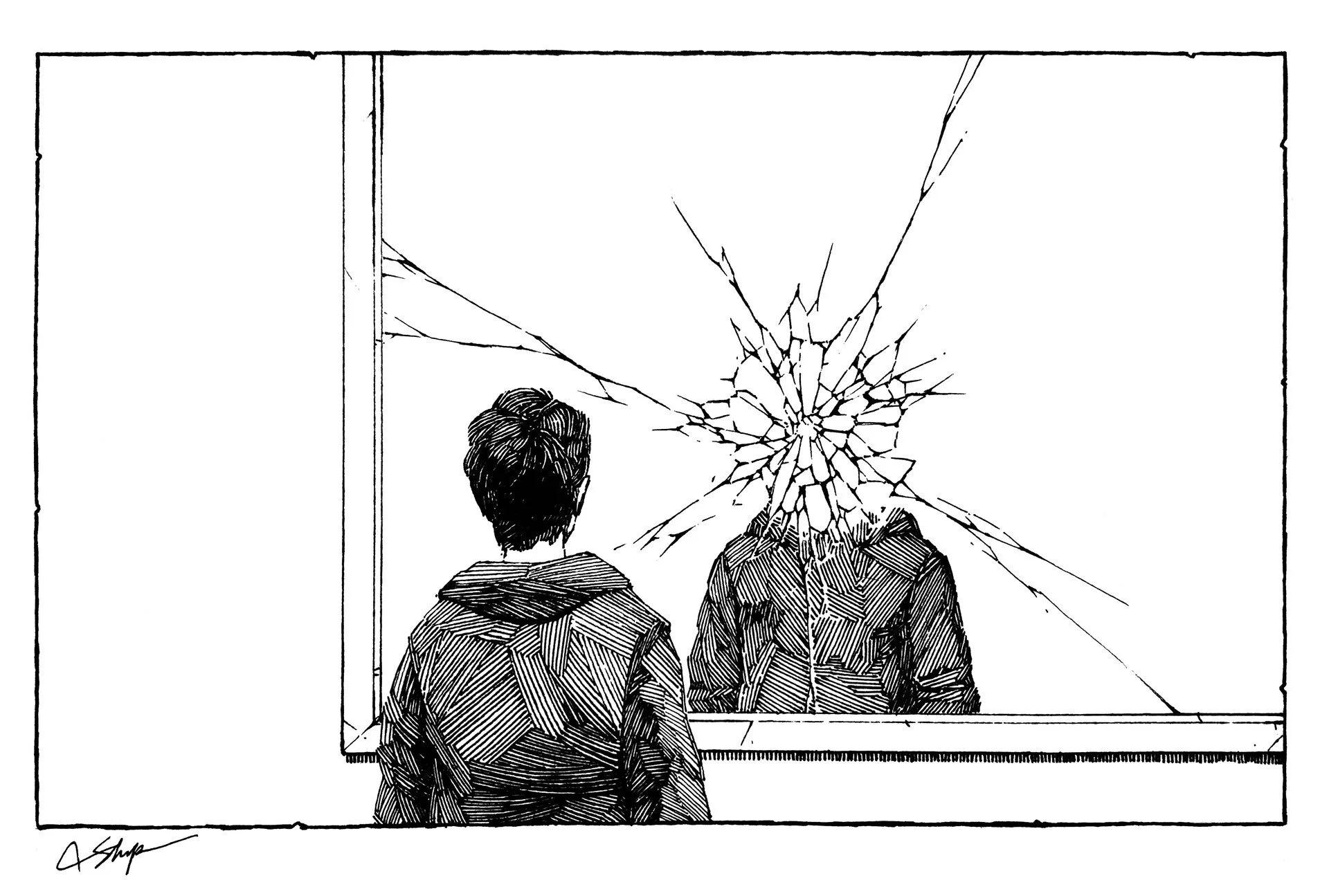
You can’t just brush aside your potential. Left unrealized, it starts to take revenge on you, corroding with acid all attempts to find peace of mind. There is a profound thought in the Gospel of Thomas: “If you bring forth what is within you, then what you bring forth will save you. And if you do not bring forth what is within you, what you don’t bring forth will destroy you”.

Looking back, I see that the worse I embodied my gift (calling, inclination), the more often I was scratched by someone else’s success. On the contrary, the more regularly I dive into exciting meaningful work, play a sport I love, and eagerly learn what I’m drawn to, the more the achievements of others fill me with warmth and joy. Becoming myself, they do things unthinkable for me, and I do things that hardly anyone else can.

Sincerely yours,

-Alexander


You can help Ukraine defend itself and the World from Russian aggression here.


”Who are you and what do you do?"
As a business therapist, I help tech founders quickly solve dilemmas at the intersection of business and personality, and boost company value as a result.

"I have an extremely important business decision to make. Can you help me?
Reserve a time on my calendar that is convenient for you to meet with me. We'll clarify your request and discuss options for how you can help.



A global problem? by Alexander Lyadov

Late at night my phone stopped charging. I fell asleep with "anticipation" of how much trouble this would cause me. In normal times it is a trifle, but now, with the internet and light outage, and, consequently, the uselessness of the laptop, you can neither look up the address of the repair shop, nor call a cab, nor even get stuck in the elevator. And buying a new phone and transferring data is not a five-minute affair. In short, I was grim - instead of preparing an analytical report for the client, I would have to do half a day of nonsense. Fortunately, while there was electricity in the morning, the kind manager of iLand advised me to check the charging cable. The newly purchased cable I admittedly did not even suspect. After walking the dog to the salon, I replaced the cable - and voila! - problem solved.

I recently made a similar misstep. The neighbor downstairs asked me not to rattle, they say, even the chandelier is wobbly. This is how I train my back, wandering barefoot through the apartment with a 36 kg kettlebell suspended between my legs. I was already beginning to think about how thick to quickly order rubber mats. But after telling my friends at the gym about the incident, I got the question, “Do you have soft-soled shoes?” Bingo! Crocs slippers turned me from Shrek to Ninja, sparing me the pointless expense.

Ironically, this is the approach I regularly use when I help entrepreneurs solve their multi-million dollar problems. It turns out that I have a keen eye for business, but, alas, not always for my own life. A problem can seem super complicated to the founder and require a fundamental solution, whether it’s investments in expensive equipment, launching a new product, selling the business or replacing the current CEO. However, if he is not nervous and fussy, but with someone else’s help looks at the problem from the outside, it often turns out that there is nothing global about it. The problem is localized in a specific point. Therefore, it practically resolves itself.

Yours sincerely,

-Alexander


You can help Ukraine defend itself and the World from Russian aggression here.


”Who are you and what do you do?"
As a business therapist, I help tech founders quickly solve dilemmas at the intersection of business and personality, and boost company value as a result.

"I have an extremely important business decision to make. Can you help me?
Reserve a time on my calendar that is convenient for you to meet with me. We'll clarify your request and discuss options for how you can help.

Lifetime subscription by Alexander Lyadov

I don’t trust services that offer lifetime subscriptions paid for once.

If life teaches us anything, it is that entropy is one of the few constants.

Whatever man creates and builds, it will immediately begin to wither away.

The ants of entropy methodically dismantle any beetle.

Therefore, to keep the fire going, wood must be constantly added.

In addition, the world does not remain static but changes ever faster.

One needs to invest in R&D so that the service will be relevant tomorrow.

Bottom line: you need resources to survive and develop in uncertainty.

How many? No genius can predict it.

No matter how much users pay once, it won’t be enough.

It should be obvious to smart founders.

Then what does offering a lifetime subscription for a single payment mean?

Either the service was founded by short-sighted people and then it will fail.

Or the owners of the service understand everything but lie to users.

After all, users want to believe that there is something eternal under the moon.

Yours sincerely,

-Alexander


You can help Ukraine defend itself and the World from Russian aggression here.


”Who are you and what do you do?"
As a business therapist, I help tech founders quickly solve dilemmas at the intersection of business and personality, and boost company value as a result.

"I have an extremely important business decision to make. Can you help me?
Reserve a time on my calendar that is convenient for you to meet with me. We'll clarify your request and discuss options for how you can help.

The ideal client by Alexander Lyadov

Once upon a time, when I was building my career in the client service department of an advertising agency, I could not afford to choose my clients. So sometimes I had to endure the disgusting attitude of the managers of international network clients and do Wow-projects for their brands not thanks to them, but in spite of them. This went on until I became the CEO of the agency, and then the co-owner of an advertising holding. We started to experiment with a new business and eventually discovered a fascinating segment of Ukrainian clients, then unknown to anyone. They fully trusted our expertise, resulting in a productive creative alliance. As a consequence of the crazy (in a good sense) advertising the clients’ sales skyrocketed, and we were deservedly bathed in awards, money and respect.

However, it took another dozen years of experience with clients, now in the investment industry, before I finally realized how critical it was to choose which clients to work with and which not to. The mind cleverly scares us and seduces us as to why it’s urgent to take on client Z. And if you haven’t decided for yourself in advance who your ideal client X is, then your entire portfolio will end up consisting of Z1, Z2, Z3, etc. Their requests will force you to hone some skills and not others, and hire specific staff to their tastes. Over time, things will only get worse — you can’t quit a working business, but you won’t have the desire or energy to drag it along either. The most unpleasant thing is that there is a risk of completely disorienting yourself, forgetting your superpower and going astray from the true Path.

Knowing all this, you become very selective in your choice of fellow travelers — clients, employees, investors and, of course, partners. If the choice is made correctly, you will create tremendous value for client X1’s business, resulting in their gratitude, a generous reward and a compelling case for future clients X2, X3, etc. Each new project will sharpen the scalpel of your expertise and facet your natural gift. The right people will be drawn to you, becoming part of your team and an ecosystem where value to clients is created even more easily and quickly. It’s an upward spiral.

Can you confidently describe who your ideal client is?

Yours sincerely,

-Alexander


You can help Ukraine defend itself and the World from Russian aggression here.


”Who are you and what do you do?"
As a business therapist, I help tech founders quickly solve dilemmas at the intersection of business and personality, and boost company value as a result.

"I have an extremely important business decision to make. Can you help me?
Reserve a time on my calendar that is convenient for you to meet with me. We'll clarify your request and discuss options for how you can help.


The cure for contradictions by Alexander Lyadov

Many problems solve themselves if you rise above them.

For example, a problem is when you desperately want X, but need Y.

Or when at the same time desperately need to provide Z and anti-Z.

Such a contradiction seems insurmountable.

Each side stands firmly on its own, to the exclusion of the other.

When such a conflict is within, one falls into a stupor.

If there is a contradiction between departments, the company loses momentum.

The problem itself signals a lack of meta-meaning.

So one of the “cures” is to try to find the meaning that has been lost.

It is necessary to replace local functions with a global one.

Then all the rubbing parts will fall into their natural places.

Why is this possible in principle?

The contradiction did not arise in a vacuum and not by accident.

The original design did not involve friction, but then something went wrong.

The company was created with some intention, as was the individual.

But then the intent was forgotten or not put into words.

No one but you can fix that mess if you are the founder.

The good news is that this way you get rid of a bunch of problems in one fell swoop.

Yours sincerely,

-Alexander


You can help Ukraine defend itself and the World from Russian aggression here.


”Who are you and what do you do?"
As a business therapist, I help tech founders quickly solve dilemmas at the intersection of business and personality, and boost company value as a result.

"I have an extremely important business decision to make. Can you help me?
Reserve a time on my calendar that is convenient for you to meet with me. We'll clarify your request and discuss options for how you can help.


Technology or People? by Alexander Lyadov

A long time ago, at an interview with the most famous venture capital fund in our region, I got the question, “What attracts you more, technology or people?” I guessed what the right answer was, but I said: “People.” I did not get into that fund, which turned out to be for the best. A year later, I found an investor and launched my own private equity and venture capital fund. Looking back, I see that no matter where I worked or what I did, I always placed my bets not on the market, assets, methods, or technology, but on the potential of a particular person or team. Often this has been fruitful, but there have also been mistakes.

Life, of course, is more complicated than any representation we have of it. For example, I remember periods when there was such a powerful pull on the market that all the players were dragged upward with them. There was no need to have a high IQ, network or capital. The main thing was not to be lazy to come to the office and answer the phone, and the customers’ money erupted like from a horn of plenty. On the contrary, I have also seen situations where a cohesive team of energetic and talented people failed to make a breakthrough when their industry was in an Ice Age. I recall a company for which having objectively the best technology in the world wasn’t enough to turn it into a commercial success. But I also know of an example where it was the possession of technology that helped a founder in an initially weak position squeeze millions of dollars out of a corporate giant.

My view today is full of nuance and clarification: “If, then.” Instead of generalizations, I prefer to pick up a specific case study. I recognize that a unique technology, a market timing, or a new trend on its own can prove to be a deciding factor in business. However, the starting point for me is the individual. All other things being equal, a true entrepreneur will lose the least in a crisis, be the first to rise from the ashes, and benefit the most when the economy blossoms. And while even mediocrity can benefit from technology, a talented founder armed with technology will be an unstoppable force.

Yours sincerely,

-Alexander


You can help Ukraine defend itself and the World from Russian aggression here.


”Who are you and what do you do?"
As a business therapist, I help tech founders quickly solve dilemmas at the intersection of business and personality, and boost company value as a result.

"I have an extremely important business decision to make. Can you help me?
Reserve a time on my calendar that is convenient for you to meet with me. We'll clarify your request and discuss options for how you can help.


True or false? by Alexander Lyadov

How do you know if something is real? Relying on our senses in their pure form is dangerous, because the mind is easily deceived. And with the growth of AI image synthesis technology, this problem is likely to worsen, causing more chaos - misunderstanding, conflict, and mental confusion.

Even without deepfake, however, there are enough situations today where we have trouble deciding if what we are looking at is true or false. Sometimes it happens by accident, for example, when we find ourselves in unfamiliar territory, whether geographical or social, and things don’t look at all like what they might really be. And sometimes people with questionable intentions deliberately try to draw you into the realm of crooked mirrors. What can you do?

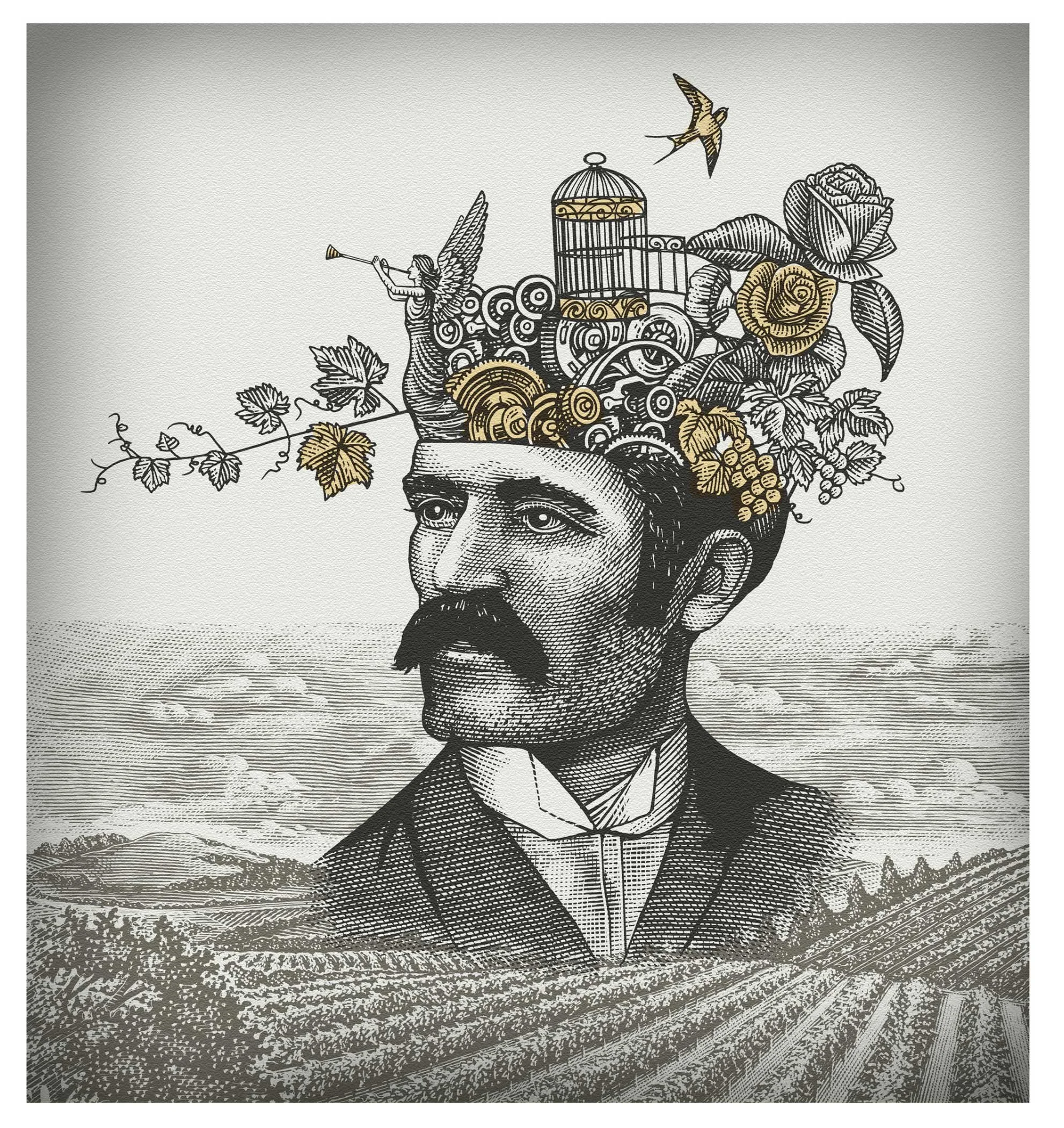
Fortunately there is a method that works without fail. It is necessary to consider a particular phenomenon from as many angles as possible. Figuratively speaking, do not limit yourself to hearing, but add sight, smell, touch, even taste, if appropriate. Think of the number of different tests and analyses to which Dr. House subjected patients when a bouquet of their symptoms turned out to be unexplained. When a founder communicates with a potential investor, in addition to paying attention to speech, body language, and consistency of answers, it’s important to add studying his social media posts, conversations with founders of other fund portfolio companies, an industry expert’s opinion, and ideally, a trip together with intensive communication on existential topics. The point is that you can still get screwed on one axis X, but not on many axes at the same time. Somewhere the tail of the lie is bound to flicker.

In cases when the stakes and risks are high, the more prisms you have and the more diverse they are, the higher the quality of your judgment. This method is especially valuable if you have a slight doubt, confusion, or suspicion the first time you interact, “Hmm, something’s not right here.”

Sincerely yours,

-Alexander


You can help Ukraine defend itself and the World from Russian aggression here.


”Who are you and what do you do?"
As a business therapist, I help tech founders quickly solve dilemmas at the intersection of business and personality, and boost company value as a result.

"I have an extremely important business decision to make. Can you help me?
Reserve a time on my calendar that is convenient for you to meet with me. We'll clarify your request and discuss options for how you can help.


Warm up and cool-down in business by Alexander Lyadov

Experienced athletes tend to do the warm-up routine. Experience has taught them that the cost of this insurance covers many times the risk of injury, after which recovery can take years. If you’re lucky enough to have a wise coach, he’ll remind you that the cool-down is just as much of a priority. It takes time for the body to switch from turbo to normal mode. Heart rate, body temperature, and respiratory rate need to drop smoothly. For example, for a biker, it is not as scary to fall off a motorcycle and slide across the asphalt as it is to encounter a stationary object along the way. The example is radical, but you get the idea - it’s bad for the body to start or brake too sharply.

In addition, I learned from a  podcast  by Stanford neuroscientist Andrew Huberman that immediately after training it is useful to sit with eyes closed for a few minutes to absorb new material. It turns out that the brain scrolls backward through recent experiences, which allows the new knowledge to fit in optimally. After all, the point of training is not in the training itself, that is, not in practicing techniques or sparring, but in the growth of the necessary skills. An injury sets the athlete back on the learning curve. Therefore, warming up and cool-down are insufficient, but necessary conditions for progress. Similarly, if the gut microflora is disrupted, no matter how much you eat, only crumbs will be digested. If a few minutes of “meditation” after training significantly increases the efficiency of training, then immediately running away from the tatami to the shower is, as they say, leaving money on the table.

All of this, of course, is applicable in business, although not as obvious, since here it is not a physiological but a mental process. There is often a temptation to take on a project immediately, especially if it is desirable, ambitious, or urgent. Or, having completed one project, to switch instantly to another, then a third, etc. Everyone knows about the risk of burnout, which is characteristic of passionate and responsible people. It is less common to notice the consequences of not “warming up” when the stage of fundamental questions is missed: “What problem are we trying to solve? How shall we think about it? Where are we aiming?” and others. Also, companies often neglect the "cool-down" and thus miss the chance to learn at least something from the experience. Not surprisingly, without reflection, organizational mistakes tend to recur. But instead of reflecting for a couple of hours after the project is over, the CEO complains about the lack of resources and rushes to investors to raise a new round.

How do you resist the temptation to skip all the important steps? For example, have an experienced coach, whose job is to keep you from slacking. Or, build processes in the company in such a way that no new project can start without a “warm-up” with answers to initial questions and a "cool-down" with analysis of the past project, no matter how bad or good it was.

Yours sincerely,

-Alexander


You can help Ukraine defend itself and the World from Russian aggression here.


”Who are you and what do you do?"
As a business therapist, I help tech founders quickly solve dilemmas at the intersection of business and personality, and boost company value as a result.

"I have an extremely important business decision to make. Can you help me?
Reserve a time on my calendar that is convenient for you to meet with me. We'll clarify your request and discuss options for how you can help.


Where to look for resources? by Alexander Lyadov

By virtue of my profession, I am constantly dealing with delusions of all kinds.

My attitude toward them is a strange mixture of dislike and admiration.

It hurts to see a founder entangled in a web of false beliefs.

No one intended any evil against him - his mind built the trap itself.

As a result, opportunities either slip through the cracks or are not noticed at all.

I cannot deny the power of delusion, but my being rebels.

However, the moment of complete liberation from these shackles is a true celebration.

The transition from minus to plus is too rapid and far-reaching.

Obviously, the harder the bowstring has been drawn, the more powerful the shot.

But every time I see such a transformation, I never cease to marvel.

It takes my breath away to realize the potential hidden within each of us.

Is it worth seeking resources outwardly until the riches are explored within?

Sincerely yours,

-Alexander


You can help Ukraine defend itself and the World from Russian aggression here.


”Who are you and what do you do?"
As a business therapist, I help tech founders quickly solve dilemmas at the intersection of business and personality, and boost company value as a result.

"I have an extremely important business decision to make. Can you help me?
Reserve a time on my calendar that is convenient for you to meet with me. We'll clarify your request and discuss options for how you can help.

Are you a good salesman? by Alexander Lyadov

Everyone knows that in business the ability to sell is super important.

However, not all business founders are sales gurus.

At least, that is their sincere self-assessment.

This is a popular misconception, a kind of prejudice.

Our culture assumes that sales is a one-time transaction.

Like, after the transaction, the buyer and seller will never see each other again.

When there is no shared future, greedy purpose makes violence appropriate.

No wonder the creative person doesn’t think of himself as a seller.

Manipulating, pushing back, and taking another by the throat-not me!

The fundamental mistake is the horizon compressed into a point.

In reality, it’s the other way around - the greatest value comes from a long-term relationship.

A repeat customer, as a generated lead, comes at no cost.

Deep integration into the client’s business increases margins many times over.

Expertise grows by observing feedback loops over and over again.

In other words, in business, the priority is an infinite number of transactions.

In that case, what is the true role of sales?

To get the maximum match between your service and the customer’s pain.

This doesn’t require blackmail and guile, but curiosity and questions.

Is that the kind of salesperson you agree to be?

Yours sincerely,

-Alexander


You can help Ukraine defend itself and the World from Russian aggression here.


”Who are you and what do you do?"
As a business therapist, I help tech founders quickly solve dilemmas at the intersection of business and personality, and boost company value as a result.

"I have an extremely important business decision to make. Can you help me?
Reserve a time on my calendar that is convenient for you to meet with me. We'll clarify your request and discuss options for how you can help.

Are you a Vendor or an Expert? by Alexander Lyadov

In the service business, the Expert receives the highest reward.

The reason is simple: he creates maximum value for the client.

The benefit of the services of even the most reliable and diligent Provider has a limit.

Why? The Provider believes that the client has diagnosed his problem correctly.

Unfortunately, this is not the case with truly complex problems.

For you can’t solve a problem within the system that caused it.

It requires an outside perspective, knowledge of patterns, and a focus on the truth.

The hallmark of the Expert is that:

  1. he knows how to pull both to a meta-level over the problem.

  2. He understands the non-obvious patterns of industry and human behavior.

  3. he cares more about the truth than his client’s comfort, his own convenience, or his fee.

Not surprisingly, in any industry, Vendors will be in the majority.

This is great news if becoming an Expert is your goal.

Such a high barrier means you have no real competition.

Yours sincerely,

-Alexander


You can help Ukraine defend itself and the World from Russian aggression here.


”Who are you and what do you do?"
As a business therapist, I help tech founders quickly solve dilemmas at the intersection of business and personality, and boost company value as a result.

"I have an extremely important business decision to make. Can you help me?
Reserve a time on my calendar that is convenient for you to meet with me. We'll clarify your request and discuss options for how you can help.


You are here for a reason by Alexander Lyadov

A manager complains about the limited opportunities for development in a corporation: “Eh, if it weren’t for the CEO (shareholders, board of directors), I would…”. He looks enviously at the entrepreneur, who seems to be free to do whatever he wants. This is true, but only in part. In fact, the founder meets just as many, and some would say more, barriers along the way. I think it’s just different barriers.

In a large corporation many things may be arranged stupidly, weirdly and even crazy, but at least there is some structure there to lean on. Like a medieval castle, the organization protects its citizens with a stone wall and moat against a number of dangers, like barbarians, wild beasts, etc. In this metaphor, the founder acts far beyond the city wall and wanders alone where sometimes no other man has set foot. He is supported by his entrepreneurial instincts, his experience of past mistakes, and his tools, mostly mental models.

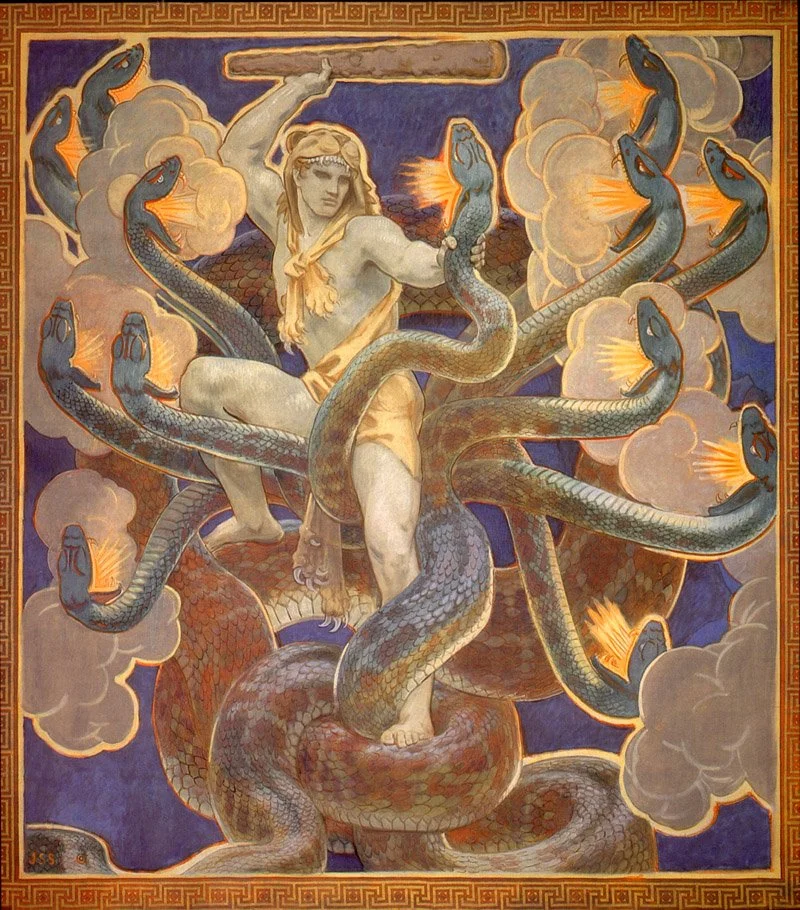
Even the most reasonable structure inevitably deteriorates over time and becomes inadequate to the changed environment. Unfortunately, corporate rulers often notice and recognize problems too late, when the castle wall has already been breached and the Hun crowds have made their way in. All of this could have been avoided if there had been someone who perceived the growing negative signals in the organization differently than everyone else. The company is like a whale caught in fishing gear, begging with all its might to be released. Perhaps you are in this company here and now for a reason. Maybe you are the one destined to defeat the Lernaean Hydra. All you have to do is research at your own pace the problems of your organization, find accomplices, develop a plan for step-by-step change, and then take responsibility for implementing it. If you do this exercise carefully and wisely, you will be surprised at how grateful corporate management will be to you in every way. Congratulations, you are now not a manager, but an intrapreneur, i.e., an entrepreneur inward.

Yours sincerely,

-Alexander


You can help Ukraine defend itself and the World from Russian aggression here.


”Who are you and what do you do?"
As a business therapist, I help tech founders quickly solve dilemmas at the intersection of business and personality, and boost company value as a result.

"I have an extremely important business decision to make. Can you help me?
Reserve a time on my calendar that is convenient for you to meet with me. We'll clarify your request and discuss options for how you can help.


Why prune grapes? by Alexander Lyadov

You, like me, are hardly an agronomist, but you have probably heard that grapes are regularly pruned. Although the bush looks tidier after this procedure, the point of pruning is not beauty at all. The main purpose is to maintain an effective balance between the top and bottom of the bush. This prevents the bush from being overloaded, prevents it from getting too big, speeds up the growth of the desired shoots, and increases the yield. In addition, pruning rejuvenates the plant, making it less vulnerable to external stimuli. In other words, you absolutely cannot do without pruning grapes.

Let’s imagine a beginner grape grower who is in a stupor, unable to decide which young shoots to cut off and which to keep. They are all equally precious to him, for each shoot represents a potential opportunity. And if the neophyte is endowed with a vivid imagination, impressionability, and empathy, he simply cannot have the hand to "take a life", depriving a vine shoot of the chance to realize its "unique mission on earth". Sounds absurd, doesn't it?

But that’s how the founder feels about the many new ideas that promise to dramatically grow his business. Similar feelings are felt by an entrepreneur when, due to a shocking change in the market, it becomes necessary to downsize the team that he has been gathering for years piece by piece. Or an inexperienced investor who guesses that zombie projects suck too much blood, i.e. attention, but does not dare to kill them: “But there is hope? They hardly lose any money." Yes, but it’s not growing either. And investor attention is an even more limited resource than capital.

In order to properly, timely and confidently prune the "shoots", at any given moment you need to remember what the physical meaning of your business is. It all starts with answering the question, “Заради чого? ¿Para qué? What for?”.

Sincerely yours,

-Alexander


You can help Ukraine defend itself and the World from Russian aggression here.


”Who are you and what do you do?"
As a business therapist, I help tech founders quickly solve dilemmas at the intersection of business and personality, and boost company value as a result.

"I have an extremely important business decision to make. Can you help me?
Reserve a time on my calendar that is convenient for you to meet with me. We'll clarify your request and discuss options for how you can help.


Looking for the trail by Alexander Lyadov

The instructor hides my dog’s favorite toy for him to find. Observing the pet’s actions, I involuntarily draw parallels with human behavior. Everything happens in exactly the same way. At first he searches enthusiastically, but superficially, looking in familiar places, obviously relying on luck. When it turns out that there is no low-hanging fruit, the level of anxiety increases greatly. His movements become more chaotic, he paces from side to side and searches again where he was already looking. It’s becoming clear that there will be no tribute or clue, so he can only rely on himself. At last the search becomes real. The nose sticks to the ground, thoroughly exploring every inch of it. Primal instincts awaken that he may not have known he had. The whole organism turns into a super-sensitive nose, which catches not even traces, but the slightest hint. Such total immersion in the process cannot but be rewarded. Sooner or later the desired target is sure to be discovered.

Recently I talked to a founder who managed to sell one of his projects, while another project was frozen by the war. He was seriously puzzled about what to do next. The past had lost relevance, and the future had not yet given a clear sign. I know from my own experience this suspended state, when the energy to live and create is corked, like a genie in a bottle. Trying to take on project X, Y and Z is only discouraging: “Eh, it’s all wrong.” The stress of trampling in one place builds up inside. The man continues to search diligently for something, but the poison of doubt creeps into his heart. The entrepreneur confessed, “What if nothing ever resonates in me? A similar fear is sometimes felt by writers looking at a blank screen with an impatiently blinking cursor: “What if new lines never arise in me again?”

Of course, that’s not the case. As soon as a molecule of the right scent touches the dog’s nose, the whole body rallies and optimizes the search in the spirit of the children’s game of cold-hot. My dog doesn’t doubt himself. You, too, trust more in the wisdom of your subconscious. Keep searching.

Yours sincerely,

-Alexander


You can help Ukraine defend itself and the World from Russian aggression here.


”Who are you and what do you do?"
As a business therapist, I help tech founders quickly solve dilemmas at the intersection of business and personality, and boost company value as a result.

"I have an extremely important business decision to make. Can you help me?
Reserve a time on my calendar that is convenient for you to meet with me. We'll clarify your request and discuss options for how you can help.


I believe by Alexander Lyadov

When electricity, food, water or wifi disappear in a city, I first of all believe in the Armed Forces of Ukraine, for their unstoppable power is the starting point for what we have today and in the future. The next thing I believe in is entrepreneurs, the most proactive and creative force of capitalism.

Business founders need not be persuaded, inspired, much less forced to work. Their “plant settings” are such that, when they see a keen demand for a service or product, they simply cannot physically do nothing. It is like trying to suppress a yawn at a boring presentation or not to laugh at a good joke. So if a product suddenly disappears from the shelves that a lot of people need, I don’t make a fuss. In the few days or weeks while others are worrying, “What if the empty shelves are forever?” I know that plenty of entrepreneurs are rolling up their sleeves and doing important, but so far invisible, work. Alternative routes all the way down to the goat trail are being explored, more responsive suppliers are being found, new supply chains are being invented. Acting independently of each other and even competing at times, the drips of entrepreneurs eventually flow into a turbulent mountain stream that can crush, erode, or bypass any obstacle. Sooner or later, customer demand is sure to be met. Betting on entrepreneurship is as reliable as saying that the sun will rise again tomorrow.

In a general sense, this means that I believe in people’s creativity - in their ability to find a solution to a problem, no matter how catastrophic. As long as man lives, he will conquer anything and everything. Do you agree?

Yours sincerely,

-Alexander


You can help Ukraine defend itself and the World from Russian aggression here.


”Who are you and what do you do?"
As a business therapist, I help tech founders quickly solve dilemmas at the intersection of business and personality, and boost company value as a result.

"I have an extremely important business decision to make. Can you help me?
Reserve a time on my calendar that is convenient for you to meet with me. We'll clarify your request and discuss options for how you can help.


Barrier to start by Alexander Lyadov

I don’t remember once regretting my decision to go to training.

But every other time I have doubts about whether or not to go today.

Often in the process I start to get satisfaction.

And afterwards, 99 times out of 100 I am grateful to myself that I went.

What does this tell you?

It is difficult to invest, even when the return is assured.

After all, the conditions here are almost perfect.

A favorite sport, a comfortable gym, a reliable sparring partner - what else?

Still, every time I have to overcome a barrier.

Sleep deprivation, stress, colds, injuries, and discouragement only raise the barrier.

Now let’s imagine the situation reversed.

You are forced to train under conditions: nasty, expensive, far away.

Now the barrier is too high for the investment to ever get back.

Our wise body will not allow such a waste of resources.

Conclusion: you want to train efficiently, passionately, and for a long time?

Lower the barrier.

By the way, that’s true about business and anything else, not just sports.

Yours sincerely,

-Alexander


You can help Ukraine defend itself and the World from Russian aggression here.


”Who are you and what do you do?"
As a business therapist, I help tech founders quickly solve dilemmas at the intersection of business and personality, and boost company value as a result.

"I have an extremely important business decision to make. Can you help me?
Reserve a time on my calendar that is convenient for you to meet with me. We'll clarify your request and discuss options for how you can help.

How many prisms do you have? by Alexander Lyadov

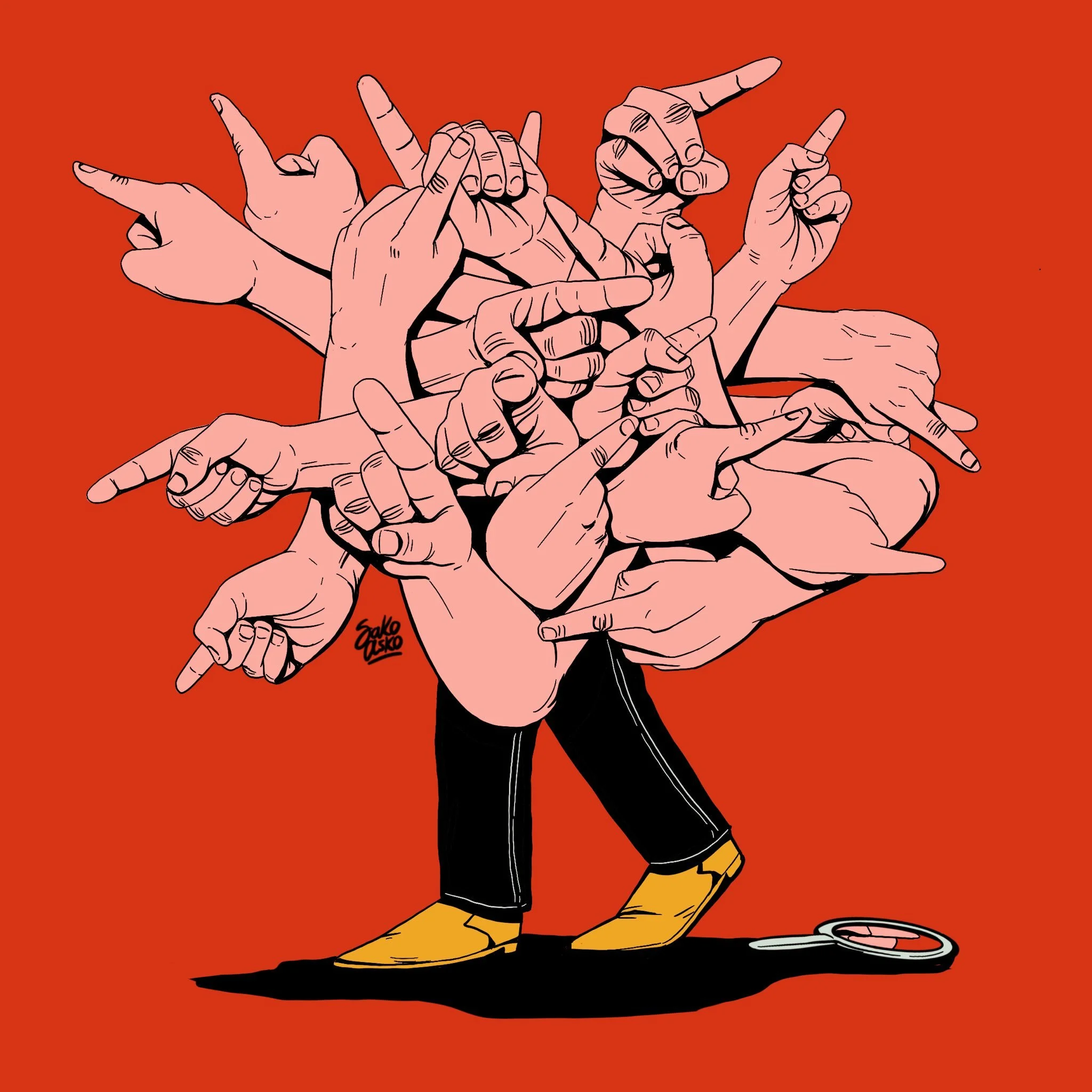
Have you ever noticed how a husband and wife can tell the same event differently?

It is worth listening to the opinion of three luminaries to clarify the diagnosis of a serious disease.

The FTX exchange turned out to be a Ponzi scheme because, among other things, it lacked a board.

What do such different examples have in common?

No matter what one’s IQ is, one’s sight is a little or a lot off.

How, then, can one bring one’s imagination and reality closer together to avoid disaster?

Any phenomenon needs to be shed light on through different prisms.

100% congruent opinions with yours are irrelevant, whether there are 10 or 100 of them.

Even a black-and-white photograph is not a reduction of a color photograph, for it allows you to see something else.

So when you have to make a meaningful decision, make sure that you are not alone.

It may be several mature people who value the truth over your feelings.

Or someone who carries a lot of prisms of different sizes in his professional valise.

In business, your goal is not so much to grab reality by the tail.

Rather, the goal is to have far fewer illusions than your competitors.

Yours sincerely,

-Alexander


You can help Ukraine defend itself and the World from Russian aggression here.


”Who are you and what do you do?"
As a business therapist, I help tech founders quickly solve dilemmas at the intersection of business and personality, and boost company value as a result.

"I have an extremely important business decision to make. Can you help me?
Reserve a time on my calendar that is convenient for you to meet with me. We'll clarify your request and discuss options for how you can help.

Side effect by Alexander Lyadov

Psychoanalysis has a side effect that I in no way expected. In the process of better understanding myself, of course I regularly get bursts of dopamine from “Aha!”-moments. It’s reminiscent of that important word rolling around on the tip of your tongue and the elation when you finally remember it. But even if the resulting insight takes your breath away, “How did I not see this before?” it doesn’t mean an instant change for the better in your life. This is where the agony begins.

While I was blissfully ignorant, getting into stupid situations and dangerous traps, I didn’t reflect, I just suffered, and then I tried my best to get out of them. I would say to myself, “It was an unfortunate accident,” “Bad luck this time,” or “There are idiots, crooks, and evil people around. Working with a therapist in person and in a group convinced me that if not all, then the overwhelming number of problematic situations I create myself. Now I have a better understanding of the root causes and scenarios of how this usually happens. And if they say about the dog, that he understands everything, but does not speak, then I can also say that I understand everything, but I do not prevent it. More precisely, I don’t have the time. Sometimes my life is like a dream, where an unwanted scenario unfolds and I either move like in jelly or watch like a dazed spectator. Admittedly, I was much more comfortable blaming other people and fate for my problems. Alas, insidious psychoanalysis has robbed me of such a convenient excuse.

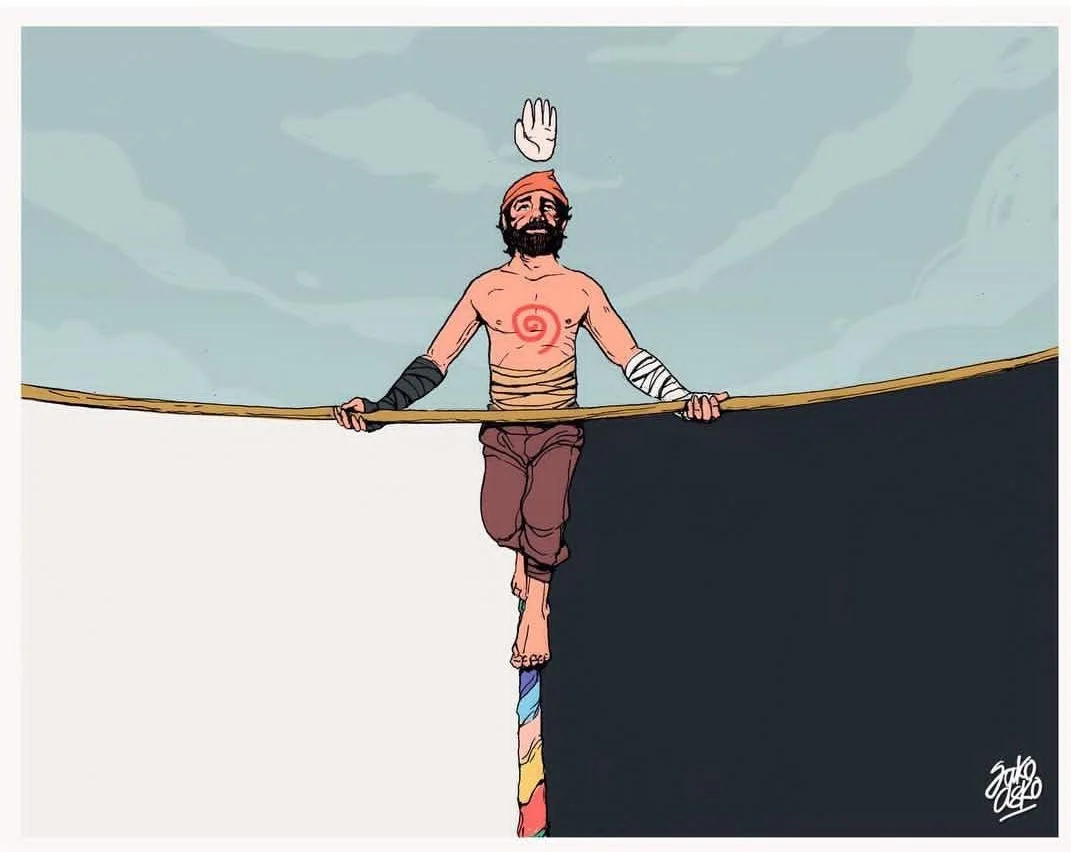
I only record the blunders: “Here we go again! My own fault. How much there?”. Sometimes I feel so stupid, ridiculous and ashamed that, right, I want to go back to the original state, when I was supposedly innocent. However, this is only in moments of moping. The rest of the time I keep the belief that all really important changes in nature occur non-linearly. For a long time it seems that nothing happens, and then, bang, a new quality sprouts. Finally!

Sincerely yours,

-Alexander


You can help Ukraine defend itself and the World from Russian aggression here.


”Who are you and what do you do?"
As a business therapist, I help tech founders quickly solve dilemmas at the intersection of business and personality, and boost company value as a result.

"I have an extremely important business decision to make. Can you help me?
Reserve a time on my calendar that is convenient for you to meet with me. We'll clarify your request and discuss options for how you can help.


Consensus? by Alexander Lyadov

If we see a friendly founder, for whom human relations are very important, it is very likely that he involves too many people in the decision-making process. Of course, this looks inspiring and humanistic, and there are plenty of fashionable managerial theories on this topic today. After all, the more people have a say, the more diverse the opinions, the higher the quality of decisions? Not really.

The thing is that decisions are rarely made once and for all. More often than not, it’s an iterative process of the market testing hypotheses put forward. Which more often than we would like, are far from perfect, or even turn out to be outright error. So the problem is not so much to get together, brainstorm and decide something, as it is to take responsibility for what has not worked. And this is where it turns out that groups are very rarely able to admit they are wrong. And the more people involved, the more painful the process of remorse. As history shows, some nations need the humiliation of losing a war in order to come to their senses, realize their errors, and apologize to the world for all their sins. Of course, it is also hard for an individual to accept his mistake, but alone, the chances are much higher than in a group. Especially if the person has the necessary prerequisites, external motivation, and an inner drive to work on himself.

This does not mean that the founder should ignore the opinions of others. This is another dangerous problem characteristic of proud people with high intelligence. The decision-making process in the company must be properly structured so that it is divided into functionally different stages. Accordingly, at a certain stage it is wise to collect opinions, but again, not from all in a row, but from the specialists competent to solve this type of problems. You can ask everyone: “Who is willing and able to be personally responsible for mistakes? (i.e., the process of educating the company about novelty).” If the question is not about rights, but about responsibility, then you would be surprised how few are suddenly willing to share this burden with the founder.

Yours sincerely,

-Alexander


You can help Ukraine defend itself and the World from Russian aggression here.


”Who are you and what do you do?"
As a business therapist, I help tech founders quickly solve dilemmas at the intersection of business and personality, and boost company value as a result.

"I have an extremely important business decision to make. Can you help me?
Reserve a time on my calendar that is convenient for you to meet with me. We'll clarify your request and discuss options for how you can help.


Power and responsibility by Alexander Lyadov

In business, the founder bears ultimate responsibility for anything. No matter what happens, only he will be guilty of not having foreseen, not reacting immediately or, on the contrary, not restraining the emotional outburst. The only thing that balances the weight of this burden is the complete freedom to do anything. And if authority is a limited right, the founder’s authority in a private company is maximal. In this way power and responsibility are maximized but matched, making entrepreneurship one of the most fascinating social games. Wealth, recognition, and fame are certainly important, too, but they seem to be by-products of activities that reward some people in the process.

The founder does not think about the balance of power and responsibility, just as he does not think about the ratio of oxygen to carbon dioxide in the air–he simply breathes it. However, I have often seen entrepreneurs violate this parity when it comes to their employees. For example, with the help of an executive search agency, a promising CEO is brought into the company with ambitious goals: “Come on, we’re waiting for a miracle!”, and if successful, he is promised the proverbial million. The new CEO rolls up his sleeves and enthusiastically plunges into the work, but quickly notices that his hands and feet are tied. It turns out that, in his words, the founder has delegated authority to the CEO, but in reality he does not let him make a single step on his own. Despite the fatigue of the operating routine, the long thinking and the high costs of hiring a professional, the fear of losing control over “his baby” takes over. Employees instantly read this dissonance and rush with all questions to the one who has the real power. From this point on, the hired CEO is doomed.

If he is naive, he will try to fight the resistance, which will only make his inevitable outcome more painful and humiliating. If the CEO is smart, he will leave the company at the first sign of actual sabotage of his authority, even if the shareholder warmly assures him otherwise. A wise CEO will never agree to any generous salary and bonus unless the owner explicitly confirms the transfer of specific powers. Or if the CEO suspects that the owner is cheating himself.

Yours sincerely,

-Alexander


You can help Ukraine defend itself and the World from Russian aggression here.


”Who are you and what do you do?"
As a business therapist, I help tech founders quickly solve dilemmas at the intersection of business and personality, and boost company value as a result.

"I have an extremely important business decision to make. Can you help me?
Reserve a time on my calendar that is convenient for you to meet with me. We'll clarify your request and discuss options for how you can help.