
Expanding Space and Time by Alexander Lyadov

Often, the problem is not the problem, but the ticking clock.

It's tough to brainstorm when the countdown is blaring in your ear: 'Three! Two! One! Game over.'

Your inner world shrinks to the size of a dot. How can a new idea squeeze in there? There's no space left. Not even for you.

But surrendering is foolish. You haven't exhausted all means yet.

Your main task is to carve out a tiny space for yourself.

Imagine in jiu-jitsu your opponent pins you to the ground. What to do? Slip your knee or elbow between your bodies. Now you can brief. Then, use that lever to break free.

Meditation, humor, and therapy work similarly. Negative emotions try to engulf you. Instead, you label them and shift to the observer's position. Voilà! Space emerges between you and them.

Space and time are intimately linked. By expanding space, you gain time to choose your reaction. And with a time buffer, your freedom expands. You can tackle almost anything.

The longer the planning horizon, the easier it is to reach your goal. That's why the best entrepreneurs have a clear vision of their business decades ahead.

Predicting market and societal shifts is impossible. But the more time you have, the easier it is to turn anything to your advantage: bad events, obstacles, or trends.

Sincerely yours,

-Alexander


About me:
As a business therapist, I help tech founders quickly solve dilemmas at the intersection of business and personality, and boost company value as a result.

How can I help you?
If you've long been trying to understand what is limiting you and/or your business and how to finally give important changes a push, then The Catalyst Session is designed specifically for you. Book it here.


Evolution of Value and Price by Alexander Lyadov

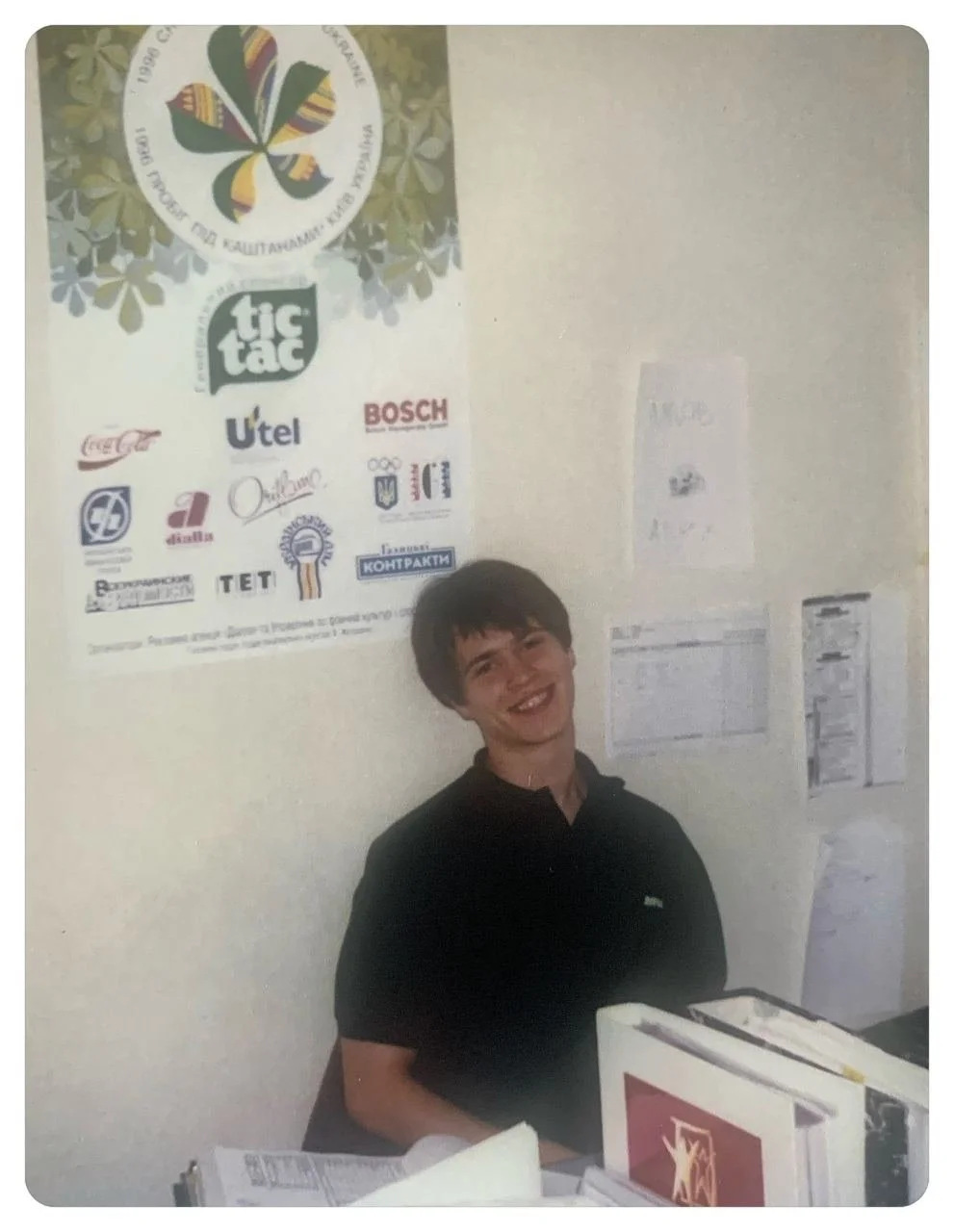
Ark JWT Kyiv, 1998

29 years ago, I embarked on my advertising career. Agencies' income stemmed from commissions on media budgets. Nobody purchased our creative and intellectual output; we gave it away for free. My client Ferrero would say, "Just adapt our Italian ad, and that's it."

Oddly enough, clients' desire to save money helped. I discovered the "Cost-plus" method, where agencies reveal the team's salaries, overhead costs, and profit to the client. This approach helped us win a crucial pitch during the 1998 crisis.

We applied this method to all clients. Now, each specialist had a price, hence value. The agency gained stability. Sadly, international clients still saw us merely as executors. Our creative potential hardly interested them.

In 2001, I became CEO and launched a series of experiments. We shifted our focus to local clients. Ironically, their potential didn't interest any major agencies. Except us. That's how the country learned about brands like Fozzi, Selpo, Morshynska, Roshen, Myagkov, and others.

It turned out that the only thing these clients cared about was our ability to skyrocket their sales by launching a vibrant brand. And we excelled at it. Realizing this, I proposed a new pricing method to the most ambitious clients.

"Payment by results" resonated with them. Being entrepreneurs, they were willing to share success. In a short time, local clients became our biggest earners. But beyond the rewards, the work brought us joy, creative fulfillment, market recognition, and most importantly, meaning.

Since then, I've learned even more about various pricing models. This subject fascinates me. If you tangibly solve client problems, sticking to old pricing means leaving value on the table.

Reflecting on this evolution, I draw these conclusions:

  1. The market defines you, but it evolves. Change with it.

  2. There are always those who direly need your contribution.

  3. When you create colossal value together, it's easy to share.

  4. No one will make you rich; you must offer a lucrative deal.

  5. It's only possible if you highly value your craft.

Sincerely yours,

-Alexander


About me:
As a business therapist, I help tech founders quickly solve dilemmas at the intersection of business and personality, and boost company value as a result.

How can I help you?
If you've long been trying to understand what is limiting you and/or your business and how to finally give important changes a push, then The Catalyst Session is designed specifically for you. Book it here.


Learning From Nature by Alexander Lyadov

In the ​video​, a praying mantis eats a wasp. Meanwhile, another wasp cuts this mantis in half. Ants scurry around.

This video isn't as fascinating as the comments beneath it.

"Imagine being so distracted trying to destroy something you don’t realize your being destroyed...". That's what happens when an entrepreneur ruins his (or her) business, caught up in chasing after a co-founder in public spaces and courts.

"These ants are gonna be the real winners in the end." Suppose a company is torn apart by internal conflicts for a long time. The ultimate beneficiary won't be its owner. Numerous big and small competitors won't leave even bones behind.

One: "Why didn't you help? Instead of filming" Another: "Help whom? The hornet or the mantis?" Humans simply can't view nature without their morality. They deeply pity the rabbit in the fox's jaws. They thirst to intervene... and doom hungry fox cubs to death. Who are you? Almighty God?

Pride is the main obstacle in business. A leader clings to beliefs and forms dear to him, even when the market signals: "I'm more complex. I'm evolving. I'm not what you thought I was."

What's a CEO to do? Act. But beware the temptation of dogma. Recognize the inevitable side effect of your intervention. Most importantly, have a clear answer to the question: "For what?"

Sincerely yours,

-Alexander


About me:
As a business therapist, I help tech founders quickly solve dilemmas at the intersection of business and personality, and boost company value as a result.

How can I help you?
If you've long been trying to understand what is limiting you and/or your business and how to finally give important changes a push, then The Catalyst Session is designed specifically for you. Book it here.


Is There a Meaning to Pain? by Alexander Lyadov

Many have been convinced that everything in this world is relative. The grand narratives of the past have fragmented into micro-stories on TikTok. People have lost their bearings. Postmodernist Derrida declared, "There is nothing outside the text."

The only thing no one will deny is pain. Regardless of age, gender, race, personality type, education, or political beliefs, pain is real for absolutely everyone. In Buddhism, there's a broader concept—"dukkha." It translates to "suffering" or "restless dissatisfaction." Even pleasure is painful because it differs from expectations, fleeting, and painfully desired to repeat.

Ignoring one's suffering is only possible for a while. Even after years, a person eventually explodes: "Enough! I can't bear this anymore! I'll do something, anything."

Pain is the most reliable catalyst for change.

What would happen if a person is artificially deprived of suffering? For instance, distracting him, pumping him with painkillers, or rendering him numb. It may seem like an act of love and sympathy. But the person becomes a zombie, an automaton, a puppet. He's not living.

No current flows when there is no potential difference between the cathode and the anode.

A person must mature on his own to change his life for the better. During this process, he (or she) will suffer until reaching a breaking point. But afterward, growth will be exponential.

Do you believe the conditions for change differ for an organization?

Sincerely yours,

-Alexander


About me:
As a business therapist, I help tech founders quickly solve dilemmas at the intersection of business and personality, and boost company value as a result.

How can I help you?
If you've long been trying to understand what is limiting you and/or your business and how to finally give important changes a push, then The Catalyst Session is designed specifically for you. Book it here.


Small Predator Won't Pass by Alexander Lyadov

When you think about self-protection, what comes to mind?

Maybe steel doors, alarms, weapons, and bodyguards. Your imagination paints a picture of sinister crime scenes, then tries to protect you from it.

Statistically, however, a different scenario is more likely. Figuratively speaking, you're more likely to encounter a hyena or a spider than a lion or a leopard.

Realistically, there aren't many dangerous predators, and they're choosy about their prey. I hope you're not cruising in an emerald Bentley, showering clubs with cash. If so, in terms of ROI, you're not an appealing target for a villain.

It's the small predators that are the real concern. They're everywhere. Their human counterparts? Con artists, thieves, thugs, charlatans, lunatics, and so on.

They won't take your life, but they can mess up your health, empty your bank account, or ruin your mood for a week. What's frustrating is not just the damage they cause, but their frequency and sudden onset.

Luckily, there's a simple solution. You need a tiny barrier. Not even a wall, ditch, or fence. A small predator can overcome it but won't bother. There are plenty of careless people around after all.

The barrier is direct eye contact, squared shoulders, and a confident stride in the city. Dummy security cameras in public places. A janitor in the lobby. A barking dog in your flat.

A symbolic barrier costs pennies. But in the long run, it saves you a lot. By the way, does your company have such a 'barrier'? And what is that?

Sincerely yours,

-Alexander


About me:
As a business therapist, I help tech founders quickly solve dilemmas at the intersection of business and personality, and boost company value as a result.

How can I help you?
If you've long been trying to understand what is limiting you and/or your business and how to finally give important changes a push, then The Catalyst Session is designed specifically for you. Book it here.


Who's Getting in My Way? by Alexander Lyadov

The core struggles of individuals, groups, and companies are alike.

It's tempting to blame the competition or fate. But in 99 out of 100 cases, the subjects restrain themselves. Consciously, no one does this. Everything seems to happen by chance.

Remember that popular game? "The city sleeps. The mafia awakens." For law-abiding citizens, it's inconceivable to admit that the mafia are themselves. The flattering image they've long crafted collapses. It feels like one is left with nothing.

A division of power is evident. By day, citizens toil, but when consciousness sleeps, criminality conducts its dark affairs. In the morning, consciousness is shocked by the disorder: "Who's hindering our life?"

The first step is to take responsibility. Entertain the thought that all coincidences aren't coincidental. Refuse to seek the oppressor around. Recognize organized crime within yourself.

Then comes the intriguing part. It's crucial to understand why it was created. You'll notice a resemblance to "Merry Men", a group of outlaws. The intentions of Robin Hood are inherently noble.

Realizing the conflict's cause and the intentions of all sides, you can act as a mediator between them. When the heat of internal struggle subsides, you unleash enormous energy for creativity and life.

Sincerely yours,

-Alexander


About me:
As a business therapist, I help tech founders quickly solve dilemmas at the intersection of business and personality, and boost company value as a result.

How can I help you?
If you've long been trying to understand what is limiting you and/or your business and how to finally give important changes a push, then The Catalyst Session is designed specifically for you. Book it here.


Passion vs. Consistency by Alexander Lyadov

When asked about the secret to his success, UFC founder Dana White ​said​: "Passion and consistency.

Essentially, this means:

  • light and darkness.

  • chaos and order.

  • sun and moon.

  • Yin and Yang.

Remove one element from the equation, and nothing will work. The fate of lonely consistency is merely treading water. And left to its own devices, passion will lose as much as it creates.

For better or worse, few entrepreneurs harmoniously embody these polar qualities. In the realm of business therapy, it's common to observe clients limping to one side.

It seems like the obvious solution would be to find someone who balances your deficiency with their surplus. Successful businesses would skyrocket if not for one "but."

Passionate individuals are generally not fans of consistency. Moreover, they consider possessors of this quality as unhelpful, primitive, and dreadfully boring.

Conversely, those inclined towards consistency often associate passion with hysterical frenzy, chaos, and an unsystematic approach. All this unsettles and even scares them. They disdainfully mutter, "Nonsense."

You see, their conflict is just one step away. That's how it goes in business all the time. Even if co-founders managed to tolerate each other for several years. Now it's arguments, lawsuits, etc.

Don't want such a scenario? Work on yourself. Here's a hint - learn to appreciate the "repulsive" quality. After all, it's within you too.

You keep it confined like a captive slave. It's time to set yourself free.

Sincerely yours,

-Alexander


About me:
As a business therapist, I help tech founders quickly solve dilemmas at the intersection of business and personality, and boost company value as a result.

How can I help you?
If you've long been trying to understand what is limiting you and/or your business and how to finally give important changes a push, then The Catalyst Session is designed specifically for you. Book it here.


The Transformative Spirit by Alexander Lyadov

Prosperity is simple if two conditions are met:

  1. Become invulnerable.

  2. Embrace Chaos.

Really?

If you're fragile and vulnerable, even the slightest volatility can be fatal. What development is there if your only concern is to survive until dawn?

But suppose your world resembles a museum—orderly and static. In such a scenario, invincibility serves no purpose. There's no risk, but there's also no upside.

As your invulnerability grows, chaos shifts from foe to ally.

After all, any encounter with uncertainty has three scenarios:

  1. Everything is much worse than we expected — it's a disaster.

  2. There's nothing important — you can ignore it.

  3. Like Aladdin, you gain access to the robbers' treasure trove.

Prosperity is inevitable when you make scenario #1 unlikely.

So, what's the catch? Carl Jung noticed: "Simple things are always the most complex." Invincibility is a significant personal endeavor.

It's not so much about physical strength or weaponry. Nor is it solely about the speed of decision-making or the adaptability of your paradigms.

It's about what's invisible yet most valuable. "The spirit indeed is willing, but the flesh is weak." (Mark 14:38).

The spiritual vector indicates what to strive for. It's within our power to enhance our invincibility each day. Then almost everything will turn out to be good.

Sincerely yours,

-Alexander


About me:
As a business therapist, I help tech founders quickly solve dilemmas at the intersection of business and personality, and boost company value as a result.

How can I help you?
If you've long been trying to understand what is limiting you and/or your business and how to finally give important changes a push, then The Catalyst Session is designed specifically for you. Book it here.


Stability Through Tension by Alexander Lyadov

Healthy tension is key for the System to develop in a stable manner.

Let's dive into some diverse examples.

To swiftly navigate through many obstacles, the rider simultaneously presses the clutch, accelerator, and brake. In the stretch between polar forces, the system gains maneuverability and stability.

In jiu-jitsu, it's crucial to limit your opponent's degrees of freedom. He pulls, you resist. He pushes, you push back. Out of two opposing forces emerges a "rigid" system, one you control.

When a board of directors is first formed, many things seem vital. Yet, the paramount goal is improving judgement. How? The board needs someone to challenge the founder-CEO.

As we see, the aim is to always create the right tension in the string, preventing it from slackness or overload.

Mastering this is half science, half art. Primarily because the environment shifts. You must adjust the tension of the bowstring when it rains or the sun blazes.

The fundamental premise is finding value and purpose in system tension. Only then are you willing to pay the price of effort and discomfort.

A Japanese proverb hints: "A carp swimming against the current may become a dragon."

Sincerely yours,

-Alexander


About me:
As a business therapist, I help tech founders quickly solve dilemmas at the intersection of business and personality, and boost company value as a result.

How can I help you?
If you've long been trying to understand what is limiting you and/or your business and how to finally give important changes a push, then The Catalyst Session is designed specifically for you. Book it here.


Garden of Love by Alexander Lyadov

Everyone knows the quote: "Love your neighbor as yourself."

The problem is, people rarely love themselves.

We're not talking about treating yourself to ice cream. We're talking about knowing deep down that your existence in this world is wanted, necessary, and precious.

A lack of self-love breeds irritation, envy, and anger. After all, one can only be generous to others from abundance.

If the above resonates, then you have the seeds of love within you. Long ago, someone planted them in the fertile soil of your soul.

If this role was fulfilled by a parent, let alone both, consider yourself hitting the jackpot. Given the dynamics of divorces, this is rare.

Perhaps only your grandmother and/or grandfather truly loved you. Maybe you were born in a terrarium, but a sports coach truly cared about you. Or an English teacher. Or even a stranger.

Such an experience a person can never forget. One day, the seeds will sprout. Now, you must uproot the stumps, cut the weeds, protect from pests, water, and so on.

There's a huge task ahead, but it will bear rich fruits. Where there was once wild forest or desert, an apple orchard or a Japanese garden 日本庭園 will spread.

As you harvest the fruits of love, you'll want to share them with your neighbor. Starting with your wife/husband and children. The circle will expand. Despite all the evil in the world, you have a source of love that no one will take away.

Sincerely yours,

-Alexander


About me:
As a business therapist, I help tech founders quickly solve dilemmas at the intersection of business and personality, and boost company value as a result.

How can I help you?
If you've long been trying to understand what is limiting you and/or your business and how to finally give important changes a push, then The Catalyst Session is designed specifically for you. Book it here.


Theory and Practice of Constraints by Alexander Lyadov

In the Theory of Constraints, there are five focusing steps.

Step one — identify the constraint. Without this, all other measures will bring weak or harmful effects. This is where people, companies, and states squander their basic resources.

Let's name just a few reasons:

1. Impatience. People rush to shoot the arrow instead of taking a second to precisely aim. Why? They aren't used to enduring discomfort. Hence: "We must do at least something asap!"

2. Lack of purpose. Not everyone understands why they should bother. Working on the constraint allows you to get rid of unbearable pain in the future at the cost of bearable pain now. As the Sicilian mafia saying goes, "It's worth trying to get rid of the pebble in the boot."

3. Lack of skills. Even if there's patience and purpose, experience and skill are still needed. The system's constraint cleverly hides in the lush bushes of symptoms. The latter seem important, tempting one to get distracted by trimming them down.

4. Irresponsibility. The constraint is hard to find because people look for it where it isn't, i.e., outside themselves. Circumstances, history, other people, etc., are to blame. One must entertain the thought: "I've put myself in this position."

5. Immateriality. It almost always turns out that it's not about a shortage of capital, people, or tools. The true constraints are false beliefs, i.e., the belief in things that don't actually exist.

Sincerely yours,

-Alexander


About me:
As a business therapist, I help tech founders quickly solve dilemmas at the intersection of business and personality, and boost company value as a result.

How can I help you?
If you've long been trying to understand what is limiting you and/or your business and how to finally give important changes a push, then The Catalyst Session is designed specifically for you. Book it here.

Who Keeps the Company Alive? by Alexander Lyadov

If you want to grasp the entrepreneur's essence, write an article. Not just any, but one you'll want to reread years later.

It's clear from the start: the main toil is finding the idea.

Editing, error-checking, and publishing demand effort too. Even significant effort, but at least it's clear. And the outcome relies entirely on you.

Yet, in the hunt for an idea, everything's foggy. No one knows where ideas dwell, to whom they come, when, or why.

I remember our marathon brainstorming sessions in the ad business. Complete team despair—deadline looming, and no Big Idea. A creative steps out for a moment. Returns astonished: "Guys, while I was washing my hands, it hit me...". Voilà! We're saved.

Companies make a mistake when the Editing function suppresses the Search for new ideas.

For instance, when a business model runs smoothly and for long. A critical mass of managers forms, convinced that such stability is forever. Novelty seems unnecessary to them.

Then, an environmental cataclysm strikes. War, Covid, or an economic crisis. The company's problem isn't that its business model is breaking. The tragedy is the wellspring of "living water" has long dried up. Breakthrough ideas are nowhere to be found.

At that moment, the business's only hope is the founder. The one who once found the Big Idea can rediscover it. At this moment, everyone remembers who breathes life into the corporate body.

Sincerely yours,

-Alexander


About me:
As a business therapist, I help tech founders quickly solve dilemmas at the intersection of business and personality, and boost company value as a result.

How can I help you?
If you've long been trying to understand what is limiting you and/or your business and how to finally give important changes a push, then The Catalyst Session is designed specifically for you. Book it here.


Decoding the Expert by Alexander Lyadov

How to tell if you're dealing with an expert or not?

You ask a question and listen to their response. If you find yourself thinking, 'Wow, that's so smart!' but end up feeling more confused, then you're likely dealing with an archivist, a memory stick.

His (or her) mind shelves are bursting with books on the subject. Potentially, everything's in there. But alas, there's no one to separate the wheat from the chaff.

Conversing with an expert is different. You're astonished: "Wow! Is it that simple? Can't be." From a vast medical reference book, he extracts one likely diagnosis, not twenty-five.

For the former, the value is the knowledge itself; for the latter, it's what that knowledge helps to accomplish.

Accomplish for whom? The client. That's why expertise is always aimed at solving someone's specific problems. Because only humans have those.

So, an expert is someone who can see and hear you. Otherwise, you're facing a "database." It's not tragic. In that case, you must extract expertise from the database yourself.

For example, an investment fund manager I know told the legal team, "Don't write a dissertation. Identify the three biggest risks of this decision. Just three."

Sincerely yours,

-Alexander


About me:
As a business therapist, I help tech founders quickly solve dilemmas at the intersection of business and personality, and boost company value as a result.

How can I help you?
If you've long been trying to understand what is limiting you and/or your business and how to finally give important changes a push, then The Catalyst Session is designed specifically for you. Book it here.

Island of Knowledge by Alexander Lyadov

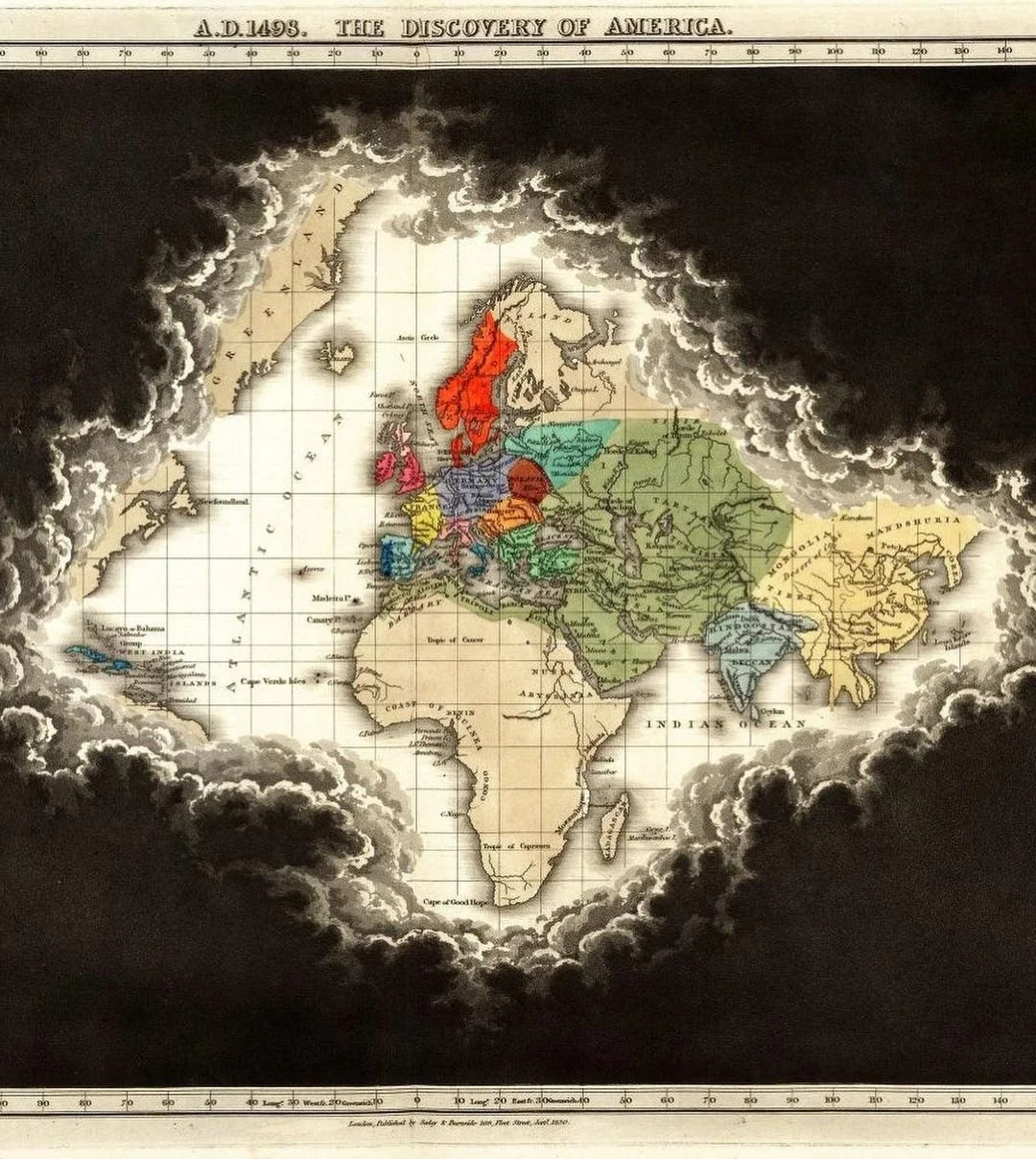
Edward Quin's Historical Atlas (1830) vividly illustrates how people's worldviews have evolved.

At first glance, we see a map: "​Eden, circa B.C. 2348.​" It's a small island, the 'known world,' encircled entirely by a dark ocean.

With each century, light seems to wrest territory from darkness.

On the map "A.D. 1498. The Discovery of America," Europe, Africa, and Asia are already outlined. Only the edge of North America is visible. The known world is vast already, but how much more discovery lies ahead!

You can't help but smile, thinking of our ancestors' ignorance. And then the smile fades. Because we're no different from them.

Yes, the Earth's surface is meticulously charted. People are exploring outer space and even dreaming of colonizing Mars. Science delves deeper into atoms, synthesizes intelligence, and modifies genomes.

The scale of these achievements is both awe-inspiring and frightening. But like before, we live on an island. It's gotten a bit bigger and more comfortable. But the primordial chaos still swirls around it. We can't fathom what lies in its depths.

What we don't know is infinitely greater than what we do.

This holds true for everyone: humanity, nations, and you. Just when you think you've unraveled the universe's greatest mysteries, reality will douse you with icy water: 'Kneel, proud one!'"

Conversely, if your virtue is humility, then your island will safely expand every day.

Sincerely yours,

-Alexander


About me:
As a business therapist, I help tech founders quickly solve dilemmas at the intersection of business and personality, and boost company value as a result.

How can I help you?
If you've long been trying to understand what is limiting you and/or your business and how to finally give important changes a push, then The Catalyst Session is designed specifically for you. Book it here.


Combustible Environment by Alexander Lyadov

Joaquin Phoenix by Michael Muller

Some employees burn out due to ​personal issues​. Everyone needs to untangle those themselves. Perhaps, with a therapist.

But some work in conditions where they can't help but burn out. For example, when responsibility and authority are out of balance.

In business, a fire breaks out. A manager sees it. He (or she) has buckets and hoses. He wants to put it out but can't. Another department controls the water supply. He gets blamed for the ashes: "You should've been able to do it!"

What should he do? If he's weak, he becomes cynics and covers his ass. Fires will become more destructive and frequent. When there are too many of such adapters, company will meet its end.

If the person is responsible yet naive, he'll endure this nonsense for a long time. "Management knows better." Cognitive dissonance is guaranteed. So stress, overheating, and breakdown are inevitable.

And if the employee is conscientious, strong, and mature? H'll try to convince management of the absurdity of the situation.

His argument will be: 'The company is missing out on these benefits' instead of 'Our department is suffering' or 'I'm tired of working without breaks.'

Option #1 — competent leadership will expand the manager's authority. The CEO might notice an employee thinking as a shareholder. His career will skyrocket.

Option #2 — up top, the manager won't find understanding: "We don't care. Others endure. Do you think you're special?" The smarter the manager, the sooner he'll leave this madhouse.

Notice that the problem of burnout is always solved by the individuals themselves. But only if they're willing to take responsibility for their life.

Sincerely yours,

-Alexander


About me:
As a business therapist, I help tech founders quickly solve dilemmas at the intersection of business and personality, and boost company value as a result.

How can I help you?
If you've long been trying to understand what is limiting you and/or your business and how to finally give important changes a push, then The Catalyst Session is designed specifically for you. Book it here.


The Secret of Burnout by Alexander Lyadov

Hey CEO, is employee burnout a hot topic for you?

A person loses motivation, falls ill, and resigns. The latter usually happens suddenly. Your company stumbles and loses pace.

Although the ending is the same, there are many roads to it.

Unfortunately, not in all cases can a leader help.

For example, if an employee is eager to burn out. This is not said out loud. Usually, the person is not even aware of it themselves.

It would look like this:

CEO: "It's already evening. You've stayed late again. Go home."

Manager: "Oh, I'm perfectly fine! I'll finish this pile and be done."

CEO: "But you look exhausted! I even allowed you to hire an assistant or pass the project to a colleague. She has the resources available."

Manager: "No worries. It's temporary. I can handle it myself."

To understand what's happening, you need to understand the benefits of the "fire victim":

  • A reason to be proud of themselves: "I've given you everything."

  • Release from the guilt that torments them the rest of the time.

  • Proof of their beliefs: "The cruel world is trying to devour me."

  • Self-admiration through tragedy: "How epic my burning is!"

  • Escape from control: "Leave me alone, I'm doing my best."

  • Pleasure from the futile attempts of others to save them.

  • Ability to manipulate, instilling guilt in others.

It's obvious that only the arsonist can put out that fire. For one, it requires approaching the abyss. For the other, it's about growing weary of this futile game.

What should the CEO do? Avoid hiring people who brag about their lack of vacations and the sleepless nights they spend at work. Let them fix themselves first.

Sincerely yours,

-Alexander


About me:
As a business therapist, I help tech founders quickly solve dilemmas at the intersection of business and personality, and boost company value as a result.

How can I help you?
If you've long been trying to understand what is limiting you and/or your business and how to finally give important changes a push, then The Catalyst Session is designed specifically for you. Book it here.


Hunting Within by Alexander Lyadov

What happens when you take away hunting from a hunting dog?

The animal will wander, misbehave, and suffer. Its "factory" function won't vanish. It'll manifest itself, one way or another.

If the owner obstructs this function, misery awaits. Nothing exhausts like fighting against the forces of nature. They're ready to go all the way, and you're not.

Now imagine, within you, there are both—the owner and the dog.

The dog feels it's a born hunter. Sadly, it can't speak. And the owner "accidentally" bought the cute puppy at the market. Some drifter was selling it nameless and pedigree-less "as is."

Their life together will be drama and comedy. Until the owner sheds illusions and starts studying the dog's habits.

Then you might discover what lies behind the seemingly sinister stubbornness and wild antics. As a result, you can begin to live with the hunting function together, not against it.

Start by giving the dog the opportunity to search, chase, and fetch "prey." Then find a trainer to develop the skills. Finally, head out into nature and put it to the test.

You may be pleasantly surprised. As you breathe in the forest's scent and feel the rush of the hunt, you'll exclaim, "This is exactly what I've been longing for!"

Sincerely yours,

-Alexander


About me:
As a business therapist, I help tech founders quickly solve dilemmas at the intersection of business and personality, and boost company value as a result.

How can I help you?
If you've long been trying to understand what is limiting you and/or your business and how to finally give important changes a push, then The Catalyst Session is designed specifically for you. Book it here.


Money and Love by Alexander Lyadov

No one buys a company as it is now.

Yeah, buyers inquire about the current profit level, client list, team quality, and so on. They listen carefully to the business's creation story. But in reality, their interest lies elsewhere.

Verifying existing facts is hygiene. That's how buyers shield themselves from incompetence and deceit. It's unbearable for a pro to be made a fool.

Buyers also try to predict future cash flow. Will it grow or suddenly dry up? The income and profit dynamics over the last 5 years aren't a guarantee, but a trend, hence a hint.

Unlike a financial investor, a strategic buyer is concerned about something else. And that "something" is hard to grasp for the founder who doesn't cherish his company X with all his heart.

The secret is that a strategic buyer is indifferent to company X. He is passionate about his business Y. His question is - how will buying "Element X" help "Rocket Y" go higher and faster?

Founders feel offended by the buyer, thinking, "They don't value my business." The paradox is that you'll get a higher price for your company if you manage to love the buyer's business as much as he loves it.

Sincerely yours,

-Alexander


About me:
As a business therapist, I help tech founders quickly solve dilemmas at the intersection of business and personality, and boost company value as a result.

How can I help you?
If you've long been trying to understand what is limiting you and/or your business and how to finally give important changes a push, then The Catalyst Session is designed specifically for you. Book it here.


From Yes to No by Alexander Lyadov

Starting a new project, venture, or career?

There is a common mistake. Premature optimization.

It's like artificially narrowing reality with some random criterion. You need experience for selection. But you're lacking it for now.

So, at the beginning, being open-minded is a boon. A savvy business analyst once told me, "With a heap of data, I simply begin sorting them in various ways. Later, a pattern emerges."

Now, if you're already an expert in your field, it's a different story. Having been through a lot of events and facts, you can already tell truth from lies.

What's the boon now? Focus. Being versatile has turned into a curse. Before, you'd say "Yes!" to everything. Now, you're cutting through with a "No!" sword. Selectivity demands ruthlessness and discipline. It's clear what for.

At every stage, your personal meaning propels you. Only its form changes. It gradually crystallizes out of the solution like a salt crystal.

The more you trust yourself, the faster meaning will reveal itself.

Sincerely yours,

-Alexander


About me:
As a business therapist, I help tech founders quickly solve dilemmas at the intersection of business and personality, and boost company value as a result.

How can I help you?
If you've long been trying to understand what is limiting you and/or your business and how to finally give important changes a push, then The Catalyst Session is designed specifically for you. Book it here.


Mistakes Make Us by Alexander Lyadov

In the past, folks kind of imagined what the future held for them.

Today, no one can predict what's gonna happen next.

Every day, fate tosses new logs into the fire:

  • tribalism,

  • deadly viruses,

  • loss of meaning,

  • confusing terms,

  • fake and lies on the rise,

  • tyranny of the minority,

  • bureaucracies fighting for global control,

  • a tendency to resort to violence instead of persuasion,

  • technologies altering the DNA of humanity and society, and so on.

You can throw in the towel and gripe about the growing chaos.

Or, you can embrace the new reality with all your heart. As the US Navy Seals ispire themselves: "Embrace the suck."

Besides the downsides, every phenomenon has its upsides. Losing track for a tram is a bummer. But in return, the whole world unfolds before the passenger.

Uncertainty breaks the templates that served us. Instead, we gain the freedom to invent solutions here and now.

The only thing holding us back is the fear of making mistakes. It paralyzes the will to take any action. Sadly, in a dynamic environment, a static system is doomed to collapse.

It's crucial to remember why Homo sapiens are still kicking.

The British physicist ​David Deutsch​ put it this way: "The society of the West, quintessentially, it's not the society that makes the right decisions all the time. It's the society that corrects errors. There is no limit to the size of errors that we can make. Individuals, groups or society as a whole can make arbitrary large errors. And the important difference between different societies, different groups, and different subcultures is therefore how good they are at correcting."

We survive and thrive only by fixing the mistakes we can't help but make.

Sincerely yours,

-Alexander


About me:
As a business therapist, I help tech founders quickly solve dilemmas at the intersection of business and personality, and boost company value as a result.

How can I help you?
If you've long been trying to understand what is limiting you and/or your business and how to finally give important changes a push, then The Catalyst Session is designed specifically for you. Book it here.