
Can Anyone Really Hear You? by Alexander Lyadov

Unknown photographer

Entropy will steadily increase in a closed system, as established by thermodynamics. This applies to a corked boiler heating up and to a person who keeps all their emotions and thoughts to themselves. Eventually, any system will reach its limit and explode in some form, whether it's a social media outburst, workplace conflict, or a physical illness. Energy will always find a way out, taking us, as usual, by surprise.

No matter how strong our willpower, patience, or habit of self-control, we need at least one hole in the lid to release the steam. Knowing that there's a way out significantly soothes the system. Yes, there's no solution yet, but I know for sure who can help me find it. In other words, I'm not alone and can be truly heard and understood.

Unfortunately, the role of an attentive and trusting listener is not suitable for everyone. You have to be a strong person, not physically or intellectually, but in terms of the courage to explore and accept the darker side of yourself. While a weak personality clings to illusory but simple and therefore lulling explanations of a frightening phenomenon, a strong personality is able to endure ambivalence in the self and therefore in the other. How many people do you know who genuinely reach for the multi-factorial dynamics of truth rather than the flat statics of dogma? I am not talking about spiritual giants - hermits in mountain hermitages, but lay people living ordinary lives who are half a head taller than you and me.

With ultimate responsibility for the business and everyone it feeds, the founder is regularly under intense internal stress. The wicked irony is that there are even fewer in his (her) immediate environment whom he considers strong and whom he can trust. So what to do? Invest more in the search. Whether it is an entrepreneurial community, an advisory board, a coach or a psychotherapist, the main thing is to go beyond your system.

Do you have someone you can be very open with about anything?

Yours sincerely,

-Alexander


You can help Ukraine defend itself and the World from Russian aggression here.


”Who are you and what do you do?"
As a business therapist, I help tech founders quickly solve dilemmas at the intersection of business and personality, and boost company value as a result.

"I have an important business decision to make. Can you help me?
Reserve a time on my calendar that is convenient for you to meet with me. We'll clarify your request and discuss options for how you can help.

The Power of Inner Light by Alexander Lyadov

One day, while strolling in the park, I stumbled upon a small library in a monastery and had a chance to speak with the librarian, a humble and soft-spoken woman in her seventies. I was struck by the peaceful aura that radiated from her and I felt immediately at ease. Although the books on the shelves were all related to Christianity, our conversation did not touch on religious matters at all. I cannot recall exactly what we talked about, but I remember feeling uncommonly relaxed in her presence. I took a book out of the library as an excuse to return and see her again in a week.

Bright people like this librarian are not often encountered in our daily lives, but they exist outside of monasteries as well. Think back and you might remember meeting similar people in various places and situations - perhaps the owner of a rural French hotel, a wise and kind doctor, or even a fellow traveler on a journey. Regardless of where you met them, you cannot deny the special significance of these encounters. In their presence, you feel like you're warming up after being in the cold. Their magnetism goes beyond mere communication and even their attention feels therapeutic. It's a kind of magnetism to have light inside.

What makes these individuals so magnetic? I'm not sure, but I've noticed that they are authentic, meaning they are at peace with themselves. They do not expect anything from you and they truly listen and see you during the conversation. In other words, they put aside their own thoughts and focus solely on you. While the first characteristic may be difficult for many people to achieve, the second and third are attainable for almost everyone, even if only for an hour.

This idea has direct relevance to the topic of this newsletter - business and entrepreneurship. When people truly listen to each other, deals are struck, conflicts are resolved, and innovative ideas flourish. The best sales pitches don't feel like sales pitches at all. You just need, as the philosopher and psychotherapist Eugene Gendlin said, to take a short vacation from yourself in order to place the other person at the centre of your world. Then they will feel relieved to openly share their pain with you, and the solution will naturally come to light if you are the expert.

Sincerely yours,

-Alexander


You can help Ukraine defend itself and the World from Russian aggression here.


”Who are you and what do you do?"
As a business therapist, I help tech founders quickly solve dilemmas at the intersection of business and personality, and boost company value as a result.

"I have an important business decision to make. Can you help me?
Reserve a time on my calendar that is convenient for you to meet with me. We'll clarify your request and discuss options for how you can help.


The Wonders of ChatGPT by Alexander Lyadov

I've been using ChatGPT for a few days now and I should say I am very impressed. The interface is user-friendly, its knowledge is deep, and its arguments are logical. It feels like talking to a wise and calm being. It even apologizes, if I ever find its answers boring. But what really stands out to me is its endless patience. In conversations with human beings, such as with tech support, friends, or doctors, there always comes a point when they will impatiently let you know, "That's enough, the conversation is over." ChatGPT, on the other hand, calmly continues to clarify and provide examples, as if my questions were #1 priority for it.

To have someone be 100% focused on you is a rare experience. It's like being with your grandparents as a child, falling in love, receiving therapy, or having the undivided attention of your beloved dog. ChatGPT's willingness to assist is almost uncanny, and it makes it an ideal partner for tasks where a second mind comes in handy, such as in business, research, study, music composition, or thinking. The prospect of where it can be applied is breathtaking.

Unfortunately, ChatGPT is not without its flaws. Its creators have reportedly biased it with left-wing ideology, which is why it may provide distorted answers on sensitive issues. The more useful it becomes as a tool, the greater the danger of it falling under the influence of a manipulator with a hidden agenda to liberate people regardless of their consent. But I have faith that common sense will eventually prevail, as it has throughout history.

In the meantime, I encourage you to try ChatGPT on any topic of importance to you. You might be pleasantly surprised by what it can do. If it isn't yet available in your country, you could ask friends in the US or Europe to help you set up an account with OpenAI and use a VPN.

Sincerely yours,

-Alexander


You can help Ukraine defend itself and the World from Russian aggression here.


”Who are you and what do you do?"
As a business therapist, I help tech founders quickly solve dilemmas at the intersection of business and personality, and boost company value as a result.

"I have an important business decision to make. Can you help me?
Reserve a time on my calendar that is convenient for you to meet with me. We'll clarify your request and discuss options for how you can help.


The Angle of Attack In Problem Solving by Alexander Lyadov

Attacking a problem head-on ain't always the best move. It can be tough, time-consuming, and therefore costly.

A seasoned wrestler or boxer knows that it's more advantageous to attack your opponent from the flank. Ask yourself: is it easier to defend when the opponent is directly in front of you or coming from behind? Or another example: it's easy to lift the weight straight above your head, but doing it at 45 degrees is torture.

So the defender's objective is to turn to face the danger. The attacker's aim, on the other hand, is to gain an advantage through angle of attack and surprise.

The issue seems insurmountable when it suddenly takes you by surprise and advances towards you along its own path. But take a step to the side and you have room to manoeuvre and time to think. The point is the step doesn't require any physical exertion or investment, it all takes place in the mind.

Sometimes the insight comes suddenly on its own. Or, the change in perspective comes from a coach, therapist, or business partner asking the right questions. So before making a full-fledged attempt to solve a problem, it's more helpful to ask yourself: "Hmm, how do I approach this?"

Sincerely yours,

-Alexander


You can help Ukraine defend itself and the World from Russian aggression here.


”Who are you and what do you do?"
As a business therapist, I help tech founders quickly solve dilemmas at the intersection of business and personality, and boost company value as a result.

"I have an important business decision to make. Can you help me?
Reserve a time on my calendar that is convenient for you to meet with me. We'll clarify your request and discuss options for how you can help.


What Kind of Risk Do You Love? by Alexander Lyadov

The best entrepreneurs I know love risk and are willing to take it. At the same time, they are paranoid about risk avoidance. How so? The term "risk" can encompass a wide range of meanings, and the distinction between them is crucial. Agree that it is very different to cold call a potential client or to borrow from a mob.

The former can be intimidating and uncomfortable, particularly for introverted entrepreneurs. But even a rude rejection can be forgotten in a matter of days and even come to be loved through repetition. A loan from a criminal, however, welcomes the founder to hell. Now any misfortune or misstep will be ruthlessly used against him by masters of all violence.

The difference between these risks lies in the magnitude of the consequences. The first is similar to a minor cut - unpleasant, but easily treatable. The second is like a punch from Mike Tyson - if it lands, it can be fatal. Figuratively speaking, the body of an experienced entrepreneur is marked by scars. But knowing Mike, they would never step in the ring against him. The rest of the people, on the other hand, lose sleep over of speaking at a conference. Then they get in a fight with a stranger in a queue for no reason, or get on a motorbike without a helmet. Then they get into a fight with a stranger in a queue for no reason, or get on a motorbike without a helmet.

As Nassim Taleb has  written , "One can be risk-loving yet completely averse to ruin...In a strategy that entails ruin, benefits never offset the risks of ruin...Rationality is avoidance of systemic ruin.

Sincerely yours,

-Alexander


You can help Ukraine defend itself and the World from Russian aggression here.


”Who are you and what do you do?"
As a business therapist, I help tech founders quickly solve dilemmas at the intersection of business and personality, and boost company value as a result.

"I have an important business decision to make. Can you help me?
Reserve a time on my calendar that is convenient for you to meet with me. We'll clarify your request and discuss options for how you can help.


Defying death and impermanence: The Entrepreneur's Mindset by Alexander Lyadov

While reading a book by Buddhist teacher Yongey Mingyur Rinpoche I came across a phrase that succinctly summed up what I was vaguely feeling: "But they were the most likely environments in which to find a great master, who had overcome his or her fear of death and impermanence — two of the fearful conditions that keep most people locked in the samsaric conditions of attachment to what is and aversion to what might occur." Anyone who has tried to change something drastically knows the power of resistance to leave things as they are. Scale and scope are unimportant as the dynamics are similar in relation to self and family, individual and group, one's profession and clients' businesses.

I haven't finished the book yet, but my hypothesis is that the root of man's problems lies in mistaken identification with X instead of Y. This can be viewed through the lens of philosophy, religion, or science, but for the purposes of this newsletter, the business perspective is more appropriate.

For example, a local company may be big and profitable today, and the owner proudly looks down on everyone. But investors and strategic buyers would value it extremely low if a global leader announced plans to conquer the same market. The value of a company is based on its discounted future cash flow, and the threat of disruption drives the value towards zero. On the other hand, a loss-making technology start-up may be highly valued by investors because users are benefiting and the number of users is growing exponentially every day. In other words, in business, the current form means something, but little. More important is the potential of a company that has yet to be unlocked.

But isn't it madness to rely on what doesn't yet exist? On the contrary, it's wise. Investors are betting on function, on someone who can turn the implicit into the explicit. In other words, the market values those who identify not with any form but with the process itself. And who is that? An entrepreneur, of course. In his (or her) private life he (or she) can be anything, but at least in business the founder overcomes the greatest fears — death and impermanence — by consciously choosing to be an agent of change.

Yours sincerely,

-Alexander


You can help Ukraine defend itself and the World from Russian aggression here.


”Who are you and what do you do?"
As a business therapist, I help tech founders quickly solve dilemmas at the intersection of business and personality, and boost company value as a result.

"I have an important business decision to make. Can you help me?
Reserve a time on my calendar that is convenient for you to meet with me. We'll clarify your request and discuss options for how you can help.

The ass and the heart by Alexander Lyadov

Each of us feels the gap between what we have and what we desire. In this, all human beings are absolutely the same. The only difference is how one perceives this fact. For example, in the West it is becoming more and more popular to convince oneself and society that a person is a helpless victim of genetics, other people’s intentions or circumstances. Like heroin, such a move guarantees relief as the weight of responsibility for the status quo instantly falls off one’s shoulders. Except that the gap between what is desired and what is available remains the same, or rather increases every day.

I see the opposite attitude in company founders. No matter how brutally and unfairly their fortunes may have kicked them, they do not point the finger at it. Rather than scratching the itch of self-pity, they take a deep breath and then get on with rebuilding the business or setting up a new one. Instead of brushing off the itch of self-pity, they take a short breath and then start rebuilding the business or launching a new one. If the prey is the object of the predator’s hunt, the entrepreneur is always the hunter of the beast himself, i.e. he is the subject.

Moreover, it’s not about the availability of resources, for founders act this way even when they are deprived of everything and driven to a dead end. It is purely a matter of the attitude of the self-in-situation, i.e. the initial attitude of the mind. Psychologically, it’s hard at the moment, but in the long run, the entrepreneur is inexorably successful. Why?

According to Stanford neuroscientist Andrew Huberman, in a fight between two animals, both are stressed and excited. However, the one that converts this into a greater number of forward movements per unit time wins. In other words, to triumph you simply have to move forward physically against all odds. Or, as Steven Pressfield, the American author of historical novels and popular science books aptly put it, ‘Put your ass where your heart wants to be’.

Yours sincerely,

-Alexander


You can help Ukraine defend itself and the World from Russian aggression here.


”Who are you and what do you do?"
As a business therapist, I help tech founders quickly solve dilemmas at the intersection of business and personality, and boost company value as a result.

"I have an important business decision to make. Can you help me?
Reserve a time on my calendar that is convenient for you to meet with me. We'll clarify your request and discuss options for how you can help.


In search of lost energy by Alexander Lyadov

The problem of professional burnout is everywhere. I too have experienced burnout a couple of times. I’ve also seen it regularly in managers, CEOs, entrepreneurs, athletes and artists. The usual advice in such cases is to take a break or change the context. In mild cases this does help. But what do you do when it’s like a scorched earth inside a person? When not only is the fuel tank empty but the battery is dead (or maybe ruined?). Outwardly the Founder may look fine looking and move forward like a gliding aeroplane when both its engines have failed. The form remains, but the essence, i.e. the vitality is gone. He who has been in that state would not wish it on anyone.

But what is vitality? Why is this vital energy pouring out of some people like a fire hose, while others have it only in the morning, like dew on the lawn? Why one is vigorous even when he gives out a lot, and the other loses energy even when he saves every drop? My hypothesis is that Vitality is proportional to Interest. It’s not about what seems important, sensible, cool, worthy or useful to you. It’s about your personal underlying interest in something, which sometimes you don’t even understand yourself. But it’s not about the reasonableness or relevance of the interest, it’s about its existence. It can be felt unmistakably in the body, like a hunger or a sneeze. Either you have interest (in a wide range of values) or you don’t.

As long as a man is alive, interest is capable of manifesting itself in him. Yes, if you force yourself for ten years to do a boring or annoying job in a society of people alien to you, your soil will burn out several meters deep. Your black earth becomes a wasteland where nothing else can grow. This means that it may take years for nature to repair the damage you’ve done to itself. But even when nothing seems to be happening, and only the wind is chasing the tumbleweed, it is not so, for the process of soil regeneration is happening non-stop inside you.Surely it is better not to sit sadly on a stump, but to go and help nature. Your lost interest must be found. And immediately your vitality will begin to flow.

Yours sincerely,

-Alexander


You can help Ukraine defend itself and the World from Russian aggression here.


”Who are you and what do you do?"
As a business therapist, I help tech founders quickly solve dilemmas at the intersection of business and personality, and boost company value as a result.

"I have an important business decision to make. Can you help me?
Reserve a time on my calendar that is convenient for you to meet with me. We'll clarify your request and discuss options for how you can help.


Strategy: red flag #1 by Alexander Lyadov

Many people and red lines

Unknown artist

How do you know if a company is not taking strategy seriously? Look at who is responsible for the process. For example, if the selection of the strategy session moderator is handled by the HR manager or assistant, this is a red flag. Why?

The very name “strategic” implies the fundamental nature of the decisions made during the session, through which the company will make a dramatic U-turn or breakthrough. That is, it is about identifying rare opportunities that can propel the business into a new orbit and neutralising the highest risks that could kill it. In essence, strategy determines whether the value of a business will go up or down. And who in the company is ultimately responsible for the increase in market capitalisation? Correct, the hired CEO if there is a board and/or shareholders, or the founder himself if he is the CEO. Delegating one of the most important processes to a lower level or two, the CEO de facto admits that the strategy is not important to him personally. At least he does not care much about the product that the group of assembled managers will come up with.

Thus there is a substitution of notions and the planned event should more correctly be called a tactical session, brainstorming, mediation or debate, but it is a laugh and a sin to call it a strategic session. After all, confusing the basic concepts is extremely dangerous because it creates a collective illusion that the company has a strategy and that employees are supposedly included in the process. It is a kind of self-gaslighting — a form of psychological abuse, as a result of which the individual (here the collective) is tormented and doubts the adequacy of their perception of the reality around them. Employees are forced to achieve real results in the realm of crooked mirrors. Obviously, the efficiency of their work will be low. And this is inevitably reflected in inflated costs, low profits and slow growth. It may seem like just a game of words, but there's a price to pay. Sooner or later the reality will punish you harshly for lying, especially to yourself.

Yours sincerely,

-Alexander


You can help Ukraine defend itself and the World from Russian aggression here.


”Who are you and what do you do?"
As a business therapist, I help tech founders quickly solve dilemmas at the intersection of business and personality, and boost company value as a result.

"I have an important business decision to make. Can you help me?
Reserve a time on my calendar that is convenient for you to meet with me. We'll clarify your request and discuss options for how you can help.


Who really holds you back? by Alexander Lyadov

Up to an average size, a business is a reflection of the founder's personality. The market, laws or global cataclysms are of course also significant, but they have roughly equal impact on all players. Therefore, the potential of a particular business is limited to nothing more than a combination of the founder's strengths and weaknesses. It's like factory firmware, which prevents a BMW from making a sharp acceleration, no matter how much you step on the gas, though the engine has power reserves.

A creative founder, for example, instantly catches promising new ideas and trends that can multiply the value of a business in a few years. However, his irrepressible thirst for novelty prevents him from turning the plucked apple into jam - the entrepreneur throws away the bitten fruit, because his hand is already reaching for the quince. The situation repeats itself again and again year after year. Standing on the rotting fruit, the Founder looks around in confusion: "What is wrong with me? Why am I losing as much as I am finding?

The other situation is when all the processes are set up and structured so that the business runs like a Swiss watch. However, despite controlling the metrics to the second decimal place, the company is barely growing. The entrepreneur looks everywhere for promising ideas, employees and customers, but they are either rare or do not take root, like seeds planted on rocks. The root cause is different, but the financial outcome and the founder's confusion are the same as in the first example.

Is it a gloomy picture? Well, it all depends on the point of view. Gloomy is when you don't know if there's a black cat in the dark room. And if you know where the "bottle neck" is, then, in fact, there is no shortage of opportunities. Virtually every business, excluding the very neglected, can become much more stable, bigger and profitable. But on one condition - the founder must admit to himself that he (or she) is the main limitation. From there, it's simpler - change grows like a snowball. Following the transformation of the owner's attitude, the business begins to improve right before your eyes.

Yours sincerely,

-Alexander


You can help Ukraine defend itself and the World from Russian aggression here.


”Who are you and what do you do?"
As a business therapist, I help tech founders quickly solve dilemmas at the intersection of business and personality, and boost company value as a result.

"I have an important business decision to make. Can you help me?
Reserve a time on my calendar that is convenient for you to meet with me. We'll clarify your request and discuss options for how you can help.


Every year you get better by Alexander Lyadov

"Every year you get better," said an old client after a session today, who approached me again after a couple of years. Although the praise is nice, I realise that the credit is not so much mine as it is my clients'. Each one of them influences my expertise and even my personality in one way or another.

If one has managed to build a business, it is impossible to be mediocre. The sea of problems to be solved revealed his or her authenticity. And although they turn to me for radical business change, I change too as a result of our collaboration. I'm inspired by the ambition of the founders, learn from their perseverance and am infected by the speed with which they get things done. Reflecting on their dilemmas, I have to rethink my experiences again and again. The variety of industries, the diversity of circumstances and the range of their problems turn my mind into a central library. All I have to do is arrange the books in alphabetical order on multi-storey shelves.

Watered by client cases, the tree of my expertise grows by itself from year to year. This is not coquetry, as I know what my true merit is. The fact is that I have managed to find, or rather create, my own business - Business Therapy. It’s been a long, difficult and bewildering journey that I would have been happy to shorten by 20 years. But Providence knows best - perhaps otherwise business therapy would not have been so effective.

Yours sincerely,

-Alexander


You can help Ukraine defend itself and the World from Russian aggression here.


”Who are you and what do you do?"
As a business therapist, I help tech founders quickly solve dilemmas at the intersection of business and personality, and boost company value as a result.

"I have an important business decision to make. Can you help me?
Reserve a time on my calendar that is convenient for you to meet with me. We'll clarify your request and discuss options for how you can help.


Is manipulation necessary in sales? by Alexander Lyadov

Manipulative persuasion techniques in sales are an expression of weakness. In essence, the salesperson turns to violence because, in reality, the customer does not want his service or product. Or he has no idea how to convey the benefits to an uncomprehending and stubborn customer. When it comes to small, one-off transactions, deceptive tricks can still be tolerated. But the potential of most business relationships unfolds over the long term. So to manipulate the customer today is to shoot yourself in the foot. After all, one never forgives violence.

Unless the salesperson is a fool or a psychopath, there is only one good reason to cut off his future cash flow — extreme impatience. That is, the seller is under intense pressure from outside (boss, mortgage, loss) and/or inside (greed, fear). Even if there are other ways to close the deal, in this state, the seller will dismiss them if there is no guarantee of getting the money now. It's understandable why books and courses on tough negotiations, the use of NLP and hypnosis in sales are so popular. The higher the level of desperation, the more likely it is that the person will bite on the promise: "Do this and you will get results". It is like being seduced by a drug: 'This powder contains heavenly pleasure. The consequences? Don't think about them.

Nothing will change for the better as long as the salesperson is impatient. You must change your attitude to despair so that its jaws open. The resulting gap will allow you to ask yourself and find the answer to the question: "For what?". By drawing strength from the meaning, it becomes possible to learn an alternative way of selling anything to anyone. It is not difficult, but it requires a quality that has been in short supply - patience. First of all, patience for yourself, and then patience for the client. But the reward is worth the effort. Now you no longer have to convince anyone. Sales happen on their own, in the course of a conversation with the customer. What's more, customers voluntarily and willingly tell you what their needs are and tell you how to change your product features, distribution or price. All you need to do is forget yourself for a moment, genuinely want to understand your customers and ask the right questions.

Yours sincerely,

-Alexander


You can help Ukraine defend itself and the World from Russian aggression here.


”Who are you and what do you do?"
As a business therapist, I help tech founders quickly solve dilemmas at the intersection of business and personality, and boost company value as a result.

"I have an important business decision to make. Can you help me?
Reserve a time on my calendar that is convenient for you to meet with me. We'll clarify your request and discuss options for how you can help.


Tension in the company? Good by Alexander Lyadov

A company should be constantly humming with tension, like the sails of a brigantine or a transformer box. A lack of tension is just as damaging as a full-blown conflict. Well, except for psychopaths, nobody usually likes conflicts. But many people dream of working in peace, though it’s an illusion, a fantasy, a myth.

Peace is useful for rare moments of self-reflection, idea generation or meditation. The rest of the time, decisions have to be evaluated, made and implemented. And if a company has ambitious goals, uncertainty is very high at every stage of this process. This means that no amount of IQ or experience will protect against disaster.

But you can raise your chances of success by clashing different ideas. Note that we are talking about a clash of ideas, not of people, which is rare. To paraphrase the mathematician and philosopher Whitehead, the goal is to let your ideas die instead of you. But in an external market, such experience comes at a high cost, so you have to organise a Darwinian self-selection of ideas internally.

So tension in the company is not only inevitable, it is desirable. Harmony is about consciously creating tension, not avoiding it. For this to happen, a company must have a healthy culture. This means that the value is the inclination to truth, that is, the desire to understand reality as it is.

Yours sincerely,

-Alexander


You can help Ukraine defend itself and the World from Russian aggression here.


”Who are you and what do you do?"
As a business therapist, I help tech founders quickly solve dilemmas at the intersection of business and personality, and boost company value as a result.

"I have an important business decision to make. Can you help me?
Reserve a time on my calendar that is convenient for you to meet with me. We'll clarify your request and discuss options for how you can help.

The root cause of problems by Alexander Lyadov

You either adapt to chronic problems so that you stop noticing them, or you try to get to the root cause if you are sick of them. For me, it’s climber/golfer’s elbow or medial epicondylitis, which occurs in 0.4-1% of the general population, 4.3-10% of industrial workers, 12% of professional golfers and 45% of handball goalies. Digging through the medical literature, I was surprised to learn that the cause may not be in the forearms or elbows but rather a weakness in the muscles of the thoracic back or an injury to the cervical vertebrae (C6 and C7). This sounds strange, because in everyday life elbow pain occurs when you hold a plate with your fingers or turn a door handle. During recovery, the first thing that comes to mind is to strengthen the ligaments and muscles in the fingers, palms and forearms - but certainly not in the shoulders or back.

The thing is that human mind loves to take apart any solid object for its parts. In principle, it is a useful property, but sometimes it harms us. So, for example, in some “progressive” circles they say, why do we need body at all, the main thing is to save brain. But the premise that the brain and body can be separated is false. Stanford neuroscientist Andrew Huberman  explains  that the eyes are an extension of the brain, and that the nervous system literally permeates the entire body from head to toe. Anatomically and functionally, a set of interconnected nervous structures provide regulation and coordination of the body’s activities, and its interaction with the environment. In other words, the interconnection of everything with everything is primary, while differentiation, dissociation and fragmentation occur later. The lungs are inconceivable without air, and the elbow without the entire kinetic chain. In my case, perhaps a long-standing neck injury and underdeveloped back muscles during jiu-jitsu bouts forced the forearms to strain excessively to compensate for the deficit.

Curiously, the same phenomenon is observed in business. Effort, time and investment are directed not to the root of the problem, but to where it hurts most symptomatically. So, for example, the founder of a technology company hires an expensive HRD because he himself is already exhausted from pacifying conflicts and pleasing prima donnas. Or the sales team, despite being generously compensated, is not able to fulfil its plans. Or the owner, cutting his dividend, allocates a hefty budget each year for training, coaching and strategy sessions for employees in the hope that the team will finally become autonomous, responsible and proactive and focus on creating value for the business as a whole, rather than pursuing each personal interest. It usually takes a founder many unsuccessful attempts to realise that it is better to look for the keys not where the lantern shines but where they have been dropped.

Yours sincerely,

-Alexander


You can help Ukraine defend itself and the World from Russian aggression here.


”Who are you and what do you do?"
As a business therapist, I help tech founders quickly solve dilemmas at the intersection of business and personality, and boost company value as a result.

"I have an important business decision to make. Can you help me?
Reserve a time on my calendar that is convenient for you to meet with me. We'll clarify your request and discuss options for how you can help.

Personality vs System by Alexander Lyadov

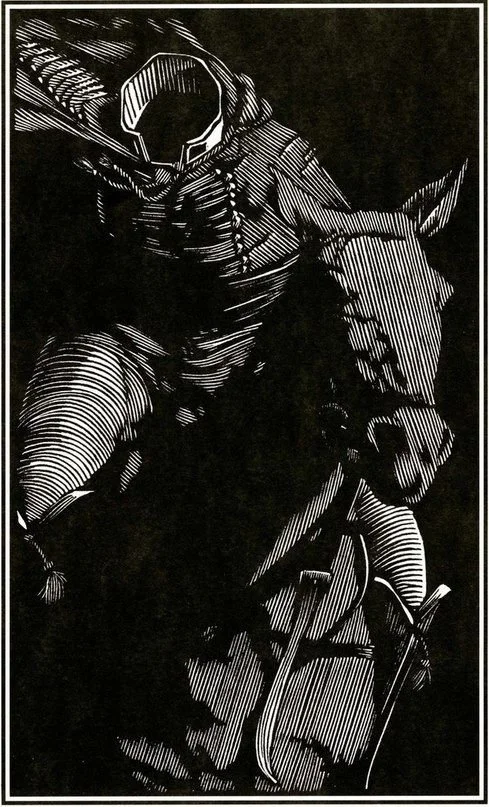
How important it is to have a group of like-minded people for everything. It helps not to go mad, because entropy accumulates in a closed system. Also, the fact that there are weirdos like you reduces anxiety: "Phew, I'm not the only one". Also, having someone else to trust allows you to evolve and progress in a given activity. And while plants use pollen to cross-pollinate, people use ideas. By cross-pollinating different ideas in a supportive environment, synthesis occurs. That is why, having found such a circle, man longs to return to it, for it is the zone of his growth.

The ideal of single-mindedness is not in the golden handcuffs of dogma, but in one's attitude to the study of the chosen phenomenon. It is very easy to confuse one with the other, especially when a small fluid movement eventually turns into a large rigid system. The problem with any system is that its main (unannounced) goal is to preserve itself. In order to do that, it will do literally anything. When it comes to survival, morality is alien to the system. Every system is created by individuals, but ultimately the system does not need an individual.

But as the context changes, the system must either reinvent itself or die. The system cannot reinvent itself, and change is repugnant and scary to it. Only a person is capable of the necessary renewal of the system. However, the system sees in such an agent of change not a surgeon, but a pathologist. That is why the system attacks the individual as fiercely as the white blood cells attack the pathogen.

Few individuals can withstand the pressure of the system on their own. . But even they sooner or later form a circle of like-minded individuals, creating a snowball effect. If you are a founder and hungry for change in your business, look for people who think like you - among employees, entrepreneurs and outside experts. It’s still up to you to initiate change, but with the support of others, it will happen faster and easier.

Yours sincerely,

-Alexander


You can help Ukraine defend itself and the World from Russian aggression here.


”Who are you and what do you do?"
As a business therapist, I help tech founders quickly solve dilemmas at the intersection of business and personality, and boost company value as a result.

"I have an important business decision to make. Can you help me?
Reserve a time on my calendar that is convenient for you to meet with me. We'll clarify your request and discuss options for how you can help.


Why are musician and entrepreneur alike? by Alexander Lyadov

Rick Rubin, one of the most famous music producers of all time, on the Huberman Lab podcast said: “Understanding how you feel without second-guessing yourself is probably the single most important thing to practice as an artist or a skill set to develop as an artist. To know how you feel and own your feelings. The reason that I chose to be an artist is to demonstrate this is how I see it. If I undermine my taste for some commercial idea, it defeats the whole purpose of doing it. And this is not what this process is about. This process is I am doing me and I am showing who I am, and you can like or not, but either way this is still how I see it.”

In this respect, the entrepreneur and the musician are very similar. You could say that their best representatives demonstrate an almost uncanny trust in themselves, or rather in that voice inside that pushes them to act in a certain way. This is most evident in moments when the opinion of the whole society is set against the founder’s idea or a piece of music that breaks the popular pattern. Today it is thought that Elon Musk might become the world’s first trillionaire, but watch the 2011 documentary Revenge of the Electric Car, where Elon, as CEO of the startup Tesla Motors, attempts to bring about a tectonic shift in the auto industry. However, with the release of its first roadster, the company is haunted by one failure after another. All the money from the sale of PayPal has been invested in Tesla, and it is now facing bankruptcy. It hurts to see how exhausted, depressed, and discouraged Ilon is. Where does he draw faith in the rightness of his path at this moment, when both circumstances and market experts and the public are skeptical or against his idea?

I have been studying the phenomenon of entrepreneurship for a very long time, and I am fascinated almost hypnotically by the personalities of the founders. Why? Probably because the pulse of authentic life is felt more clearly in them. Again, why? The nature of their activity burns out all the extraneous, artificial and superfluous by fire. To use the terminology of Buddhists, there is more Tathātā (Suchness) in entrepreneurs. Again, why? The answer lies in Rick Rubin’s insights — they simply cannot do otherwise, for that would be a betrayal of themselves, or rather, of the Force that drives them forward.

Yours sincerely,

-Alexander


You can help Ukraine defend itself and the World from Russian aggression here.


”Who are you and what do you do?"
As a business therapist, I help tech founders quickly solve dilemmas at the intersection of business and personality, and boost company value as a result.

"I have an important business decision to make. Can you help me?
Reserve a time on my calendar that is convenient for you to meet with me. We'll clarify your request and discuss options for how you can help.

The headless horseman by Alexander Lyadov

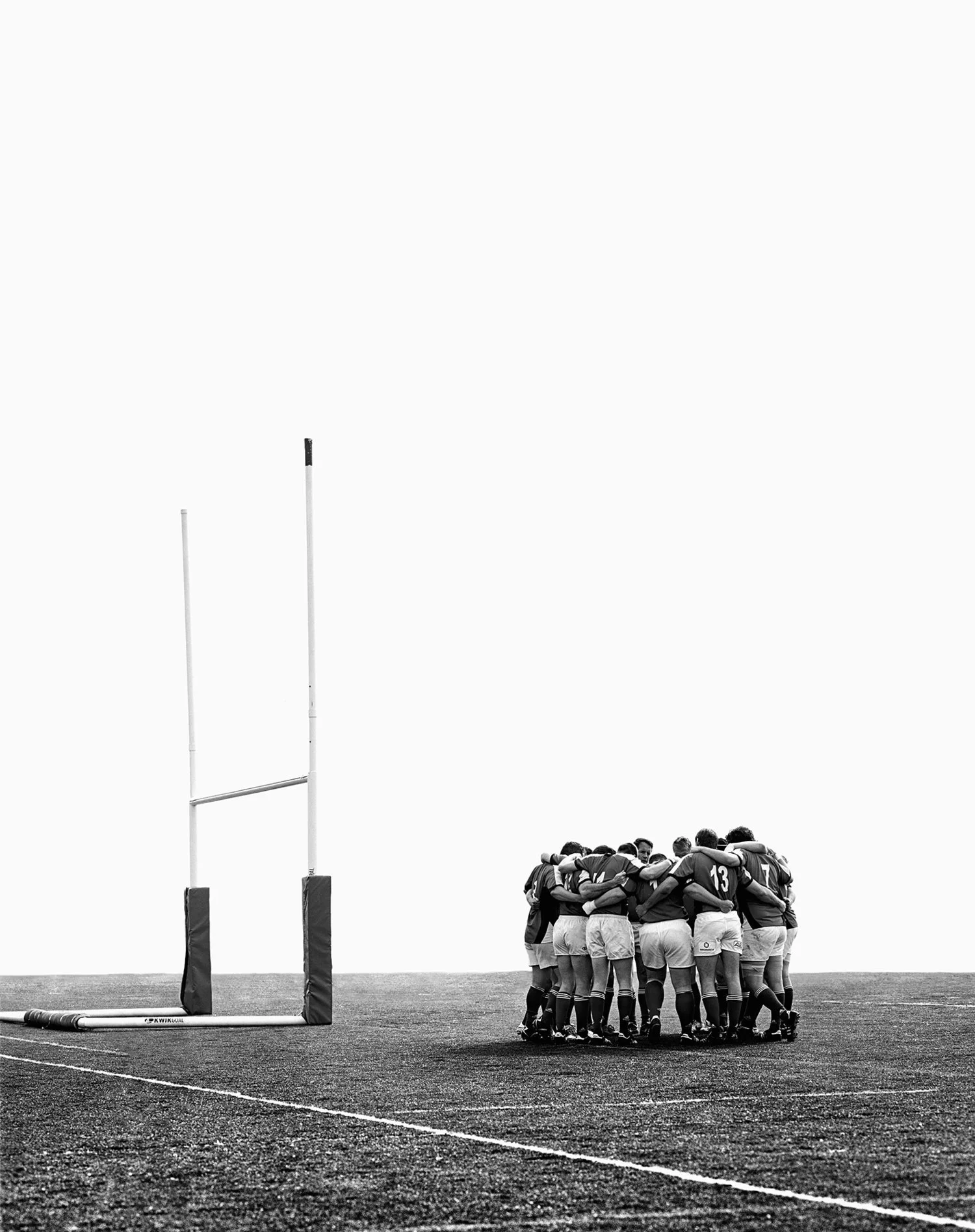
Some companies are like a horseman with no head at all. That is, all the elements (horse, harness, rider, gallop) are there, but something is missing. And don't let the regalia of management and levels of organizational structure deceive you. Yes, the company is moving steadily, but like a sleepwalker who is sound asleep at the moment. Either the market is creating traction, or the inertia of past successes, or the occasional jolt from within. But despite the bustle of the sailors and the whistles of the bosun, there is no one at the helm.

Where has the captain gone? Oh, there could be many reasons. Perhaps he was too tired from the long voyage, burned out and locked himself in his cabin. Or maybe he realised his ship was lost at sea and went into anabiosis. Or perhaps, imbued with the ideas of universal equality, he voluntarily resigned his post. Either way, the purposeful movement has disappeared - there is no one to set the course.

All the necessary elements are there, but there is no coordinating idea: "For what? And without a function, any form, even the most elaborate, is meaningless. And it's not even about the answer, because there are many ready to offer an inspiring goal.

The point is that there is no one willing to take personal responsibility for everything. When you are blamed even when fate has treated you unfairly. When no one will thank you after you have saved everyone with a colossal effort. When a decision has to be made in total uncertainty, alone, here and now. Most people are not prepared to make such sacrifices. Leadership is a heavy burden, not an intoxicating power.

So my first question during the diagnosis is, "Is the founder fulfilling his function?"

Yours sincerely,

-Alexander


You can help Ukraine defend itself and the World from Russian aggression here.


”Who are you and what do you do?"
As a business therapist, I help tech founders quickly solve dilemmas at the intersection of business and personality, and boost company value as a result.

"I have an important business decision to make. Can you help me?
Reserve a time on my calendar that is convenient for you to meet with me. We'll clarify your request and discuss options for how you can help.

Service or product? by Alexander Lyadov

There is no service entrepreneur who has not dreamed of launching his own product.

Of course, the unknown beckons, especially seeing the success of a number of product companies.

The founder says, “I want to do something tangible that I can ‘get my hands on.

But if you dig deep, the real reason is something else.

The founder of a service company is just dead tired of milling the wind.

Struggling for customers, employee wage increases, and low margins were killing the point.

The first 5 years it was interesting, the next 5 pulled out of habit, but now the energy is gone.

Sell the business? No one. To reassign? Impossible. Get up and leave? No way.

Out of the dilemma comes the dream of the product as the miracle solution to all problems.

However, only a few manage to realize this dream.

Why? Making a Wow product is no easier than a Wow services business.

But if the founder has invested 10 years in services, with a product you have to go over it all over again.

It’s much easier and faster to rethink the current service delivery model.

The goal is to create an order of magnitude higher value for customers, in exchange for getting a margin of x2-3.

And then, having a surplus of cash, you can do product R&D.

The industry doesn’t matter - IT outsourcing, law office or architectural boutique.

What is important? A desperate determination to reinvent your services business.

Sincerely yours,

-Alexander


You can help Ukraine defend itself and the World from Russian aggression here.


”Who are you and what do you do?"
As a business therapist, I help tech founders quickly solve dilemmas at the intersection of business and personality, and boost company value as a result.

"I have an important business decision to make. Can you help me?
Reserve a time on my calendar that is convenient for you to meet with me. We'll clarify your request and discuss options for how you can help.


Who needs this strategy anyway? by Alexander Lyadov

If the team asks the founder for a strategy session, it’s both a bad and a good sign. Why is it bad? The very fact of the request speaks to the extreme desperation of the employees-they are confused, disoriented, and tired of exerting extra effort for nothing.

In large corporations, management brings down strategic plans that are often divorced from reality, but at least they are there and can be criticized or tried to improve. In medium and small businesses the situation is sometimes worse. Everyone pretends to understand where, why and how the company moves, but it is not fixed anywhere in a clear and structured form. And the market winds are constantly changing, forcing the captain of the business to suddenly lie down on a different tack. What’s left for employees to do? First, to develop the ability to read the owner’s reactions, and second, in their discretion to decide locally what is best to do.

If there were computers instead of humans, perhaps they would end up agreeing on something. But people have different experiences, IQs, psychotypes, values, and ultimately personal interests. So even those of them who sincerely want the company to do well bump into each other because of differences in information, assumptions, and interpretations. But cynics, intriguers, and liars feast like crocodiles on a herd crossing in these murky waters. In such chaos, talented people don’t stick around and run away, burn out, or give up. Even if the business has historically had a margin and liquidity reserve, general inefficiency will sooner or later destroy that reserve.

Why would the owner want to maintain a delusional state of affairs? Oh, there could be many reasons. From infatuation with other businesses to a desire for power, because confused people are easier to manipulate. But if we do not take the most destructive extremes, it often turns out that the question, “What is our strategy?” the founder does not know the answer himself. Out of pride he cannot admit this to anyone, including himself. But since he is expected to be the bearer of secret knowledge, everyone plays a silly game as if the company has some kind of genius strategy.

Okay, but what’s the good sign? If, in spite of all of the above, a group of employees joined forces, gathered their spirits and approached the owner with the initiative of a strategy session, then all is not lost. It means that there is a strong and healthy core in the team. The worst reaction is to ignore them, to resent their “disrespect” or to grudgingly allocate a budget for inviting a moderator, say, let the kids have fun. On the contrary, if the founder gratefully accepts this team momentum and personally leads the process, there is a great chance of developing a winning strategy that will give the company a fresh start.

Yours sincerely,

-Alexander


You can help Ukraine defend itself and the World from Russian aggression here.


”Who are you and what do you do?"
As a business therapist, I help tech founders quickly solve dilemmas at the intersection of business and personality, and boost company value as a result.

"I have an important business decision to make. Can you help me?
Reserve a time on my calendar that is convenient for you to meet with me. We'll clarify your request and discuss options for how you can help.


How to accelerate change in a group? by Alexander Lyadov

Once a top manager I know surprised me a lot. He said: “Can you teach me how to run a strategy session for a group of co-founders of a large business? I know you’ve been doing this for a long time, which means you have the tools.” My first impulse was to say no, since training is not my business. And my sessions are so specific that I still need to comprehend the experience for myself. But the top manager explained that the stakes were too high - his future career depended on the effectiveness of this event.

The situation was complicated by the fact that the participants were mature entrepreneurs, smart and cynical people used to tough negotiations (a feature of the industry). In addition, there were historical tensions between them. The cherry on the cake was that there was no tradition of such sessions at the shareholder level, that is, it was an experiment for everyone. My acquaintance could not refuse the offer, but could not vouch for the result either. Managing companies, of course, he organized meetings, trainings and brainstorming sessions more than once. But it is one thing to have your own employees and quite another thing to have unknown influential people who can either reward or upset the moderator.

Within two hours I had given him an extract of what I knew - the meaning of the session, the logic, structure, priorities and indicators of success, questions at each stage, ways to get to the truth, attitudes toward conflict, typical problems and how to solve them. Since the “student” trusted me and was motivated to learn, he absorbed every insight like a sponge. Because of the urgency, we did not have a chance to play out the situations in person, but otherwise I did my best. In the evening he happily reported: “Everything went according to plan. The shareholders are happy. I shined.” As expected, his career moved forward.

After such incidents, I wonder if there might be an unsatisfied demand for such knowledge. On the one hand, you just have to say: “Strategy Session” and there is an immediate line of moderators, coaches, and facilitators lined up. On the other hand, from communicating with the founders, it is clear that they do not see the benefit of typical strategy sessions and often perceive it as a necessary evil. The point is that if the moderator is a communicative charismatic and/or empathic person, it is quite easy to cheer the participants up in the short term or help them feel a sense of community. But how do you make a real shift in the group so that the systemic contradictions of the business weaken or even disappear, and the value of the business goes up? This is a conundrum that they don’t teach you to solve anywhere.

So I thought, if there are enough people willing, I would make a compact, practical course based on two decades of personal experience in group sessions as a CEO, shareholder, investor, and now business therapist.

Who will benefit from it:

  • founders, to boost the speed of change in the team and then in the business.

  • top managers, to reduce friction and conflicts in the team.

  • consultants and moderators, to increase the objective value of their services.

If you thought, “Cool! Where and when can I buy this product?”, drop me a line or two in an email or message about what you do and why it’s relevant to you.

Yours sincerely,

-Alexander


You can help Ukraine defend itself and the World from Russian aggression here.


”Who are you and what do you do?"
As a business therapist, I help tech founders quickly solve dilemmas at the intersection of business and personality, and boost company value as a result.

"I have an important business decision to make. Can you help me?
Reserve a time on my calendar that is convenient for you to meet with me. We'll clarify your request and discuss options for how you can help.