
Three hobbies by Alexander Lyadov

Anonymous said: “Find three hobbies you love: One to make you money, one to keep you in shape and one to be creative.” Business, sports and creativity are the three legs of a sustainable existential stool. If you’ve been able to find even one of them, much less three, from an early age, you’re a very lucky man. No matter how your fate develops further, at least in this aspect you will always find support, an outlet, and a recharge.

The hallmark of true passion is a willingness to pursue it without any payment and in spite of punishment. The process is rewarding in and of itself. Investor and entrepreneur Naval Ravikant has a tweet: “Do what feels like play to you, but looks like work to others.” When society is willing to buy the results of your “game” without bargaining, it is a powerful factor that brings harmony, appreciation and stability to your life. The opposite is torture, where you have to work your ass off 24/7/365 and in return get a pittance that devalues your work.

It took me decades of groping around in the dark to put myself together from puzzles scattered all over the place. If you’re interested, someday I’ll tell you about my wanderings in the Minotaur’s Labyrinth. Of course, the process is far from over, and the legs of my stool sometimes wobble unexpectedly. But I do have three hobbies now. First is business therapy for IT entrepreneurs, which I didn’t so much find as I had to create myself. Second is Brazilian jiu-jitsu, kettlebells and mace. And third, it’s writing articles like this. If dictatorial law banned these hobbies, I’d still find a way to do them in secret.

Sincerely yours,

-Alexander


You can help Ukraine defend itself and the World from Russian aggression here.


Alexander Lyadov portrait

”Who are you and what do you do?"
As a business therapist, I help tech founders quickly solve dilemmas at the intersection of business and personality, and boost company value as a result.

"I have an extremely important business decision to make. Can you help me?
Reserve a time on my calendar that is convenient for you to meet with me. We'll clarify your request and discuss options for how you can help.


Emotions and professionalism by Alexander Lyadov

When we observe a professional at work, be it a military officer, a dog-training instructor, or a psychotherapist, we admire their cool detachment, focus on the goal, and clarity of action in circumstances where anyone would have melted down. It is as if this man possesses a superpower that shields him from the poison arrows of emotion. This is partly true. After all, over the years of contact with dangerous situations, the "skin" of a professional inevitably hardens, turning into a callus or a shell. But I think it's about something else.

To become a high-caliber specialist in any field, one has to pass through the sieve of one’s experience a huge number of real situations that differ in form but are repeated in essence. With time the professional’s eye begins to distinguish in any chaos the threads of order, the basic patterns that emerge like a frosty pattern on glass. Thus, the astronomer reads the starry sky like a book, while the philistine simply gazes into the abyss with his mouth open in admiration.

As long as the patterns are not obvious, the would-be professional feels discomfort, frustration, and anger. Uncertainty breeds anxiety, misunderstanding leads to mistakes, and lack of control generates a series of negative surprises. The student experiences a gamut of emotions in the process and after the fact. But the repetition of the situation gives insight, as in Spielberg’s “Bridge of Spies.” There, a lawyer tells a Soviet spy that the U.S. authorities might send him to the electric chair, but the spy replies phlegmatically: “I see.” The lawyer is shocked: “Aren't you worried?” To which the spy shrugs, “Would that help?”

Professionalism is the understanding that there is no point in worrying. Either the accumulated knowledge is not enough, and then nothing will help anyway. Or sweat, blood and tears of learning were not in vain and the professional will solve the problem in one way or another.

Sincerely yours,

-Alexander


You can help Ukraine defend itself and the World from Russian aggression here.


Alexander Lyadov portrait

”Who are you and what do you do?"
As a business therapist, I help tech founders quickly solve dilemmas at the intersection of business and personality, and boost company value as a result.

"I have an extremely important business decision to make. Can you help me?
Reserve a time on my calendar that is convenient for you to meet with me. We'll clarify your request and discuss options for how you can help.

The first noble truth by Alexander Lyadov

The first of the four noble truths uttered by the Buddha on the night of enlightenment is that suffering exists. One way or another, everyone suffers. Some of them get everything in advance in childhood, some get it evenly during decades, and some get it in excess at the end. Even if one’s life looks like an advertisement cover, behind the scenes hell often opens up.

A powerful billionaire finds himself powerless to influence the only heir who is obsessed with Marxism, has become addicted to drugs, and lives under a bridge. “Poisoned” as a child by a failure to live up to parental expectations, the creator amazes everyone with his early work, but then buries his natural gift in the ground, constantly devaluing herself. The founder of a sensational startup that has raised several multimillion-dollar rounds, but has eroded his stake so badly in the process that he is now depressed because he can neither push that rock further nor quit. Some carelessly make fatal mistakes themselves, and some, against all precautions, are suddenly run over by the train of fate. If not business, then family. If not family, then health. If not health, then economic crisis, epidemic or war. Alas, the Buddha was right.

However, in the darkness of this picture, a light can be seen. Yes, at first glance, suffering is inescapable, like a snowslide coming down the Alps. But each of us has a choice to let this mudflow destroy our beloved village or to redirect it. A stand-up comedian burns off the trauma inflicted by his parents with outright humor on stage, while simultaneously gaining popularity and healing. The pain of an unfair loss is fueled by the athlete’s preparation for the next Olympics. A failing business shatters the founder’s pride, helping him to realize that he is not omnipotent, omniscient or omnipresent. Paradoxically, but it is humility that allows him during the next decade, not only to create a new, larger business, but also to find harmony with people and himself.

Sincerely yours,

-Alexander


You can help Ukraine defend itself and the World from Russian aggression here.


Alexander Lyadov portrait

”Who are you and what do you do?"
As a business therapist, I help tech founders quickly solve dilemmas at the intersection of business and personality, and boost company value as a result.

"I have an extremely important business decision to make. Can you help me?
Reserve a time on my calendar that is convenient for you to meet with me. We'll clarify your request and discuss options for how you can help.

Bone or skin? by Alexander Lyadov

“Tendons don’t like change,” said a savvy physiotherapist who specializes in climbing injuries. It was about abrupt load changes, for example, when an athlete is in too much of a hurry to return to “normal” mode after a month of rehabilitation.

In this sense, it’s amazing how wisely evolution has shaped our bodies. Skin is extremely stretchy, but a careless movement can damage it. The opposite is true of bones — it is impossible to bend, but fortunately also difficult to break. A sequential study of skin, muscles, tendons and bones shows a gradual reduction in elasticity, but robustness, i.e. resistance to compression and breakage, increases rapidly. The genius of body design is that there is no emphasis on any one “universal” or “innovative” material in the spirit of “either/or”. There is a skilful integration of all available materials simultaneously in the spirit of “and-and”.

Life is unpredictable, and the range of external influences is wide. For self-preservation, the organism needs maximum optionality, i.e. freedom of adaptive reactions to almost any novelty. Skin takes the first blow, plastically yielding to the load, like a willow under snow. Bone, on the other hand, firmly resists any cataclysm, like California’s Methuselah pine, 4,851 years old. Muscles, ligaments and tendons react both ways, according to the situation.

A successfully built business follows the evolutionary principle of “and-and,” that is, “Fur on the outside, steel on the inside.” There is no one idea, approach or technology that is always absolutely right. It depends on the specific market context. When the “body” of the company has harmoniously combined, but opposing functions, the business will inventively survive and grow dynamically against all odds.

Sincerely yours,

-Alexander


You can help Ukraine defend itself and the World from Russian aggression here.


Alexander Lyadov portrait

”Who are you and what do you do?"
As a business therapist, I help tech founders quickly solve dilemmas at the intersection of business and personality, and boost company value as a result.

"I have an extremely important business decision to make. Can you help me?
Reserve a time on my calendar that is convenient for you to meet with me. We'll clarify your request and discuss options for how you can help.


Five Founder's Steps by Alexander Lyadov

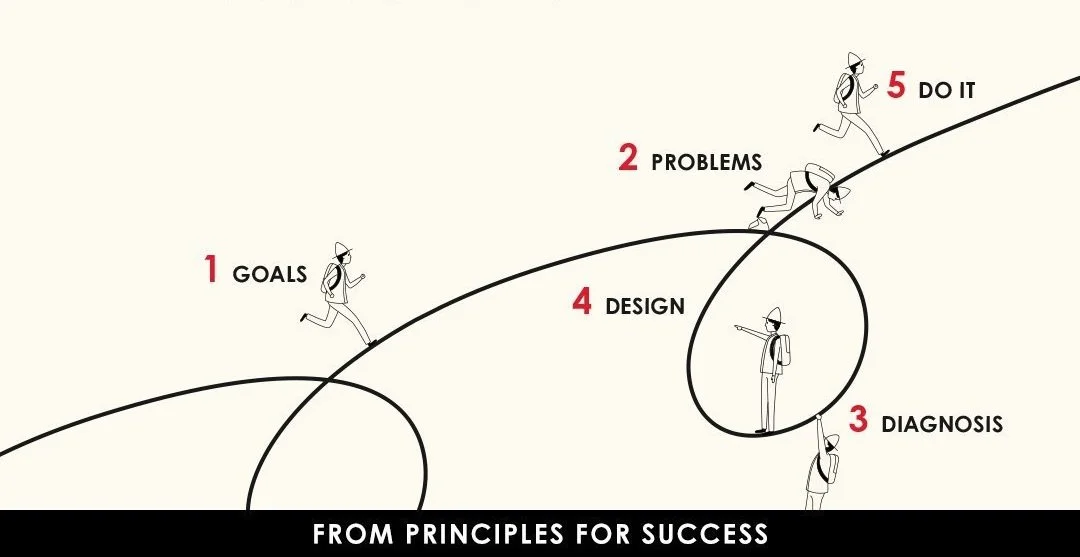
Investor Ray Dalio offers a 5-step process to get what you need in life. 1) Have clear goals, 2) Identify the problems that stand in the way of your achieving those goals. 3) Accurately diagnose the problems to get at their root causes, 4) Design plans that will get you around them, and 5) Do what’s necessary to push these designs through to results. So simple and logical, isn’t it?

Similar feedback loops have been described in developmental psychology, philosophy of science, biology, business, and the military arts even before Ray. Common to all is the passage of successive stages in the form of a repeating “loop”. Obviously, each of the stages is necessary, because the fewer of them, the better. But there is no equality between the stages either, for some are more important. At least this is what I observe in my work with tech founders.

Founders have no difficulty with stages 4 and 5, that is, the development of realistic plans and their immediate implementation. After all, the strength of entrepreneurs is that they have a bias to action. So if the decision is made, the result is just around the corner. Also at stage 2 — identification of problems that complicate life — no one, as a rule, stalls. Negative symptoms are irritating and painful, so it’s hard to ignore them.

Surprisingly, many founders slip on clarifying goals. If goals are even outlined, it is done in passing, as if along a horizontal line. There is no ascent to breathtaking heights, nor a plunge to frightening depths. But the main stumbling block becomes stage #3, the diagnosis of the root problem, which is responsible for 80-90% of all symptoms. Why this stage? That’s a curious question, requiring a detailed answer in a separate article.

Yours sincerely,

-Alexander


You can help Ukraine defend itself and the World from Russian aggression here.


Alexander Lyadov portrait

”Who are you and what do you do?"
As a business therapist, I help tech founders quickly solve dilemmas at the intersection of business and personality, and boost company value as a result.

"I have an extremely important business decision to make. Can you help me?
Reserve a time on my calendar that is convenient for you to meet with me. We'll clarify your request and discuss options for how you can help.


The Origins of Lies by Alexander Lyadov

Sometimes a valuable thought can be found in unexpected places. In the TV series “Narcos,” the Colombian drug dealer Pablo Escobar utters the phrase: “Lies are necessary when the truth is too difficult to believe”. Perhaps all the lies that exist in the world are based not so much on the fact that someone is trying to fool, as on the fact that there is always someone who is happy to be fooled.

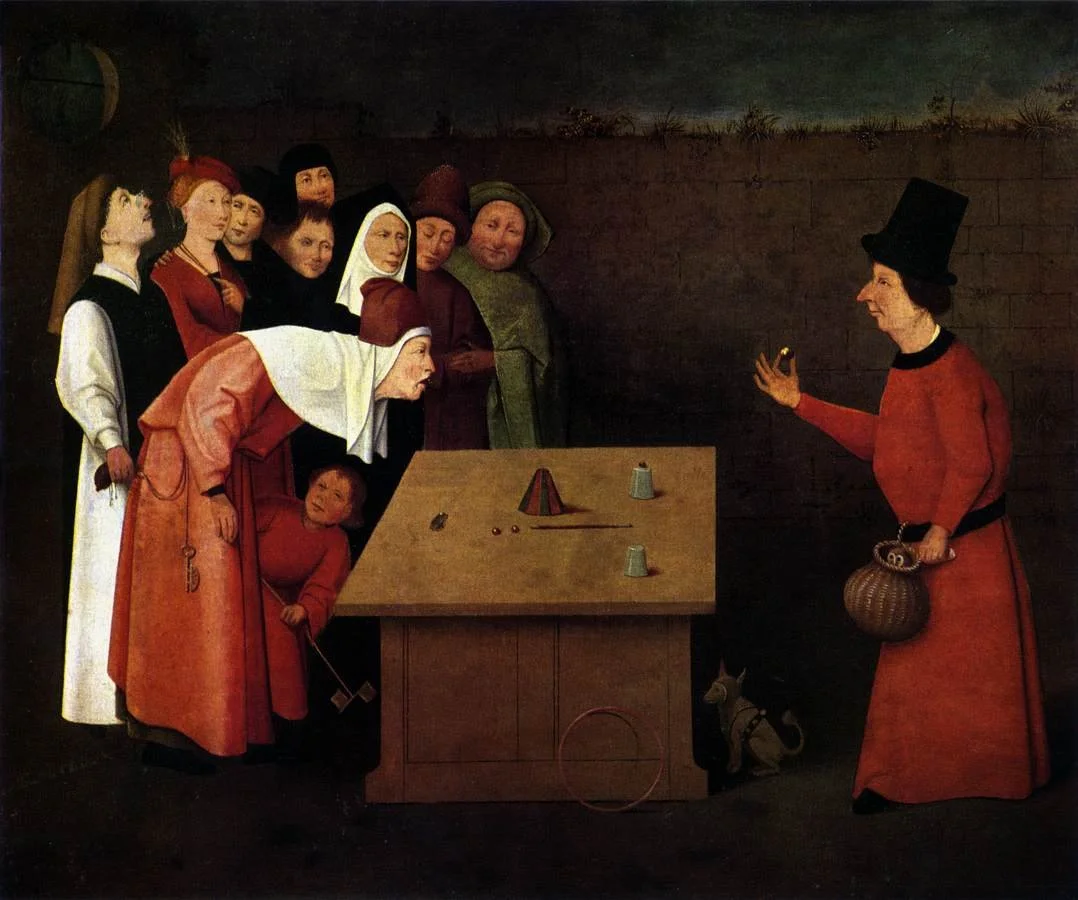
A prime example of this is the game of thimbles. It would seem that everyone knows this fraud, which has its roots in the centuries, or even millennia. But no, there is always a “victim” ready to gamble away all the money raised to buy boots for a child. This is where the cheat finds his moral justification: “I don’t force anyone to participate in the game. The justification is cheesy, of course, but the victims do willingly stick their heads in the lion’s mouth. The temptation to solve all current problems in one fell swoop proves irresistible.

Yes, the truth can be unbearable. Especially when it violates the image of the precious self. Accepting reality as it is can mean the death of a part of the personality, whether the vision of oneself as a successful businessman, an ideal parent, an altruist, or the savior of people, animals, or the planet. Not everyone is willing to look into the vaults of their souls, much less regularly subject themselves to torture-cleansing. Therefore, over the years, the screen of lies turns into a fence, then into scaffolding, and then the foundations are quietly poured and the concrete walls of a skyscraper are erected. An earthquake, tsunami or another cataclysm must occur for the tower to collapse, and for its owner, if he survived, to regain under his feet a firm ground.

Sincerely yours,

-Alexander


You can help Ukraine defend itself and the World from Russian aggression here.


Alexander Lyadov

”Who are you and what do you do?"
As a business therapist, I help tech founders quickly solve dilemmas at the intersection of business and personality, and boost company value as a result.

"I have an extremely important business decision to make. Can you help me?
Reserve a time on my calendar that is convenient for you to meet with me. We'll clarify your request and discuss options for how you can help.


What is your resource? by Alexander Lyadov

Saeed Dhahi

Saeed Dhahi, Asian Youth Para Games, Bahrain 2021

When I explain to a new client what will happen in a transformational session, I use in particular the metaphor of a person waking up after a plane crash in the taiga. Once orientation has been made and the destination point has been roughly chosen, it is critical to assess personal resources. After all, it is one thing to be wounded, but to have a knife and matches. It is quite another to be in great shape but find yourself in the wilderness without clothes, like the biblical Adam.

Potentially, anyone can get home. Especially in business, where the element of unpredictability is great. The availability of “assets” available to man determines the choice of survival and growth strategies. Therefore, there are no strategies suitable for all founders at once, even if we are talking about a business in a specific segment, say, MarTech SaaS B2B. Of course, the immutable laws of life, like gravity or tissue regeneration, are universal for all creatures in the taiga. But every business is as peculiar as the person who founded it. Your company, too, has a specific set of “curses” and “gifts. Do you know yours?

So, before lamenting where your business is more vulnerable than competitors, correctly evaluate what you already have, and perhaps always had. In my experience and the cases of entrepreneurs, I am convinced that each of us is dangerously wrong about ourselves in some ways, and, on the contrary, blatantly unfair in others. Often we, like restless schoolchildren, are in too much of a hurry to start solving our urgent problem without carefully reading the initial conditions: “Given: A, B, and C.”

Yours sincerely,

-Alexander


You can help Ukraine defend itself and the World from Russian aggression here.


Alexander Lyadov

”Who are you and what do you do?"
As a business therapist, I help tech founders quickly solve dilemmas at the intersection of business and personality, and boost company value as a result.

"I have an extremely important business decision to make. Can you help me?
Reserve a time on my calendar that is convenient for you to meet with me. We'll clarify your request and discuss options for how you can help.


Bifurcation point by Alexander Lyadov

In business, can I control myself without a leash?

“Stop! Hands up!” those words sounded like a shot in the morning silence. Fifty meters away, a guy in camouflage was approaching, pointing his machine gun straight at us. Yes, I was not alone. Not yet awake, I was out for a walk with my dog. The familiar path along the fence made an L-shaped turn, so it wasn’t until I came around the corner that I realized we were trapped. A couple of passersby were facing the fence in the distance, and they were being searched by a soldier. The rest of the group was moving toward us. It was late February when the cleanup of saboteurs was being carried out daily in Kyiv. It was not clear who was in front of me — friend or foe.

The situation was complicated by the fact that a minute before the encounter I had let the dog off its leash. And now, while I froze with my hands up, the dog was studying the machine gunner with interest, sitting at my leg. There is a term in physics for a bifurcation point. It’s the unstable state of a system when a feather can break the back of an elephant. In a steady voice, I called out: “I’m sorry, can I fasten the leash? I’m afraid he’s about to start on you.” Approaching, the military man muttered: “If he lunges, I’ll shoot him.” The heat was so intense, you could cut him with a katana. I thought, “The dog’s about to snap. What if the guy gets scared and shoots?” So I explained, “The dog ain’t mean and won’t bite, he’ll just kick you with his nose. Can I strap him in?” “Okay,” replies the stranger, “with your left hand and slowly”. Sometimes a second stretches into infinity. Finally my “beast” is on the leash. The guy’s tension subsides: “What’s your address? Oh, close by? Okay, off you go.” We quickly pick up speed toward home: “Ohhh! That was lucky”.

What lesson have I learned? If the dog is not 100% in control, “free-range” is not an option. A little more joy, but instead an unbearable risk. This is true not only of the dog but of anything I manage, such as a business. But the main question is, in critical situations, can I control myself without a “leash”?

Sincerely yours,

-Alexander


You can help Ukraine defend itself and the World from Russian aggression here.


Alexander Lyadov portrait

”Who are you and what do you do?"
As a business therapist, I help tech founders quickly solve dilemmas at the intersection of business and personality, and boost company value as a result.

"I have an extremely important business decision to make. Can you help me?
Reserve a time on my calendar that is convenient for you to meet with me. We'll clarify your request and discuss options for how you can help.

Obvious non-obviousness by Alexander Lyadov

Obvious non-obviousness.
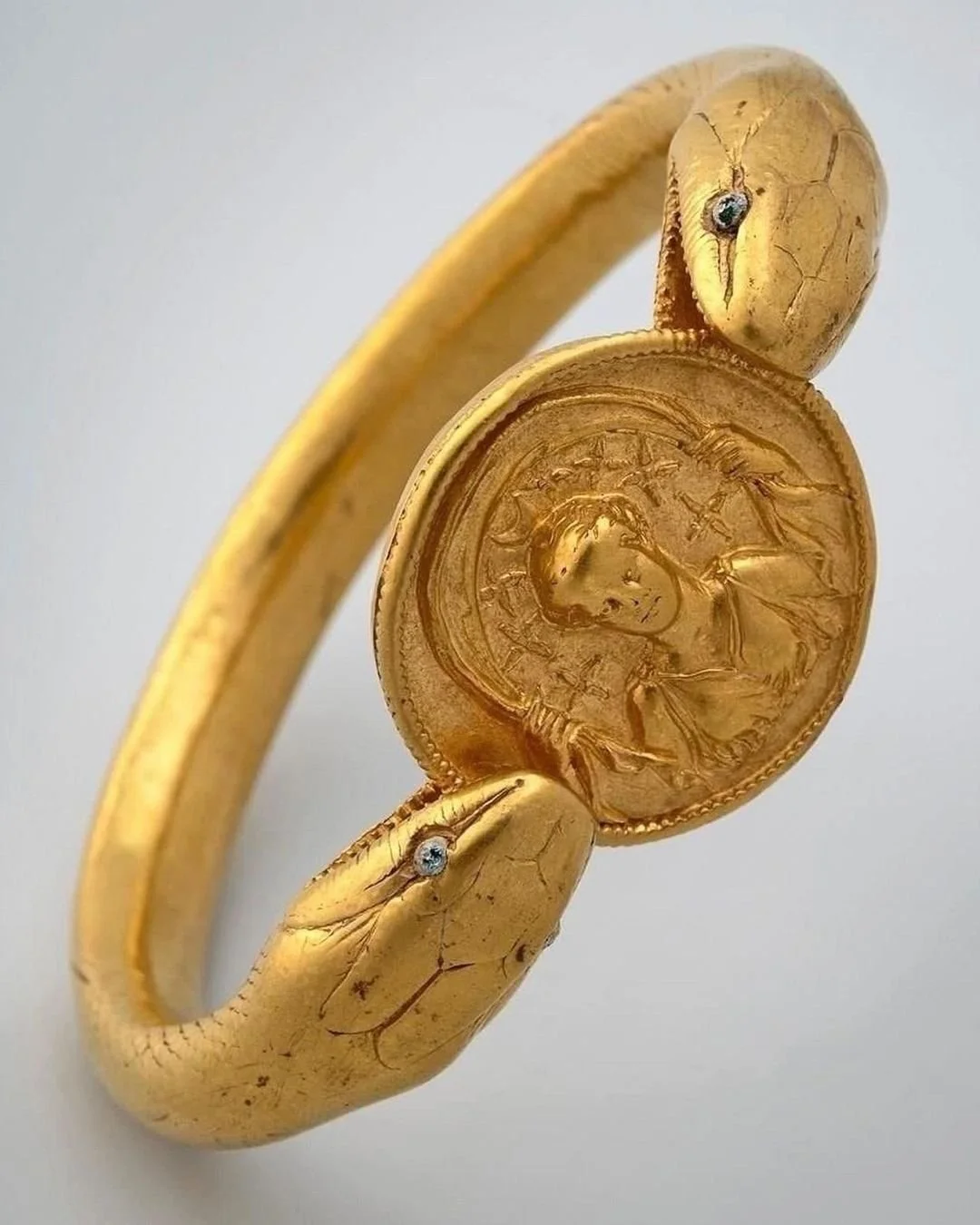
"What a relief... But it's so obvious!" - the founder says, surprised, after his business positioning, growth strategy, or negotiation dilemma has become clearer. He's right - breakthrough solutions bring a sense of liberation from a heavy burden, like Sisyphus would have felt if he had learned a way to keep the stone from rolling down the top of the hill. Perhaps you have been suffering from a "pebble in your shoe" for a long time, but you have somehow - with patience, ointments and crutches - adapted to it. Suddenly, bang, and my chafed feet plunge into a refreshing mountain spring.

At the same time, you are perplexed as to why such an obvious thing took so long to be perceived as such. In trying to remember the important password, only a moment separates the “before” and the “after”. But how different these states are. The first is the torture of the clue that swirls on the tip of the tongue. The second is the arrow fired from the bow: "Oh gods, finally! However, you are unfair to yourself, for the illumination has irreversibly transformed you. Once you have seen the “secret” of optical illusion, you cannot unsee it. Freshly trampled neural pathways instantly recognize a new pattern in a familiar picture. It was a mystery for the old you, but for the new you it is the obviousness.

Fortunately, not one drop of your sweat, blood and tears has been shed in vain. They have infused the black soil of your subconscious with moisture as you tilled it with the plow of questions. And no matter how long it takes, at least you are the sole master and beneficiary of the process. Is it possible, and more importantly, wise, to delegate the birth and upbringing of one's children, initiation, creativity, or finding personal meaning? The older you are, the more peculiar your life path is, including your problems that take "too long" to find solutions. Who are we to know everything about the transcendent? The important thing is not to avoid the problem, but to resourcefully take at least some steps.

Sincerely yours,

-Alexander


You can help Ukraine defend itself and the World from Russian aggression here.


”Who are you and what do you do?"
As a business therapist, I help tech founders quickly solve dilemmas at the intersection of business and personality, and boost company value as a result.

"I have an extremely important business decision to make. Can you help me?
Reserve a time on my calendar that is convenient for you to meet with me. We'll clarify your request and discuss options for how you can help.


Being misunderstood by Alexander Lyadov

Always remember that it is impossible to speak in such a way that you cannot be misunderstood: there will always be some who misunderstand you” said Sir Karl Popper, one of the most influential philosophers of science of the XXth century. And he, more than anyone else, was able to articulate his thoughts with surgical precision. So what to do? Accept the unpleasant fact that no matter how much effort we put into our speech, post, or article, someone will still interpret our words falsely, and maybe even twist the meaning. Why?

First, hearing the other is a rare skill. It requires forgetting about yourself for a while, turning off your assumptions, and devoting 100% of your attention to the person. Then there’s a chance behind the husk of categories, labels and associations, to notice a peculiar personality in a particular moment of being.

Secondly, as one psychotherapist said, we go with our so-called symptom forward. And then we bump into each other, like knights with their lances. Some people don't hear what you said, but what very selectively pierces their spear. Triggers for them can be anything — an innocent word, a punctuation mark or an “untimely” open mouth. It is important to understand that there is no you in their interpretation. Using you, these people are waging a battle with their past, trying, for example, to separate from their absorbing mother, castrate their nagging father, get their sister's love, etc.

Most importantly, nothing authentic and alive can be fully expressed in words. And the more familiar the definitions, the more sophisticated the concepts, and the more precisely chosen the words, the sooner existence in our hands will change from ice to water, and then to steam. All of our concepts, systems, and structures are discarded snake skin, deer antlers, and clam shells. They, too, are valuable in their own way, but one must not confuse the form with the function that produced it.

Sincerely yours,

-Alexander


You can help Ukraine defend itself and the World from Russian aggression here.


”Who are you and what do you do?"
As a business therapist, I help tech founders quickly solve dilemmas at the intersection of business and personality, and boost company value as a result.

"I have an extremely important business decision to make. Can you help me?
Reserve a time on my calendar that is convenient for you to meet with me. We'll clarify your request and discuss options for how you can help.


Judgment and wisdom by Alexander Lyadov

“Judgment is knowing the long-term effects of your decisions, or being able to predict the long-term effects of your decisions,” says entrepreneur and investor Naval Ravikant. As he himself admits, his definition of judgment is close to wisdom. The only difference, he says, is that judgment focuses on external problems, while wisdom focuses on personal ones.

A subtle distinction, isn’t it? Everyone has probably met people who were extremely successful professionally, while their personal lives were hell. But we can also remember those who seemed to be in perfect harmony with themselves and acted sensibly exactly until they had to take responsibility for others and solve difficult problems in an extreme situation. Maybe there wasn’t judgment and wisdom there to begin with, or maybe these are two close but separate skills — unraveling external and internal problems.

As I have been working with entrepreneurs for the past twenty-five years, I cannot help but notice one phenomenon. A business can grow dynamically for a while, but in the end it always ends up resting against the personality of the founder. Then there is slowing down, plateauing, fussing, going to extremes, frequent mistakes, fading, and/or collapse. In other words, the ability to solve external problems reaches a local maximum. The bottleneck becomes the inability to look inward to notice the knots of false beliefs holding the business back.

But if the founder is able to reinvent himself, there is a quantum leap to a new level of personality and then the company. New customers come in, the team matures, profitability grows, and investors knock on the door. This renaissance happens right up to the next systemic dilemma. Perhaps true wisdom lies in knowing when it’s time to solve external problems and when it’s time to solve internal ones.

Yours sincerely,

-Alexander


You can help Ukraine defend itself and the World from Russian aggression here.


”Who are you and what do you do?"
As a business therapist, I help tech founders quickly solve dilemmas at the intersection of business and personality, and boost company value as a result.

"I have an extremely important business decision to make. Can you help me?
Reserve a time on my calendar that is convenient for you to meet with me. We'll clarify your request and discuss options for how you can help.


An underrated skill by Alexander Lyadov

“Interviewing is a grossly underestimated skill. If you are not collecting rich stories in your interviews, it’s gonna be really hard to identify opportunities,” says Teresa Torres, Product Discovery Coach, whose clients include Spotify, CapitalOne, and Snagajob. According to Teresa, most product teams ask users direct questions out of context: “Do you like watching Netflix? How do you decide what to watch there?” and get superficial answers. It’s more helpful to ask open-ended questions, such as: “Tell us about the last time you watched a movie?” This allows you to hear details, insights and pains of the user, and most importantly, needs that they didn’t even realize they had.

When I studied the Focusing psychotherapy practice, mastering the six basic steps was easy. The harder part was not asking the client pattern questions or repeating the answers like a parrot, but rather seeing the unique personality and understanding the context from which the speech emerges. Therapy was successful when a “shift” occurred within the client. This was only possible when the person expressed exactly how he (or she) bodily felt his problem and was really heard by me. For this I needed openness, that is, the rejection of all preconceptions, categories, and forms. Otherwise, either the “thusness” of person-in-context did not reveal itself, or it passed through my fingers like sand.

No matter what we are talking about - SaaS-product discovery or psychotherapy. Valuable opportunities and breakthrough solutions reveal themselves only through the experience of a living person, but the questioner himself needs to “come alive” to get a real answer.

Yours sincerely,

-Alexander


You can help Ukraine defend itself and the World from Russian aggression here.


”Who are you and what do you do?"
As a business therapist, I help tech founders quickly solve dilemmas at the intersection of business and personality, and boost company value as a result.

"I have an extremely important business decision to make. Can you help me?
Reserve a time on my calendar that is convenient for you to meet with me. We'll clarify your request and discuss options for how you can help.

Need refueling? by Alexander Lyadov

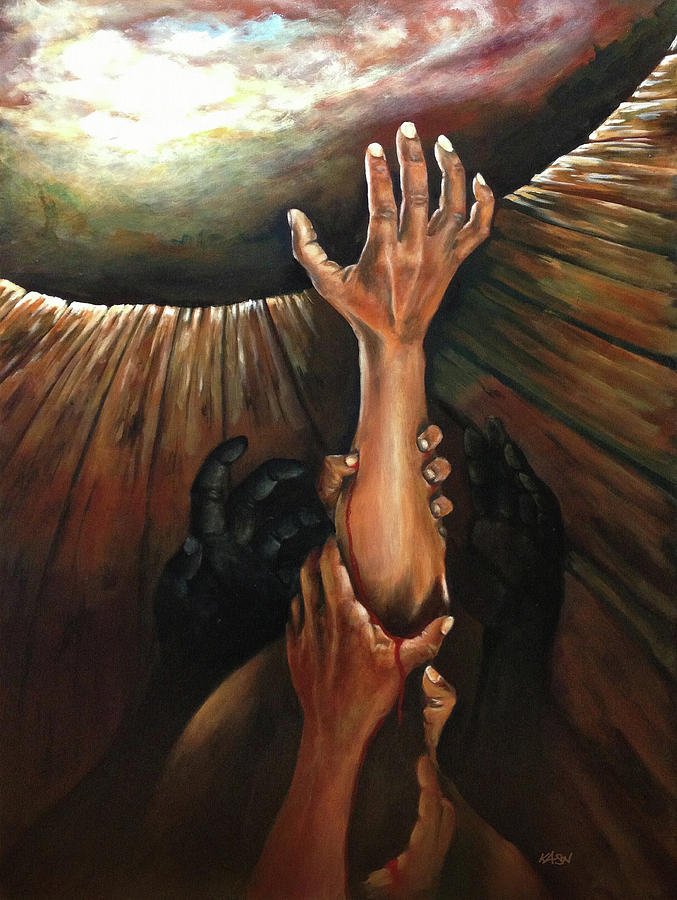
Sometimes you find yourself in a state where you have neither the energy nor the desire to move your arm. There may be a queue of urgent matters in the diary or an important problem flickering in neon. But it is absolutely impossible to move you. Psyche hangs a categorical sign: “Gone to the base” in the style of saleswomen in the USSR. To get out of such a stalemate, I have several lock-picking strategies.

One of them is to look for the don’t-know-what out there. I glide my consciousness melancholically through the waves of environmental stimuli. Watching passersby in the window, listening to various podcast interviews, wandering around town, or going through the internet stash of illustrations, paintings, and photographs. The goal is to get into contact with the circle of life as much as I can. Sooner or later there will be a loop that will catch the hook of my interest.

After all, our loneliness, emptiness, and separation from the world are an illusion of the mind. Without a constant exchange with the environment, we would simply not exist. Philosopher and psychotherapist Eugene Gendlin wrote that the process of interaction is primary and nothing would make sense without it. For example, lungs without air. Once the “coupling” of the loop with the hook has occurred, the energy to live begins to reside, just as fuel fills the tank of an airplane during aerial refueling.

Of course, at the heart of the strategy is the belief that the missing puzzle in my picture is bound to be there somewhere. It’s a basic trust in the richness and bounty of the world. But it is also a trust in myself, specifically my ability to recognize that puzzle at the right time in the right place.

Yours sincerely,

-Alexander


You can help Ukraine defend itself and the World from Russian aggression here.


”Who are you and what do you do?"
As a business therapist, I help tech founders quickly solve dilemmas at the intersection of business and personality, and boost company value as a result.

"I have an extremely important business decision to make. Can you help me?
Reserve a time on my calendar that is convenient for you to meet with me. We'll clarify your request and discuss options for how you can help.

Numerator or denominator? by Alexander Lyadov


Every activity requires its adherents to make sacrifices. The outsider wonders: "Who could ever be attracted to this horror?" Pick any profession, sport, or hobby, and there are those who wrinkle their noses at once. What's the fun of crushing, breaking, and strangling each other in sweat-soaked kimonos, at the risk of dislocating a joint or splitting an eyebrow? Or saddling a fragile "stool," at 100 km / h, looping in a herd of metal "elephants"? How about taking out a loan secured by an apartment to then invest all the money in your new business with no guarantee that it will ever take off? Sounds eerily like the leap of faith without a parachute in the legendary movie "Point Break" (1991).

And while absolutely all human pursuits have haters as well as fans, for some reason people argue to the hilt whether something is bad or good. The question is not what the possible loss of health, reputation, time, or money is. What's in the "denominator" is more or less clear. The big question is, what is in the "numerator"? The trick is that there is no universal answer. You have to ask yourself the question and either find or not find personal meaning in activity X.

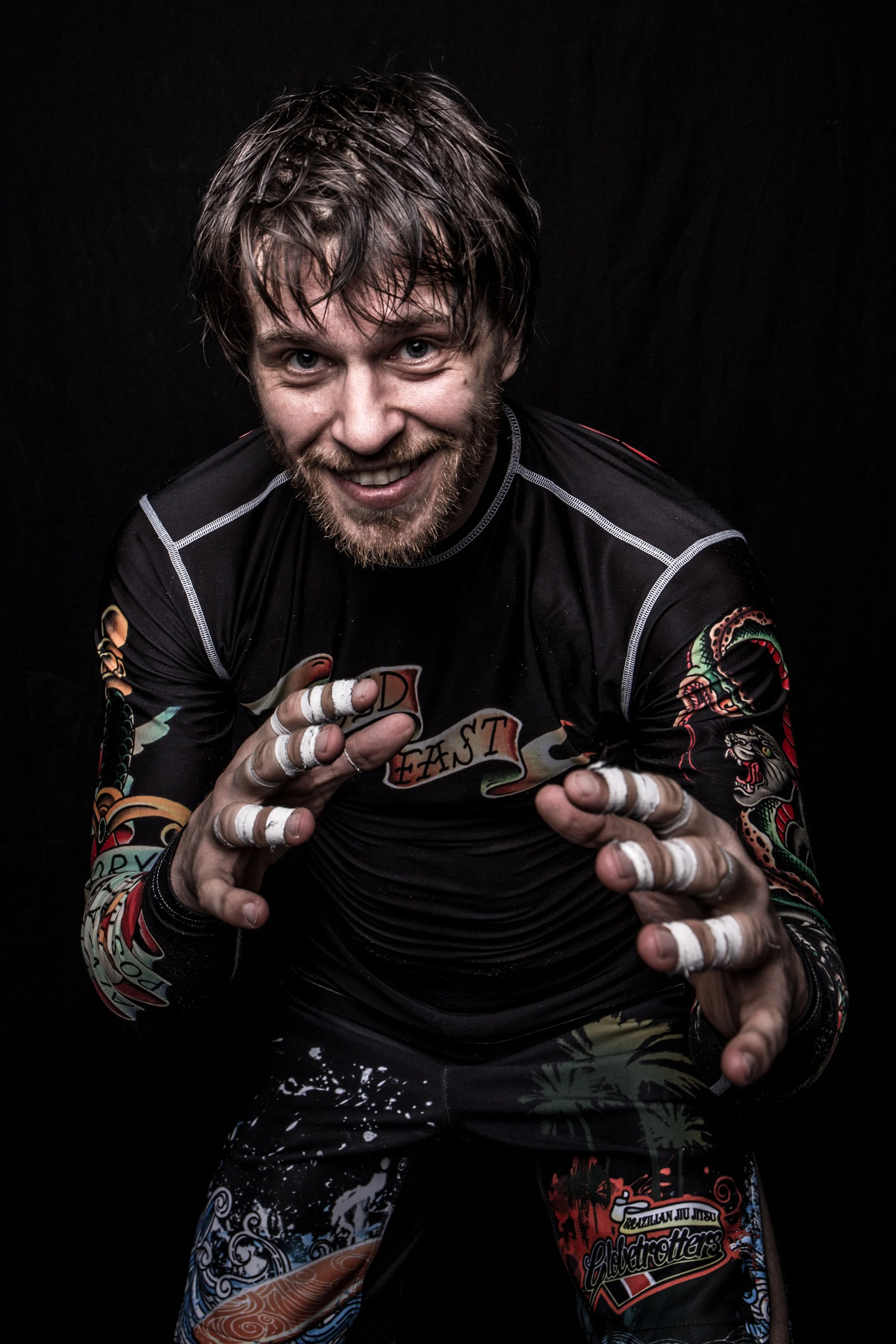
Even if many people do something with passion, this does not mean that their meaning is the same. Many motifs, like trails to the summit, lead climbers across the western, northern, eastern, and southern slopes. For example, people do not come to Brazilian jiu-jitsu just for self-defense skills. One is impressed by a versatile physical load in the form of a game, the other creatively expresses himself, the third collects insights, the fourth only here finds control over himself, the fifth develops fear of aggression, the sixth, alas, spits out his sadistic nature, and the seventh seeks and finds true friends.

Whatever you have to do, it is certainly important to be aware of the true cost. But having an answer to the question, "What's in it for me?" is infinitely more important.

Yours sincerely,

-Alexander


You can help Ukraine defend itself and the World from Russian aggression here.


”Who are you and what do you do?"
As a business therapist, I help tech founders quickly solve dilemmas at the intersection of business and personality, and boost company value as a result.

"I have an extremely important business decision to make. Can you help me?
Reserve a time on my calendar that is convenient for you to meet with me. We'll clarify your request and discuss options for how you can help.

Crab mentality by Alexander Lyadov

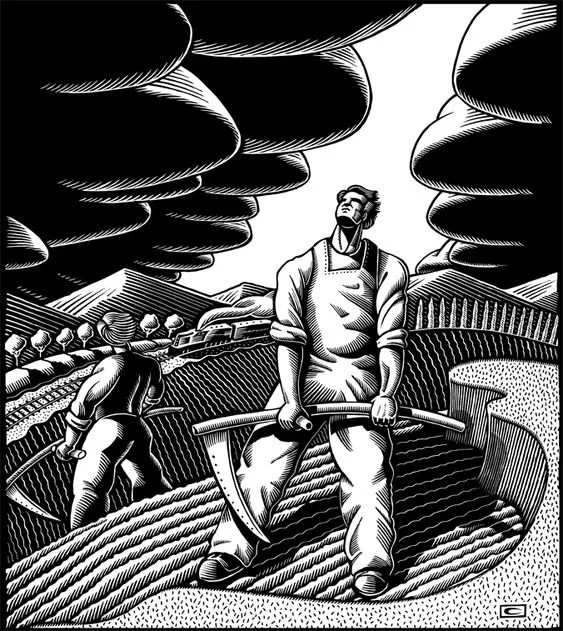
I learned with interest about the term “Crab mentality”. It came from observing the behavior of crabs in a bucket. Even if one of them has a chance to break free, reaching the boundary of the “prison”, the other crabs cling to him and pull him back. A similar phenomenon is observed in human communities, where people are extremely intolerant of those who have already achieved success or are making visible steps toward it. Whether the group dynamic is in science, business, philanthropy, film, or sports, the dynamics of preventing a comrade from escaping are universal. All you have to do is read the comments on social media to see for yourself.

Why do people do this? It seems to me it’s not just a matter of envy, jealousy or resentment. The other person’s accomplishments are a chilling reminder that I, too, could have done a lot if I had undertaken something decisive in the past. In other words, deep down we have a vague sense of our potential, but squander opportunities and time, only to torture ourselves later, “Too late!”

I would venture to say that the potential of most of those around you remains tragically unfulfilled. I see this problem even in entrepreneurs, who forge their own destiny. What about the rest of us, especially those who are stuck in jobs they hate or who have lost faith in themselves? It is unlikely that all people will suddenly have an epiphany. That is why it is so important to carefully choose your inner circle — partners, clients, colleagues, relatives and friends. Close communication has the effect of an echo chamber, which ends up forming either a nutrient solution or a poisonous environment for you.

The most important thing, however, is to go through the “bucket of crabs” within yourself. Our "Shawshank redemption" is hindered by false assumptions that either hold us by claws or we are sorry to let them go. It's reassuring to know that sometimes all it takes is one question to set us free.

Yours sincerely,

-Alexander


You can help Ukraine defend itself and the World from Russian aggression here.


”Who are you and what do you do?"
As a business therapist, I help tech founders quickly solve dilemmas at the intersection of business and personality, and boost company value as a result.

"I have an extremely important business decision to make. Can you help me?
Reserve a time on my calendar that is convenient for you to meet with me. We'll clarify your request and discuss options for how you can help.

Local redundancy by Alexander Lyadov


A lot of problems in life arise because of a phenomenon that I call “local redundancy”. I remember a few years ago, in jiu-jitsu, my finger joints began to ache unbearably. I started every training session by building an “exoskeleton” of band-aids for each finger. These “crutches” helped only partially.

Analyzing the reason, I realized that during fights I clung too tightly to the lapels of other people’s kimonos. Either because I didn’t want to let go of a position I had already lost, or because I tried to perform techniques solely by using my arms, I overstretched my fingers. A dangerous asymmetry emerged as a consequence of my opponent’s explosive effort with his whole body against my ten fingers. According to science, the destruction of material under overstress is the logical outcome. Having found the “root of the evil,” I began to involve my legs and back more often in the attack, as well as to let go of what could not be held. Pretty quickly the pain went away, and I forgot about the ritual of “mummifying” my fingers.

It’s the same in business. A top manager tries to solve an acute company problem with just his department, without calling for help from his colleagues. Or the founder’s brain is already exploding from the excessive operational routine, but he keeps saying, “No one will do it better than me”. Or it is high time for the company to part with the old one and find a new business model, because the market has changed and there is no future for the familiar technology/approach/product. Local redundancy always leads to trauma — the company loses an anchor client because of a top manager’s mistake, the owner burns out and loses interest in his business, and the weakened company is taken over by competitors.

The Buddha said: “Your suffering is caused by your resistance to what is”. Sometimes important truths enter us faster through the gates of the body rather than the mind. That’s why I love Brazilian jiu-jitsu.

Yours sincerely,

-Alexander


You can help Ukraine defend itself and the World from Russian aggression here.


”Who are you and what do you do?"
As a business therapist, I help tech founders quickly solve dilemmas at the intersection of business and personality, and boost company value as a result.

"I have an extremely important business decision to make. Can you help me?
Reserve a time on my calendar that is convenient for you to meet with me. We'll clarify your request and discuss options for how you can help.


Problems with your partner? by Alexander Lyadov

Everyone wants certainty, security and guarantees. After all, the world around us is an inexhaustible source of bitter and disastrous change. Entrepreneurs, too, want to stand their ground against the chaos of their industry, their country and the world. But sometimes this desire does them harm.

For example, when the founder clings to the terms of an outdated partnership agreement. It seems that he is right when he makes a claim: “I work 24 hours a day in the business, and you live two years abroad, receiving dividends on time. But we have equal shares, and you want to influence my decisions as before”. This is still a positive scenario, meaning that the person has a conscience, and between them there is trust, allowing them to voice what has boiled over inside. Often business is just quietly taken over.

But if you discern the spirit behind the letter of the agreement, it may not be the "plowman and the freeloader"that is the problem. Why, after a dozen years of successful cooperation, did one of the partners begin to lose interest in the business? Why did such a large company never form a professional team, and why was the founder involved in the operation as if it were a startup? Why, when disagreements grew over business strategy, did both pretend that everything was OK?

These and other "Why?" remind us that partnership is not so much a contract as it is a process. And this process adds value only if each participant is aware of the indispensability of the other's contribution. But everything changes - the context, the industry, the company, and the individual. Therefore, business, like an albatross in the wind, should not freeze the tilt of its wings. The dynamics of the process require periodic renegotiation of agreements. Legal documents, like a photograph or a video, try to capture real life, but in vain. The snapshot remains, but life has already moved on.

Sincerely yours,

-Alexander


You can help Ukraine defend itself and the World from Russian aggression here.


”Who are you and what do you do?"
As a business therapist, I help tech founders quickly solve dilemmas at the intersection of business and personality, and boost company value as a result.

"I have an extremely important business decision to make. Can you help me?
Reserve a time on my calendar that is convenient for you to meet with me. We'll clarify your request and discuss options for how you can help.

What is your gift? by Alexander Lyadov

I am usually quite quick to see the peculiarity of the person in front of me. This is important, for example, in the context of a founder’s query about a lack of energy, loss of interest in the business, mediation of conflict, or the proverbial resting of the head on the “glass ceiling". Of course, I ask a number of additional questions, but rather to test my hypothesis and not to mess things up. This kind of diagnosis is especially impressive by contrast when it is not at all obvious to the person what he or she is naturally good at. Sometimes there are even laughter or tears, so fundamental is the insight into a greater understanding of oneself. The moment when a client’s eyes flash with joy is one of the most grateful moments in my work.

But I have no credit for this ability because it came from a combination of my nature and nurture. The first decade of my career was spent in the advertising industry during its tumultuous formative phase, a side effect of which was a high turnover of people. I had to conduct hundreds of interviews in order to urgently find people for the expanding team or to close the gap caused by the departure. For the second decade, now in the investment industry, I sought out and hired those who formed the teams — CEOs, COOs, СTOs, etc. The sheer number and variety of people has treated my diagnostic ability like a sharpener improves a pencil.

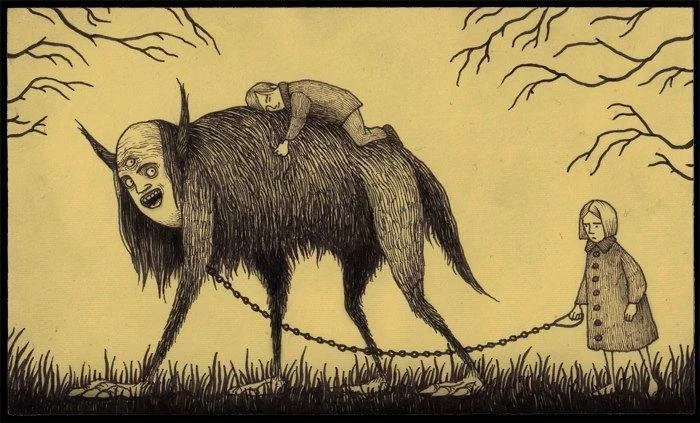
Ironically, my gift is a consequence of a curse. For years I've been desperately trying to figure out who I am and what I'm for. Unfortunately, it was all in vain. At times, there was a sense of abandonment and longing. All that remained was the belief that there was a way out of that labyrinth. One day I suddenly had the insight that I was a guide, an “in-between” and that my function was to help others understand their talent, inclination, potential, spark, and giftedness. So the “40 years wandering in the wilderness” made sense. Judging by my clients' testimonials, the grueling search for myself has turned a trivial log into a valuable tool.

Yours sincerely,

-Alexander


You can help Ukraine defend itself and the World from Russian aggression here.


”Who are you and what do you do?"
As a business therapist, I help tech founders quickly solve dilemmas at the intersection of business and personality, and boost company value as a result.

"I have an extremely important business decision to make. Can you help me?
Reserve a time on my calendar that is convenient for you to meet with me. We'll clarify your request and discuss options for how you can help.


Desirable inefficiency by Alexander Lyadov

Any new activity looks confusing and unmanageable at first. All the elements seem equally important and tear your attention to shreds. Not knowing where to expect a catch, the vulnerable mind flinches nervously at every hint and rustle. Muscles are constantly in hypertension to avoid irreparable mistakes. Obviously, during this period, your energy — physiological, mental, and spiritual — is siphoning out of every crevice for nothing. In short, your activities are insanely inefficient.

Many people are not ready to accept this fact. That is why, in addition to fear of the unknown, they are not ready to start anything new. It is especially evident in business, when large organizations make loud statements, spend huge money on R&D and BizDev activities, but have no real innovations and breakthrough solutions in the end. The fact is that by the time businesses have become big, the bulk of executives and employees are professionals in raising specific efficiencies to the second decimal place.

In their worldview, inefficiency is blatant heresy that must be mercilessly scorched with purging fire. Not surprisingly, for them, exploring novelty without guarantees of quick and predictable results is not an investment, but a throwing away of limited funds. Large companies tend to get tired of the "insolubility" of this dilemma and are forced to buy up one startup after another at exorbitant prices.

However, if you understand the fundamental difference in behavior in unfamiliar territory as compared to known territory, the loss of efficiency is not a problem, because there is a value more important by many orders of magnitude. All true entrepreneurs know this "secret". By the way, the increase in efficiency in the initial phase can be exponential, if you consciously slow down, use the minimum load and learn to distinguish between primary and secondary, function and form, figuratively speaking, good and evil.

Sincerely yours,

-Alexander


You can help Ukraine defend itself and the World from Russian aggression here.


”Who are you and what do you do?"
As a business therapist, I help tech founders quickly solve dilemmas at the intersection of business and personality, and boost company value as a result.

"I have an extremely important business decision to make. Can you help me?
Reserve a time on my calendar that is convenient for you to meet with me. We'll clarify your request and discuss options for how you can help.


Fear by Alexander Lyadov

“You are what you fear”. Once I have heard this paradoxical thought, I can no longer erase it from my “hard drive”. Now anything that provokes in me a spontaneous reaction of horror or fear is next questioned, “Is this really me?”. At first, the thought seems so ridiculous that I want to throw it in the trash. But as the number of cases I’ve looked at grows, I realize, “Hmm, there’s something there”.

What we fear the most is what we don’t understand. Everyone remembers how, as a child, some friend used to tell stories about the “black hand” and how painful it was to come home at night. Of course, what is the “black hand” specifically, was not specified. The child’s heightened imagination gave the object its own creepy details. The more amorphous, strange and mysterious the source of fear, the greater its paralyzing power. The absence of clear contours, familiar categories, and identifying marks means that, potentially, the threatening shadow is cast by something that longs to tear, chew, and digest you personally and all that is dear to you.

There are universal things that scare most people. But there is a remarkable variation in reactions to the rest. Some people break into a cold sweat at the mere mention of X, while others don’t see X at all. Some are obsessed with “dangerous” Y, sniffing it out, looking for it everywhere, and, of course, finding it. Some cannot sleep peacefully at the thought that somewhere out there in the world there is a nightmarish Z.

The aforementioned idea indicates that the one who fears Z is himself Z deep inside, but rejects it. Without being integrated, this aspect of the personality remains misunderstood and unrecognized and, like the hound of Baskervilles, is forced to howl longingly in the swamp at night, terrifying the master of the castle. And yet he might have been tamed and trained to guard the inhabitants from wolves.

Assuming this thought to be true, a careful examination of your fears is the way to multiply true riches — the knowledge of how much more you are than you have always thought you were.

Yours sincerely,

-Alexander


You can help Ukraine defend itself and the World from Russian aggression here.


”Who are you and what do you do?"
As a business therapist, I help tech founders quickly solve dilemmas at the intersection of business and personality, and boost company value as a result.

"I have an extremely important business decision to make. Can you help me?
Reserve a time on my calendar that is convenient for you to meet with me. We'll clarify your request and discuss options for how you can help.