
Pseudo-aging by Alexander Lyadov

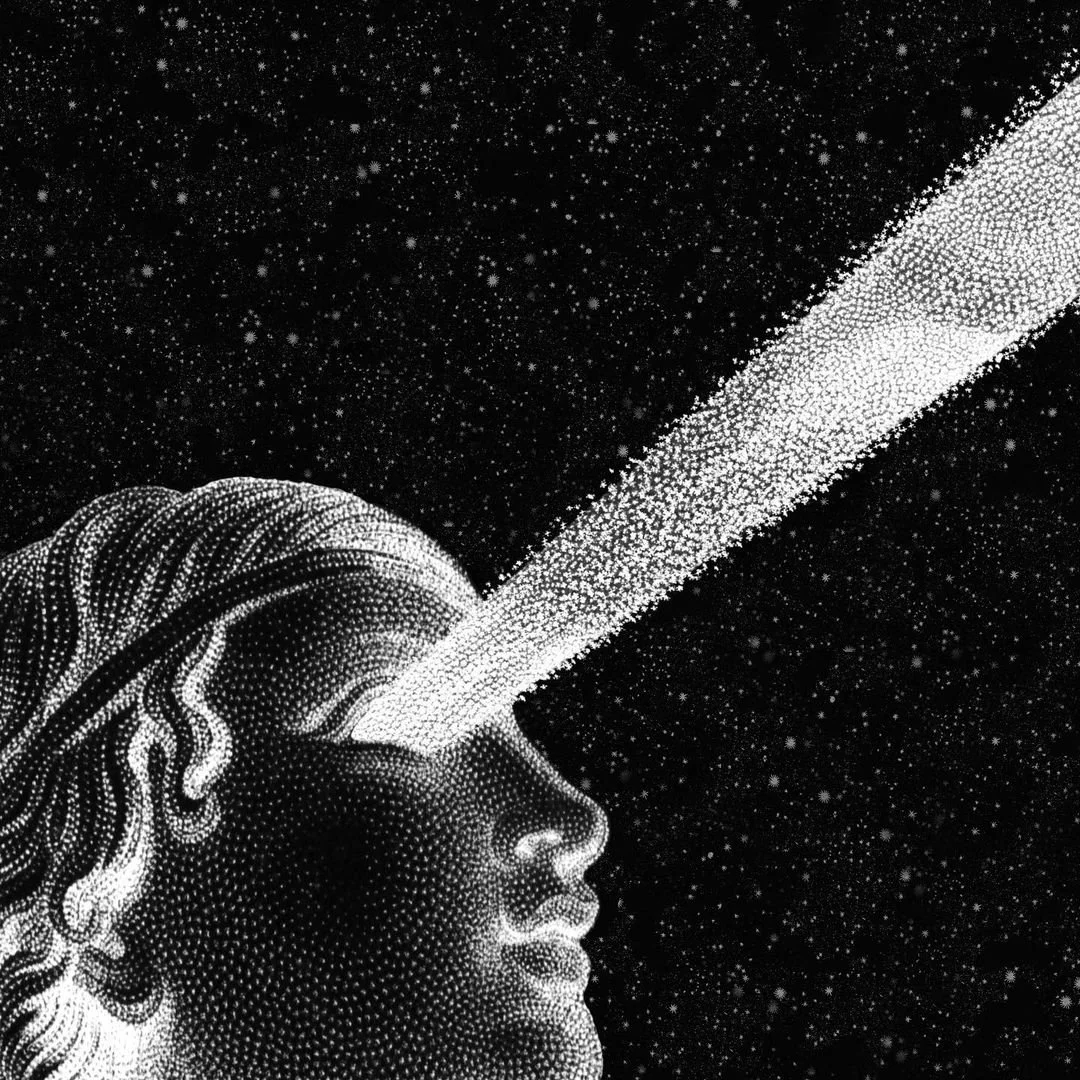
People complain that the body loses mobility, stamina and strength over the years. Of course, the natural aging processes cannot be reversed. But let’s be honest — it’s not that a person loses abilities because the body weakens. As a rule, it’s the other way around — the body decays because a person has no desire or habit to move.

In youth, the body sort of holds the potential of possibilities at the ready: “If you want, try this or that.” But then gradually, out of necessity, it starts to turn off the extensive functionality. After all, instead of using what’s available and exploring what else is possible, the person slips into a narrow “wake-up-eat-work-drink-sleep” rut. Oh yes, the brain of a mental worker is very valuable. But what about the body? “Well, it’s just a brain shipping container, and an incomprehensible, unreliable, and maintenance-intensive machine.”

“Sure you don’t need anything?” - the body interjects. The person annoyedly waves it off, grabs the joystick in his hands, orders home delivery of groceries, and gets on the scooter. The body shrugs perplexedly, “Well, you’re the boss,” and starts the process of atrophy of muscles, joints, nerve cells, etc. Then the downward spiral accelerates: less movement - less function - less movement… The man complains more and more and resents the body, which allegedly let him down. No, honey, it’s the opposite - you betrayed it by carelessly refusing the generous gifts of the gods. Fortunately, you can always become your body’s friend again. Like a dog, the body willingly forgives us for everything and is ready to open its treasury again. You shouldn’t expect miracles, but you can be pleasantly surprised. After all, you are capable of much more than you ever imagined.

Sincerely yours,

-Alexander


You can help Ukraine defend itself and the World from Russian aggression here.


”Who are you and what do you do?"
As a business therapist, I help tech founders quickly solve dilemmas at the intersection of business and personality, and boost company value as a result.

"I have an extremely important business decision to make. Can you help me?
Reserve a time on my calendar that is convenient for you to meet with me. We'll clarify your request and discuss options for how you can help.


What does your face say? by Alexander Lyadov

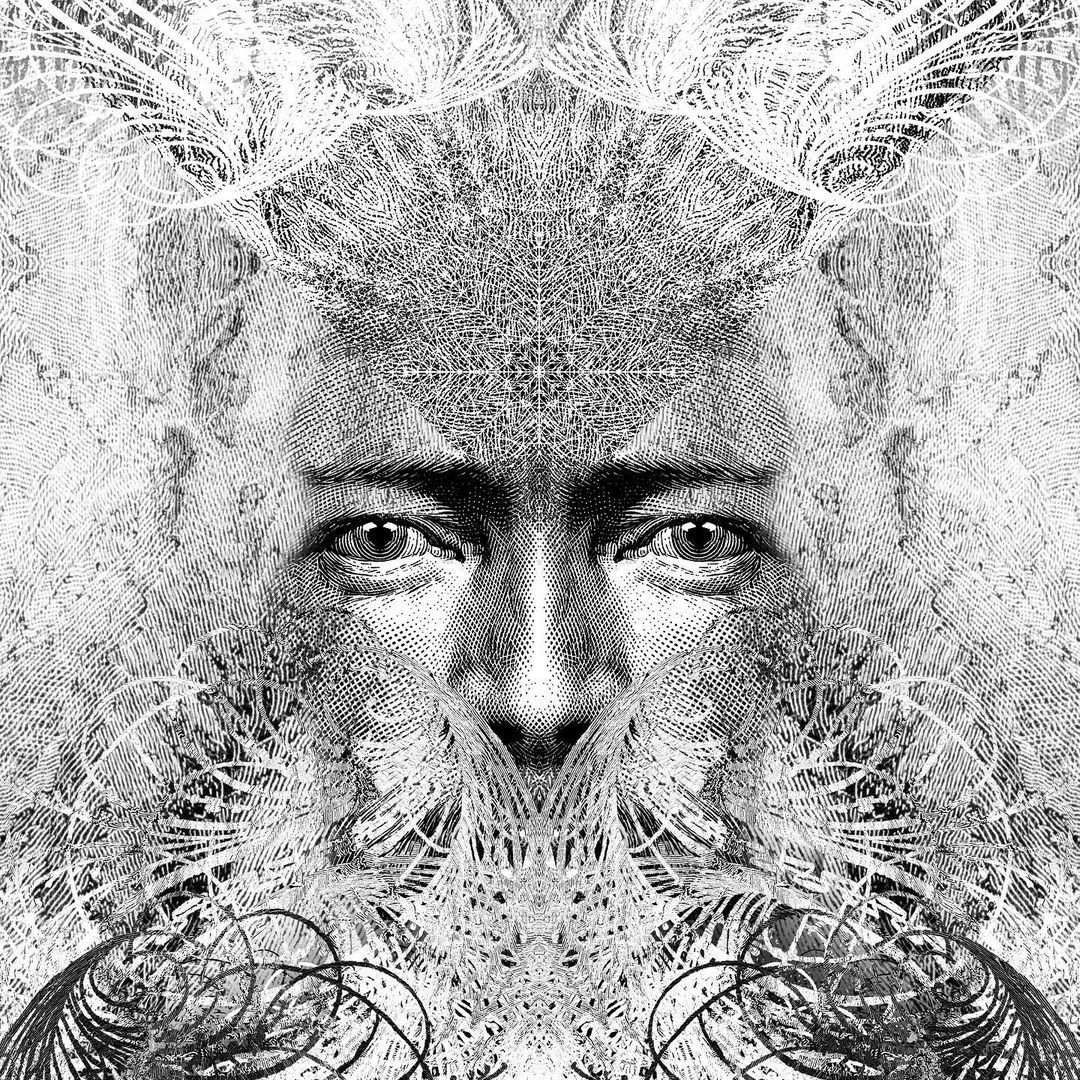
The children are very similar to each other. How? Their faces show unlimited potential. Every kid can become almost anything. Even with the influence of genes, environment and upbringing, the range of scenarios is unimaginably wide. That’s why a child’s eyes are as fresh as a high mountain spring. And the forehead is as clean as a new canvas.

Looking at an adult, we read the story of his or her life. In addition to the effects of the outside world in the form of bumps, scuffs and scars, over the years, the face more and more accurately reflects the inner world. Dissatisfaction with everyone and everything, that is, with oneself, pulls the corners of the lips downward, as if one had eaten bird droppings. The habit of frequent and intense thinking plows two vertical furrows on the bridge of his nose. You can tell a man who laughs good-naturedly by the ray of wrinkles around his eyes. Constant anxiety throws the triangles of the eyebrows up, “Ah, what happened this time?”

As we know, function determines form, not the other way around. No matter how hard one tries to hide one’s nature, it still comes out through facial expressions. Over several decades, the face reflects a specific emotion a million times — envy and sadness, anger and compassion, etc. A child has a chance to come to harmony with himself, no matter what kind of birth curse he has. At 80 years of age, a person will usually only cement something that has not been fixed in a lifetime.

Knowing all this, I think it makes sense to take a closer look at yourself in the mirror. Do you like where this person is going? If so, hallelujah! If not, well, you know what to do.

Yours sincerely,

-Alexander


You can help Ukraine defend itself and the World from Russian aggression here.


”Who are you and what do you do?"
As a business therapist, I help tech founders quickly solve dilemmas at the intersection of business and personality, and boost company value as a result.

"I have an extremely important business decision to make. Can you help me?
Reserve a time on my calendar that is convenient for you to meet with me. We'll clarify your request and discuss options for how you can help.

The problem of self-education by Alexander Lyadov

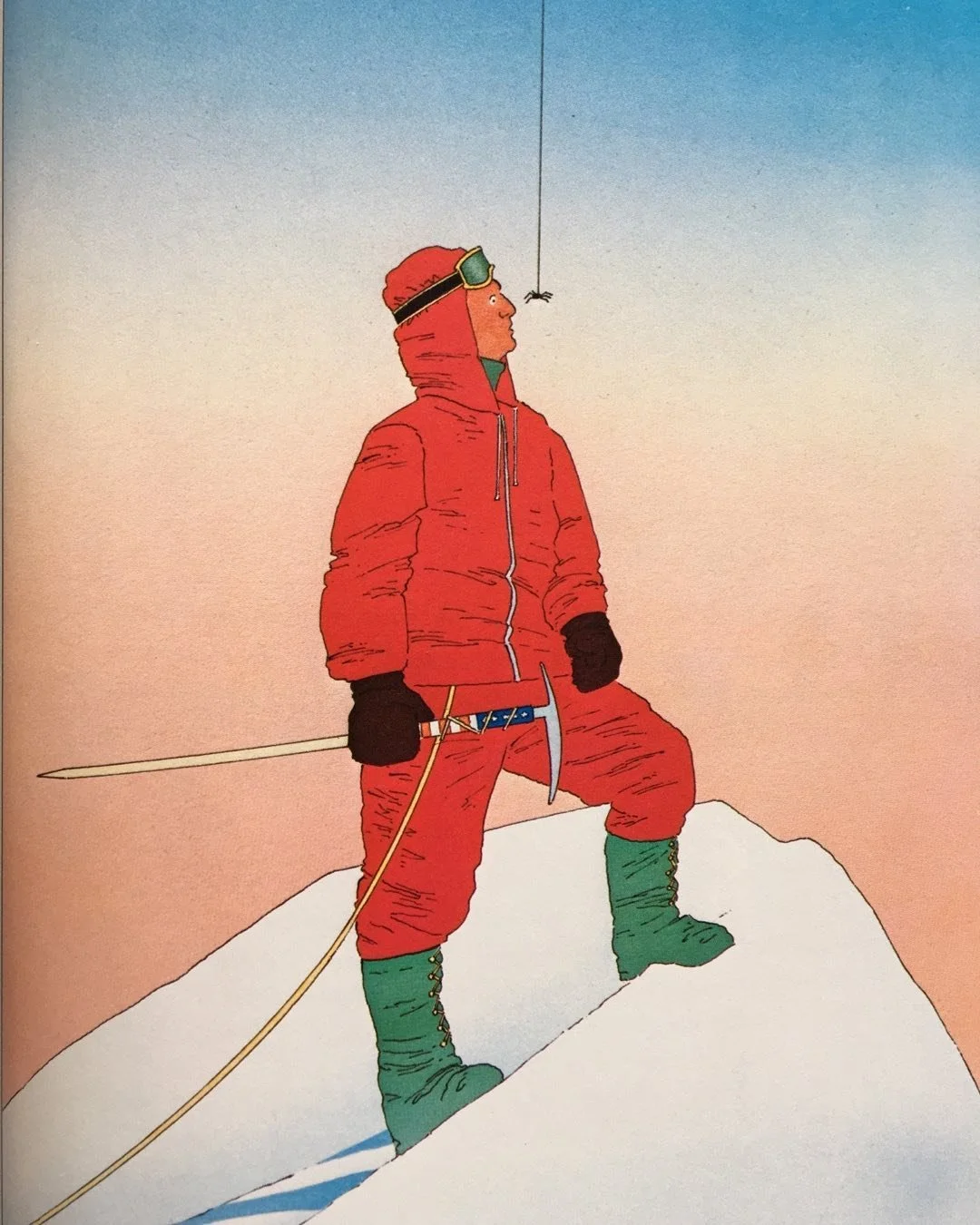
When I was a kid, we had a bookcase at home. In it was a complete Library of Adventures collection, published in the USSR in 1955. One of my fondest memories is picking up a book at random and making myself comfortable in an immense armchair. As I gazed at the amazing illustrations and read the captions, I was imperceptibly engrossed in the content before and after the illustrations, so that the books were quickly swallowed one by one.

It is the property of talented works to dissolve the reader into themselves, transporting them to another reality. The characters of the novels and short stories took on flesh and blood, and their way of thinking and behavior affected the malleable child’s mind, as if we were communicating in person. Thus I discovered an infinite number of teachers, inspirers, comforters, and role models. Whether the author was a contemporary or lived centuries ago, he was always there for me. Regardless of my emotional state or degree of ignorance, the titans of thought generously shared their treasures with me. Investor and entrepreneur Naval Ravikant observed, “Free education is abundant, all over the Internet. It’s the desire to learn that’s scarce.”

In fact, there is no secret knowledge guarded by anyone from the uninitiated. The bottleneck is our ability to gather insights scattered everywhere. It’s like picking strawberries or mushrooms — the forest rewards the one who is willing to bow down, digging through the grass, moss, and leaves. It is usually pride and laziness that get in the way of getting down on all fours. One wants to learn everything, all at once, without effort and without admitting to being a “fool.” But it doesn’t work that way.

Hunger is needed to truly appreciate the taste of viands. One must have a “hunger” to learn anything new. Ultimately, the problem with education is not about the availability of knowledge, but about answering the very personal question, “What is my sacrifice for?”

Sincerely yours,

-Alexander


You can help Ukraine defend itself and the World from Russian aggression here.


”Who are you and what do you do?"
As a business therapist, I help tech founders quickly solve dilemmas at the intersection of business and personality, and boost company value as a result.

"I have an extremely important business decision to make. Can you help me?
Reserve a time on my calendar that is convenient for you to meet with me. We'll clarify your request and discuss options for how you can help.


Build what's missing by Alexander Lyadov

How do you build something that doesn’t exist? Y Combinator startup accelerator founder Paul Graham wrote, “Live in the future and build what’s missing.” One phrase captures the present, the future, and action to turn one into the other.

Working with company founders, I see a variety of challenges. One finds it difficult to accept the bitter reality of the present because it would destroy the coveted image of self. Another gets sucked into the swamp of routine and has no time, or rather mental energy, to clearly describe the future the company is supposedly heading toward. But if there is no target, you can hit the bull’s-eye only by accident. The third one understands everything correctly, but the key decisions which can quickly increase the value of the business are for some reason not taken in any way. False assumptions invisibly entangle the mind and make it only unproductively twitch from side to side, like a bumblebee in a web.

Man is a value-oriented being. This means that of all the variety of the world around us, we notice only what preserves and develops our lives. In fact, this is why the same event will strike you deeply in the soul, while your neighbor will only shrug his shoulders. It’s the same with opportunities, dangers, resources, and tools — we only see them when we really need them. Thus, when falling from a tree, the hand involuntarily grasps any object whose function is to keep us from hitting the ground.

Therefore, it is important for every entrepreneur to know at all times what is good and evil, but not in an abstract sense, but specifically for his business and in general for his life.

Yours sincerely,

-Alexander


You can help Ukraine defend itself and the World from Russian aggression here.


”Who are you and what do you do?"
As a business therapist, I help tech founders quickly solve dilemmas at the intersection of business and personality, and boost company value as a result.

"I have an extremely important business decision to make. Can you help me?
Reserve a time on my calendar that is convenient for you to meet with me. We'll clarify your request and discuss options for how you can help.


Source of strength by Alexander Lyadov

When assessing someone's power, we tend to pay attention immediately to external attributes. For a person, it is height, muscle, and weight. For an army, it is the number of personnel, the volume and technological sophistication of weapons. For a company, it's market share, turnover, patents, customers, etc. Evolution has taught us that in an encounter, as a rule, the larger individual wins. In the wild, all animals have similar "OS" in the form of instinct. If there is no difference in "software," then "hardware" rules. That is why in primitive societies - in the early Paleolithic, prisons and Muscovy - only the propensity for violence is valued, and the most pathological psychopath becomes the king.

As the internal organization of both the individual and society as a whole becomes more complex, the number one value becomes creative solutions to non-standard problems, i.e. ingenuity, creativity, innovativeness. And friendly cooperation with other people is especially important, because social capital is a lever that exponentially increases the creative output. Here clash is also inevitable, but in a civilized society there is a conflict of ideas, not people. The more developed the spiritual vector of culture, the sharper the struggle for truth, not for power.

In this sense, who is the strongest? The one who has the least amount of unproductive internal friction. Any squabbles, intrigues and quarrels increase entropy in the system, increasing the probability of collapse. And no matter how big the group is, how advanced the technology is, and how bottomless the resources are, soon the system will start to wobble, stumble, and fall to pieces itself. Investor Peter Thiel writes: "Internal peace is what enables a startup to survive at all." Developing his thought further, it can be argued that the most important thing is for the founder to have peace in his mind. Then any external problem is surmountable.

Yours sincerely,

-Alexander


You can help Ukraine defend itself and the World from Russian aggression here.


”Who are you and what do you do?"
As a business therapist, I help tech founders quickly solve dilemmas at the intersection of business and personality, and boost company value as a result.

"I have an extremely important business decision to make. Can you help me?
Reserve a time on my calendar that is convenient for you to meet with me. We'll clarify your request and discuss options for how you can help.

Yin and Yang by Alexander Lyadov

If by your psychotype, you are a person who appreciates novelty, it is easy for you to make a super order once, but it is hard to maintain it. Of course, you сan force yourself to repeat the cleaning. But for the hundredth time your brain, which hates routine, will “accidentally” forget, get “strangely” sick or go on strike. Monotonous activity does not just bring boredom — it literally sucks the life out of you. It is easier for you to solve a dozen non-trivial tasks, just not to make copies of what you already know.

You’d be surprised, but there are a lot of people who have a completely different view. They are no worse than you, and you are no better than them. If novelty intrigues, inspires and invigorates you, for them it is disorienting, confusing and alarming. Therefore, in an unfamiliar situation, they fall into a stupor and genuinely suffer. But in known territory, they are invaluable. When goals and plans are clear, and resources and authority are sufficient, such people are unstoppable. They are reliable, hard-working and responsible, sometimes even too much. Most importantly, they are happy to do exactly what is torture for you.

One with all his soul yearns to exponentially develop whatever he takes on. The other can’t wait to stabilize something. It’s not hard to guess that together you are doomed to conflict. We tend not to recognize and depreciate the opposite quality, which is in short supply. But with years of experience comes the insight that a kite is meaningless without a thread. So, too, all your creative-inventive power if productive only if there is someone who will carefully take your trophies, and without losing anything, carefully clean, sort and arrange them into a structure. It is a great fortune in business when alliances are formed where partners functionally complement each other, like Yin and Yang. Are you lucky in this sense or are you still carrying the entire load?

Sincerely yours,

-Alexander


You can help Ukraine defend itself and the World from Russian aggression here.


”Who are you and what do you do?"
As a business therapist, I help tech founders quickly solve dilemmas at the intersection of business and personality, and boost company value as a result.

"I have an extremely important business decision to make. Can you help me?
Reserve a time on my calendar that is convenient for you to meet with me. We'll clarify your request and discuss options for how you can help.

The settling of scores by Alexander Lyadov

Chaos is the perfect time to settle a personal score. If someone has long annoyed, disgusted or envied you, if he or she has triggered you with every post, achievement or fact of existence, now you can destroy them. And you’ll probably get away with it. Why?

In extreme situations, whether war, riot, corporate conflict or natural disaster, the spectrum of worldview collapses, becoming black and white — life and death, good and evil, friend and foe. Shades, nuances and halftones disappear. Rows of zeros and ones run across the retina. To each event, fact or person the mind immediately assigns a label “+” or “-“. How else could it be? In chaos, time works against you, and real human lives are at stake.

Only professionals — military officers, policemen, firefighters, surgeons, psychotherapists — are able to act in a differentiated, measured and cold-blooded manner, despite adrenaline splashes. They are trained to make micro-pauses to let the wave of emotion pass by, opening up a space of options. The vast majority of people don’t have the skill or energy to go into detail. It’s enough to shout out loudly, “That’s the villain! Sic him!” and a cloud of arrows will fly off the drawn bows.

Even if the truth about the smear comes out later, everyone will try to hush up the incident, out of shame for participating willy-nilly. In the dissident literature of Soviet times, this kind of settling of personal scores was called “putting a person on an ideological plane (translating into ideological terms)”. Of course, there are no such inquisitors among the readers of this article. But here’s a key for you — if someone in chaos tries to bite you from a moral high ground, know this — he or she has secretly hated you for a long time.

Sincerely yours,

-Alexander


You can help Ukraine defend itself and the World from Russian aggression here.


”Who are you and what do you do?"
As a business therapist, I help tech founders quickly solve dilemmas at the intersection of business and personality, and boost company value as a result.

"I have an extremely important business decision to make. Can you help me?
Reserve a time on my calendar that is convenient for you to meet with me. We'll clarify your request and discuss options for how you can help.

The paradox of imperfection by Alexander Lyadov

Perfectionism is popular among middle managers, and many CEOs too. Just as teenagers compete to see who can walk over the edge of a cliff, so managers measure up: “You’re only 95% of perfect, and I’m 99.5%.” No wonder some people get burned out at these “Olympics”. After all, every extra percentage of perfection comes at an exponentially increasing cost. I used to be like that myself, and later observed this phenomenon in my subordinates and colleagues.

Entrepreneurs intuitively know all this, and so instead of perfectionism they profess the principle: “Good enough is good enough”. The manager inhabits an artificial greenhouse environment, where the connection with reality is indirect, and therefore responsibility for mistakes can be avoided. The habitat of the entrepreneur is a wild market, where there is no connivance or mercy. Business has to fight every day for survival, with no guarantee of reward for efforts. Like the cheetah, the entrepreneur values his limited resource, which may not be enough for the next hunt. Therefore, his goal is not the form, but the pure functionality of the product, the process, and the team. If the mechanism roars, rattles and smokes, but it moves, it is already good.

Besides perfectionism is bad for people’s health and unacceptably expensive for business, there is another argument against it. Ido Portal, the world’s #1 human movement expert, suggested in an interview, “I believe in power of non-complete process, like making this table, but leaving something undone, not perfecting the product. Why? Because it offers some kind of dynamic nature of evolution that naturally unravels from it. Almost like sometimes I do it, I count reps and I’ll only count to 9, because it tends to leave people in the count and it keeps going instead of giving them the 10”.

What if imperfection is fundamental to the existence and development of not just business, but Life in general?

Sincerely yours,

-Alexander


You can help Ukraine defend itself and the World from Russian aggression here.


”Who are you and what do you do?"
As a business therapist, I help tech founders quickly solve dilemmas at the intersection of business and personality, and boost company value as a result.

"I have an extremely important business decision to make. Can you help me?
Reserve a time on my calendar that is convenient for you to meet with me. We'll clarify your request and discuss options for how you can help.


The Infinite Way by Alexander Lyadov

More than once I heard from experienced entrepreneurs how important it is to know in advance what to do after the successful sale of the business has taken place. It usually seems that the main thing is to build something meaningful, to reach the cherished peak, and harmony and grace are sure to await there. But many founders are shocked that after many years of focused extra effort, there comes a brief moment of triumph, followed by despondency, depression, and emptiness. It feels as if someone has knocked the stool out from under you. The meaning that had guided, sustained, and inspired you up to that point suddenly evaporated. And the new meaning did not emerge by itself. Expensive toys, hedonism and entertainment cannot become substitutes for meaning. On the contrary, existential longing is only exacerbated by the thought: “How dare you be dissatisfied? You have absolutely everything.

Knowing this, experienced founders, like in a telescopic fishing rod, begin to pull in a new segment of meaning long before D-Day. Thus, the current goal is not the final destination, but a prerequisite for achieving something even more desirable later. If we develop this thought to the limit, we will see a multilevel hierarchy, where one meaning is subordinate to the second one, the second to the third one, etc. With such a vertical of meaning, a person will become almost unstoppable.

Life will create obstacles, breaking the current plan of action and questioning the current goal. But instead of discouragement and frustration, a person simply turns to the meta-meaning one or two levels higher and from that height redraws the route differently. After all, the feeling of deadlock is a consequence of a lack of perspective, when it seems there is only one, but absolutely unacceptable option. As one gains altitude, the number of options grows rapidly.

When multiple personal meanings are embedded one within another, life resembles a conscious path toward infinity. Perhaps this is what Lao Tzu meant when he said: “A good traveler has no precise plans or intentions of getting anywhere.”

Yours sincerely,

-Alexander


You can help Ukraine defend itself and the World from Russian aggression here.


”Who are you and what do you do?"
As a business therapist, I help tech founders quickly solve dilemmas at the intersection of business and personality, and boost company value as a result.

"I have an extremely important business decision to make. Can you help me?
Reserve a time on my calendar that is convenient for you to meet with me. We'll clarify your request and discuss options for how you can help.


Thiel's Law by Alexander Lyadov

“A startup that is corrupt at its core cannot be repaired.” PayPal co-founder and venture capitalist Peter Thiel repeated this insight so often that friends called it “Thiel’s Law”. You can give an SUV a brutal shape by wrapping it with expensive equipment on all sides, but if it was born a “city boy”, it will never become the “king of the off-road”. The quality of the foundation defines, what you can build — a skyscraper or a mud hut. Some mistakes, like incest or jumping without a reserve parachute, cannot be compensated for later.

In a startup, of course, the main decision is who to build it with. I have had different experiences — from a successful business with the wrong partners to, on the contrary, an unsuccessful business with the right partners. Outside of the ideal, the latter is more to my liking. After all, the company is just one episode of many. Yes, we lost time and money together, but we gained good relationships for life. And with people with whom there is no value match, there is still no way to share or celebrate, much less repeat success. The only benefit here is a lesson in who you should (not) choose as a partner. And most importantly, why.

To think that I was just unlucky to meet a bad partner is naivety, victim psychology and infantilism. Of all the possible alternatives I, oops, for some reason chose specifically them and not others. So, some part of me was eager to realize this negative scenario. Even if the decision was made subconsciously, and I was surprised later. Taking responsibility for my own choices does not amnesty the malevolent actions of others, but it allows me to take control of my life to have a chance to ever change it.

It turns out that the most important startup is yourself. It is the cornerstone without which all business projects will falter or crumble into dust. Fortunately, you can always start fixing it. How about now?

Yours sincerely,

-Alexander


You can help Ukraine defend itself and the World from Russian aggression here.


”Who are you and what do you do?"
As a business therapist, I help tech founders quickly solve dilemmas at the intersection of business and personality, and boost company value as a result.

"I have an extremely important business decision to make. Can you help me?
Reserve a time on my calendar that is convenient for you to meet with me. We'll clarify your request and discuss options for how you can help.


Recalibration by Alexander Lyadov

It is known that a lost traveler makes a multi-kilometer meaningless circle back to the starting point. To verify this, in 2007, German researchers Jan Sowman and Mark Ernst set up an experiment on volunteers in the woods and deserts. It turned out that travelers do walk in circles if they cannot see the sun and the moon, or if they are blindfolded.

However, it turned out that the same person sometimes deviates to the left, sometimes to the right. Thus, walking in circles is not caused by differences in leg length or strength, but is most likely the result of a growing uncertainty about where the forward direction is [1]. So without landmarks to guide them, the walkers were relying on feedback from their bodies (proprioception) and their sense of balance. These cues can help over short distances, but Souman says that they soon build up “sensory noise” that renders them inaccurate and causes the person’s trajectory to drift both increasingly and randomly. Small errors lead to random walks, while larger errors cause circling. Small errors lead to random wandering, while large errors cause circling [2].

In business, one often has to act in smoke, fog, and darkness. In the short term, a founder’s intuition and extra effort can help a business survive uncertainty. But in the long run, as in the woods, you have to be wary of the accumulation of “sensory noise.” Knowing all this, savvy entrepreneurs establish a ritual once a quarter (six months, a year) to double-check their mental maps and key decisions made. By being proactive, they protect their business from themselves, or rather from the natural tendency to accumulate entropy in any closed system. As National Geographic continues, “A visual cue, however, can do wonders for resetting our navigation. If Souman allowed his blindfolded bumblers to lift their blindfolds for a minute out of every five or ten, they managed to recalibrate their sense of “straight ahead” and started each block of time in a straight line again”.

Sincerely yours,

-Alexander


You can help Ukraine defend itself and the World from Russian aggression here.


”Who are you and what do you do?"
As a business therapist, I help tech founders quickly solve dilemmas at the intersection of business and personality, and boost company value as a result.

"I have an extremely important business decision to make. Can you help me?
Reserve a time on my calendar that is convenient for you to meet with me. We'll clarify your request and discuss options for how you can help.


Curse or grace? by Alexander Lyadov

Most people are constantly tormented by something inside, but unfortunately they have no idea what to do about it. So for a long time they just pretend that all is well in their lives, communicating their enthusiasm, success, health and wealth. But one day they go off the rails, which shocks everyone around them.

What happens is like diarrhea and a gag reflex that cannot be restrained. The person makes some excessive, inadequate or even violent move against himself, a stranger, a colleague, family or society as a whole. The scale of the tragedy can be anything, affecting only a close circle or entire nations: a mental breakdown on social media, a corporate conflict, a school shooting, and, of course, the invasion of Ukraine by wild Russian hordes.

Common to all cases is the inability of a particular individual (or group) to recognize, curb, and redirect into a constructive channel the energy that explodes him (or her, them) from within. Sometimes, however, it is too late for reflection. In neglected cases, the only way out is a straitjacket or a bullet to the head.

In this sense, I have always been struck by the ability of creative people to transform their suffering into works of art. Even if for a while, their lives become, if not harmonious, at least bearable. The creators were lucky to intuitively find the channel through which their inner dissonance is released to the outside. Moreover, this happens in a form that society accepts, appreciates, and sometimes generously rewards. The latter is true mercy of the gods, for the power that destroyed man now grants him salvation, prosperity, and, most importantly, meaning. What would happen if everyone, to the extent of his humble strength, became a Creator?

Sincerely yours,

-Alexander


You can help Ukraine defend itself and the World from Russian aggression here.


”Who are you and what do you do?"
As a business therapist, I help tech founders quickly solve dilemmas at the intersection of business and personality, and boost company value as a result.

"I have an extremely important business decision to make. Can you help me?
Reserve a time on my calendar that is convenient for you to meet with me. We'll clarify your request and discuss options for how you can help.


When is it important to want little? by Alexander Lyadov

“My greatest skill has been to want little”. These are the words of the transcendentalist writer Henry David Thoreau, author of the terrific self-reflection book Walden, or Life in the Woods. We are so used to the maxim, “More is better,” that we implement it where appropriate and where not. But any idea is essentially a tool and requires knowing the limits of its application to avoid injury at work.

In business, the frugality of the founder’s desires can protect him from unnecessary anxiety and mistakes. For example, when searching for an investor, an entrepreneur may try to find an all-in-one solution–an uninterrupted provider of capital, a wise mentor and an energetic business development partner. If there is such an investor in any universe, the likelihood of meeting him in this one is negligible. It is more likely that the founder will bite on the promises of a wily investor who knows the secret entrepreneurial dreams. It is known that the search for a magician leads to a storyteller. The result of cooperation will be disappointment, claims and corporate conflict.

It is more reasonable to lower your expectations by accepting reality as it is: “The main thing is for the investor to pay every agreed tranche on time, and then not to interfere with me building this business. If it suddenly turns out that he can sometimes suggest something clever - hallelujah - that will be the cherry on the cake.” This mindset will help the founder speak bluntly to potential investors: “I expect only financial capital from you. And any specific expertise I will later buy where I choose myself.” This negotiating position is very strong. As entrepreneur and investor Naval Ravikant astutely observed, “Negotiations are won by whoever cares less..” May the force be with you!

Sincerely yours,

-Alexander


You can help Ukraine defend itself and the World from Russian aggression here.


”Who are you and what do you do?"
As a business therapist, I help tech founders quickly solve dilemmas at the intersection of business and personality, and boost company value as a result.

"I have an extremely important business decision to make. Can you help me?
Reserve a time on my calendar that is convenient for you to meet with me. We'll clarify your request and discuss options for how you can help.


Risk and Reward by Alexander Lyadov

Peter Drucker, one of the most influential management theorists of the 20th century, put it succinctly: “All profit is derived from risk”. Of course, everyone is eager to get something of value for nothing, without worry or effort. But reality with a firm hand stops such infantilism. Risk, like an exam test, separates the majority of those who only want it from the few who are willing, ready, and able.

No one likes risk, per se. Even the serial entrepreneur goes for it with a fiddling heart. Of course, he will do everything he can to eliminate the “stupid risk” - the one that destroys rather than generates profit. But the bottom line is market risk, which cannot be avoided. So the founder voluntarily and deliberately takes a step into uncomfortable uncertainty. The investment of capital, time, and effort in a new business illustrates this most clearly. The most valuable resource has to be let loose at first, only to receive a generous reward from Mr. Market, sometimes 5 or 10 years later. Or get nothing, which happens depressingly often. Even in the United States, without epidemics, revolution, or war, 20% of new businesses fail in the first year, 50% within five years, and 65% within 10 years [1].

The insidiousness of risk is that in the real world, that is, outside social networks, university campuses, and progressive coffee shops, there are no guarantees, no justice, and no mercy. The entrepreneur is left to do the best he can and then accept what will be. His willingness to take significant risks is incomprehensible to almost no one. So the existential loneliness of the entrepreneur is inevitable. But when the gods accept the sacrifice of the daredevil and lavishly shower him with gifts, the envy of the philistine is ridiculous, though understandable. Deep down, everyone is aware of the sparks of curiosity and determination to look into the Unknown. Fortunately, there is no need to risk it all at once. Just as with weights, the risk can be dosed to get used to a gradually increasing load. In the end, you may be surprised at the amount of profit you can extract from the additional risk you have accepted.

Yours sincerely,

-Alexander


You can help Ukraine defend itself and the World from Russian aggression here.


”Who are you and what do you do?"
As a business therapist, I help tech founders quickly solve dilemmas at the intersection of business and personality, and boost company value as a result.

"I have an extremely important business decision to make. Can you help me?
Reserve a time on my calendar that is convenient for you to meet with me. We'll clarify your request and discuss options for how you can help.


Go for it! by Alexander Lyadov

“For all the most important things in life, the timing always sucks,” wrote Rolf Potts, author of the “traveler’s bible”, Vagabonding: An Uncommon Guide to the Art of Long-Term World Travel. Most of us have inspiring dreams, usually in the form of vague outlines in a dense fog. They regularly remind us of them, in our youth with fervor, and as the years pass with growing reproach. “Eh, if it weren’t for A, I’d be busy making dreams come true today,” we tell ourselves, lamenting the long To Do list of work, family and household issues. “I’ll just finish the B’s and then…” - we lie to ourselves, for we know that C, D, E, F, etc. will come next. If only we could stretch out our hand, pluck it and taste it with pleasure, but no, we have to climb so high and risk falling to the ground.

Sometimes Providence surprises us with a sudden reshuffle of all the cards, which nullifies our past achievements, as well as our problems. With new cards in our hands, we can be much closer to our dreams than ever before. It seems time to act, but no. Immediately, like worms out of a can, worries G, H, I, J, K crawl out. In addition to the longing for the dream, there is also the fear that it will come true. It is a kind of sweet game of the noble victim of insurmountable events. On the one hand, the narcissism: “How bold and ambitious my dreams are. What a potential, huh?”. And on the other, the infantilism that avoids responsibility for the fiasco: “God knows, I really wanted to. But the conditions weren’t perfect.”

If the hidden enjoyment of the game is interrupted, then all that remains is the imperfect conditions. I think it’s designed that way for a reason. After all, if someone kneaded, baked, chewed, moistened with enzymes, and poured our dream down our, um, gullet, what, exactly, is our role? That’s right, nothing. It turns out that the greater the gap between the desirable future and the miserable conditions now, the greater Providence’s confidence in our ability to transform one into the other. It whispers: “Go for it! You are capable of much more”.

Sincerely yours,

-Alexander


You can help Ukraine defend itself and the World from Russian aggression here.


”Who are you and what do you do?"
As a business therapist, I help tech founders quickly solve dilemmas at the intersection of business and personality, and boost company value as a result.

"I have an extremely important business decision to make. Can you help me?
Reserve a time on my calendar that is convenient for you to meet with me. We'll clarify your request and discuss options for how you can help.

U-turn by Alexander Lyadov

John Wheeler, the physicist who coined the term "black hole"


Science communicator Brett Hall suggests: “Take a piece of paper, take a pen, draw two dots on the piece of paper. Now, how many unique straight lines can you draw through those two dots? It should be fairly obvious to you that only one line can be drawn. However, we know that’s false”. To prove this, all you have to do is fold the sheet in half and pierce both points through with a pen. Now you have not one line, but two. How? What?! Oh, right, of course…

The process of finding a way out of any impasse is similar. At first, we come to the conviction that there is no successful solution to our difficult problem at all. After all, we have made so much effort, tried all the known methods, invited experts, but to no avail. Only one variant is evident, but it is unacceptable because it requires too much sacrifice. For example, there is no ink in our pen, or under the law of wartime we cannot use it. We experience anger, despair, depression, fatigue, and so on.

But one day, thanks to unusual circumstances or an encounter with the right person, our worldview undergoes a U-turn. Within the usual two-dimensional space, our reflections are stuck like a deer in a swamp. But in multidimensional space, there is no trap or prey. The static becomes dynamic. The knot unties itself. Sometimes it is hard to believe that the problem that has oppressed us for so many years is not an omnipotent terminator, but a colossus on clay feet. Probably for the “Aha!” moments, I adore my job and life in general. Even if for a short time, there is peace in my soul and the certainty that anything is possible.

Sincerely yours,

-Alexander


You can help Ukraine defend itself and the World from Russian aggression here.


”Who are you and what do you do?"
As a business therapist, I help tech founders quickly solve dilemmas at the intersection of business and personality, and boost company value as a result.

"I have an extremely important business decision to make. Can you help me?
Reserve a time on my calendar that is convenient for you to meet with me. We'll clarify your request and discuss options for how you can help.


The heat of life by Alexander Lyadov

Christine Francis mused aloud, “There!—you’re doing it again. Both times, when the coffee was poured, you’ve held your hands around the cup. As it gave you a kind of comfort.” Across the dinner table, Albert Wells gave his perky sparrow’s smile…: “Prospecting, in the north, you never waste anything if you want to stay alive, not even the heat from a cup you’re holding. It’s a habit you get into.” It’s a habit that becomes part of your flesh and blood.” An excerpt from the 1965 bestselling novel The Hotel by Arthur Haley reminds us of the value of what we have here and now.

Such frugality is understandable to someone whose work takes place on the edge of the abyss, whether he is a warrior, a polar explorer, a free solo climber, a heart surgeon, or an entrepreneur. Even with years of experience and super-professional skills, they are clearly aware of their vulnerability and limited strength. In the language of myths, they know that they are dealing with the Dragon of Chaos, whose nature and habits are unknown, except that for the slightest misstep he is sure to incinerate or eat them.

In an emergency situation, man is forced to show humility, openness, and gratitude in order to make the most of what little he has at hand. There is no time to dream of more or to resent inappropriate form. If something serves a vital function, that’s a good thing. In this sense, carelessly scattering resources is a grave sin. Who knows, maybe that one sip of water, that one match, or the heat from a cup will be the last grain of sand, which at the decisive moment will turn the scales of fate in your favor?

Yours sincerely,

-Alexander


You can help Ukraine defend itself and the World from Russian aggression here.


”Who are you and what do you do?"
As a business therapist, I help tech founders quickly solve dilemmas at the intersection of business and personality, and boost company value as a result.

"I have an extremely important business decision to make. Can you help me?
Reserve a time on my calendar that is convenient for you to meet with me. We'll clarify your request and discuss options for how you can help.


The secret to startup magic by Alexander Lyadov

“At Stripe, the main thing I took away is that when you combine high energy, sound judgment, low ego, and small teams, you just get magic,” says Shreyas Doshi, now an advisor to fast-growing startups, and former product leader and engineer at Stripe, Twitter, Google, Yahoo, etc.

These may not be sufficient conditions for the success of a new business project, but they are 100% necessary, otherwise, it just won’t take off. But why these exact requirements? My experience in co-founding and helping launch companies from various industries suggests that it’s all about speed of decision-making.

By definition, any initial stage takes place in an ocean of chaos, when the waves of uncertainty mercilessly beat the project, spinning, twisting and trying to drown it. As it happens in an extreme situation, during a surgery or a wrestling match, it is necessary to analyze, decide and act with lightning speed, because the reality severely punishes slow-witted, laggards and idlers.

High energy is needed to overcome the inertia of the surrounding business environment clinging to the status quo. Sound judgment gets rid of dangerous illusions, reducing iteration time. Low ego saves limited resources without squandering them on psychological defenses, intrigue, and power struggles. A compact team fuses individuals into a single “organism,” leveling their weaknesses and multiplying their strengths. As a result, what your competitors require weeks and months, and therefore many millions of dollars of investment, your project makes in a couple of days, creating an advantage out of nothing. And even if you tell them your secret, your competitors can do nothing quickly. Because changing your mindset is the hardest thing to do.

Yours sincerely,

-Alexander


You can help Ukraine defend itself and the World from Russian aggression here.


”Who are you and what do you do?"
As a business therapist, I help tech founders quickly solve dilemmas at the intersection of business and personality, and boost company value as a result.

"I have an extremely important business decision to make. Can you help me?
Reserve a time on my calendar that is convenient for you to meet with me. We'll clarify your request and discuss options for how you can help.


Personality and demands by Alexander Lyadov

Our dog behaves differently with me, wife, son and daughter. The creature is one, but there are four modifications. Why? Each of us unconsciously puts different demands on him. Over 25,000 years of cohabitation, the dog has learned to guess what the human wants from it. A dog cannot become, for example, a snake. The biological framework does not allow it. And man, thanks to his imagination, has more plasticity and adaptability and therefore can become almost anything. In many ways, it depends on the demands of the environment. Today it means society rather than wild nature. Man manifests himself by the facet expected by the specific culture in which he survives and grows.

In this sense, the influence on the personality of the family, first the mother and then the father, is fundamental. Initially, in the child’s perception, it is the mother who embodies the ambivalent Life, loving, comforting, frightening and punishing him. Even without realizing what they want from the children, the mother and father inevitably make demands, what they must be, or else… Having assimilated in childhood his (or her) relationship with the primary object, a person will carry it through all the life. He will struggle, pursue, avoid, and worry about something nebulous that irresistibly beckons to him and/or scares him to death. As psychotherapists say, he or she will relentlessly replay his or her symptom in different circumstances and with different people. At least until he realizes its power over him and “domesticates” it.

That is why, for example, in business one should be super-careful in choosing people, especially co-founders and top managers. For one thing, regardless of their stated intentions, they will act the way their symptom tells them to act. It is better to guess early on what truly drives them. On the other hand, by adapting, people will begin to hide or exhibit those traits that your company culture can’t stand or, on the contrary, passionately desires. This, by the way, is not a matter of abstract missions&values, but an honest description of your corner of reality as it is.

Sincerely yours,

-Alexander


You can help Ukraine defend itself and the World from Russian aggression here.


”Who are you and what do you do?"
As a business therapist, I help tech founders quickly solve dilemmas at the intersection of business and personality, and boost company value as a result.

"I have an extremely important business decision to make. Can you help me?
Reserve a time on my calendar that is convenient for you to meet with me. We'll clarify your request and discuss options for how you can help.


Acid test by Alexander Lyadov

Jonathan Shroyer co-founded Officium Labs with the goal of helping clients turn contact centers into profit centers. The business grew rapidly and he eventually sold it at a valuation multiple of 20xEBITDA. Jonathan said what annoyed him the most when buyers started making offers: “It’s when the CEO on the call tells you all the amazing stuff and is really exciting about you. And then when you send an email to the CEO, they never respond. If you are interested in my company, you should respond to my email. And in fact, that was the number one reason why I decided even not to even consider that offer. Because that disrespect was enough for me to say: “Hey, this is the wrong culture. I don’t want put people in the company like this.”

One of the characteristics of a true entrepreneur is attention to such seemingly small things. Most people will say, “No way, that’s nonsense. After all, the CEO was so enthusiastic.” That is, they focus on declarations, whereas Jonathan analyzed the CEO’s behavior. His intuition was looking for an anomaly, a glitch, a mismatch. Intuition knows that deeds outweigh words. By the time people have climbed to the corporate top, they are already adept at juggling words, that is, lying. Behavior is more difficult to distort, because long-running neural pathways force a person to act in this way, not otherwise.

When it comes to important events like selling a company, there is no such thing as a small thing. Especially if you, as the founder, are to receive a portion of the deal as an earnout within a few years. And if you care whether your team falls into good or bad hands. Any hostage rescue expert, investigative journalist or psychoanalyst will tell you that the devil is in the details. When the stakes are high and your opponent is skilled in the art of deception, remember the advice of the boy in the movie Amelie: “Monsieur, when the finger points to the sky, the fool looks at the finger.” Let us be vigilant and clever.

Yours sincerely,

-Alexander


You can help Ukraine defend itself and the World from Russian aggression here.


As a business therapist, I help tech founders quickly solve dilemmas at the intersection of business and personality, and boost company value as a result.