
One who creates value by Alexander Lyadov

“As always? Coffee with lactose-free milk and a glass of warm water,” the barista at the newly opened Shu coffee shop says with a smile. And this is only the third time I’ve been there. Kyiv has a chance to become a coffee Mecca for pilgrims from Europe. Even now, during the war, a new coffee shop opens regularly. And what kind of boom will happen when Ukraine wins? The choice is there, and it’s getting bigger. All other things being equal, in which coffee shop will I end up? Certainly, where I am welcomed. I wonder if there is only one such barista in Shu or the rest like him. Depends on whether the business has a Master and a System. Time will tell.

This is an example of how competitive advantage in the commodity category is literally born out of nothing. There are several others around this coffee shop that are similar to each other. However, in one of them, even for the hundredth time you will be served politely, qualitatively, but, alas, soullessly. And in the other, there is a feeling of discomfort, like a tourist who interrupted a ritual at church. Right now I’m spontaneously advertising a certain cafe for free. Why? Because in the service business, the human factor decides everything.

It is not easy, but it is possible to set up processes in such a way that ingredients are of high quality, prices are reasonable, and the final product is delicious. It is more difficult to achieve that the customer experience is reproduced steadily, without “pits”. People, on the other hand, are both the greatest challenge and the greatest potential. This is true for a premium consulting company such as McKinsey, and for a tiny coffee shop, dreaming of growing into a successful chain. Well, how to motivate a Harvard graduate with a six-figure annual salary is clear, but try to keep trendy and communicative young people in SME business, much less “inspire” them to remember what guests like. That’s where the real art is! First of all, it is a matter of selecting those who cannot help but love people and give them joy.

Sincerely yours,

-Alexander


You can help Ukraine defend itself and the World from Russian aggression here.


As a business therapist, I help tech founders quickly solve dilemmas at the intersection of business and personality, and boost company value as a result.



How to learn faster? by Alexander Lyadov

In his video course, the trainer of champions John Danaher emphasizes again and again that for all five variations of the “guillotine” technique it is necessary to ensure the “High Wrist” position. This is the only way to block the two carotid arteries in the opponent’s neck at once, radically limiting the flow of oxygen to the brain. Everything else — the position of your body or the grip with the other hand — is of secondary importance. If you managed to close High Wrist on your opponent’s neck, you’re already halfway to victory.

The most important thing in learning anything is to understand the most important thing. Otherwise, it is easy to drown in the ocean of interesting, diverse and promising information. It would seem such a simple thought. But looking at the training content from experts in business, science, crafts or sports, you come to the conclusion that in 90% of cases, students can not digest it. The amount of information provided is generous, the details are described thoroughly, the quality of presentation is excellent, but it is impossible to fit this knowledge into their heads. For example, the rings from the children’s game “Pyramid” delight the eye with their colors and sizes, but are absolutely useless if there is no pole to string them on.

A professional can tell the nuances of his field of knowledge a thousand and one nights, like Scheherazade. A student needs, as my coach Vadim Puzanov used to say, a “basic foundation”, that is, a solid foundation on which to build a skyscraper. Although there are enough experts in each subject area, but those who can quickly and effectively transfer knowledge to students is hard to find. First of all, because the expert must have a clear hierarchy of knowledge in his head, which he can individually convey to the student: “This is the most important thing for you right now. You can forget about the rest for now.” If you are discovering some new area in business and beyond, the first thing to do is to find an expert who knows how to separate the grains from the chaff. Perhaps one piece of advice will radically accelerate your growth.

Yours sincerely,

-Alexander


You can help Ukraine defend itself and the World from Russian aggression here.


As a business therapist, I help tech founders quickly solve dilemmas at the intersection of business and personality, and boost company value as a result.

Russian ghoul by Alexander Lyadov

I remember a movie about a boy who found out he had a gift. Although at first he thought it was a curse. Sitting on the bus or in a store, he could clearly see the underside of ordinary passers-by — a witch, a vampire, and other evildoers. Besides being frightened, the boy thought he was going crazy, because no one else noticed the creatures swarming everywhere. Then he learned to control himself and even make the most of his gift.

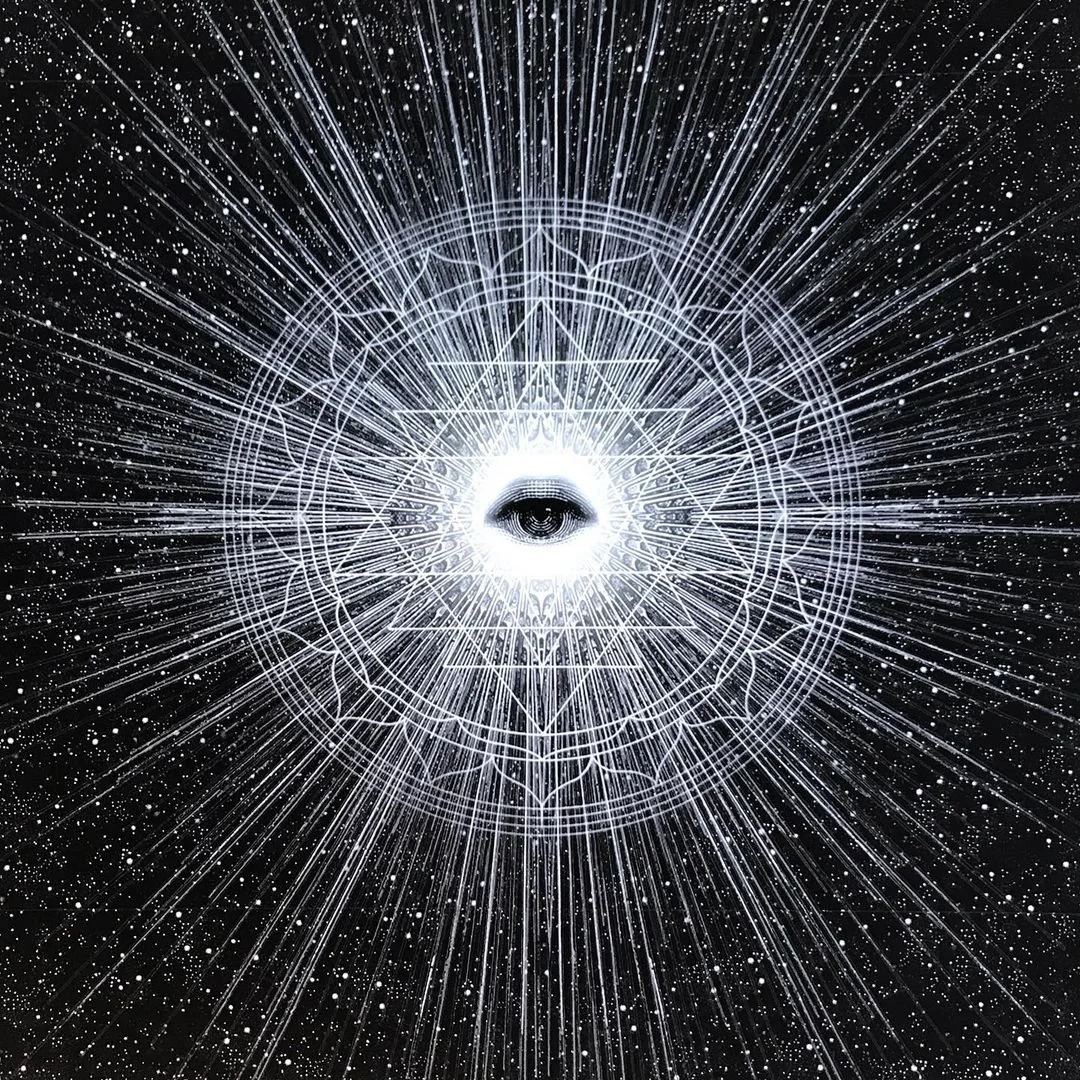
Real life is worse than any movie. The scale of the atrocities of a “typical” folkloric werewolf is dozens, maybe hundreds of innocent souls, for he attacks selectively, individually, and at special times. And the bloodthirstiness of the Russian ghoul has no bottom at all. Those who have a conscience have a limit. For the Ghoul, “it sank” in 2000, which he admitted with a smirk. The villains of fairy tales are no match for the Russian ghoul. He seems to dream of surpassing Stalin and Mao by keeping an imperial count of tens and hundreds of thousands of lives, even millions, if he is allowed to. His omnivorousness is remarkable — if no one else is available, he devours his own people, for that is his ghoul nature.

That is not to say that no one can see the essence behind his lean shell, his brash rhetoric, and his insinuating manner. But many intelligent people, including leaders of Western powers, either naively failed to notice the alarming signals, or fell in love with the PR image of the male hamadryl, or in horror tried to satisfy his boundless hunger with small offerings.

In 1856 Abraham Lincoln said: “You can fool all the people some of the time, and some of the people all the time, but you cannot fool all the people all the time.” Truth is not a submarine; eventually, it comes to the surface. This year the world saw the Russian ghoul for what he is — with his ice-cold eyes, skewed jaws, and skull bursting with hatred for life in general. Whether the world community has had enough of the revelation to sober up is the question. Today one hears calls to “save face” (to whom?!) to the beast. One has to believe, if not in people’s sanity, then at least in their instinct for self-preservation.

Yours sincerely,

-Alexander


You can help Ukraine defend itself and the World from Russian aggression here.


As a business therapist, I help tech founders quickly solve dilemmas at the intersection of business and personality, and boost company value as a result.

A vacation from yourself by Alexander Lyadov

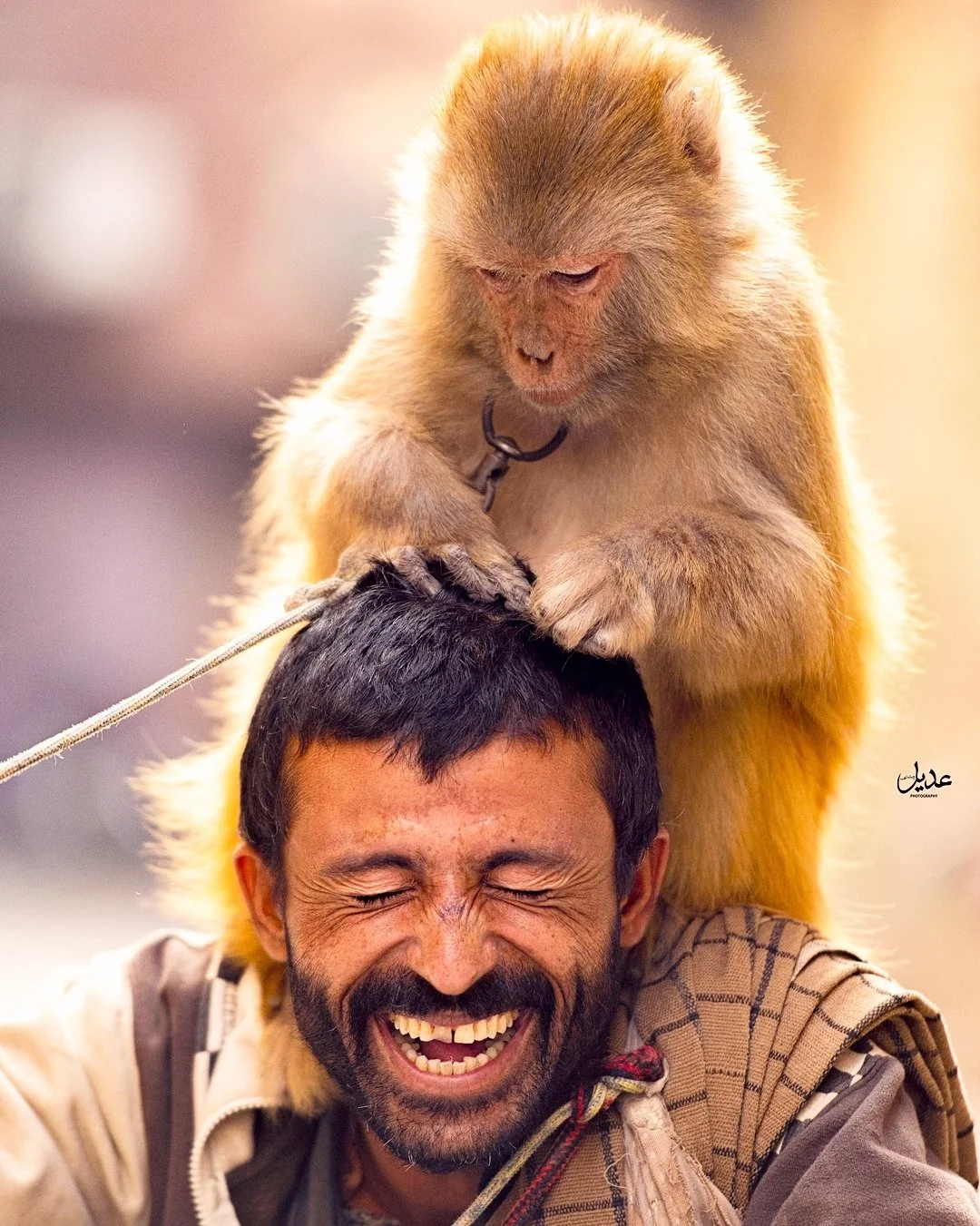
Sometimes, during business therapy sessions with overseas clients, they suddenly listen in and ask anxiously, "What's that sound? Is that an air-raid siren?" I nod my head affirmatively and hurry back to their business. Why? A job I love is the best way to forget about whatever is complicating or poisoning my life.

Eugene Gendlin, founder of the Focusing method of psychotherapy, used to say, "The therapy is a vacation from myself. Truly, time with a client is a unique opportunity not to think about one's anxieties and hardships. If it had only been my wish, it would have been difficult to fulfill, as it is when you can't sleep despite trying. Fortunately, one hundred percent focus on the client's needs is a basic requirement for successful therapy. Whether I want to or not, I have to. So, when I give myself wholly to working on a client's request, I harmonize my own life at the same time.

The ideal is to reach a paradoxical state. On the one hand, the therapist must disappear so as not to interfere with the process inside the client with his "impurities" (emotions, biases). On the other hand, as the Other, the therapist must be clearly present in order to speed up the transformational process. To be and not to be at the same time, to help without helping, so that the solution to the problem will be born by itself.

Yours sincerely,

-Alexander


You can help Ukraine defend itself and the World from Russian aggression here.


As a business therapist, I help tech founders quickly solve dilemmas at the intersection of business and personality, and boost company value as a result.


Spectral problem-solving by Alexander Lyadov

“The easiest way to solve a problem is to deny it exists” — said Isaac Asimov, biochemist, writer and science popularizer. And the bigger the problem, the more desperately we want to forget about it. This is where the magical thinking of a child comes in, hiding with his head under a blanket, supposedly making monsters roam around the bed in vain all night long.

As a rule, it is uncertainty that infinitely inflates the problem. The imagination readily paints the most negative and hopeless scenario, discouraging the will to fight. A person’s life turns into a gloomy fairy tale, where it is urgently necessary to get the magic cure, but there is absolutely no idea where and how.

The paradox is that sometimes the solution is right at hand. And the more impregnable the problem, the more vulnerable it is, as Odysseus proved to the one-eyed Cyclops. You just need to find the right point of force. By the way, it doesn’t take much at all.

Curiously, there is a spectrum in front of us. On the left edge, the problem is “solved” by denying it altogether. And from the opposite right edge, the problem is eliminated by itself, if the necessary and sufficient conditions are created. Notably, the options in the middle of the spectrum require a significant investment of energy, time, and money. In contrast, in terms of resources, the solutions at the edges of the spectrum tend toward zero. But since negation is a pseudo-solution, it only makes sense to aim at one extreme. The process of finding a solution is simplified when there is an ideal.

Yours sincerely,

-Alexander


You can help Ukraine defend itself and the World from Russian aggression here.


As a business therapist, I help tech founders quickly solve dilemmas at the intersection of business and personality, and boost company value as a result.

Self-discovery by Alexander Lyadov

Whether it's a conflict in business or an argument in a social media, it's easy to let your impulsive emotions run wild. They are as uncontrollable as the gag reflex. An attack of “righteous” anger, irritation and hatred overwhelms the brain, chattering it in the skull like balls in a lottery machine. At that moment, some mighty force takes possession of man, subjugating his will to itself. Enslavement to passions, demonic possession or acting out — whatever you call the phenomenon, the result is dire for all involved.

I remember once on the road, some car and I started cutting each other off in retaliation. The fantasy quickly inflamed the misunderstanding into a Sicilian vendetta. Enraged, we parked and strode out of the cars for the “duel.” But having met not a demonic image, but a living person, we sobered up from the absurdity of the situation and, in embarrassment, dispersed.

There are different ways to confront these forces: ascesis, prayer, meditation, sports, psychotherapy, etc. It seems to me, technically, common is to create distance — yes, IT is there, but so are YOU. By making passion the object of exploration, we reclaim the lost power back.

But why did we succumb to the impulse in the first place? A wise man gave the thought, “The only roughness to cling to is the Ego. Excessive preoccupation with one’s own needs and inflated self-esteem is a sore point that, no matter how careful you are, you can’t help stepping on. Everyone has it at a very specific point. It is clearly indicated by your explosive overreaction to a relatively small stimulus. And the analyst’s eye will even notice the deeply hidden pleasure in allowing yourself to get off to the fullest. In the heat of the moment, you can’t realize such subtleties. You need a “laboratory,” where a specialist or group in a trusting environment can help you experience, understand, and internalize the lesson you have learned.

Sincerely yours,

-Alexander


You can help Ukraine defend itself and the World from Russian aggression here.


As a business therapist, I help tech founders quickly solve dilemmas at the intersection of business and personality, and boost company value as a result.


Dog Life by Alexander Lyadov

My dog has a new ritual. More accurately, an addition to an old ritual. Before I pour the food into the bowl, it has always been important for him to lick the feeding hand three times. What’s new is that while he’s waiting for the command “Eat!”, all of a sudden he started giving me a paw on his own. At first I thought: “How cute is that!” but then I wondered about the meaning. Today I decided to see what he would do if I practiced his stamina by dragging out the long-awaited finale. The dog was surprised at first, then raised his paw. Seeing no success, he did it again and again. Now his action no longer seemed cute, rather it was an impatiently demanding gesture: “Master, jokes aside, let me eat!” It became clear that the clever dog invented all this with one purpose — to influence his master to get dopamine ASAP. After all, the city dog’s most important values in life are food, walking and play.

Of course, the 26,000 human-dog cohabitation is no trifle. Involuntarily everyone will study the psychology of the other side. But I was struck by the “discovery” that even an animal tries to take control of a vital process. The dog doesn’t go into a stupor or look for excuses for his passivity, but takes the initiative in his paws and puts the experiment on me. If my response accelerates the achievement of his metrics, the innovation is fixed as an updated status quo. Despite his complete dependence on his master and the difference in intelligence (debatable), the dog relentlessly tries to hack me to improve his life. This attitude is reminiscent of the characteristic of real entrepreneurs from investor Paul Graham — relentless resourcefulness. In that sense, my dog is an entrepreneur from nose to tail.

Frankly, I’d like to act the same way whenever circumstances, the system, or someone proves to be stronger than me by an order of magnitude. Without unnecessary pauses, immediately proactively look for a hack, a loophole, a way out. To create a new degree of freedom where there doesn’t seem to be one.

Sincerely yours,

-Alexander


You can help Ukraine defend itself and the World from Russian aggression here.


As a business therapist, I help tech founders quickly solve dilemmas at the intersection of business and personality, and boost company value as a result.


Life without fire by Alexander Lyadov

I was once struck by the short story “To Build a Fire” by Jack London. The main character is traveling with his dog through northwestern Canada on a very cold day (-59 °C). One day the traveler falls knee-deep in water. He recalls an old man who warned him that no man should travel alone in the Klondike if the temperature is below -46 °C. Further events illustrate why. I won’t spoil it — the story is too good.

Only a city dweller spoiled by the benefits of civilization could come up with the absurd idea that nature is a kind and affectionate mother. Sitting at a laptop in a cafe or strolling along the paths of a park, it is easy to fall into the illusion that the world around us unconditionally loves us and longs to make us happy. Nothing could be further from the truth. Nature doesn’t care about us. It will bite, trample, and swallow anyone who lets their guard down and is naive about it. Our ancestors understood this and therefore made heroic efforts to fence off its ferocity with a high and reliable “fence”. Our usual parks, gardens and even forests are spaces of pacified chaos, where everything dangerous is etched, domesticated or banished away. Whole generations of people grow up in the “gardens of paradise” of civilization, taking the safety and benevolence of their environment as a given.

So when such a person sees nature as it is — bloodthirsty, unforgiving and unjust — he instantly has an epiphany. The task of “surviving at any cost” becomes central. Only in the safe comfort of the “cave” can one ponder whether nature is mother or stepmother. An encounter with reality can occur at any moment, whether it is an abnormal snow storm in New York, a carelessness in the mountains or the forced landing of a tourist plane in the taiga.

However, the greatest revelation awaits someone who has been convinced of the good nature of all people, especially himself. There is a dark underbelly in every human being that neither he nor those around him are aware of. The encounter of careless naivete with this “beast” leads at best to PTSD. So what to do? Open your eyes wide and voluntarily take the feasible steps to discover the true nature of the world, people, and yourself.

Sincerely yours,

-Alexander


You can help Ukraine defend itself and the World from Russian aggression here.


As a business therapist, I help tech founders quickly solve dilemmas at the intersection of business and personality, and boost company value as a result.


What’s in the bush? by Alexander Lyadov

When a leopard sneaks up on an antelope, it tries to blend into the landscape. Although the prey regularly scans its surroundings, hunger causes it to lower its head into the grass. This gives the predator the opportunity to move even closer. And then a little more. All the way to a devastating attack.

The ability to recognize danger where there seems to be none determines the survivability of a particular animal on the savanna. When the threat is obvious, it’s usually too late. Therefore, the peripheral eye of the antelope does not look for the leopard itself, but for a vague hint of all predators in general. The brain is able to catch an “unnatural” fluctuation of a fragment of the environment to raise its vigilance and freeze. If there are no more strange deviations, the antelope will decide, “False alarm.” Probably a mistake. The predator may have more patience to remain motionless. The animal that is more sensitive in recognizing patterns of abnormal signals here and there will pass on its genes to its offspring.

n this sense, it is easier for animals than for humans, because they fully “trust” the instinct that there is Something in the bushes. We humans put a lot of effort into stabilizing our world and making it as safe as possible. As a result, our vigilance is atrophied and our complacent minds devalue the “primitive” instinct. Until force majeure strikes. One day a cataclysm happens, knocking the ground out from under our feet. Then everyone, against his or her will, enters the first grade. In this school of life, the worldview is rebooted and trust in oneself quickly returns. More precisely, to that unknown part of yourself that sleeps half-awake and whose primary function is to protect you. Over millions of years, this tool has evolved into perfection. Why give up an important part of yourself? Instead of “either-or,” wouldn’t it be better to choose “and-and”?

Yours sincerely,

-Alexander


You can help Ukraine defend itself and the World from Russian aggression here.


As a business therapist, I help tech founders quickly solve dilemmas at the intersection of business and personality, and boost company value as a result.


Are there resources or not? by Alexander Lyadov

“A resource is material which is useful given some knowledge,” said “science communicator” Brett Hall, reflecting on the books of physicist David Deutsch. Take aluminum, for example. It’s a wonderful structural material. But our forefathers couldn’t use it, even though it was always under their feet. In terms of occurrence in the Earth’s crust, it ranks first among metals and third among the elements (Wikipedia). However, there is no reliable information about the production of aluminum until the 19th century. In nature, aluminum, due to its high chemical activity, occurs almost exclusively in the form of compounds. It was mankind’s accumulated knowledge that allowed Danish physicist Hans Ersted to transform worthless matter into a valuable resource in 1825.

But this insight is also applicable on a broader scale, whether micro or macro. For example, to the novice wrestler, every bout looks like a daunting clump of chaotic movements, while the experienced athlete sees an endless stream of opportunities to apply technique #1, 2 or 100. Similarly, the storm of force majeure events throws the top manager into shock and anabiosis. While the entrepreneur immediately shakes off the stress, like a dog after a fight, and begins to figure out how to turn fallen trees and debris into building blocks. Figuratively speaking, the ability to see light where others see only darkness distinguishes a professional in any field — military, engineer, entrepreneur or athlete.

By the way, this is why we should not succumb to the apocalyptic sentiments of those who yell, “Oh, that’s it! Resources are about to run out. Our planet is doomed.” This is the narrow view of people who do not understand the power of creativity and invention. There are innumerable and inexhaustible resources hidden all around us on Earth and in space. Exponential increases in knowledge will gradually open up access to them. We need to trust a little more in the potential that is hidden within us.

Yours sincerely,

-Alexander


You can help Ukraine defend itself and the World from Russian aggression here.


As a business therapist, I help tech founders quickly solve dilemmas at the intersection of business and personality, and boost company value as a result.

Still no transformation? by Alexander Lyadov

Today I did not find the coffee can in its usual place — on the kitchen table. Then I was surprised to find it on the shelf above my head — where we used to keep coffee until six months ago when I said: "Since I make coffee twice a day, let the can be on the table at hand." It would seem that 6 months is enough time to form a new habit, but no, the mind didn't even notice how the old habit took over. This is a trivial example, but I observe a similar phenomenon in business too.

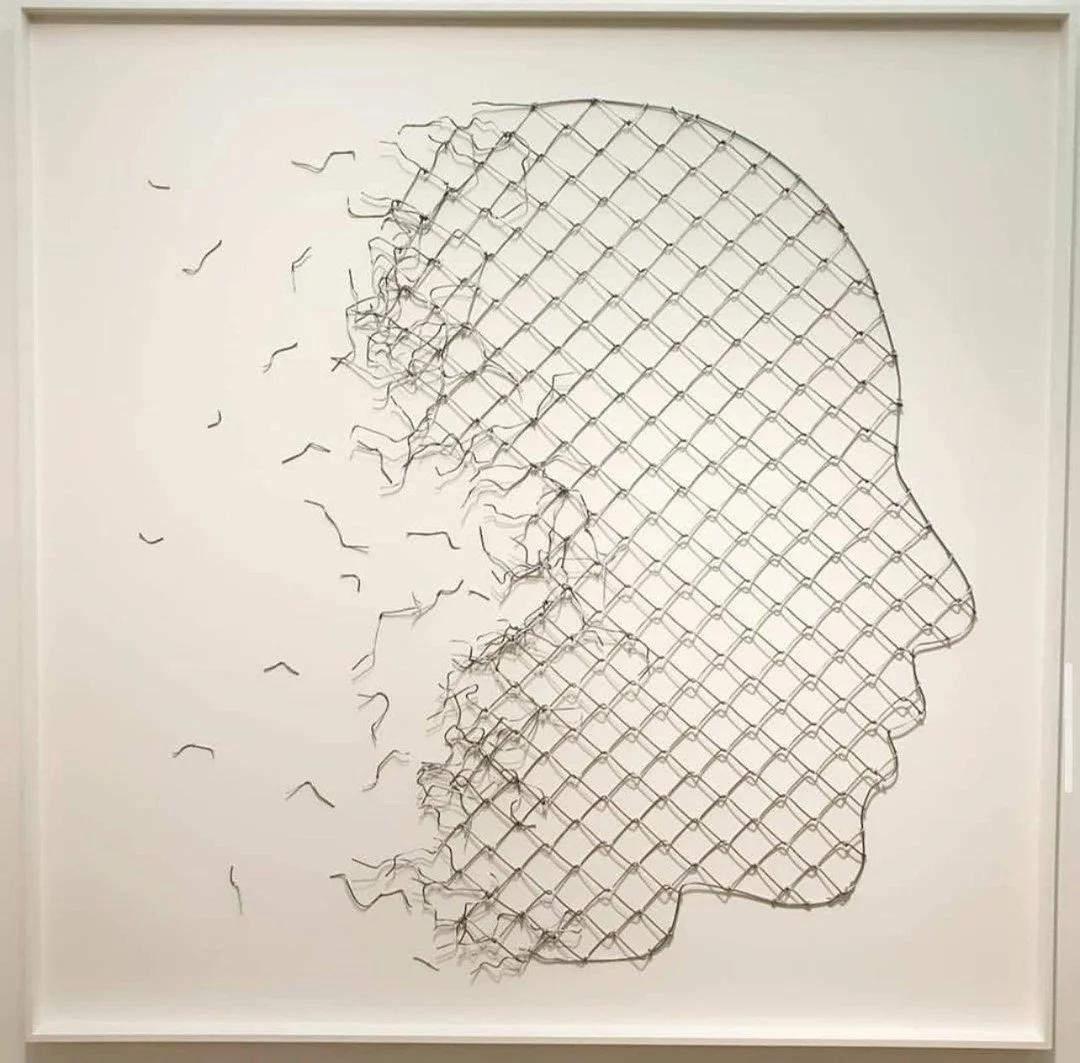
Let’s say the founder has a clear vision of a radical transformation that will take the company from point A to the desired point B. Such a vision is an achievement in itself, since most players in any industry don’t have one. Unfortunately, it is not enough. For company behavior, which means employees, to change significantly, they need to voluntarily “buy” this vision. Which is possible if the vector of their personal development and the vector of the company’s growth coincide, as fellow travelers on some part of the road.

But the very fact that the company needs a reboot confirms that the old “modus operandi” has brought it to a dead end. That is to say, for years a team was formed of those who wanted to or were not against moving toward A. Even if someone secretly dreamed of B, there were only a few of them, and secondly, they had to adapt to the dominant paradigm of A or leave. It is obvious why transformation attempts so often fail - the majority outright rejects them, while the minority yearns for them with all their soul, but the learned inertia of behavior is already too strong. By the way, the founder is also human, and sometimes his actions (A) contradict his intentions (B), as the coffee situation illustrates above.

The only way to reverse institutional inertia is to create “islands of revolution” that will seduce, infect or inspire new behavior in everyone else. How? If you’re interested, I’ll tell you sometime.

Sincerely yours,

-Alexander


You can help Ukraine defend itself and the World from Russian aggression here.


As a business therapist, I help tech founders quickly solve dilemmas at the intersection of business and personality, and boost company value as a result.

Catalyst by Alexander Lyadov

If I were to show you the stacks of drafts and calculate the time I spent trying to solve my dilemmas, you would be horrified, “No way!” At home at my desk, rushing to a meeting, or on vacation while driving, I was trying to get out of yet another web I was stuck in. The process was like the unraveling of koans that a Zen master gives to a disciple. Unlike the monk, I did not attain the Great Satori, but there were tangible, though unexpected, benefits to be gained from years of self-torture.

Firstly, the range of tools I now have significantly expanded, although I did not set such a goal. Second, it has become clear where, when and what tools should and should not be used. Third, it became clear that, paradoxically, Problem = Solution. One easily transmutes into the other, if the necessary and sufficient prerequisites are created or are ripe for that. When in a deadlock, the first impulse is to look outside for the most promising resources in terms of efficiency and guarantees, while it is often enough to change the point of application of forces which are already available.

In fact, the latter is the greatest challenge. After the fact, a person is amazed: “Why did I ignore so obvious things for so long?”. The fact is that changing the angle of view is not so much a question of choosing a tool as it is of parting with hidden beliefs that are extremely dear to us for some reason. And how do we find what our eyes are adamantly unwilling to see? In chemistry, a catalyst is used to speed up a reaction. In business, a specialist (advisor, coach, psychotherapist) or fate (chance, providence, fate) comes in handy to accelerate the transformation of beliefs.

Yours sincerely,

-Alexander


You can help Ukraine defend itself and the World from Russian aggression here.


As a business therapist, I help tech founders quickly solve dilemmas at the intersection of business and personality, and boost company value as a result.


The paradox of change by Alexander Lyadov

Often past achievements become the proverbial golden cage. Especially when the business model generates a stable cash flow. The founder had long understood that it was necessary to, say, develop the American market, but there were a thousand reasons, from not knowing English to operating routines, for not doing anything. Or the company’s development was hindered by a toxic partner, but you didn’t want to exacerbate the relationship. When there is an ambitious vision and no progress, there is dissonance within the founder, manifesting as lack of energy, depression, decision paralysis, conflict, and more.

Because of the war, the founder may find that he is left without assets, customers, and business processes. So the captain, after a shipwreck, looks longingly at the wreckage, nailed to the shore by the wave. But suddenly it dawns on him that it is now that he is truly free. There is nothing else holding him or her back. Fate forces him to break up with a partner, to experiment with a business model, or to end up in the United States. Yes, these changes took him by surprise and happened against his will. But the long-awaited decisions have finally been made, and it is a step forward.

Many religious figures and thinkers have noted that providence does not give us what we want, but what we need. In regard to life in general, it’s hard to accept this overly harsh thought. But in regard to business, it may be true. One founder told me: “I’ve had business disasters before where I thought, ‘This is the end.’ But then, after a while, I would admit, ‘How much this difficult period has made me and the business stronger.

By taking away one thing, reality gives something else in return. By gaining new degrees of freedom, the founder can chart a different route. That means, potentially, to realize his vision in seven years instead of ten, to scale not locally, but globally, so that eventually, in spite of the enemy, to build a prosperous world-scale business with the proud seal “Made In Ukraine”.

Yours sincerely,

-Alexander


You can help Ukraine defend itself and the World from Russian aggression here.


As a business therapist, I help tech founders quickly solve dilemmas at the intersection of business and personality, and boost company value as a result.

How it is by Alexander Lyadov

Regularly I meet cases in which there are two, three or more co-founders of a business between whom a conflict is quietly building up. However, no one in the company, including the client with the request, describes what is happening other than as "some misunderstanding", "there are disagreements" or "something incomprehensible is going on". In relation to the opponent the rhetoric is mixed - mostly polite acknowledgement of qualities useful for business, but through it now and then bursts, resentment, anger and disgust.

It seems to the client that the root of the problem is a particular person whose behavior is unacceptable. But often it turns out that it is about something else. The historical context seems to force people to act this way and not that way. But to understand this, one must first "get a grip" on the whole phenomenon. Remember how difficult it is to grasp something with your head turned back. Looking at the situation point-blank allows us to separate this phenomenon from the rest and to give it a name. This step in solving the problem seems nominal, but in reality there is nothing more important. It is no coincidence that the first line of John's Gospel is "In the beginning was the Word..." To accurately name something is to make it real by pulling a meaningful thread out of the primordial chaos.

The only condition is that the name of a phenomenon should reflect its true essence, without illusions, as it is. Then a paradox is observed - the problem is not yet solved, but the founder is palpably relieved. First, a vague and therefore frightening problem has taken shape. Secondly, it became clearer where to direct the efforts. This is how a hunter navigates a hot trail that anticipates his prey. Third, what had long matured and tormented the founder inside now lay outside under a microscope. A fascinating exploratory discovery lies ahead of him. An important discovery lies ahead of him. It's a rewarding process anyway.

Sincerely yours,

-Alexander


You can help Ukraine defend itself and the World from Russian aggression here.


As a business therapist, I help tech founders radically increase the value of their companies by accelerating key decisions at the intersection of business and personality.


What to focus on? by Alexander Lyadov

James Ashford, founder of GoProposal, a SaaS proposal service for accounting firms, told a story about the long-running rivalry between the Chinese and U.S. table tennis teams. Tired of losing, the American coach finally asked: “What are we doing wrong?”. To which the Chinese coach replied, “One thing. You keep trying strengthening your weaknesses. And we just strengthening our strengths”. I don’t know if that’s true or not, but it’s an important point. After all, in both business and sports, the topic of “What to focus on?” is often hotly debated.

I support betting on “strength,” that is, a gift, a predisposition, an aptitude. Why? The return on the effort invested is greatest. We tend to like what we do well and vice versa. It’s a spiral that leads upward to Olympus. Whereas the development of traits for which there is no natural inclination, although possible, requires a titanic effort. It’s like training a border collie or a wolf - the former catches the movement of your eyebrow, and giving commands to the latter is like talking to a brick wall.

That’s why, for example, judo has a special term Tokui-waza, which means signature move. Once he notices a technique that comes out organically and easily, the athlete can then grow that acorn into a powerful oak tree. As a result, opponents, even if they know the athlete’s technique, can’t do anything about it. If the gift is an uncut diamond, then Tokui-waza is a Koh-i-Noor diamond.

However, one should not forget about weaknesses at all. They must be strengthened, but only to the “hygienic” level specific to each industry.

Yours sincerely,

-Alexander


You can help Ukraine defend itself and the World from Russian aggression here.


As a business therapist, I help tech founders radically increase the value of their companies by accelerating key decisions at the intersection of business and personality.


Against the odds by Alexander Lyadov

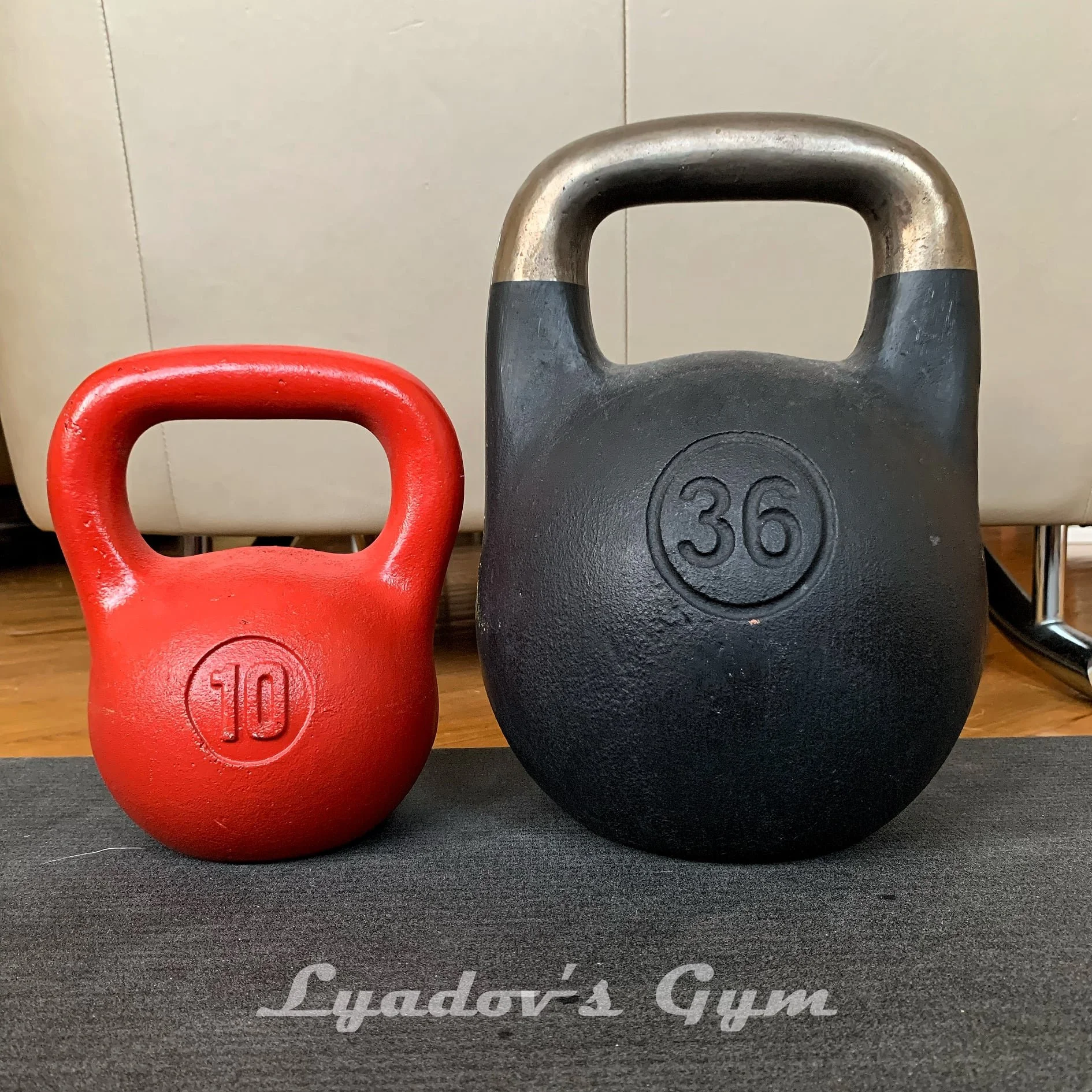
Quite often I meet friends and strangers who say or message me: "You know, thanks to that article of yours, I ended up buying kettlebells. I'm extremely happy about this, because progress is evident".

I wrote the article "Strengthening Quarantine" in March 2020, when the pandemic was unfolding in all its "glory. I wanted to share a simple and in every sense affordable means of preserving health, performance and strength that, despite lockdowns, literally anyone can have. It has now become clear that there can be many reasons for forced isolation. Epidemics, wars, natural disasters - reality never ceases to take us by surprise. However, quarantine, a closed gym or a curfew are not reasons to forget about yourself until life is back to normal. . With just a couple of kettlebells or a set of rubber bands in any room, you can fully exercise your entire body to be more prepared for force majeure and, importantly, to release excess stress.

It's no secret that the body, mind and psyche are fundamentally dependent on each other. By strengthening one, we strengthen the rest. And who knows, maybe having such a "gym" in your corner will make you train harder and more often. Nietzsche would have approved of this — that which has tried to weaken or kill us, eventually, will only make us stronger.

You can read the article "Strengthening Quarantine" here.

Yours sincerely,

-Alexander


You can help Ukraine defend itself and the World from Russian aggression here.


As a business therapist, I help tech founders radically increase the value of their companies by accelerating key decisions at the intersection of business and personality.


Gratitude by Alexander Lyadov

As a business therapist, I help entrepreneurs, my clients. But they also give me a lot in return. First of all, it's the insights we find together in the process of solving their difficult problems. In addition to the dopamine surge, my "scalpel" becomes sharper with each of our sessions.

Secondly, the many cases of companies of all different sizes, fates and industries, unobtrusively weave together into a stunning meta-pattern. This makes the subsequent puzzle solved faster. It turns out that the hundreds of clients I've worked with over the past 25 years, through me, are helping their colleague today.

Third, I draw inspiration from their real-life examples of how things can and should be done, especially in circumstances of overwhelming force. This reinforces my belief in how much a person is resourceful, resilient, and anti-fragile. As a result, I realize that I myself am capable of more. And then I pass on that belief in the superpower hidden in all of us through sessions, podcasts, articles and this newsletter.

Most importantly, clients multiply the Meaning in my life. Client appreciation reminds me that my contribution is definitely there and meaningful. As my grandmother jokingly and lovingly said when I diligently scrubbed the balcony as a child, "A cat wouldn't do that." After all, at a critical moment for entrepreneurs, I was the one who was there. In business, as in boxing or standup, in addition to expertise, timing decides everything.

I am grateful to Natalia Yaromenko, founder of the Beauty Tech Corporation for the wonderful review.

Sincerely yours,

-Alexander


You can help Ukraine defend itself and the World from Russian aggression here.


As a business therapist, I help tech founders radically increase the value of their companies by accelerating key decisions at the intersection of business and personality.


Energy of Void by Alexander Lyadov


Sometimes it happens that there is no energy, absobloodylootely. The simplest task looks like a monolithic Chinese wall. There can be many reasons for this, from stress and overworking to lack of sleep and illness. At this very moment, nothing can be done. To be exact, you can make a shift, but it will be ridiculous in terms of ROI. And most importantly, there is the risk of screwing up the task or injuring yourself.

At times like this, I draw my energy in an unexpected place-where there seems to be nothing. At home, I crawl into my favorite chair, put a sleep mask over my eyes, and turn on the sounds of “Underwater” on the Brain.fm app. Outside, I just look for a quiet corner of the alley, away from passersby and dogs. During day-long transformational sessions with clients, I sequester myself in a far room during a break. My goal is total isolation from the outside world for an encounter with the Void.

Prolonged isolation is known to be guaranteed to drive a person insane. However, like hunger or cold, in microdoses it is miraculous. Is there any other name for the transformation that takes place in just 15 minutes inside me? I come back different, energetic, calm and determined. There was no introspection, no breathing techniques, no sacred mantras - just being in touch with my body. What was going on reminded me of the “Lava lamp” - a decorative lamp that became super-popular in the U.S. in the 1960s (and later in the USSR). Which, by the way, is not surprising, because the bizarre play of paraffin “clouds” resembles the effect of taking psychedelics, in particular LSD. In the same way, fragments of my feelings, thoughts, and sensations arise out of nowhere and disappear into nowhere without a trace. The only constants are the fertile Void and my ability to observe this vortex. Paradoxically, this kind of doing nothing restores my efficiency the best. Will you try it today?

Sincerely yours,

-Alexander


You can help Ukraine defend itself and the World from Russian aggression here.


As a business therapist, I help tech founders radically increase the value of their companies by accelerating key decisions at the intersection of business and personality.


On your terms by Alexander Lyadov

“He learned a long time ago the basic law of survival: make the enemy fight on your terms, not his. These are words from James Clavell’s novel The Noble House, which I read before going to bed. In most aspects of life, you can see how right he is.

For example, exposure therapy is considered one of the most effective techniques in psychotherapy for treating all kinds of phobias, obsessive-compulsive disorder, post-traumatic stress disorder, etc. The essence is that the client comes into contact with the gradually strengthening source of the fear, choosing the workload that is feasible for him or her. And, most importantly, does it voluntarily, that is, not fear assigns the time and place of battle, but the client himself. There is a revolution in the way that power has changed hands. It is not that the client gets used to his fear or that the latter disappears somewhere - no, the client himself becomes bolder. In other words, his ability to act independently increases dramatically.

It doesn’t matter whether the fight is with the external aggressor or the inner fear. What matters is who dictates terms to whom - you or he. It’s never too late to make a “creative U-turn,” for fortunately this is the realm of personal assumptions and beliefs. Of course, “surviving on my terms” requires a preliminary clarification: “What do I really want?” Thus, survival depends directly on a hierarchy of values and personal meaning.

Sincerely yours,

-Alexander


You can help Ukraine defend itself and the World from Russian aggression here.


As a business therapist, I help tech founders radically increase the value of their companies by accelerating key decisions at the intersection of business and personality.


The skill of letting go by Alexander Lyadov

I don't know about you, but I have found it very difficult to let go of my past life. Maybe your business was booming, a wedding was performed, your health was restored, a trip around the world was planned, or, after years of construction, a house was completed. On February 24, much of what we held dear suddenly became distant, indefinable, or even gone. Mentally I understand that it will never be the way it was. But inside, there is still hope that with a little more patience, life will become "normal" again. Moreover, there is a tendency to recreate old habits at every opportunity, like trying to glue a priceless vase from the shards.

Of course, this is a dangerous illusion, I admit. First of all, because for many people, far more intelligent and informed than I am, the war was an unexpected event, accompanied by a shock. And the more unusual the phenomenon, the more the psyche makes an adaptation shift. A complete upgrade of the "operating system" is required so that the new knowledge of reality organically fits into the worldview of society or the individual. A survivor of war in any scenario is bound to become different. And here, in addition to Ukraine, the war affects almost all countries directly or indirectly. So the world is forever and radically changed. How exactly? Time will tell.

The point is that he who has not let go of the past has no future. Just as an experienced hunter does not feed his dogs before going into the woods, so a person should come to a meeting with novelty with an emptiness in his "stomach". I sincerely envy people who find it easy to start anything new. They rush through the jungle of life, jumping, like Mowgli, from one vines to another. Even in wrestling, I spend too much time clinging to an unpromising position, instead of letting it go and moving on. It is very sad, frustrating, and scary to lose what I have right now in my hands. But trying to hold on to the past is even more dangerous-it will go away anyway, while the energy is wasted.

It is extremely tempting to push, force, or seduce myself in some way to catalyze the parting of the old to meet the new. But here, too, I have to admit that this process has a different pace for each person. After all, isn't it one of the lessons of life not to try to speed things up, but at the same time not to hinder what cannot not happen.

Sincerely yours,

-Alexander


You can help Ukraine defend itself and the World from Russian aggression here.


As a business therapist, I help tech founders radically increase the value of their companies by accelerating key decisions at the intersection of business and personality.