
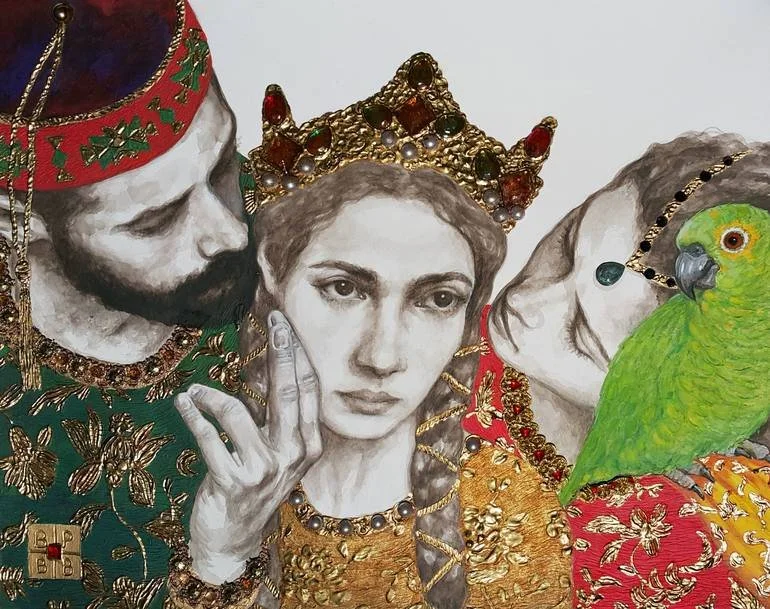
There are two ways to help someone.
The first is to force a saving solution — fast and efficient. Crash, fire, heart attack, fall under ice. Every second counts. The spot calls for guts and even rudeness, right?
Yes, but only if the person is unconscious or a child. Both of them will later thank the saver. Maybe.
But what if adults in full awareness are the ones suffering? Force your help on them, do it often — and it will destroy them. The rescuer’s motive, kind or cruel, doesn’t matter. The result is the same.
But what if grown folks suffer wide awake? Force help on them, do it often—this will kill them. Savior's motive, kind or cruel, doesn’t matter. The end is the same.
Violence contradicts freedom, and that means the will and choice to live.
An adult stripped of freedom turns into a child, an animal, a machine. Such devolution is unbearable torture, especially when wrapped in words of love.
The second way of helping leans on a person’s freedom. You have to see the uniqueness of the individual-in-his-situation. Sometimes it’s right to offer options, and sometimes it’s wiser to shut your own mouth.
It’s clear that the second way is far harder. Instead of a standard “victim type,” you face the eyes of a Person. Instead of a ready-made template — an emergent solution, something that appears between you.
If the second way feels close to you, congratulations. There are very few like you.
Guardians of others' freedom and your own.
Yours sincerely,
-Alexander

As a business therapist, I help tech founders quickly solve dilemmas at the intersection of business and personality, and boost company value as a result.
Stuck? Your business grows when you do. I’m your business therapist to guide your shift. See testimonials here. Ready? Book your Catalyst session.