
In search of lost energy by Alexander Lyadov

The problem of professional burnout is everywhere. I too have experienced burnout a couple of times. I’ve also seen it regularly in managers, CEOs, entrepreneurs, athletes and artists. The usual advice in such cases is to take a break or change the context. In mild cases this does help. But what do you do when it’s like a scorched earth inside a person? When not only is the fuel tank empty but the battery is dead (or maybe ruined?). Outwardly the Founder may look fine looking and move forward like a gliding aeroplane when both its engines have failed. The form remains, but the essence, i.e. the vitality is gone. He who has been in that state would not wish it on anyone.

But what is vitality? Why is this vital energy pouring out of some people like a fire hose, while others have it only in the morning, like dew on the lawn? Why one is vigorous even when he gives out a lot, and the other loses energy even when he saves every drop? My hypothesis is that Vitality is proportional to Interest. It’s not about what seems important, sensible, cool, worthy or useful to you. It’s about your personal underlying interest in something, which sometimes you don’t even understand yourself. But it’s not about the reasonableness or relevance of the interest, it’s about its existence. It can be felt unmistakably in the body, like a hunger or a sneeze. Either you have interest (in a wide range of values) or you don’t.

As long as a man is alive, interest is capable of manifesting itself in him. Yes, if you force yourself for ten years to do a boring or annoying job in a society of people alien to you, your soil will burn out several meters deep. Your black earth becomes a wasteland where nothing else can grow. This means that it may take years for nature to repair the damage you’ve done to itself. But even when nothing seems to be happening, and only the wind is chasing the tumbleweed, it is not so, for the process of soil regeneration is happening non-stop inside you.Surely it is better not to sit sadly on a stump, but to go and help nature. Your lost interest must be found. And immediately your vitality will begin to flow.

Yours sincerely,

-Alexander


You can help Ukraine defend itself and the World from Russian aggression here.


”Who are you and what do you do?"
As a business therapist, I help tech founders quickly solve dilemmas at the intersection of business and personality, and boost company value as a result.

"I have an important business decision to make. Can you help me?
Reserve a time on my calendar that is convenient for you to meet with me. We'll clarify your request and discuss options for how you can help.


Strategy: red flag #1 by Alexander Lyadov

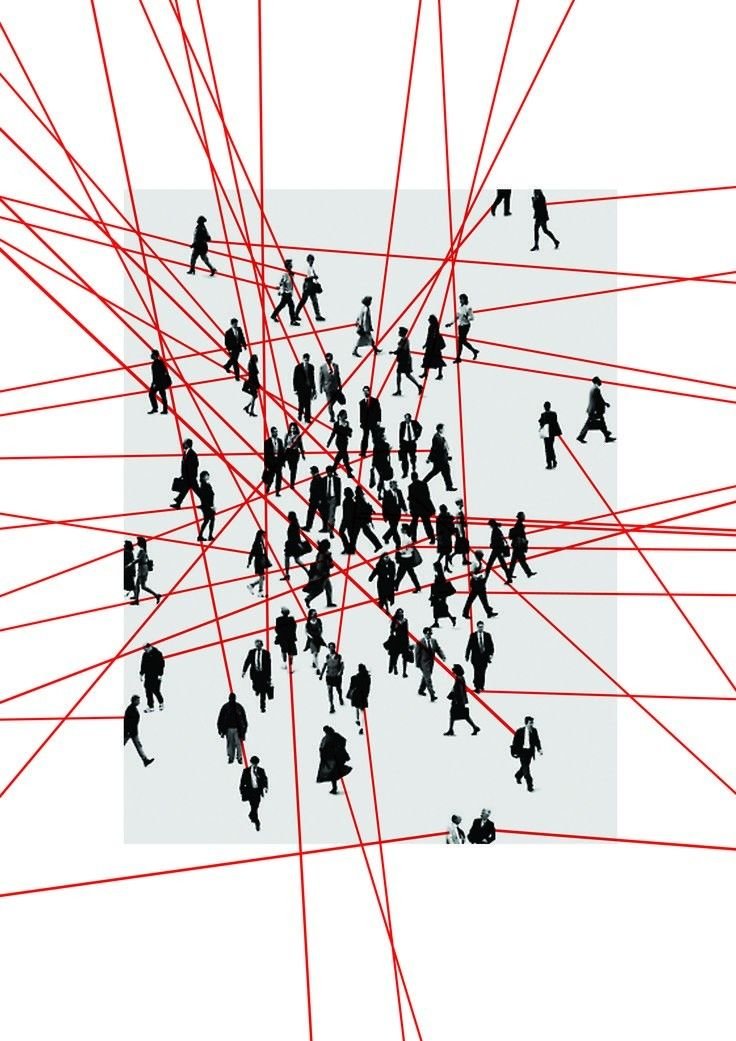
Many people and red lines

Unknown artist

How do you know if a company is not taking strategy seriously? Look at who is responsible for the process. For example, if the selection of the strategy session moderator is handled by the HR manager or assistant, this is a red flag. Why?

The very name “strategic” implies the fundamental nature of the decisions made during the session, through which the company will make a dramatic U-turn or breakthrough. That is, it is about identifying rare opportunities that can propel the business into a new orbit and neutralising the highest risks that could kill it. In essence, strategy determines whether the value of a business will go up or down. And who in the company is ultimately responsible for the increase in market capitalisation? Correct, the hired CEO if there is a board and/or shareholders, or the founder himself if he is the CEO. Delegating one of the most important processes to a lower level or two, the CEO de facto admits that the strategy is not important to him personally. At least he does not care much about the product that the group of assembled managers will come up with.

Thus there is a substitution of notions and the planned event should more correctly be called a tactical session, brainstorming, mediation or debate, but it is a laugh and a sin to call it a strategic session. After all, confusing the basic concepts is extremely dangerous because it creates a collective illusion that the company has a strategy and that employees are supposedly included in the process. It is a kind of self-gaslighting — a form of psychological abuse, as a result of which the individual (here the collective) is tormented and doubts the adequacy of their perception of the reality around them. Employees are forced to achieve real results in the realm of crooked mirrors. Obviously, the efficiency of their work will be low. And this is inevitably reflected in inflated costs, low profits and slow growth. It may seem like just a game of words, but there's a price to pay. Sooner or later the reality will punish you harshly for lying, especially to yourself.

Yours sincerely,

-Alexander


You can help Ukraine defend itself and the World from Russian aggression here.


”Who are you and what do you do?"
As a business therapist, I help tech founders quickly solve dilemmas at the intersection of business and personality, and boost company value as a result.

"I have an important business decision to make. Can you help me?
Reserve a time on my calendar that is convenient for you to meet with me. We'll clarify your request and discuss options for how you can help.


Who really holds you back? by Alexander Lyadov

Up to an average size, a business is a reflection of the founder's personality. The market, laws or global cataclysms are of course also significant, but they have roughly equal impact on all players. Therefore, the potential of a particular business is limited to nothing more than a combination of the founder's strengths and weaknesses. It's like factory firmware, which prevents a BMW from making a sharp acceleration, no matter how much you step on the gas, though the engine has power reserves.

A creative founder, for example, instantly catches promising new ideas and trends that can multiply the value of a business in a few years. However, his irrepressible thirst for novelty prevents him from turning the plucked apple into jam - the entrepreneur throws away the bitten fruit, because his hand is already reaching for the quince. The situation repeats itself again and again year after year. Standing on the rotting fruit, the Founder looks around in confusion: "What is wrong with me? Why am I losing as much as I am finding?

The other situation is when all the processes are set up and structured so that the business runs like a Swiss watch. However, despite controlling the metrics to the second decimal place, the company is barely growing. The entrepreneur looks everywhere for promising ideas, employees and customers, but they are either rare or do not take root, like seeds planted on rocks. The root cause is different, but the financial outcome and the founder's confusion are the same as in the first example.

Is it a gloomy picture? Well, it all depends on the point of view. Gloomy is when you don't know if there's a black cat in the dark room. And if you know where the "bottle neck" is, then, in fact, there is no shortage of opportunities. Virtually every business, excluding the very neglected, can become much more stable, bigger and profitable. But on one condition - the founder must admit to himself that he (or she) is the main limitation. From there, it's simpler - change grows like a snowball. Following the transformation of the owner's attitude, the business begins to improve right before your eyes.

Yours sincerely,

-Alexander


You can help Ukraine defend itself and the World from Russian aggression here.


”Who are you and what do you do?"
As a business therapist, I help tech founders quickly solve dilemmas at the intersection of business and personality, and boost company value as a result.

"I have an important business decision to make. Can you help me?
Reserve a time on my calendar that is convenient for you to meet with me. We'll clarify your request and discuss options for how you can help.

Every year you get better by Alexander Lyadov

"Every year you get better," said an old client after a session today, who approached me again after a couple of years. Although the praise is nice, I realise that the credit is not so much mine as it is my clients'. Each one of them influences my expertise and even my personality in one way or another.

If one has managed to build a business, it is impossible to be mediocre. The sea of problems to be solved revealed his or her authenticity. And although they turn to me for radical business change, I change too as a result of our collaboration. I'm inspired by the ambition of the founders, learn from their perseverance and am infected by the speed with which they get things done. Reflecting on their dilemmas, I have to rethink my experiences again and again. The variety of industries, the diversity of circumstances and the range of their problems turn my mind into a central library. All I have to do is arrange the books in alphabetical order on multi-storey shelves.

Watered by client cases, the tree of my expertise grows by itself from year to year. This is not coquetry, as I know what my true merit is. The fact is that I have managed to find, or rather create, my own business - Business Therapy. It’s been a long, difficult and bewildering journey that I would have been happy to shorten by 20 years. But Providence knows best - perhaps otherwise business therapy would not have been so effective.

Yours sincerely,

-Alexander


You can help Ukraine defend itself and the World from Russian aggression here.


”Who are you and what do you do?"
As a business therapist, I help tech founders quickly solve dilemmas at the intersection of business and personality, and boost company value as a result.

"I have an important business decision to make. Can you help me?
Reserve a time on my calendar that is convenient for you to meet with me. We'll clarify your request and discuss options for how you can help.


Is manipulation necessary in sales? by Alexander Lyadov

Manipulative persuasion techniques in sales are an expression of weakness. In essence, the salesperson turns to violence because, in reality, the customer does not want his service or product. Or he has no idea how to convey the benefits to an uncomprehending and stubborn customer. When it comes to small, one-off transactions, deceptive tricks can still be tolerated. But the potential of most business relationships unfolds over the long term. So to manipulate the customer today is to shoot yourself in the foot. After all, one never forgives violence.

Unless the salesperson is a fool or a psychopath, there is only one good reason to cut off his future cash flow — extreme impatience. That is, the seller is under intense pressure from outside (boss, mortgage, loss) and/or inside (greed, fear). Even if there are other ways to close the deal, in this state, the seller will dismiss them if there is no guarantee of getting the money now. It's understandable why books and courses on tough negotiations, the use of NLP and hypnosis in sales are so popular. The higher the level of desperation, the more likely it is that the person will bite on the promise: "Do this and you will get results". It is like being seduced by a drug: 'This powder contains heavenly pleasure. The consequences? Don't think about them.

Nothing will change for the better as long as the salesperson is impatient. You must change your attitude to despair so that its jaws open. The resulting gap will allow you to ask yourself and find the answer to the question: "For what?". By drawing strength from the meaning, it becomes possible to learn an alternative way of selling anything to anyone. It is not difficult, but it requires a quality that has been in short supply - patience. First of all, patience for yourself, and then patience for the client. But the reward is worth the effort. Now you no longer have to convince anyone. Sales happen on their own, in the course of a conversation with the customer. What's more, customers voluntarily and willingly tell you what their needs are and tell you how to change your product features, distribution or price. All you need to do is forget yourself for a moment, genuinely want to understand your customers and ask the right questions.

Yours sincerely,

-Alexander


You can help Ukraine defend itself and the World from Russian aggression here.


”Who are you and what do you do?"
As a business therapist, I help tech founders quickly solve dilemmas at the intersection of business and personality, and boost company value as a result.

"I have an important business decision to make. Can you help me?
Reserve a time on my calendar that is convenient for you to meet with me. We'll clarify your request and discuss options for how you can help.


Tension in the company? Good by Alexander Lyadov

A company should be constantly humming with tension, like the sails of a brigantine or a transformer box. A lack of tension is just as damaging as a full-blown conflict. Well, except for psychopaths, nobody usually likes conflicts. But many people dream of working in peace, though it’s an illusion, a fantasy, a myth.

Peace is useful for rare moments of self-reflection, idea generation or meditation. The rest of the time, decisions have to be evaluated, made and implemented. And if a company has ambitious goals, uncertainty is very high at every stage of this process. This means that no amount of IQ or experience will protect against disaster.

But you can raise your chances of success by clashing different ideas. Note that we are talking about a clash of ideas, not of people, which is rare. To paraphrase the mathematician and philosopher Whitehead, the goal is to let your ideas die instead of you. But in an external market, such experience comes at a high cost, so you have to organise a Darwinian self-selection of ideas internally.

So tension in the company is not only inevitable, it is desirable. Harmony is about consciously creating tension, not avoiding it. For this to happen, a company must have a healthy culture. This means that the value is the inclination to truth, that is, the desire to understand reality as it is.

Yours sincerely,

-Alexander


You can help Ukraine defend itself and the World from Russian aggression here.


”Who are you and what do you do?"
As a business therapist, I help tech founders quickly solve dilemmas at the intersection of business and personality, and boost company value as a result.

"I have an important business decision to make. Can you help me?
Reserve a time on my calendar that is convenient for you to meet with me. We'll clarify your request and discuss options for how you can help.

The root cause of problems by Alexander Lyadov

You either adapt to chronic problems so that you stop noticing them, or you try to get to the root cause if you are sick of them. For me, it’s climber/golfer’s elbow or medial epicondylitis, which occurs in 0.4-1% of the general population, 4.3-10% of industrial workers, 12% of professional golfers and 45% of handball goalies. Digging through the medical literature, I was surprised to learn that the cause may not be in the forearms or elbows but rather a weakness in the muscles of the thoracic back or an injury to the cervical vertebrae (C6 and C7). This sounds strange, because in everyday life elbow pain occurs when you hold a plate with your fingers or turn a door handle. During recovery, the first thing that comes to mind is to strengthen the ligaments and muscles in the fingers, palms and forearms - but certainly not in the shoulders or back.

The thing is that human mind loves to take apart any solid object for its parts. In principle, it is a useful property, but sometimes it harms us. So, for example, in some “progressive” circles they say, why do we need body at all, the main thing is to save brain. But the premise that the brain and body can be separated is false. Stanford neuroscientist Andrew Huberman  explains  that the eyes are an extension of the brain, and that the nervous system literally permeates the entire body from head to toe. Anatomically and functionally, a set of interconnected nervous structures provide regulation and coordination of the body’s activities, and its interaction with the environment. In other words, the interconnection of everything with everything is primary, while differentiation, dissociation and fragmentation occur later. The lungs are inconceivable without air, and the elbow without the entire kinetic chain. In my case, perhaps a long-standing neck injury and underdeveloped back muscles during jiu-jitsu bouts forced the forearms to strain excessively to compensate for the deficit.

Curiously, the same phenomenon is observed in business. Effort, time and investment are directed not to the root of the problem, but to where it hurts most symptomatically. So, for example, the founder of a technology company hires an expensive HRD because he himself is already exhausted from pacifying conflicts and pleasing prima donnas. Or the sales team, despite being generously compensated, is not able to fulfil its plans. Or the owner, cutting his dividend, allocates a hefty budget each year for training, coaching and strategy sessions for employees in the hope that the team will finally become autonomous, responsible and proactive and focus on creating value for the business as a whole, rather than pursuing each personal interest. It usually takes a founder many unsuccessful attempts to realise that it is better to look for the keys not where the lantern shines but where they have been dropped.

Yours sincerely,

-Alexander


You can help Ukraine defend itself and the World from Russian aggression here.


”Who are you and what do you do?"
As a business therapist, I help tech founders quickly solve dilemmas at the intersection of business and personality, and boost company value as a result.

"I have an important business decision to make. Can you help me?
Reserve a time on my calendar that is convenient for you to meet with me. We'll clarify your request and discuss options for how you can help.
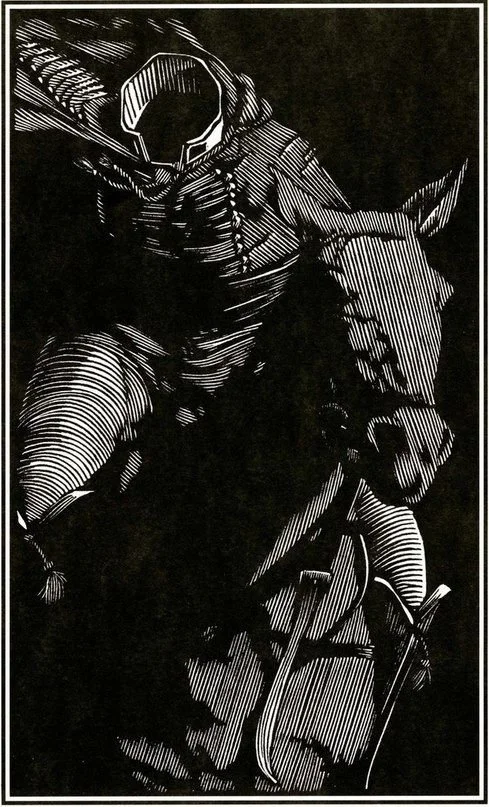

Personality vs System by Alexander Lyadov

How important it is to have a group of like-minded people for everything. It helps not to go mad, because entropy accumulates in a closed system. Also, the fact that there are weirdos like you reduces anxiety: "Phew, I'm not the only one". Also, having someone else to trust allows you to evolve and progress in a given activity. And while plants use pollen to cross-pollinate, people use ideas. By cross-pollinating different ideas in a supportive environment, synthesis occurs. That is why, having found such a circle, man longs to return to it, for it is the zone of his growth.

The ideal of single-mindedness is not in the golden handcuffs of dogma, but in one's attitude to the study of the chosen phenomenon. It is very easy to confuse one with the other, especially when a small fluid movement eventually turns into a large rigid system. The problem with any system is that its main (unannounced) goal is to preserve itself. In order to do that, it will do literally anything. When it comes to survival, morality is alien to the system. Every system is created by individuals, but ultimately the system does not need an individual.

But as the context changes, the system must either reinvent itself or die. The system cannot reinvent itself, and change is repugnant and scary to it. Only a person is capable of the necessary renewal of the system. However, the system sees in such an agent of change not a surgeon, but a pathologist. That is why the system attacks the individual as fiercely as the white blood cells attack the pathogen.

Few individuals can withstand the pressure of the system on their own. . But even they sooner or later form a circle of like-minded individuals, creating a snowball effect. If you are a founder and hungry for change in your business, look for people who think like you - among employees, entrepreneurs and outside experts. It’s still up to you to initiate change, but with the support of others, it will happen faster and easier.

Yours sincerely,

-Alexander


You can help Ukraine defend itself and the World from Russian aggression here.


”Who are you and what do you do?"
As a business therapist, I help tech founders quickly solve dilemmas at the intersection of business and personality, and boost company value as a result.

"I have an important business decision to make. Can you help me?
Reserve a time on my calendar that is convenient for you to meet with me. We'll clarify your request and discuss options for how you can help.


Why are musician and entrepreneur alike? by Alexander Lyadov

Rick Rubin, one of the most famous music producers of all time, on the Huberman Lab podcast said: “Understanding how you feel without second-guessing yourself is probably the single most important thing to practice as an artist or a skill set to develop as an artist. To know how you feel and own your feelings. The reason that I chose to be an artist is to demonstrate this is how I see it. If I undermine my taste for some commercial idea, it defeats the whole purpose of doing it. And this is not what this process is about. This process is I am doing me and I am showing who I am, and you can like or not, but either way this is still how I see it.”

In this respect, the entrepreneur and the musician are very similar. You could say that their best representatives demonstrate an almost uncanny trust in themselves, or rather in that voice inside that pushes them to act in a certain way. This is most evident in moments when the opinion of the whole society is set against the founder’s idea or a piece of music that breaks the popular pattern. Today it is thought that Elon Musk might become the world’s first trillionaire, but watch the 2011 documentary Revenge of the Electric Car, where Elon, as CEO of the startup Tesla Motors, attempts to bring about a tectonic shift in the auto industry. However, with the release of its first roadster, the company is haunted by one failure after another. All the money from the sale of PayPal has been invested in Tesla, and it is now facing bankruptcy. It hurts to see how exhausted, depressed, and discouraged Ilon is. Where does he draw faith in the rightness of his path at this moment, when both circumstances and market experts and the public are skeptical or against his idea?

I have been studying the phenomenon of entrepreneurship for a very long time, and I am fascinated almost hypnotically by the personalities of the founders. Why? Probably because the pulse of authentic life is felt more clearly in them. Again, why? The nature of their activity burns out all the extraneous, artificial and superfluous by fire. To use the terminology of Buddhists, there is more Tathātā (Suchness) in entrepreneurs. Again, why? The answer lies in Rick Rubin’s insights — they simply cannot do otherwise, for that would be a betrayal of themselves, or rather, of the Force that drives them forward.

Yours sincerely,

-Alexander


You can help Ukraine defend itself and the World from Russian aggression here.


”Who are you and what do you do?"
As a business therapist, I help tech founders quickly solve dilemmas at the intersection of business and personality, and boost company value as a result.

"I have an important business decision to make. Can you help me?
Reserve a time on my calendar that is convenient for you to meet with me. We'll clarify your request and discuss options for how you can help.
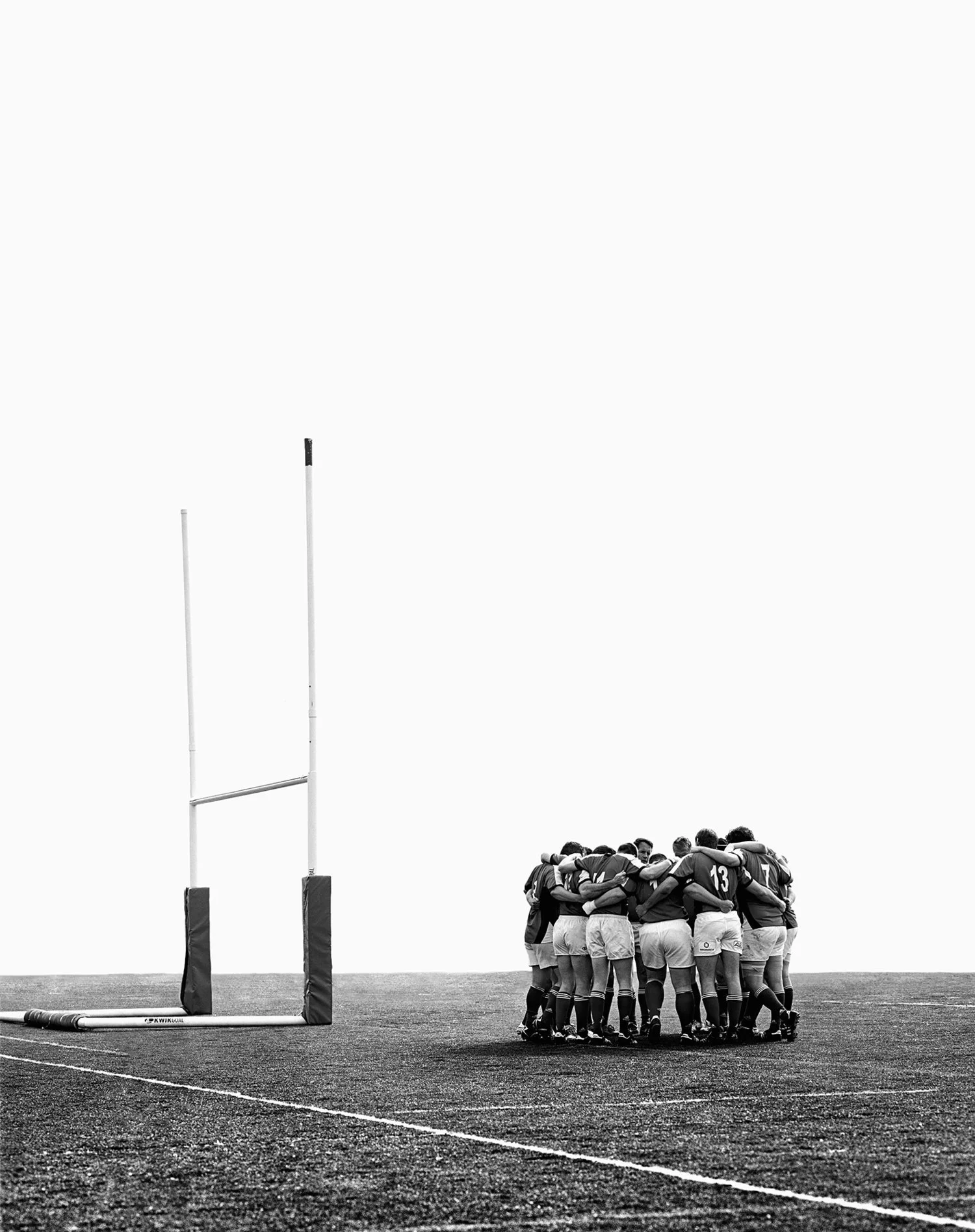

The headless horseman by Alexander Lyadov

Some companies are like a horseman with no head at all. That is, all the elements (horse, harness, rider, gallop) are there, but something is missing. And don't let the regalia of management and levels of organizational structure deceive you. Yes, the company is moving steadily, but like a sleepwalker who is sound asleep at the moment. Either the market is creating traction, or the inertia of past successes, or the occasional jolt from within. But despite the bustle of the sailors and the whistles of the bosun, there is no one at the helm.

Where has the captain gone? Oh, there could be many reasons. Perhaps he was too tired from the long voyage, burned out and locked himself in his cabin. Or maybe he realised his ship was lost at sea and went into anabiosis. Or perhaps, imbued with the ideas of universal equality, he voluntarily resigned his post. Either way, the purposeful movement has disappeared - there is no one to set the course.

All the necessary elements are there, but there is no coordinating idea: "For what? And without a function, any form, even the most elaborate, is meaningless. And it's not even about the answer, because there are many ready to offer an inspiring goal.

The point is that there is no one willing to take personal responsibility for everything. When you are blamed even when fate has treated you unfairly. When no one will thank you after you have saved everyone with a colossal effort. When a decision has to be made in total uncertainty, alone, here and now. Most people are not prepared to make such sacrifices. Leadership is a heavy burden, not an intoxicating power.

So my first question during the diagnosis is, "Is the founder fulfilling his function?"

Yours sincerely,

-Alexander


You can help Ukraine defend itself and the World from Russian aggression here.


”Who are you and what do you do?"
As a business therapist, I help tech founders quickly solve dilemmas at the intersection of business and personality, and boost company value as a result.

"I have an important business decision to make. Can you help me?
Reserve a time on my calendar that is convenient for you to meet with me. We'll clarify your request and discuss options for how you can help.

Service or product? by Alexander Lyadov

There is no service entrepreneur who has not dreamed of launching his own product.

Of course, the unknown beckons, especially seeing the success of a number of product companies.

The founder says, “I want to do something tangible that I can ‘get my hands on.

But if you dig deep, the real reason is something else.

The founder of a service company is just dead tired of milling the wind.

Struggling for customers, employee wage increases, and low margins were killing the point.

The first 5 years it was interesting, the next 5 pulled out of habit, but now the energy is gone.

Sell the business? No one. To reassign? Impossible. Get up and leave? No way.

Out of the dilemma comes the dream of the product as the miracle solution to all problems.

However, only a few manage to realize this dream.

Why? Making a Wow product is no easier than a Wow services business.

But if the founder has invested 10 years in services, with a product you have to go over it all over again.

It’s much easier and faster to rethink the current service delivery model.

The goal is to create an order of magnitude higher value for customers, in exchange for getting a margin of x2-3.

And then, having a surplus of cash, you can do product R&D.

The industry doesn’t matter - IT outsourcing, law office or architectural boutique.

What is important? A desperate determination to reinvent your services business.

Sincerely yours,

-Alexander


You can help Ukraine defend itself and the World from Russian aggression here.


”Who are you and what do you do?"
As a business therapist, I help tech founders quickly solve dilemmas at the intersection of business and personality, and boost company value as a result.

"I have an important business decision to make. Can you help me?
Reserve a time on my calendar that is convenient for you to meet with me. We'll clarify your request and discuss options for how you can help.


Who needs this strategy anyway? by Alexander Lyadov

If the team asks the founder for a strategy session, it’s both a bad and a good sign. Why is it bad? The very fact of the request speaks to the extreme desperation of the employees-they are confused, disoriented, and tired of exerting extra effort for nothing.

In large corporations, management brings down strategic plans that are often divorced from reality, but at least they are there and can be criticized or tried to improve. In medium and small businesses the situation is sometimes worse. Everyone pretends to understand where, why and how the company moves, but it is not fixed anywhere in a clear and structured form. And the market winds are constantly changing, forcing the captain of the business to suddenly lie down on a different tack. What’s left for employees to do? First, to develop the ability to read the owner’s reactions, and second, in their discretion to decide locally what is best to do.

If there were computers instead of humans, perhaps they would end up agreeing on something. But people have different experiences, IQs, psychotypes, values, and ultimately personal interests. So even those of them who sincerely want the company to do well bump into each other because of differences in information, assumptions, and interpretations. But cynics, intriguers, and liars feast like crocodiles on a herd crossing in these murky waters. In such chaos, talented people don’t stick around and run away, burn out, or give up. Even if the business has historically had a margin and liquidity reserve, general inefficiency will sooner or later destroy that reserve.

Why would the owner want to maintain a delusional state of affairs? Oh, there could be many reasons. From infatuation with other businesses to a desire for power, because confused people are easier to manipulate. But if we do not take the most destructive extremes, it often turns out that the question, “What is our strategy?” the founder does not know the answer himself. Out of pride he cannot admit this to anyone, including himself. But since he is expected to be the bearer of secret knowledge, everyone plays a silly game as if the company has some kind of genius strategy.

Okay, but what’s the good sign? If, in spite of all of the above, a group of employees joined forces, gathered their spirits and approached the owner with the initiative of a strategy session, then all is not lost. It means that there is a strong and healthy core in the team. The worst reaction is to ignore them, to resent their “disrespect” or to grudgingly allocate a budget for inviting a moderator, say, let the kids have fun. On the contrary, if the founder gratefully accepts this team momentum and personally leads the process, there is a great chance of developing a winning strategy that will give the company a fresh start.

Yours sincerely,

-Alexander


You can help Ukraine defend itself and the World from Russian aggression here.


”Who are you and what do you do?"
As a business therapist, I help tech founders quickly solve dilemmas at the intersection of business and personality, and boost company value as a result.

"I have an important business decision to make. Can you help me?
Reserve a time on my calendar that is convenient for you to meet with me. We'll clarify your request and discuss options for how you can help.


How to accelerate change in a group? by Alexander Lyadov

Once a top manager I know surprised me a lot. He said: “Can you teach me how to run a strategy session for a group of co-founders of a large business? I know you’ve been doing this for a long time, which means you have the tools.” My first impulse was to say no, since training is not my business. And my sessions are so specific that I still need to comprehend the experience for myself. But the top manager explained that the stakes were too high - his future career depended on the effectiveness of this event.

The situation was complicated by the fact that the participants were mature entrepreneurs, smart and cynical people used to tough negotiations (a feature of the industry). In addition, there were historical tensions between them. The cherry on the cake was that there was no tradition of such sessions at the shareholder level, that is, it was an experiment for everyone. My acquaintance could not refuse the offer, but could not vouch for the result either. Managing companies, of course, he organized meetings, trainings and brainstorming sessions more than once. But it is one thing to have your own employees and quite another thing to have unknown influential people who can either reward or upset the moderator.

Within two hours I had given him an extract of what I knew - the meaning of the session, the logic, structure, priorities and indicators of success, questions at each stage, ways to get to the truth, attitudes toward conflict, typical problems and how to solve them. Since the “student” trusted me and was motivated to learn, he absorbed every insight like a sponge. Because of the urgency, we did not have a chance to play out the situations in person, but otherwise I did my best. In the evening he happily reported: “Everything went according to plan. The shareholders are happy. I shined.” As expected, his career moved forward.

After such incidents, I wonder if there might be an unsatisfied demand for such knowledge. On the one hand, you just have to say: “Strategy Session” and there is an immediate line of moderators, coaches, and facilitators lined up. On the other hand, from communicating with the founders, it is clear that they do not see the benefit of typical strategy sessions and often perceive it as a necessary evil. The point is that if the moderator is a communicative charismatic and/or empathic person, it is quite easy to cheer the participants up in the short term or help them feel a sense of community. But how do you make a real shift in the group so that the systemic contradictions of the business weaken or even disappear, and the value of the business goes up? This is a conundrum that they don’t teach you to solve anywhere.

So I thought, if there are enough people willing, I would make a compact, practical course based on two decades of personal experience in group sessions as a CEO, shareholder, investor, and now business therapist.

Who will benefit from it:

  • founders, to boost the speed of change in the team and then in the business.

  • top managers, to reduce friction and conflicts in the team.

  • consultants and moderators, to increase the objective value of their services.

If you thought, “Cool! Where and when can I buy this product?”, drop me a line or two in an email or message about what you do and why it’s relevant to you.

Yours sincerely,

-Alexander


You can help Ukraine defend itself and the World from Russian aggression here.


”Who are you and what do you do?"
As a business therapist, I help tech founders quickly solve dilemmas at the intersection of business and personality, and boost company value as a result.

"I have an important business decision to make. Can you help me?
Reserve a time on my calendar that is convenient for you to meet with me. We'll clarify your request and discuss options for how you can help.


Updraft by Alexander Lyadov

Azido 88 (music album)

There is no one profession in which mastery is achieved quickly and easily.

You have to absorb a lot of knowledge and skills by undertaking a colossal number of iterations.

But the world outside and inside a person is unstable — it swings up and down.

So it’s impossible to learn only when the circumstances and mindset are perfect.

In 90 cases out of 100 you have to overcome resistance of one kind or another.

It’s like rock climbing, where gravity pulls you down to the ground nonstop.

You have to have just as much strength in your allies to climb to the top.

It’s not about stamina, fortitude or discipline, although those can’t hurt.

Something has to pull you upward like an eagle is pulled by a warm updraft.

It doesn’t own or control the air currents, but that doesn’t upset it.

The eagle doesn’t even need to understand where it’s coming from or why it’s moving upward.

All these details are unnecessary for a steady climb, for they are secondary.

What is primary is the ability to find that flow, and then to trust the vector of its power.

Well, everything is clear with the eagle, but what about the man? What pushes him up and forward?

Meet your Curiosity.

Sincerely yours,

-Alexander


You can help Ukraine defend itself and the World from Russian aggression here.


”Who are you and what do you do?"
As a business therapist, I help tech founders quickly solve dilemmas at the intersection of business and personality, and boost company value as a result.

"I have an important business decision to make. Can you help me?
Reserve a time on my calendar that is convenient for you to meet with me. We'll clarify your request and discuss options for how you can help.


How to become a business owner? by Alexander Lyadov

The main problem of a business owner is his (or her) total solitude. This means that he literally has to think about everything himself. Like a school troop leader on a camping trip, the entrepreneur has the ultimate responsibility for everyone. Few people are able not only to offer him something sensible, but no one is even able to understand the scale and severity of his problems.

But at the same time it gives you a unique opportunity no matter what level in the company you are at now. Of course, you can continue to complain about how unreasonably everything in the company is organized and what keeps you from doing your job. You can blame it all on the business owner, expecting him to have a miraculous epiphany and instantly solve all the current problems.

Alternatively, I suggest that you look at things from a different vantage point. Imagine that you are the owner of this business and you sincerely want it to grow steadily and quickly. With your mind on the top of the mountain, take a broad look at all the current problems of the business and all the resources available to it - yourself, top managers, CEO, all departments, physical assets, brands, processes, etc. And then ask yourself the question, "What should my action be so that the whole business will do well as a result?"

Of course, at first this perspective will feel strange. It's too tempting to slip into the familiar position of being owed something by those at the top. Perhaps at times this will create conflicts with colleagues pursuing their own local interest. 

But then you will notice that there is a new point of reference in your thinking, and a strong pivot in your arguments. Even if someone disagrees with you and your proposal is pushed aside, you know for a fact that you are right. After all, now when you propose something, you are not thinking about yourself or your department, but about the improvement of the company as a whole. You will be surprised to find that almost no one around you thinks this way. 

It's only a matter of time before the founder or CEO turns his attention to you. He very rarely meets someone like you in the marketplace, and certainly within the company, he would not even hope to find one. After that your career will switch into turbo mode and the only limitation will be the speed at which you as a manager can grow. 

Of course, you may end up in a bad company where the top management is corrupt and the shareholders don't care about anything. But if you practice the mindset of the owner, you're still in the driver's seat. If you constantly analyze the situation, make decisions, and act like a true business owner, you're just doomed to eventually become one. Sooner or later you will be spotted by the firm's competitors and offered compensation with options. Or, you will decide to start your own business after noticing the unsatisfied problems of your clients.

An owner is not so much a legal right to stock as it is a life choice, a way of thinking, and a willingness to subordinate your whole self to the business. Make a clerk a partner - tomorrow he will lose everything. Take away an entrepreneur's business and soon he will create two more. Function always determines form, not the other way around. The owner, it's only later on paper, but first it's in your head.

Sincerely yours,

-Alexander


You can help Ukraine defend itself and the World from Russian aggression here.


”Who are you and what do you do?"
As a business therapist, I help tech founders quickly solve dilemmas at the intersection of business and personality, and boost company value as a result.

"I have an important business decision to make. Can you help me?
Reserve a time on my calendar that is convenient for you to meet with me. We'll clarify your request and discuss options for how you can help.


Prima Donna or Superstar? by Alexander Lyadov

Probably nothing in business is as exhausting as managing people.

Especially if they are gifted creators, not low-skilled performers.

Their gift is a double-edged sword that can make or break a business.

Push too hard and you get a revolt against the dictatorship.

But let go of control, and all this power dissipates into conflicts inside and nonsense outside.

From the analysis of the cases it is clear that pockets of both anarchy and despotism arise.

One way or another, the efficiency of the team, like that X in mathematics, tends to zero.

Following a fall in labor productivity, the company’s net profits shrink.

The lack of funds reduces the founder’s room for maneuver to a minimum.

There are a lot of management dilemmas in the vein of “Execute not pardon”.

In a crisis such a business will quickly die out, and in stable conditions it will not grow.

The irony is that capricious divas can be quickly turned into superstars.

How? Scattered photons have to be collected in a directed laser beam.

If it’s that easy, why isn’t it happening all the time?

This is a basal job no one can do, only the founder.

Sincerely yours,

-Alexander


You can help Ukraine defend itself and the World from Russian aggression here.


”Who are you and what do you do?"
As a business therapist, I help tech founders quickly solve dilemmas at the intersection of business and personality, and boost company value as a result.

"I have an important business decision to make. Can you help me?
Reserve a time on my calendar that is convenient for you to meet with me. We'll clarify your request and discuss options for how you can help.


Stop adding legs to the drawn snake by Alexander Lyadov

Suppose you meet a stranger who offers to get rid of a bunch of problems that have long been complicating your life in one fell swoop. But there is a nuance - while the interlocutor sees the obvious cause of your torments, you were not aware of it, and, pouring sweat, continued to drag the heavy burden for years. The alternative - you have long ago made many attempts to get rid of the annoying symptoms on your own, but have failed and finally accepted that nothing can be done and that this is your fate. In both cases, it’s as if there is a problem, but it’s as if there isn’t.

How will you meet a stranger’s proposal? Obviously, with a mixture of bewilderment, mistrust and skepticism. It will take him a truly titanic effort to overcome this barrier by conveying ironclad logic, objective facts, the benefits of change, and the dangers of maintaining the status quo. But all this work will be in spite of, not thanks to, since you have no motivation to change anything. By definition, there is no answer without a question. This kind of over effort is energy wasted. It’s like making a fire out of wet twigs in the woods. Or, as the Buddhists would say, adding legs to the drawn snake.

Yet all too often, companies stubbornly try to push a service or product to the wrong customers and/or at the wrong time. Advertising, sales, and negotiations are like a cruel baby pulling the tail of a poor cat who resists and begs to be left alone. What's more, there is a whole industry that promises to quickly teach you how to impose your will on customers. Where does this propensity for violence and cynicism come from? I think it comes from impatience, greed, and lazy thinking. When you want it all right now, like a junkie, you’ll do anything to get your fix. So what to do?

It is necessary to interrupt the dangerous craving for pleasure. Practically, this means pushing the transaction into the future, to feel indifferent to the result in the short term. In this space, peace reigns instead of hysteria, and curiosity ensues. These are optimal conditions to explore and experiment, answering the questions: “Who are my ideal clients? How do I differentiate them from the rest? What are their true needs?” The advantage of this approach is that even a little clarification rewards the entrepreneur, as if he were the captain of a ship tweaking the spyglass to enhance the contours of the land. Soon the feedback loops will present the insight that your ideal clients are those who have recognized their problem, tried to solve it themselves, but are not resigned to failure, but instead are determined to find a solution together with you.

Yours sincerely,

-Alexander


You can help Ukraine defend itself and the World from Russian aggression here.


”Who are you and what do you do?"
As a business therapist, I help tech founders quickly solve dilemmas at the intersection of business and personality, and boost company value as a result.

"I have an important business decision to make. Can you help me?
Reserve a time on my calendar that is convenient for you to meet with me. We'll clarify your request and discuss options for how you can help.

Luck or no luck by Alexander Lyadov

Locust plague in Africa and the Middle East, unknown photographer

“Little did I know that all the times I thought I was good, I had only been lucky.” That’s a quote from “What I Learned from Losing a Million Dollars,” which I’m currently reading before I go to bed. Alas, it is too tempting for a businessman to mistake Fortune's whim for his own merits. In any market, as in the savannah, periodically there comes a period of long and generous rains. Then all emerge from anabiosis, even old poles put down roots. In terms of fecundity, all plants and animals break records. Certainly some grow slower and some grow faster, but there are no bankruptcies in the market at this time, as the abundant cash flow and high profits cover up all the sins. A businessman doesn’t have to make an extra effort; all he has to do is answer incoming customer calls.

But everything in nature is cyclical, so a period of drought is inevitable. Recession, war, revolution, hurricane, locust infestation or pestilence - for any one reason, the water of life disappears. Now the majesty of chance changes its sign to minus and pulls any business to the bottom with a heavy weight. Like a finicky auditor, force majeure exposes the company’s vulnerabilities, which the founder was always vaguely aware of, but was in no hurry to eliminate. Customer omnivorousness, cost-based pricing, an imbalance of responsibility and authority, team conflicts, bloated overheads, lack of decision-making processes, an unformulated business vision-these and other mistakes add up in a hostile environment, increasing the devastating effect on business many times over.

Such experiences will open one founder’s eyes to the extent to which his past successes owe to luck, not his IQ. And someone else will blame the sorry state of the business solely on the toxic context. That’s convenient - when things are lousy, the environment is responsible, and when they are spectacular, the businessman is credited. Not surprisingly, collapse teaches us better than triumph. There are many ways to get to the top, but only a limited number of ways to fail. In fact, this is why in any risky activity, whether skydiving, stock trading or entrepreneurship, the first thing to learn is the safety manual, that is, how to protect yourself from devastating risks. Fortunately, everyone is capable of accumulating this kind of expertise. In business, a compound interest works for the entrepreneur, provided that, firstly, the term is long enough, and secondly, he retains the right to participate in the game.

Yours sincerely,

-Alexander


You can help Ukraine defend itself and the World from Russian aggression here.


”Who are you and what do you do?"
As a business therapist, I help tech founders quickly solve dilemmas at the intersection of business and personality, and boost company value as a result.

"I have an important business decision to make. Can you help me?
Reserve a time on my calendar that is convenient for you to meet with me. We'll clarify your request and discuss options for how you can help.


How much is it worth? by Alexander Lyadov

Not thinking about the value of your business is just as bad as dwelling on it. Why? Every game has a purpose for which all participants originally came together. Is the meaning of soccer exhausted by winning the World Cup? No, but without counting goals, kicking a ball wouldn’t excite 3.5 billion fans. By playing soccer, someone may be looking for entertainment, recognition, companionship, or even spiritual growth. Anyone can derive any additional value from the game. But only as long as he tries his best to win, not conceding but scoring goals against his opponent.

Similarly, business is a game whose goal is to create cash flow today and in the future. And if you bring the cash flow to the here and now, you get Company Value (CV). The market can idolize your business or devalue it to zero - that’s secondary. The important thing is, hand on heart, how much do you think your business is worth? Accuracy to the second decimal point is not necessary, a rough estimate is enough. An estimate of what? Progress in the game - is there an increase from CV1 to CV2 in 3 years, for example.

Without it, the founder’s priorities get confused in his head, and the company gets devoured by chaos. On the contrary, thinking about value, once a year or a quarter, reinforces the vector of order.

Yours sincerely,

-Alexander


You can help Ukraine defend itself and the World from Russian aggression here.


”Who are you and what do you do?"
As a business therapist, I help tech founders quickly solve dilemmas at the intersection of business and personality, and boost company value as a result.

"I have an important business decision to make. Can you help me?
Reserve a time on my calendar that is convenient for you to meet with me. We'll clarify your request and discuss options for how you can help.


Your Game Design by Alexander Lyadov

Josh Buckley, investor and entrepreneur, formerly CEO of Product Hunt and founder of Mino Games, a top 25 grossing mobile gaming company. Josh articulated the elements of successful game design:

  1. Frequent Feedback Loops.

  2. Variable Outcomes.

  3. Sense of Control.

  4. Connection to a Meta-Game.

If you recall an experience from your childhood, when, forgetting about food and rest, you were engrossed in the game, all four elements were certainly present. You instantly knew when something was going wrong, victory and defeat were not predetermined, it was clear that much depended on you, and of course, the particular game was always part of something bigger, whether it was the adventures of longtime friends or the preparation for your sports club’s competitions.

Then something happened and our natural skill of playing began to fade. Forcing ourselves to do tests in school, we often wondered who needed that knowledge in the first place. Once we started working, we didn’t understand, and no one was in a hurry to tell us what should be considered a desirable result and what your role was in achieving it. If it was a large corporation, the sense of real control came only closer to the organizational top. As for what connection all this daily hustle and bustle had with something fundamentally and vitally important to us, many tried to avoid the question because they knew - no one had a real answer.

If you read this newsletter regularly, it means that you are ripe for finding an answer. And not just formal excuses and other people’s smartassery, but something that is of value to you. How can I be so sure? Because I, too, have been searching for those answers for a long time. Perhaps our Game is called: “Hunting for Personal Meaning”?

Going back to Josh’s observations, it’s easy to see that insight from mobile gaming is applicable to any area that’s important to you - business, sports, hobbies and life in general. What’s more, by superimposing these criteria on top, like a stencil, you can figure out exactly what’s wrong with your business right now, for example:

  1. Key decisions in the company take a long time, in their implementation is bogged down as in jelly, yes or no?

  2. You are not satisfied with the modest results that you have now, but how to raise sales, profits and company value many times remains a mystery, yes or no?

  3. Top managers are conflicted and fighting among themselves for power, avoiding responsibility and complaining about lack of resources and authority, yes or no?

  4. No one, including you, can give a clear answer to the question, “What is this all about?”, yes or no?

Depending on your answers, you can assess to what extent your business is an exciting and rewarding Game or a tedious slave galley.

Yours sincerely,

-Alexander


You can help Ukraine defend itself and the World from Russian aggression here.


”Who are you and what do you do?"
As a business therapist, I help tech founders quickly solve dilemmas at the intersection of business and personality, and boost company value as a result.

"I have an important business decision to make. Can you help me?
Reserve a time on my calendar that is convenient for you to meet with me. We'll clarify your request and discuss options for how you can help.