Cleansing in the mud by Alexander Lyadov

Alexander Lyadov's gym since 1972

Yesterday I celebrated my 50th birthday with friends. Although we only had a few glasses of wine, I had a hard time waking up, because instead of going straight to bed, as neuroscientist Andrew Huberman recommended, I stayed up late reading greetings from kind people. Worse, the day before I had thoughtlessly suggested meeting at the tatami at 9 a.m., which I now regretted. I don’t know about you, but for me sleep deprivation is worse than a hangover. The feeling in my body is like jet lag, as if I had just arrived in Hong Kong.

Whenever in this situation, I remember the advice of podcaster Joe Rogan, who, no matter how awful he feels after a long flight, the first thing he does is look for the hotel gym or go on a savage trail run in the hills. This sounds like torture to the body, because instead of lifting heavy weights it wants to curl up in a dark hole and wall up the entrance. But, as is often the case in life, the best solutions are paradoxical.

So it is here - a voluntary step into discomfort brings relief. Jet lag causes a person’s circadian rhythm to become out of sync with the natural circadian rhythm, resulting in fatigue, insomnia, headaches, loss of appetite, etc. And a strong physical load, figuratively speaking, reloads the body and integrates it into the local spatial and temporal context.

Walking out of the gym today, I also felt more awake and refreshed. Remembering all the cases when I had doubts about going or not going to the workout, in 9 out of 10 cases the “after” feeling was much better than the “before” feeling. The medieval alchemists were right when they said, “In sterquiliniis invenitur”, which means, “You will find everything in the dirt.” It is where one absolutely does not want to look that one should look for all the answers.

Yours sincerely,

-Alexander


You can help Ukraine defend itself and the World from Russian aggression here.


Alexander Lyadov portrait

”Who are you and what do you do?"
As a business therapist, I help tech founders quickly solve dilemmas at the intersection of business and personality, and boost company value as a result.

"I have an extremely important business decision to make. Can you help me?
Reserve a time on my calendar that is convenient for you to meet with me. We'll clarify your request and discuss options for how you can help.



Tokyo solution to dilemmas by Alexander Lyadov

“If I don’t know what to do next, I try to always follow one rule. - A rule? - If given a choice: a formless object or an object with form, choose the formless one. That is my rule. When I ran into a wall, I always followed it, and if I took my time, it always led to good results. Even if it was hard at the time.” I was absent-mindedly reading Haruki Murakami’s “Tokyo Legends” at bedtime last night, when suddenly this fragment surprised me, rousing my mind and chasing away sleep. Outlandish advice, eh? There is a desire to reveal it carefully and unhurriedly, like a fragile birthday present, wrapped in many layers by people dear to you.

As a business therapist, I deal with a variety of dilemmas all the time. Therefore, I can easily imagine a “fork” or, as some say, “horns of a dilemma”, which was insidiously thrown by fate or a person created it for himself. The peculiarity of such a choice is that essentially there is no choice. If at least one of the alternatives met expectations, the decision would be obvious. But as it is, on each side there is only, “Yes, but…”. So the man agonizes, crucified on the horns of a dilemma — it is impossible to choose, and impossible not to choose.

The advice of the hero of the story is curious in that it asks you to assess the degree of formation of options X and Y. Each of them, by definition, is far from ideal. Therefore, it makes sense to choose the variant whose optionality is high. After all, the formed object X does not promise anything new — it is defective and will remain so. A shapeless object Y is quite another matter. It has room for maneuver, degrees of freedom, and secret potential. Of course, all indeterminacy is ambivalent, that is, it promises both “minus” and “plus. But with Y at least there is a chance to jump into another orbit, while X is knowingly unacceptable and boring. Also, the finality of X makes you passive, whereas Y invites you to become a creator of your own volition.

Yours sincerely,

-Alexander


You can help Ukraine defend itself and the World from Russian aggression here.


Alexander Lyadov portrait

”Who are you and what do you do?"
As a business therapist, I help tech founders quickly solve dilemmas at the intersection of business and personality, and boost company value as a result.

"I have an extremely important business decision to make. Can you help me?
Reserve a time on my calendar that is convenient for you to meet with me. We'll clarify your request and discuss options for how you can help.


Synthesis is the way by Alexander Lyadov

“When I first wrote to Alexander, there were no expectations-it was a step of desperation. I’m glad I chose a long-term collaboration. It’s akin to building a business with a partner. What I liked most is that he doesn’t try to teach me anything. Alexander’s approach is both flexible and firm. Firmness is evident in the focus on selected hypotheses, and flexibility — in the options for testing these hypotheses.” — wrote Sasha Bondar, founder of Reintech, a service that helps U.S. CTOs find mature Ruby and JavaScript developers, in a testimonial.

Feedback from clients helps crystallize meanings I’ve vaguely felt for a long time. At one time, PromoRepublic co-founder Valery Grabko gave me a gift after the session when he said I help at the intersection of business and personality. Here Sasha Bondar points to another important aspect of productive business therapy: maintaining a balance of flexibility and firmness.

An entrepreneur would not be himself if his mind were not open to new ideas. The flip side is that the laser beam of attention tends to turn into a scattered beam of nightlight. The founder’s resources are extremely limited, and tempting opportunities loom under every bush. But business success, like compound interest, is shaped by methodical effort over a long period of time.

The dilemma of Systemicity vs. Optionality must be creatively solved by every entrepreneur. A clue is given by the scientific method of cognition, the basis of which is observation and experimentation. According to Popper’s criterion, every scientific theory is falsifiable, that is, it cannot be fundamentally irrefutable. But until then, we can confidently rely on a valid theory or hypothesis, while maintaining openness to novelty. The synthesis of firmness and flexibility. Dynamic stability. Another paradox.

Yours sincerely,

-Alexander


You can help Ukraine defend itself and the World from Russian aggression here.


Alexander Lyadov portrait

”Who are you and what do you do?"
As a business therapist, I help tech founders quickly solve dilemmas at the intersection of business and personality, and boost company value as a result.

"I have an extremely important business decision to make. Can you help me?
Reserve a time on my calendar that is convenient for you to meet with me. We'll clarify your request and discuss options for how you can help.


When to sell? by Alexander Lyadov

In 2005, Rory Fatt founded Royalty Rewards, a marketing platform for small businesses, and in 2022 successfully sold his business, which generated $85 million in sales. Reflecting today on the question of what he would have done differently in the process of selling the business, Rory said: “I’d say not starting (this process) early enough. When you start the business you should be thinking of exiting” When you start a business, you have to think about getting out of it.” This thought is not obvious to everyone.

Often entrepreneurs are so mesmerized by a market opportunity that they rush to develop it and ignore the “little things” like a partnership agreement or shape the entire operating process for years to suit themselves. If they are focused, hard-working and, of course, lucky, they become owners of a large fortune. The nuance is that the vast majority of it is on paper, because the liquidity of assets is close to zero. If the unexpected happens — a serious illness of the founder, shareholder conflict, competitors’ intrigues, a security raid, a revolution, a pandemic or a war - the solid business will collapse like a house of cards.

Even if there is no force majeure, but the founder decides to sell the business, tired of ploughing 24/7/365 for decades. But it turns out there are no willing buyers in its current form. Or the “sell as is” option means a tangible discount to the value. Why? Confusing legal structure, unresolved disputes with former partners, handling the company’s money as if it were a personal wallet, a strange system of financial accounting that is far from international, etc. Buying such a business, you can not just “turn on and go." At first, you have to clean up the Avgiye stables, for which you either have to be a hero or pay Hercules to clean it up.

Being able to sell your company quickly for a high price at any appropriate moment is an additional degree of freedom. That’s why a wise founder starts thinking about the selling process even when the company isn’t there yet.

Yours sincerely,

-Alexander


You can help Ukraine defend itself and the World from Russian aggression here.


Alexander Lyadov portrait

”Who are you and what do you do?"
As a business therapist, I help tech founders quickly solve dilemmas at the intersection of business and personality, and boost company value as a result.

"I have an extremely important business decision to make. Can you help me?
Reserve a time on my calendar that is convenient for you to meet with me. We'll clarify your request and discuss options for how you can help.


Heir and bastard by Alexander Lyadov

If something in reality stubbornly exists, it must be there for something. Without knowledge of the history of its appearance and the specific context in which it is organic, it can seem strange and alien. And, therefore, cause embarrassment, irritation, fear, or squeamishness. After reading these words, which person first comes to your mind?

But this is also true of our rich inner world. And there really is a lot to be found. For a person’s personality is not much like a statue from a single piece of marble. A better analogy is an oriental carpet, the ornament of which is woven from threads of different colors. But if in a carpet every thread has value, it is often not so with regard to our personality.

Some aspects of our personality are very attractive to us, we are proud of them, we recognize and love them, like a king loves his heir. But there are other aspects that hide in the corners, trying not to come to our attention. As history shows, every ruler has always had children who were begotten out of wedlock. It did not matter which of them was actually more talented and more like the mind and courage of the ruler-father. According to the conventions of society, the legitimate son received all the benefits of the throne, wealth, and universal respect. What was left for the bastard? That’s right, overthrow the legitimate authority to avenge perceived injustices and assert his right to be.

Almost everyone finds themselves either caught off guard by a “palace coup” or forced to suppress one “rebellion” after another on a regular basis. Such a struggle, in essence, with oneself, takes a lot of strength and makes us weaker against real enemies and dangers from outside.

The way out? We need to make friends with the negative self. Or, more precisely, with someone who only appears as such because of conventional norms we once internalized that are actually alien to us.

Yours sincerely,

-Alexander


You can help Ukraine defend itself and the World from Russian aggression here.


Alexander Lyadov portrait

”Who are you and what do you do?"
As a business therapist, I help tech founders quickly solve dilemmas at the intersection of business and personality, and boost company value as a result.

"I have an extremely important business decision to make. Can you help me?
Reserve a time on my calendar that is convenient for you to meet with me. We'll clarify your request and discuss options for how you can help.

Tumbleweed by Alexander Lyadov

Our world has changed rapidly and most of your, as well as my business meetings, probably now take place online through various apps. Curiously, in WhatsApp, for example, the conversation starts with excellent sound quality, but after 30 minutes there is often such a nasty echo that you have to interrupt the conversation and call again.

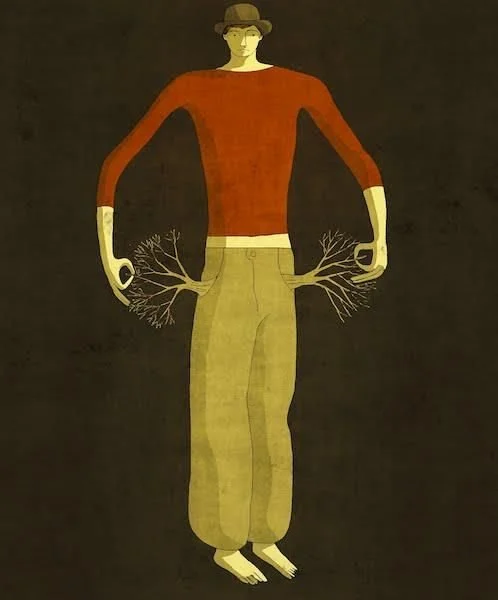
Whatever process you take in life, you see the same phenomenon everywhere. Over time, even the most beautiful “system,” be it a mobile app, the bottom of a ship, a skyscraper, a state, an organization, or an individual, tends to accumulate noise, garbage, seaweed, barnacles, dirt, dust, waste, lies, and mistakes. All this crap can be called the beautiful word entropy. We know from the second law of thermodynamics that entropy will steadily increase in a closed, nonequilibrium system. I see it now on the example of my apartment, which in just a week without cleaning turns into the Kazakh steppe with a tumbleweed of dog hair in every corner.

The conclusion? The system cannot simply be left unattended. Returning later, we risk finding non-functional junk, a nibbled backbone or dēlīrium, i.e. nonsense. Renewal, restart, renaissance, transformation is not a whim, but a hygienic norm. Not only survival, but also prosperity depends on it. With respect to a software product, this statement is self-evident. But how often does the founder of an IT company apply this thought to the assumptions underlying his business, his relationship with his partner, much less himself?

Yours sincerely,

-Alexander


You can help Ukraine defend itself and the World from Russian aggression here.


Alexander Lyadov portrait

”Who are you and what do you do?"
As a business therapist, I help tech founders quickly solve dilemmas at the intersection of business and personality, and boost company value as a result.

"I have an extremely important business decision to make. Can you help me?
Reserve a time on my calendar that is convenient for you to meet with me. We'll clarify your request and discuss options for how you can help.


Breathe in and out by Alexander Lyadov

I learned to swim all styles on my own by watching more experienced swimmers. It was enough to stay in the water, but my technique was not right. So 40 years later I finally decided to take a lesson from a coach. It was immediately clear that he was a master. First, he clarified my goals and limitations. Secondly, he carefully watched my trial swim. Thirdly, he gave me only a few pieces of advice, but very simple and, most importantly, specific to me, and not to some ideal Alexander. Also, the coach confirmed my hunch that breathing is the cornerstone in swimming, as I had previously seen in jiu-jitsu and kettlebells. No technique can compensate for errors in the exchange of oxygen and carbon dioxide between the body and the environment.

In the swimming pool, this fundamental thought comes very quickly. After all, despite its ordinariness, water is completely alien to our being in it. If you hesitate a bit and inhale water instead of air, that’s it — panic in your head and adrenaline in your blood, because the environment became hostile in a moment. According to WHO statistics, drowning is the 3rd leading cause of unintentional injury death worldwide.

You can swim slowly or quickly, technically or clumsily, beautifully or terribly — it’s all secondary. But it is impossible to swim with impaired breathing, especially if the distance is X kilometers and not one pool. The brain is very sensitive to lack of oxygen, which every wrestler was convinced of when, after 30-40 seconds, he switched off from a chokehold or when he forced his opponent to sleep.

Unlike swimming, kettlebells, or yoga, in other aspects of life we tend not to pay much attention to breathing. But extrapolating this idea, I can only imagine the underappreciated potential, especially for intellectual workers, hidden in such an unremarkable activity as breathing in and out. Now I want to listen to the Huberman Lab podcast episode, “Master your breathing.

Yours sincerely,

-Alexander


You can help Ukraine defend itself and the World from Russian aggression here.


Alexander Lyadov portrait

”Who are you and what do you do?"
As a business therapist, I help tech founders quickly solve dilemmas at the intersection of business and personality, and boost company value as a result.

"I have an extremely important business decision to make. Can you help me?
Reserve a time on my calendar that is convenient for you to meet with me. We'll clarify your request and discuss options for how you can help.


Lucky? by Alexander Lyadov

It seems as if the biggest problem is when you don’t have something you need, or when you are in danger of losing something you care about. In reality, this problem is simply more conspicuous because its contours are clear and its essence is as acute as thirst in the Sahara. But no less difficult is the condition when, as everyone else thinks, you are doing well in business (or life), but for some reason you feel sad, desperate and lost. This condition is exacerbated by the fact that you can’t tell anyone about your feelings. After all, others react with a mixture of surprise, envy, and annoyance: “How dare you not be happy, ungrateful!".

For example, the founder spent a long time building and finally sold his business for a handsome sum with a premium multiplier to EBITDA. Or the owner has a project in his portfolio that yields a more than generous stream of regular dividends, but requires him to get involved cumulatively only one month a year. In theory, both “lucky” owners should now be enjoying full freedom — financially, operationally and existentially.

But the attentive observer will read the confusion in the depths of their eyes, as evidenced by their chaotic rushes from one investment idea to another, be it a promising startup, a cryptocurrency, or the stock market. Things look promising at first, as the investor is extremely busy and involved in the process. But I remember several entrepreneurs (myself included) who buried a significant portion of their fortune in project 1, 2 and 3 this way, only to actually get nothing. What’s wrong?

Warren Buffett said: “It’s insane to risk what you have for something you don’t need.” The problem is that often we, on the one hand, do not know what we really need and, on the other hand, easily devalue what we already have. We rush to fill the vacuum that arises inside us with whatever we can. And only losses sober us up, forcing us to ask ourselves fundamental questions: "Where am I? Where am I going? And for what?". This is where the long-awaited journey home begins.

Yours sincerely,

-Alexander


You can help Ukraine defend itself and the World from Russian aggression here.


Alexander Lyadov portrait

”Who are you and what do you do?"
As a business therapist, I help tech founders quickly solve dilemmas at the intersection of business and personality, and boost company value as a result.

"I have an extremely important business decision to make. Can you help me?
Reserve a time on my calendar that is convenient for you to meet with me. We'll clarify your request and discuss options for how you can help.

Willpower? by Alexander Lyadov

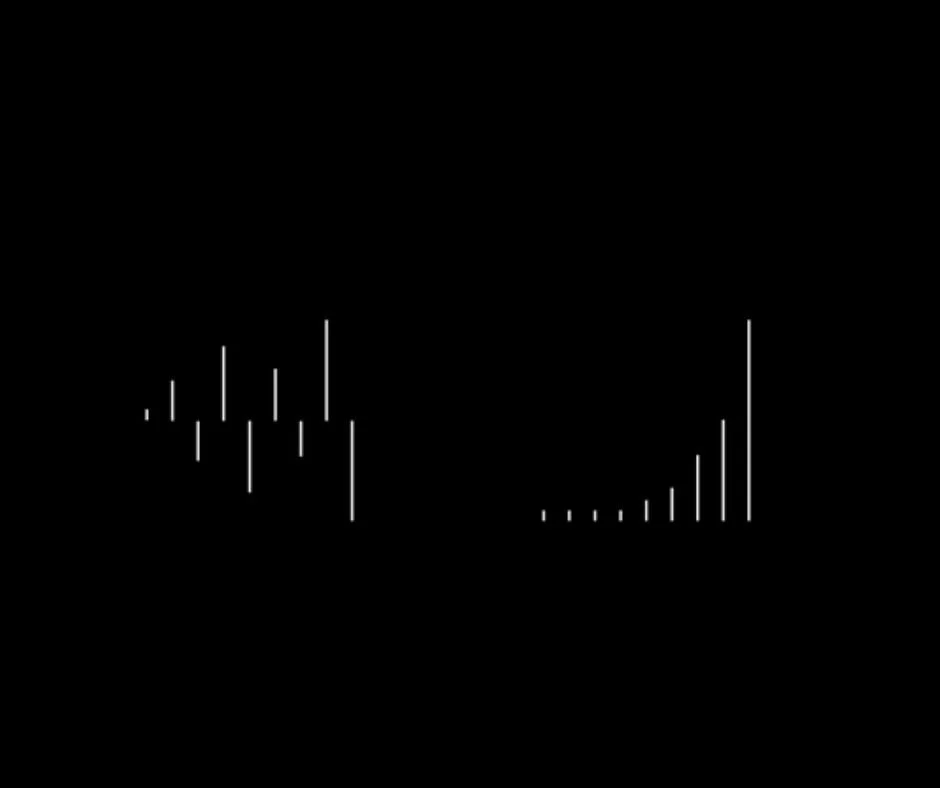
Willpower is often put on a pedestal, but isn’t it overrated? Of course, it’s great to be able to concentrate all your abilities and do things that are difficult, scary or just lazy. Willpower is like nitrous oxide in street-racing cars - you push a button and immediately get ahead. Days, weeks, well, months can still be pushed by willpower. But if the “race” stretches for years or decades, you need a more stable system for moving yourself forward.

Overexertion of nerves and emotions in the spirit of ancient Greek myths is certainly fascinating, but it is better when there is none at all. This resource is limited and unpredictable - today the will is enough, and tomorrow the “tank” is empty. In addition, if you need the effort of a group of people, for example, in business, it is naive to think that at any moment all employees are ready to make a “quantum leap”.

So what is there to lean on? First, it is a skill-an action that has been repeated so often that “the sword has become an extension of the hand.” A true professional, even when drunk, tired or sleep-deprived, may not create a masterpiece, but he won’t ruin a furrow. Secondly, it is technology - the application of scientific knowledge to solve practical problems. This involves reproducibility of the result, no matter who is operating the “machine”. The professional multiplies the power of his skills with technologies of all kinds, from tools and robots to paradigms and ideas.

Still, the perfect pusher is when you don’t need to be pushed. Or rather, something inside pulls you in the right direction without stopping. This pull is in everyone, but not everyone has understood and mastered it. When it does, one becomes unstoppable. Following his pulling, armored with skills and forced by technology, he consistently achieves more than he expected, without overexerting his will and at his own pace.

Sincerely yours,

-Alexander


You can help Ukraine defend itself and the World from Russian aggression here.


Alexander Lyadov portrait

”Who are you and what do you do?"
As a business therapist, I help tech founders quickly solve dilemmas at the intersection of business and personality, and boost company value as a result.

"I have an extremely important business decision to make. Can you help me?
Reserve a time on my calendar that is convenient for you to meet with me. We'll clarify your request and discuss options for how you can help.


From minus to plus by Alexander Lyadov

What kind of superpower would you like to have? I dream of being able to turn absolutely any situation from minus to plus. So far, I can’t boast about the skill. Sometimes such μεταμόρφωσις happens, but unpredictably and by itself. Where the “transformer” switch is inside me I do not know. But the facts of the spontaneous flip are reassuring. It’s like the mustang - wild power is there, it only needs to be tamed. The value lies in the hidden potential, which suddenly becomes available to you and significantly changes your life for the better.

It’s not just about extreme situations where the risks are high and such a superpower would help save assets, health, or even life. For everyday situations, it would also come in handy. Let’s say you’re stuck in an elevator with a stranger and it’s not clear when someone is going to get you out. A perfectly planned schedule for a series of important meetings goes down the drain. You get hot, can’t breathe, and have back pain. Irritation, anxiety, and anger grow. And then there’s this suspicious stranger, squeezing in with a trespass on your usual boundaries, as if in the streets of Bombay. Many wouldn’t hold back and vent their emotions on the other, especially if you have very important people waiting for you, your cellmate is nervous, and the ordeal has dragged on for several hours.

But with superpower, you don’t look for a “container” for your emotions on the outside, you miraculously process them on the inside. Despite the unfortunate uncertainty, you are calm, friendly, and humorous. Most importantly, your “system” appears to be open rather than isolated. Infected by your mood, the stranger relaxes and warms up. And so he, in response to your sincere interest, tells what he may not have revealed to anyone. When the elevator doors finally open, you even feel sorry for interrupting such a fascinating conversation.

By the way, seven years ago I had a similar experience after a motorcycle accident and even turned it into a podcast episode.

Sincerely yours,

-Alexander


You can help Ukraine defend itself and the World from Russian aggression here.


Alexander Lyadov portrait

”Who are you and what do you do?"
As a business therapist, I help tech founders quickly solve dilemmas at the intersection of business and personality, and boost company value as a result.

"I have an extremely important business decision to make. Can you help me?
Reserve a time on my calendar that is convenient for you to meet with me. We'll clarify your request and discuss options for how you can help.


Will you stick to it? by Alexander Lyadov

In a recent interview with world-class physical therapist Jeff Cavaliere, Andrew Hubeman suggested that whatever workout program you choose, the big question is sustainability - will you stick with the plan if the enjoyment is low and the duration and intensity are high?

How often does a person get inspired by another “system” for gaining muscle mass, increasing stamina or losing extra pounds, only to abandon the sport altogether in a month or two because of subconscious excuses: “I caught a cold,” “I was busy at work,” or “Now is not the time. When X is over, then…”. X changes regularly and the only thing that is stable is the accumulation of dust by the sports uniform in the corner. So the goal is to find your training plan in particular and the type of physical activity in general. The criterion should not be advancement, not popularity, and not the promised mega-usefulness, but a guarantee of no absences for a long period of time.

MMA coach Firas Zahabi points out the priority of consistency over intensity. What’s the point of putting yourself out there every time until you have a gag reflex if you end up losing a quarter to recover from an injury? Just as you should get up from the table slightly hungry, it makes sense to leave your workout awake rather than crawling away like a zombie.

And how often in business do owners get caught up in the trending fad in their industry and try to artificially instil it? But if the prerequisites are not naturally ripe for revolution, another false start is inevitable, plunging the team into depression. It is quite another matter when the solution is the answer to a long-winded business question, and its implementation is smooth, consistent and feasible. Is your business or sports plan sustainable?

Sincerely yours,

-Alexander


You can help Ukraine defend itself and the World from Russian aggression here.


”Who are you and what do you do?"
As a business therapist, I help tech founders quickly solve dilemmas at the intersection of business and personality, and boost company value as a result.

"I have an extremely important business decision to make. Can you help me?
Reserve a time on my calendar that is convenient for you to meet with me. We'll clarify your request and discuss options for how you can help.


Personal R&D process by Alexander Lyadov

27 years ago out of curiosity, I responded to the offer of an acquaintance from an English course: “A new international advertising agency has opened in Ukraine. They are forming a client service department. You should go”. After the interview, I remember standing in the street, as if struck by lightning, and thought: “God, how much I want to work here.”

It was too much of a contrast to a Ukrainian-American hair dye and shampoo company, where I, a graduate of the chemistry department, was involved in product certification and the search for technical specifications in dusty patent offices. Here, though the line of work was frighteningly unclear to me, but the very “body” of the Ark Communications agency beckoned me to it like a magnet. The office was located in a cozy two-story apartment, there were Apple computers on the desks, and the employees I met were young, feisty, and extremely smart.

Thus, ostensibly by accident, I entered the advertising industry, where I spent a mind-bogglingly exciting first ten years of my career. I went from advertising to wealth management, and from there to an Internet startup, then to private equity and venture capital fund, and finally to business therapy. Each time it was a knight’s move, a strange one before and a logical one after.

In the beginning, there was necessarily a reluctant step into the unknown: “Well, okay, except out of pure curiosity,” and then the delight of discovering the Klondike: “Wow! No, it would be a crime not to accept such an opportunity. The process of personal R&D is not linear and goes through knots of chaos, where one have to sacrifice own comfort. In that moment, confusion, doubt, suspicion, irritation or fear envelop the mind, demanding that you give up the novelty. But if you simmer patiently in the cauldron of uncertainty for a while, curiosity always wins out over fear in the end.

Yours sincerely,

-Alexander


You can help Ukraine defend itself and the World from Russian aggression here.


Alexander Lyadov portrait

”Who are you and what do you do?"
As a business therapist, I help tech founders quickly solve dilemmas at the intersection of business and personality, and boost company value as a result.

"I have an extremely important business decision to make. Can you help me?
Reserve a time on my calendar that is convenient for you to meet with me. We'll clarify your request and discuss options for how you can help.


Together or apart? by Alexander Lyadov

“I think the number one most unrecognized reason startups fail is because the founders fell apart,” says Naval Ravikant, who has invested in dozens of companies, including Twitter, Uber and Yammer. But why “unrecognized?” Naval didn’t reveal his thinking, but let’s try to guess.

A successful partnership is a single organism, like the fusion of driver and navigator in a rally crew. Together they are power; separately, each is meaningless. When there is harmony between the founders, they effectively solve all problems one by one. This is a necessary but not sufficient condition for success. War, economic crisis, change of legislation, intrigues of competitors and miscalculations of the founders themselves - many reasons can ruin a startup. But at least the reasons are more or less conspicuous.

Another thing is a rift between the founders. Misunderstanding, irritation, and resentment can build up for quite a long time before the conflict escalates. But to the founders themselves, what is going on is not at all obvious. If you ask them about the quality of the relationship, they will say, “There are disputes, but in general everything is OK.” Employees are usually as confused as children whose parents stealthily devalue and hurt each other, but strenuously maintain the facade of a happy family. It takes the eyes of an independent expert who, noticing the typical signals and asking in-depth questions, diagnoses which stage of the nine is the conflict.

But most importantly, the dissonance in the “head” makes the whole corporate “body” slow and clumsy. Decisions are delayed, poorly analyzed, and never fully implemented. Mistakes accumulate like a snowball. And when the immune system is weakened, any one of ten thousand diseases can strike the body. So if revenue growth is slowing, margins are dropping, and the team is feverish, it makes sense to examine not the symptoms, the competition, or the market, but the co-founders - are they still together or are they de facto apart.

Sincerely yours,

-Alexander


You can help Ukraine defend itself and the World from Russian aggression here.


Alexander Lyadov portrait

”Who are you and what do you do?"
As a business therapist, I help tech founders quickly solve dilemmas at the intersection of business and personality, and boost company value as a result.

"I have an extremely important business decision to make. Can you help me?
Reserve a time on my calendar that is convenient for you to meet with me. We'll clarify your request and discuss options for how you can help.


The Perfect Sleep by Alexander Lyadov

“Sleep is the best performance-enhancing drug that’s ever been invented,” says Andrew Huberman, professor of neurobiology and ophthalmology at Stanford, in his podcast. Andrew never tires of constantly reminding us of the value of sleep in relieving a wide variety of problems and ailments. I know from experience that as soon as I go to bed a couple of hours late or have a disrupted sleep pattern, a completely different Alexander gets out of bed in the morning — irritable at the drop of a hat, with hypersensitivity to pain, decreased will, and a pessimistic outlook on the world. It is hard to believe that not some super-potent substance or shock event, but the banalest sleep, or rather its absence, can change the personality so dramatically.

Every adult knows what it means to be sleep-deprived, but in order to remember the opposite state, you have to strain your brain. The most vivid memory comes from my childhood, when I spent the summer at my grandparents’ house. I was, I think, eight years old at the time. While my grandfather was reading the humorous magazine “Crocodile” aloud to us, I was quietly falling asleep between two people who loved me unconditionally. When I woke up in the morning on my endless bed, I stretched sweetly and long in the warm rays of the sun. Ahead of me awaited an endlessly long day filled with fascinating possibilities. I could read books, make crafts, play with friends, in short, be my authentic self, while life generously opened up its treasure chest in front of me. Recently, at a session with a therapist, I remembered that feeling of an excess of potential energy in the body as a result of a full night’s sleep, which could only be described as ideal. I remembered it, and now I want to keep it. Of course, it is impossible to turn back the years. But it’s never too late to start bringing that pristine quality of sleep back into your life.

Sincerely yours,

-Alexander


You can help Ukraine defend itself and the World from Russian aggression here.


Alexander Lyadov portrait

”Who are you and what do you do?"
As a business therapist, I help tech founders quickly solve dilemmas at the intersection of business and personality, and boost company value as a result.

"I have an extremely important business decision to make. Can you help me?
Reserve a time on my calendar that is convenient for you to meet with me. We'll clarify your request and discuss options for how you can help.


Your captain by Alexander Lyadov

Power of incentives

Portrait of an East India Company Captain, Stephen Hewson (active 1768–1812)

“What is the ratio of fixed to variable in your CEO’s annual compensation?” - is the first thing I ask the company owner. “The CEO only has a fixed salary,” he replies puzzled. Such an answer is a “red flag.” I describe possible negative symptoms in the company and see the owner’s amazement, “Do you have a video camera in our office?” Although each company’s problems are unique in their own way, there are a few things whose presence predictably aggravates, confuses and complicates everything. In business, the incentive system is the cornerstone.

“Never, ever, think about something else when you should be thinking about the power of incentives,” said Charlie Munger, Warren Buffett’s closest partner. In my humble experience as a co-founder of companies and a PE/VC fund manager, I’ve seen more than once how important it is to align the interests of the owner and the CEO. In a sense, the first person is a “transitional form”-not yet an entrepreneur, but no longer an employee. Like the captain of the Dutch East India Company, the CEO steers a ship that does not belong to him. On distant seas his power is great, and in times of storm it is absolute. How could the beneficiaries of the expedition, who trusted the captain to invest their money in spices, be sure that he would preserve and increase their assets as his own? Especially given the grim statistic that only one out of three ships returned.

In the novel “Shogun,” the captain dreams of riches that will change his life abruptly if he successfully returns home with his valuable cargo. He will finally be able to buy his family a house and himself a ship. In compensation for the risk and in exchange for the power, the captain would receive, in addition to his salary, a share in the profits the investors had managed to make. In an ocean of uncertainty, you, as a founder, need not a captain-executor, but a captain-partner.

Yours sincerely,

-Alexander


You can help Ukraine defend itself and the World from Russian aggression here.


Alexander Lyadov portrait

”Who are you and what do you do?"
As a business therapist, I help tech founders quickly solve dilemmas at the intersection of business and personality, and boost company value as a result.

"I have an extremely important business decision to make. Can you help me?
Reserve a time on my calendar that is convenient for you to meet with me. We'll clarify your request and discuss options for how you can help.


The harm and benefits of models by Alexander Lyadov

“All models are wrong but some are useful,” said Professor George P. Box, who has been called one of the great statistical minds of the 20th century. The original reference was to statistical models, but this aphorism is now used for scientific models in general. However, I think there is no area of life where a perfect model exists. Why is that? Simply put, life is too complex. Trying to describe life in a model is like trying to hold on to a slippery lizard, leaving only its tail in your hands.

This fact is the hardest to accept for someone with a developed intellect. Feeling his habitual superiority over the rest, he arrogantly ponders: “Am I not able to solve this problem? All I have to do is come up with an ingenious “knight’s move.” Psychologist Jordan Peterson observed, “Rationality tends to fall in love with its own creations.” After all, it’s so tempting to feel like the all-powerful demiurge before whom reality prostrates itself. Unfortunately, obsession with any “great” idea has always ended in great blood. An example is the USSR, China, Cambodia, and other countries of “victorious communism,” where social experiments with “good” Marxist ideas took the lives of 60 to 100 million people.

Business is no exception. The founders easily get carried away with the next supposedly breakthrough idea/theory/model, slashing and reshaping their companies alive, despite the groans and protests of the people working in the “petri dish”. The problem is that the model becomes an absolute, in which a flaw is impossible. But if we remember Box’s aphorism, instead of worshipping the product of a proud mind, there is a humble interest in exploring the limits of the model’s applicability: from here to here, there is benefit. From here to there is harm.

Yours sincerely,

-Alexander


You can help Ukraine defend itself and the World from Russian aggression here.


Alexander Lyadov portrait

”Who are you and what do you do?"
As a business therapist, I help tech founders quickly solve dilemmas at the intersection of business and personality, and boost company value as a result.

"I have an extremely important business decision to make. Can you help me?
Reserve a time on my calendar that is convenient for you to meet with me. We'll clarify your request and discuss options for how you can help.


Recovery by Alexander Lyadov

A couple of years ago, I wrestled a large stranger without a warm-up and, of course, sustained an injury that has the name “climber/golfer’s elbow,” or in my case, “jitser’s elbow.” Tired of the chronic symptoms, I began to explore ways to permanently fix the problem. I learned with interest that in the past doctors recommended long and complete rest for recovery, but today, on the contrary, immediately after the acute phase, they begin to give feasible load.

Immobility does bring relief to the injured area, but at the same time it causes atrophy of the remaining healthy muscles and tendons. That is, the system as a whole becomes weaker and more fragile. Which means retraumatization is inevitable once the patient begins a “normal” life. “Tendons don’t like rest or change,” says Jill Cook, physiotherapist, professor and leading musculoskeletal researcher.

A key principle for accelerated rehabilitation is “progressive load.” It doesn’t matter if, compared to the previous record, it starts with a tiny weight. The value is the persistent progression, like a turnstile or watch winder — one step forward, not one step back. Interestingly, the attitude to pain is attentive, but without the ahs-sighs — the opposite of the now popular “safe spaces”.

In essence, the cure is a paradoxical movement toward pain, fear and doubt. However, you don’t rush recklessly but take the step voluntarily, dose the stress on the bottleneck, and believe in your adaptive potential. The reward is an exponential recovery in the spirit of “Slow is smooth, smooth is fast.”

Sincerely yours,

-Alexander


You can help Ukraine defend itself and the World from Russian aggression here.


Alexander Lyadov portrait

”Who are you and what do you do?"
As a business therapist, I help tech founders quickly solve dilemmas at the intersection of business and personality, and boost company value as a result.

"I have an extremely important business decision to make. Can you help me?
Reserve a time on my calendar that is convenient for you to meet with me. We'll clarify your request and discuss options for how you can help.


Not just by Alexander Lyadov

If, as a client, you’ve been working with a therapist 1-on-1 or in a group for a long time, you take with a smile someone’s response, “I just…” to your question, “Why did you do X?”. Analysis of my own and others’ examples has taught me that nothing is “just.” Reservations, jokes, dreams, typos, mishearings, forgetting — every action has a specific motivation, even if the person doesn’t see it himself. “Just, merely, simply,” are convenient excuses. But you find it impolite to “drill a well” on the spot to get the truth out. Especially since your attempts to clarify are usually met with bewilderment, irritation, and then aggression.

It is important not to devalue your suspicion and to trust the feeling of what is implicit. Actions always outweigh words. Although we really want to believe the latter. Actually, the difficulty lies precisely in our unwillingness to accept some discomforting but not yet explicit fact. The co-founder convinces you that you are equal partners, but every time he “simply” forgets to agree with you on an important issue. The owner announces the appointment of one of the top managers as CEO, but six months later he makes all the key decisions de facto himself, poisoning the new “leader” and all the employees with the ambiguity of the situation. An investment manager goes to a meeting with a billionaire, a controversial man, but who may invest a lot of capital in the fund, and even chooses a motorcycle to avoid traffic, but is still a few minutes late. Why? Napoleon Bonaparte was right: “There is no such thing as accident; it is fate misnamed.”

I think it’s all about the gap between what really is and what we desperately (don’t) want. The greater the gap, the more often there are “strange” dreams, mistakes, and reservations. Suchness (tathatā) pulls us along like an ocean current pulls a drifting raft. There is no point in listening to a traveler’s speech, disrupted by thirst and isolation. Better to carefully observe the ocean, both in people and within ourselves.

Sincerely yours,

-Alexander


You can help Ukraine defend itself and the World from Russian aggression here.


Alexander Lyadov portrait

”Who are you and what do you do?"
As a business therapist, I help tech founders quickly solve dilemmas at the intersection of business and personality, and boost company value as a result.

"I have an extremely important business decision to make. Can you help me?
Reserve a time on my calendar that is convenient for you to meet with me. We'll clarify your request and discuss options for how you can help.


Three hobbies by Alexander Lyadov

Anonymous said: “Find three hobbies you love: One to make you money, one to keep you in shape and one to be creative.” Business, sports and creativity are the three legs of a sustainable existential stool. If you’ve been able to find even one of them, much less three, from an early age, you’re a very lucky man. No matter how your fate develops further, at least in this aspect you will always find support, an outlet, and a recharge.

The hallmark of true passion is a willingness to pursue it without any payment and in spite of punishment. The process is rewarding in and of itself. Investor and entrepreneur Naval Ravikant has a tweet: “Do what feels like play to you, but looks like work to others.” When society is willing to buy the results of your “game” without bargaining, it is a powerful factor that brings harmony, appreciation and stability to your life. The opposite is torture, where you have to work your ass off 24/7/365 and in return get a pittance that devalues your work.

It took me decades of groping around in the dark to put myself together from puzzles scattered all over the place. If you’re interested, someday I’ll tell you about my wanderings in the Minotaur’s Labyrinth. Of course, the process is far from over, and the legs of my stool sometimes wobble unexpectedly. But I do have three hobbies now. First is business therapy for IT entrepreneurs, which I didn’t so much find as I had to create myself. Second is Brazilian jiu-jitsu, kettlebells and mace. And third, it’s writing articles like this. If dictatorial law banned these hobbies, I’d still find a way to do them in secret.

Sincerely yours,

-Alexander


You can help Ukraine defend itself and the World from Russian aggression here.


Alexander Lyadov portrait

”Who are you and what do you do?"
As a business therapist, I help tech founders quickly solve dilemmas at the intersection of business and personality, and boost company value as a result.

"I have an extremely important business decision to make. Can you help me?
Reserve a time on my calendar that is convenient for you to meet with me. We'll clarify your request and discuss options for how you can help.


Emotions and professionalism by Alexander Lyadov

When we observe a professional at work, be it a military officer, a dog-training instructor, or a psychotherapist, we admire their cool detachment, focus on the goal, and clarity of action in circumstances where anyone would have melted down. It is as if this man possesses a superpower that shields him from the poison arrows of emotion. This is partly true. After all, over the years of contact with dangerous situations, the "skin" of a professional inevitably hardens, turning into a callus or a shell. But I think it's about something else.

To become a high-caliber specialist in any field, one has to pass through the sieve of one’s experience a huge number of real situations that differ in form but are repeated in essence. With time the professional’s eye begins to distinguish in any chaos the threads of order, the basic patterns that emerge like a frosty pattern on glass. Thus, the astronomer reads the starry sky like a book, while the philistine simply gazes into the abyss with his mouth open in admiration.

As long as the patterns are not obvious, the would-be professional feels discomfort, frustration, and anger. Uncertainty breeds anxiety, misunderstanding leads to mistakes, and lack of control generates a series of negative surprises. The student experiences a gamut of emotions in the process and after the fact. But the repetition of the situation gives insight, as in Spielberg’s “Bridge of Spies.” There, a lawyer tells a Soviet spy that the U.S. authorities might send him to the electric chair, but the spy replies phlegmatically: “I see.” The lawyer is shocked: “Aren't you worried?” To which the spy shrugs, “Would that help?”

Professionalism is the understanding that there is no point in worrying. Either the accumulated knowledge is not enough, and then nothing will help anyway. Or sweat, blood and tears of learning were not in vain and the professional will solve the problem in one way or another.

Sincerely yours,

-Alexander


You can help Ukraine defend itself and the World from Russian aggression here.


Alexander Lyadov portrait

”Who are you and what do you do?"
As a business therapist, I help tech founders quickly solve dilemmas at the intersection of business and personality, and boost company value as a result.

"I have an extremely important business decision to make. Can you help me?
Reserve a time on my calendar that is convenient for you to meet with me. We'll clarify your request and discuss options for how you can help.