The paradoxical nature of partnership by Alexander Lyadov

Why is it so challenging to maintain a partnership?

Business requires contrasting qualities to create, sustain and scale it.

There are few individuals who can harmoniously integrate polar qualities within themselves - the ability to establish relationships and think analytically, openness to new ideas and organizational skills, caring for people and being results-oriented, sensitivity to contextual changes, and emotional stability.

It's no wonder that founders instinctively choose business partners who complement them in terms of psychological type, experience, and skills. Firstly, such an alliance helps prevent frustrating mistakes by neutralizing individual blind spots. It's like the difference between holding an object with one hand versus two hands - the gap disappears.

Secondly, both partners are freed from duties abhorrent to their nature. One person can't stand active travel, meetings, and communication with investors, but for another it's as natural as breathing. Optimising processes may cause depression for one partner, while for the other it may cause excitement, like a child opening presents on New Year's Eve.

Most importantly, such a union allows for the creation of a meta-system in terms of complexity, flexibility, and resilience. This gives rise to antifragility, allowing a company to paradoxically derive benefits from everything that destroys others.

But there's a tiny detail that determines whether a partnership will succeed or not. It's an honest answer to the question: "Do you value your partner's contribution as highly as your own?" It seems that the answer is obvious. However, it is precisely what initially creates a partnership that often ends up destroying it. After all, it's not by chance that you lack certain qualities. Often, it means that there is an internal prohibition towards them, causing judgment, aversion, or fear.

It's not surprising that you feel conflicted about people who have what you don't - envy and irritation, admiration and contempt, curiosity and suspicion. Such a partner simultaneously attracts and repels you. Carl Jung quotes medieval alchemists: "In sterquiliniis invenitur," which literally means "In filth, it will be found." It is often translated as: "What you need the most, you will find where you least want to look."

My experience tells me that partnerships succeed when each partner equally:
a) recognizes the necessity of opposite qualities in business,
b) acknowledges his or her own area of deficit,
c) values in the other what they lack themselves.

In essence, a partnership is a test of individual maturity. It means thanking fate that, like yourself, your partner is exactly the way he or she is.

Yours sincerely,

-Alexander

Kyiv, 29.04.2022


You can help Ukraine defend itself and the World from Russian aggression here.


As a business therapist, I help tech founders radically increase the value of their companies by accelerating key decisions at the intersection of business and personality.
Successful Partnership Mechanism - Part I by Alexander Lyadov

Is your business partnership on the verge of collapse?

This simple engineering metaphor might help.

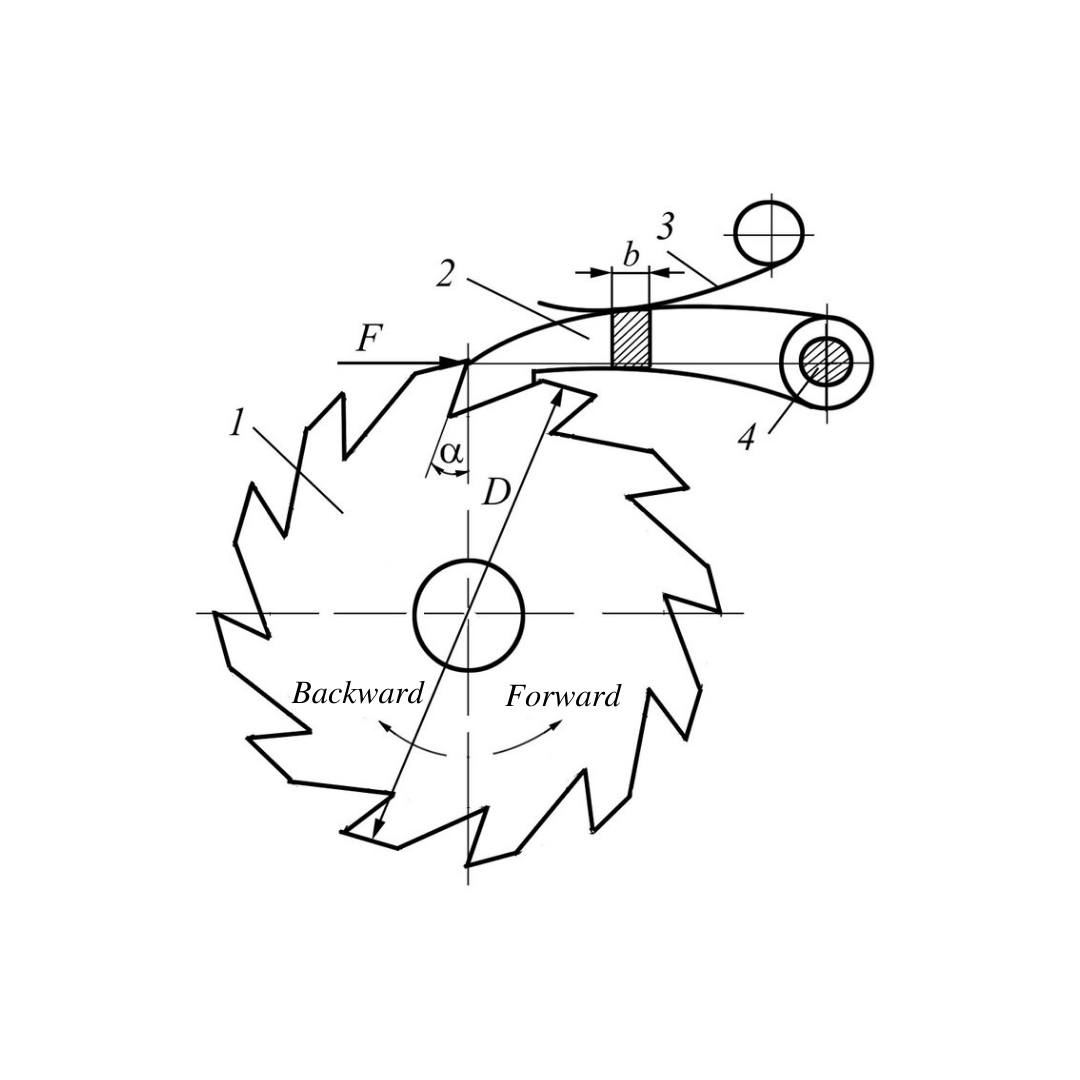
Do you know what a ratchet mechanism is? It consists of a gear wheel and a pawl. The asymmetric teeth of the wheel have a stop on one side. The pawl is pressed against the wheel by a spring or its own weight. Thanks to this design, the wheel rotates exclusively in one direction, reliably preventing any backward movement. The ratchet mechanism is used, for example, in jacks, winches, handcuffs, and bicycles. But it can also be recognized in other areas. For instance, in business.

There are many classifications of human personality types. For our purposes, we can simplistically divide people based on their natural inclination towards two functions - Development and Stabilization. The first function propels the wheel of business forward, while the second function secures achievements, preventing it from rolling back.

Encountering an entrepreneur with both functions equally developed is practically impossible. It's like in the wild, where some animals predominantly lead a daytime lifestyle, while others are nocturnal. It's neither good nor bad. That's just how it is.

From the metaphor of the ratchet mechanism, it is evident that the simultaneous presence of both functions, represented by individuals, is a necessary condition for the functionality of a business. Remove the wheel from the structure, and all rotational movement disappears. But without the pawl, the system ceases to develop progressively. The wheel will rotate chaotically, moving back and forth.

Unfortunately, in real business, things turn out differently. In some companies, there is an excess of fervent activity that yields little in the long run. In others, on the contrary, all processes are organized, polished, and meticulously described, but the business sluggishly drifts like a sailboat in calm weather. This means that one function is hypertrophied, while the other is weak and feeble.

The root cause of such imbalance must be sought in the head of the corporate body. And it doesn't matter how many owners the company has - three, two, or just one. The problem lies in the hidden beliefs and assumptions of the person, of which he or she may not even be aware. I'll hint that it concerns the natural inclination to value what we already have in abundance, and conversely, to devalue what we currently lack. However, this captivating topic deserves a separate post.

Yours sincerely,

-Alexander


You can help Ukraine defend itself and the World from Russian aggression here.


As a business therapist, I help tech founders radically increase the value of their companies by accelerating key decisions at the intersection of business and personality.

What for? by Alexander Lyadov

Harry Brockway

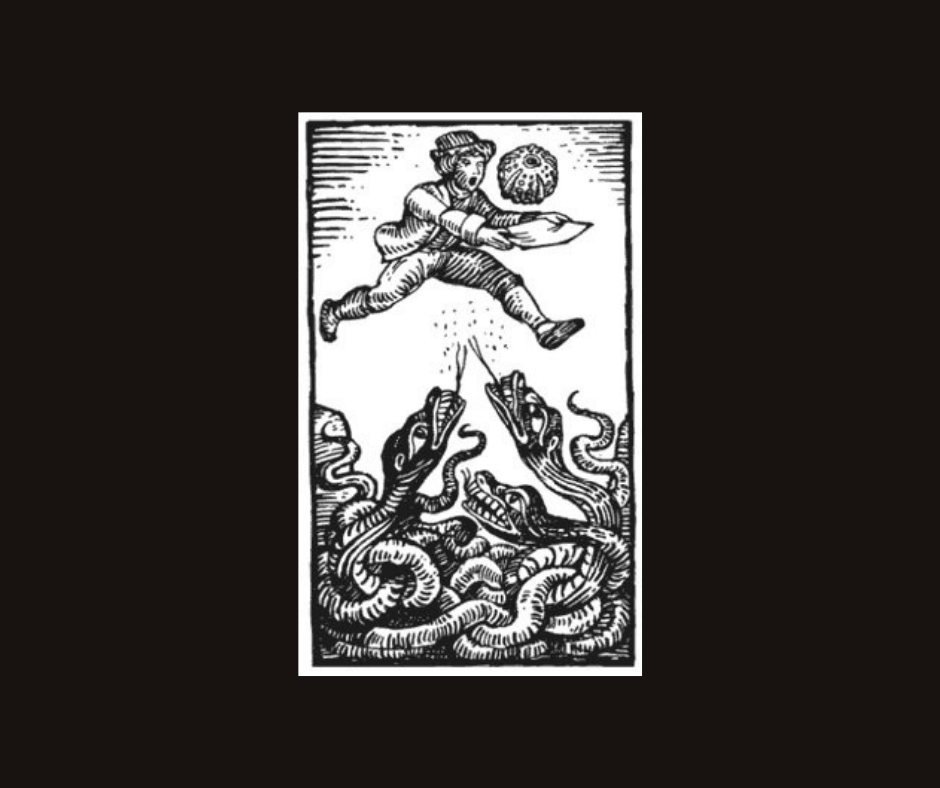
Muscles are only needed as long as they serve us. Without action, they quickly atrophy, losing volume and strength. The same happens to joints — their range of motion and elasticity are reduced. Without regular use, any biological organ, technical system or mechanism withers, rusts and mosses.

Even after a joint injury, rest is recommended only for the first couple of days. Then you need to provide enough strain despite the discomfort. This increases blood flow to the injured area, provides nutrients and eventually speeds up the healing process.

Real life is frugal and does not allow for senseless waste. Only the essentials are saved. Anything unnecessary is eliminated at the root. Nature does not sponsor whimsy.

Every organ or system has a function and was not designed this way by accident. Ignorance or neglect of its primary function leads to premature wear and tear and breakdown. On the contrary, using it for its intended purpose keeps any system functioning for an unexpectedly long time.

This explains, in part, why many intellectual workers have health problems, suffer unnecessary injuries, or age too early. For them, the main value is the brain. The body is at best an appendage to it, at worst a meaningless atavism. If the body is neglected and unappreciated, is it any wonder that it falls apart?

I know talented classical musicians whose careers were threatened by shoulder and back problems at age 30. I remember an amazing designer who had to interrupt her work every half hour because of chronic arm pain. Even young programmers often suffer from cardiovascular disease, neck, back and wrist pain. Not to mention entrepreneurs and CEOs, because all too often I encounter the consequences of their burnout, when the body declares an ultimatum and goes on indefinite strike.

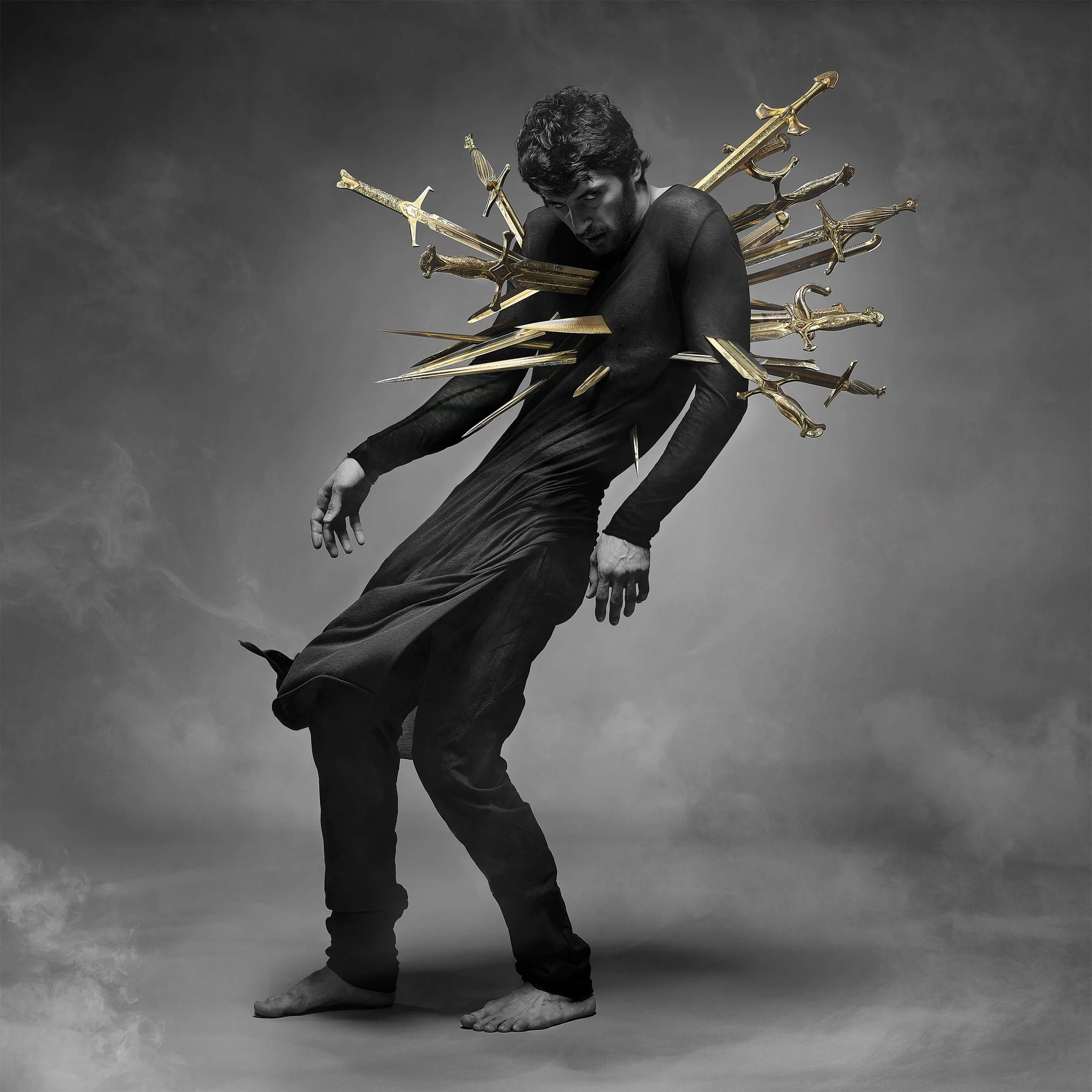
The word "corporate" comes from the Latin "corpus" and specifically means body. Atrophy of unused muscles occurs within the corporate body as well. An example of this is when the Board of Directors is created by the owner only as a tribute to fashion or as a formality. In this case, one should not be surprised that the Board of Directors rusts senselessly in its scabbard, like a decorative sword on the wall. The answer to the question "Why does the system not work well?" is impossible without answering the question "What was it created for?".

Sincerely yours,

-Alexander

Kyiv, 20.04.2022


You can help Ukraine defend itself and the World from Russian aggression here.


As a business therapist, I help tech founders radically increase the value of their companies by accelerating key decisions at the intersection of business and personality.

The first step toward fear by Alexander Lyadov

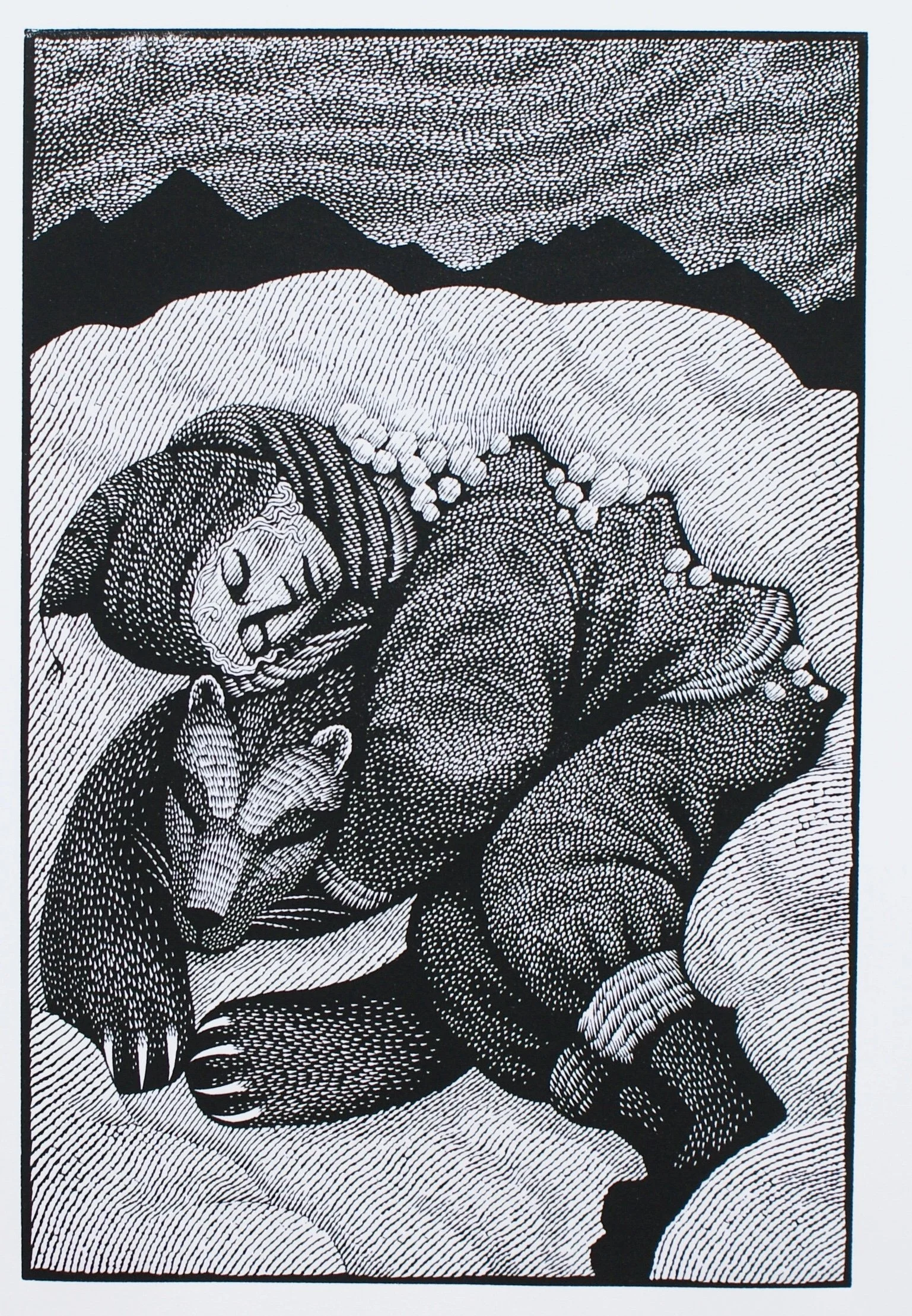
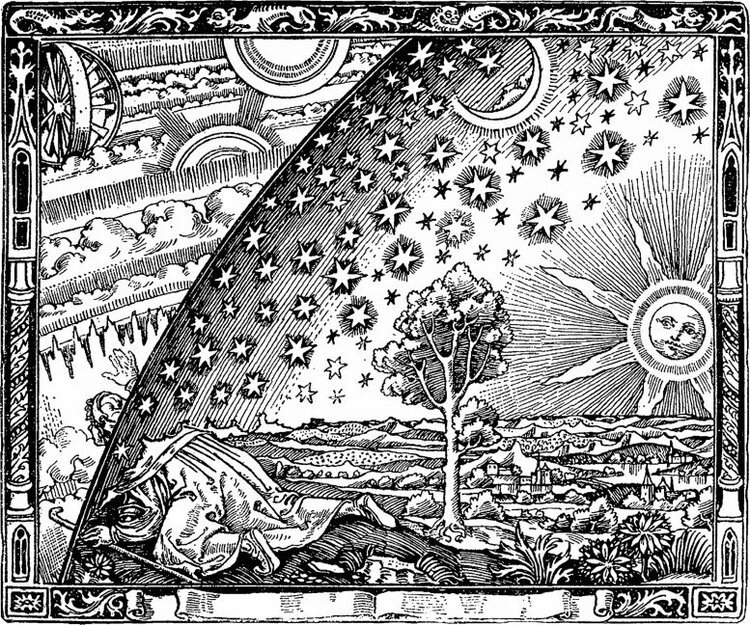
Woodcut from 1497

What usually happens when you encounter something new, unfamiliar and wild that can destroy your business and even ruin your whole life? Many entrepreneurs freeze for a while, falling into anabiosis.

It's not their fault. That's how the brain works. It's hard to argue with amygdala. While life is flowing according to plan, the oldest part of our brain sits quietly. But as soon as something goes wrong, the amygdala takes over the steering wheel. Millions of years of evolution have taught it that any novelty is potentially disastrous. So as long as uncertainty persists, the amygdala interrupts habitual activities in animals and humans - work, play, food, sleep, and sex. Emotions such as confusion, anxiety, worry, and fear forcibly focus our attention on the now most pressing problem.

In such moments, we desperately want the fire to extinguish itself and the danger to pass by. We ignore abnormal facts for so long that it is often too late. We convince ourselves: "I imagined everything. It's okay. Everything will be all right." No, unfortunately, it won't. Intuition is sometimes wrong about the extent of the problem, but it is almost always right that there is something meaningful there.

Fortunately, we have a reliable helper. Evolution has not only created a brake within us, but also a gas. It is curiosity, which in response to novelty necessarily arises, but a little later than fear. In psychology it is called the Orientational Response. Curiosity helps us explore the source of uncertainty and separate the dangerous from the scary.

Knowing all this, we can speed up the process of our adaptation to novelty. It is necessary, first, to wait for the inevitable wave of fear to strike. It must be patiently waited out. And secondly, quickly try to show interest in the new phenomenon. At the same time, it is important to choose a load that is within your capabilities (if there is such a possibility). There is no need to decide or undertake something right away - increasing vigilance and focus of attention is enough to start with. Symbolically, you have already turned to face your fear. On the surface it's tiny, but in essence it's a monumental step. Instead of a terror-stricken victim, a hunter emerges, scrutinizing the predator to choose the right moment for a successful counter-attack.

Sincerely yours,

-Alexander

Kyiv, 18.04.2022


You can help Ukraine defend itself and the World from Russian aggression here.


As a business therapist, I help tech founders radically increase the value of their companies by accelerating key decisions at the intersection of business and personality.

How do you become the one in between? by Alexander Lyadov

Woodcut from 1497

When I went to The University of Chicago Booth School of Business in 2002, I was struck by one of the professors. During a lecture on social capital, Professor Ron Burt explained that most people tend to socialize in closed clusters: businessmen with businessmen, doctors with doctors, the military with the military, artists with art people, and so on. Over time, they become more and more entrenched in the ideas popular in their cluster and less and less open to ideas from outside.

But there is another type of person, the network entrepreneur. They are few in number and, unlike the others, they are able to travel between clusters and, most importantly, communicate with the locals in their language. It is no secret that a top manager and a designer, an investor and a programmer, a scientist and an actor often do not understand each other, as if they were inhabitants of different planets. Often they need a mediator-translator.

In the course of their multicultural journeys, network entrepreneurs are able to spot ideas that are trivial in one cluster but of extraordinary value in another. Knowing the languages, they deliver the message in a way that makes it stick. Like bees carrying pollen, they transfer ideas from one flower to another.

As a result, communities are enriched with new knowledge, opportunities and perspectives. Some network entrepreneurs build information bridges pro bono; others earn reputation or capital for themselves in the process.

In the olden days they were called dragomans or truchmen, that is, interpreters of spoken language. They, too, had an affinity for learning new cultures and languages. Since people have always been fearful and aggressive toward everything unfamiliar, the life of interpreters was dangerous. They must have been distinguished by their ability to think on the move — to listen actively to the interlocutor, to analyze a situation quickly, to make decisions in uncertainty, and to resolve conflict.

Still, the main thing for these mediators is openness to new experience and willingness to take risks for it. In other words, their curiosity is stronger than their fear.

Today, technologies like social media do not so much connect people as they do divide them. Along with agonizing media, they polarize people's opinions, trapping them in tight clusters. To maintain sanity, survive and thrive, it is useful for each of us to develop the skills of a network entrepreneur, to be an interpreter a little more often. It is necessary to become a link between what has always been valuable and what can become so.

Yours sincerely,

-Alexander

Kyiv, 17.04.2022


You can help Ukraine defend itself and the World from Russian aggression here.


As a business therapist, I help tech founders radically increase the value of their companies by accelerating key decisions at the intersection of business and personality.

How to deal with your mistakes? by Alexander Lyadov

Woodcut from Camille Flammarion’s 1888 book L’Atmosphère: météorologie populaire.

Perhaps there are people who are not afraid to make mistakes. I think they are in the minority. Are you one? Well, I'm certainly not one of them. The mismatch between reality and my expectations often hits me like a punch in the gut.

It is normal to experience negative emotions in this case. After all, a mistake can mean anything. At best, it is just a slight miscalculation. At worst, you don't understand anything at all in this life. No wonder the amygdala paralyzes your brain with anxiety - potentially every mistake invites chaos inside, like a crack in the bottom of a ship. In other words, a mistake symbolizes death.

That's why man so desperately wants to always and in everything to be right. Even smashing his face in blood against the iron barrier of facts that prove to him that in reality the opposite is true. It's an understandable but naive idea: "I'll survive if I never leave the safe nest."

And that would be a great solution, if the world around us remained static. But the context is transforming, reborn and transformed, and it seems to be transforming faster and faster every day. A tree that has held the family nest for decades falls from old age. The river floods the cozy hole where several generations have grown up.

In addition to changes outside, invisible changes are constantly taking place inside each person. In one moment, hormones and a desire to change the world awaken, in another - the desire to have children and build their own business, in the third - the urge to contemplate the turbulent flow of life. Because of the inevitable metamorphosis inside, it becomes unbearable for us to breathe, like a crab in an old shell. By doing nothing, we only make ourselves worse off. It turns out that when we dare to do something, we make mistakes and suffer. Refraining from action is illusory, for in the long run it also means a dead end. So here is another existential dilemma.

The way out, as usual, is paradoxical. Contrary to spasms of anxiety, it makes sense to try to be wrong more often. Ideally, dozens or even hundreds of times every single day. A deadly poison in a small dose becomes a safe or even a cure. In the same way, dangerous mistakes, when broken down to elementary particles, become valuable bytes of information. Voluntarily seeking out and making sense of such knowledge allows us to create a defense against truly dangerous catastrophes.

But most importantly, mistakes thus transformed open the door to a new world. By our willingness to endure anxiety, it is as if we are buying a call option at an affordable price. It entitles us to upside, that is, to the unlimited potential for development, prosperity, and growth. That sounds like a great deal to me. What do you think?

Yours sincerely,

-Alexander

Kyiv, 09.04.2022


You can help Ukraine defend itself and the World from Russian aggression here.


As a business therapist, I help tech founders radically increase the value of their companies by accelerating key decisions at the intersection of business and personality.

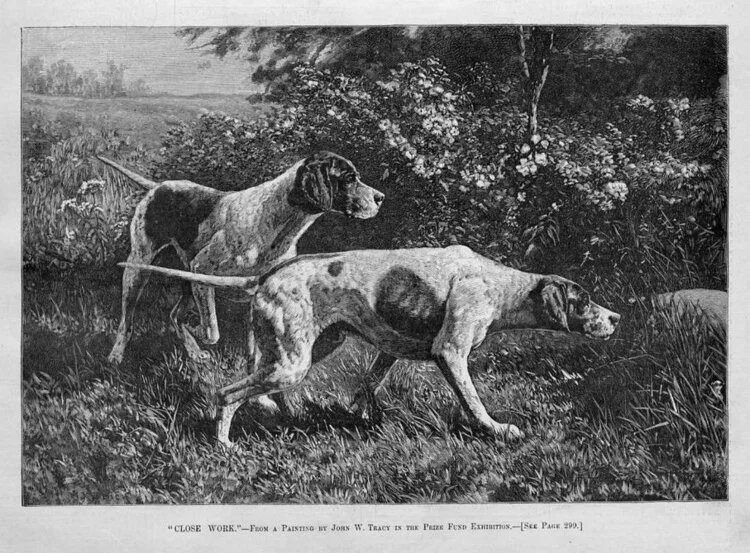
What should a dog who has lost the trail do? by Alexander Lyadov

There are two states. The first is when the dog is on the trail. The second is when it has lost the trail. Except for the target and the participant, there is nothing else in common between the states. The perception of the situation, the range of emotions, the way of thinking, the algorithm of behavior are all different, like darkness and light.

In the first state, the key word is coherence. A reliable navigator projects a clear route on the retina. Each step makes sense, steadily approaching the desired goal. Attention is sharpened, energy is focused, and movement is optimal. Self-confidence and anticipation of victory grows.

Of course, the dog may stumble or encounter barriers along the way. But problems are quickly solved, because the navigator immediately paves an alternative route. Obstacles only further inflame the excitement of the hunter.

It’s different when the trail is gone. It’s as if the dog has been replaced. He rushes, sharply changing direction, sniffing everything — the ground, trees, air. He is full of despair and anxiety. Total disorientation. It’s not just the trail that’s lost. The main purpose of his life has disappeared.

From the outside, a dog’s behavior can look strange, even comical. Isn’t it silly to wander from side to side like that? It’s obvious he’s wasting a lot of energy, isn’t it? See how ineffective he is at this point!

But it’s a big mistake to think that way. In reality, the actions of a dog that has lost the trail are 100% effective. It’s just a different efficiency, in a different system of coordinates. Revolutionary expediency is very different from Evolutionary expediency.

In a situation of high uncertainty, the strategy of options, that is, keeping the right to play the game, is preferable. It is necessary to get the maximum favorable opportunities, opening the largest number of closed doors. And pay the minimum price for each attempt. In other words, in a situation of confusion, poking your nose neatly in all directions is sensible. Gradually, out of these “pointless” attempts a certain pattern will emerge, one of the options will definitely work.

The dog’s tossing seems nonsensical only on the outside. On the inside, the dog knows exactly when to pick up the trail again. Like a taut arrow, it’s just waiting for the signal to instantly turn its stored energy into action.

Of course, this is a metaphor. The dog is both you and me. Unfortunately, in our culture there is an overemphasis on the first state, and almost no information about the second. So we know very well how to chase our prey on the hot trail. However, we fall into a severe stupor when we suddenly lose the trail.

The reasons are varied — epidemics, economic crisis, natural disasters, personal circumstances, or war, as in my country right now. Sooner or later, each of us is bound to find ourselves at an impasse. In that case, remind yourself of that dog. Perhaps the way out will be found more quickly. After all, you are a skilled hunter. Trust your gut.

Sincerely yours,

Alexander

Kyiv, 07.04.2022


You can help Ukraine defend itself and the World from Russian aggression here.


As a business therapist, I help tech founders radically increase the value of their companies by accelerating key decisions at the intersection of business and personality.

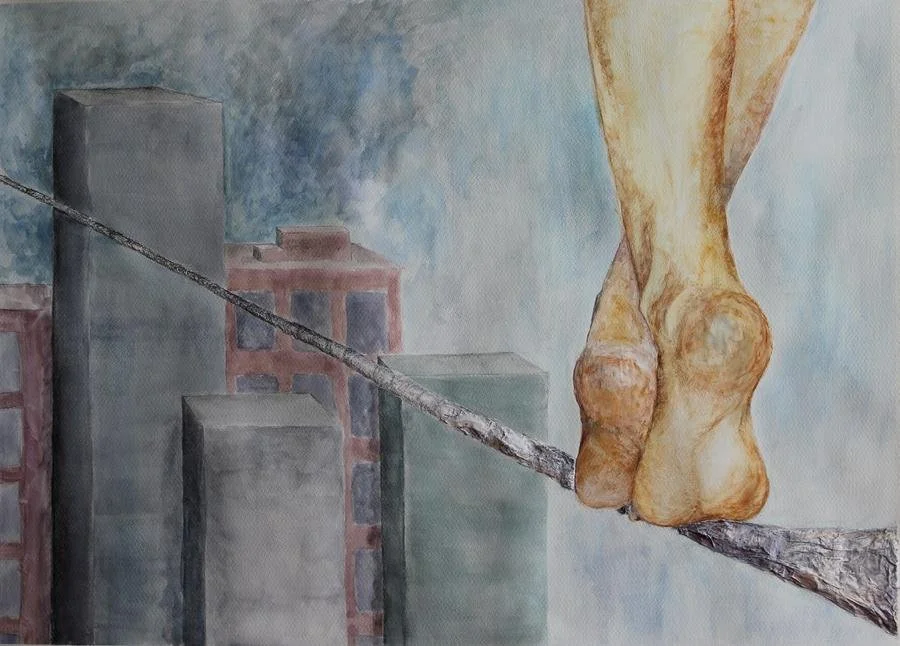
The tightrope walker's step by Alexander Lyadov

Of course, it is prudent to choose only those battles in which you have a high chance of winning. But sometimes life doesn't ask you what you're ready for and what you want. It grabs you hard by the neck and throws you into the raging ocean.

Faced with a new and unfamiliar situation, it's easy to fall into a stupor. There is a significant gap between the level of difficulty of the task and your skill level. Riding a giant wave, there is a risk of not holding on, falling off, hitting the reefs and drowning. The proximity of disaster and not knowing what to do — no wonder you feel insecure at such a moment. It would be strange if it were otherwise.

In such cases I am reminded of the tightrope walker. When he is over the precipice, he has no time to tremble or reflect. There is no time to doubt himself. And there's no point in plotting the perfect route. The tightrope walker is totally absorbed in the work. All of his attention is focused on how to take that one next step.

It seems like a small step, but without a full commitment, nothing will work. The stakes are too high. Death is looking into his eyes. The slightest distraction, hesitation, asynchrony - and the daredevil will fly down with a scream. That is why his whole life is concentrated at the point of contact of the foot and the rope.

Fortunately, the rope walker doesn't need a map or a navigator. Even fog and night will not lead him astray. The rope itself has laid out the route, and it is the only one and the best one. You just have to trust it.

It is necessary to dissolve in the problem entirely. Forget everything else. Raise your vigilance and caution. Take one leap of faith after another. As you do this, you'll be surprised how quickly time flies by, and you'll be relieved to be stepping on solid ground.

Yours sincerely,

-Alexander

Kyiv, 02.04.2022


You can help Ukraine defend itself and the World from Russian aggression here.


As a business therapist, I help tech founders radically increase the value of their companies by accelerating key decisions at the intersection of business and personality.

Choose your battle wisely by Alexander Lyadov

In nature, everything is set up wisely. As a rule, an animal does not claim what it cannot hold, swallow, or digest. Even the strongest and fiercest lion, without extreme necessity, will not attack the leader of a herd of bulls. No, he would prefer a young, weakened or wounded one. And it will do it suddenly from an ambush. A predator has an a priori limited reserve of strength for chasing and fighting. Each false start quickly brings death from injury or exhaustion in the wild.

Unlike the animal world, humans often act in highly irrational ways. How do you explain the actions of an office clerk who, after cutting each other off in the road, jumps out of his car to start a fight with a complete stranger who may be a professional MMA fighter? What goes through the mind of a pedestrian who “punishes” a motorist by walking quickly across a zebra without even turning his head at the screeching of the brakes? What drives the entrepreneur, when he arrogantly rejects the possibility of conflict mediation and rushes to sue his partner, which will suck a lot of nerves, time and money out of both of them?

In nature, a predator chooses only the battles in which he has the maximum probability of winning. So if an attack fails, he stops it immediately. Or retreats without regret if the game suddenly fought back strongly. This is not the last hunt in his life. If he stays alive, there will be many others.

The difference is that the predator puts everything on zero, only being really cornered. A man, on the other hand, easily and on a trivial matter, drives himself into an imaginary corner. In the offender on the road, the clerk sees the “universal” evil. The pedestrian tries to restore “world justice.” The businessman fights for what “has always rightfully belonged to him”. There is much hidden pleasure in such an impulse. For which, however, neither of them is willing to pay. After an unfortunate confrontation, one of the participants goes to intensive care and the other to prison. The fates of their children, relatives, co-workers, and random bystanders are ruined. Afterwards, when they come to their senses, the participants regret the excessive price they paid for the short-term pleasure.

At the very least, it’s a matter of soberly assessing one’s chances of success. If in business you know what your overwhelming advantage is, have limited your risks, have developed a plan B, then go ahead — boldly go on the attack. But if there is nothing but the obsession: “This is stronger than me. I can’t do otherwise. I just have to do it,” then it’s best to pause the situation and ask yourself: “Is this my battle? Can I win it?”

In this sense, the war is very instructive. In today’s Russian aggression against Ukraine, we can see that the Russian leadership is acting even less intelligently than any animal in the air, water, or land. The Russian Federation imprudently attacked someone who is clearly too tough for her. Not only is Russia unable to defeat Ukraine, but the injuries resulting from the fight may be incompatible with life for her. In the end, the Russian empire may collapse and fall to its original pieces.

But in addition to a developed neocortex for planning and evaluation, what distinguishes humans from animals is the ability to ask themselves the fundamental question: “What for?”. Depending on the answer, humans (and the countries) reveal themselves to be either the crown of nature or the lowest creature in the world.

Yours sincerely,

-Alexander

Kyiv, 01.04.2022


You can help Ukraine defend itself and the World from Russian aggression here.


As a business therapist, I help tech founders with rapid business transformation. My specialty is accelerating decision-making at the intersection of business and personality.

What fate does not like. by Alexander Lyadov

Sometimes there are days when it seems as if the universe has turned against you. Bad news comes down like rain of fire all at once. Resources run out, assets are destroyed, and opportunities disappear as if they were derailed by an enemy sabotage squad. Subjectively, it feels as if it will never dawn on you again.

At such moments I am reminded of what it is like when, during a jiu-jitsu fight, your opponent has taken a good position and tries to strangle you from behind. You panic inside, your consciousness clouds and darkness thickens. Your hand spontaneously wants to tap. But suddenly, for some unknown reason, you decide to wait some more time.

It is hard to say whether this is stubbornness, boldness, or stupidity. However, to your surprise, a couple of seconds later your opponent dissolves his dangerous grip. He mumbles in a dazed, frustrated voice, "I don't understand. Why didn't you give up? Is there something wrong with my technique?" There's a smile on your face in response. After all, you don't have to tell him your secret.

In many areas of life, whether in war, politics, science, business, or jiu-jitsu, excruciating uncertainty often lingers right up to the end. You can lose one position after another at first, but eventually to defeat all opponents, crushing all obstacles in your way. The task of man is not to worry about winning or losing. On the contrary, it is necessary to dissolve into the fight with nothing left. For he who does absolutely everything he can paradoxically becomes invulnerable to the result. That's anti-fragility, isn't it? And such "impudence" fate does not mind rewarding. What fate punishes with certainty is a premature exit from the game.

Yours sincerely,

-Alexander

Kyiv, 31.03.22


Support Ukraine in any way you choose here


As a business therapist, I help tech founders with rapid business transformation. My specialty is accelerating decision-making at the intersection of business and personality.

Your vague feeling by Alexander Lyadov

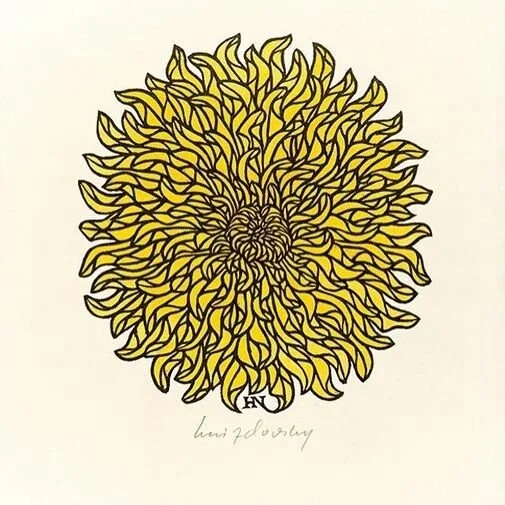
Hanuman, the god monkey, print from West Bengal


Do you remember the feeling of vague unease when you were offered a lucrative business deal or interviewed a brilliant CEO candidate? From my own mistakes, I've come to this conclusion: what makes you uneasy during a deal or interview is what will get you out of the partnership and get the candidate fired a year from now.

Words, like contract terms or resume clauses, are tangible and explicit — you can pick them up, double-check and evaluate them. The same cannot be said for voice and facial expressions, whose effects are implicit within us. Like the wind, they leave a slight ripple on the surface of the water, just for a moment. But it would be naive to deny the existence of the wind, wouldn't it? Especially if there is a possibility that it will be followed by a hurricane.

It is customary to contrast the explicit and the implicit, logic and feeling, reason and instinct. This seems to me to be a big mistake. It is necessary to get out of the "either-or" dilemma by choosing the alternative path of "and-and." Swedish film director, producer, and playwright Ingmar Bergman famously said: "I throw a spear into the dark. It's intuition. Then I send an army to find it. That's intelligence." In a situation of high uncertainty, it is equally important to trust your "stomach" in its ability to spot an important mystery and your "head" in its ability to solve it soon.

Yours sincerely,

-Alexander

Kyiv, 30.03.22


Support Ukraine in any way you choose here


As a business therapist, I help tech founders with rapid business transformation. My specialty is accelerating decision-making at the intersection of business and personality.

It's not about you at all by Alexander Lyadov

A therapist once gave me the task of finding an object in her office that angered or annoyed me and then describing it in the first person. When we picked apart my words, I was amazed.

It turned out that in describing my attitude toward the external object, I was describing my inner world quite accurately. Or, more precisely, what was troubling me inside at that moment. So I learned that no matter what a person talks about, in reality, he (or she) talks mostly about himself.

No wonder, then, that the willingness to seek the truth, as well as the ability to listen to another person, is a great rarity, either a professional skill or a gift. But there is good news in all this.

For example, when someone sharply criticizes your position or your product on social media, there's no point in taking it personally — to a large extent, it is not about you. By venting their anger, frustration or resentment at you, this person is only describing, as psychologists say, his own symptom. And the more emotion in his criticism, the less information there is about you, but more about him.

Derek Gaunt of the The Black Swan Group, an expert hostage negotiator, often reminds in his business negotiation seminars, "It's not about you!" He advises focusing on identifying your opponent's hidden needs, calling it Tactical Empathy. Understanding someone else's motives doesn't mean that you accept them, but it helps you to change their minds more effectively. You don't even have to try very hard — your opponent will tell you all about himself. Just remember, it's not about you at all.

Yours sincerely,

-Alexander

Kyiv, 29.03.22


As a business therapist, I help tech founders with rapid business transformation. My specialty is accelerating decision-making at the intersection of business and personality.

Transformation by Alexander Lyadov

Imagine that you are an experienced gardener who lives on an island. One day you discover the seeds of a plant you don't know. Maybe a recent typhoon blew them in. Out of curiosity, you decide to plant these strange seeds. You don't know what will grow from them, but you do understand the process common to all plants.

Of course, it is not clear what exactly this species needs. You have to be very careful not to inadvertently kill it. You create favorable conditions for development of whatever you want - plant seeds in the black earth, provide watering, make a fence against wild beasts and so on. Finally, the first shoots appear. Gradually the delicate plant turns into a gorgeous tree. You can see it already decorating your garden. Every day you can see the obvious progress. But you still do not know when the strange tree will bear fruit and what its fruit will be like. So you continue to care for it carefully and wait patiently for the culmination of the process.

After all, anything is possible with the abnormal plant. It can surprise you as early as tomorrow or, on the contrary, keep the intrigue for several years. Once that happens, you'll know exactly the whole cycle from sowing to harvest. And if you like the harvested fruit, you can repeat the cycle all over again. Instead of uncertainty, knowledge will arise.

Most of us spend a good part of our lives learning the specifics of growing known species of plants, figuratively speaking. And we become exceptionally good at it, achieving universal recognition, self-respect, and perhaps prosperity. But one day we wake up with a vague longing that this is not all. It is as if we are missing something important, without which our life is not life. Over time, the vague feeling grows into a physically felt need-existential hunger, metaphysical emptiness.

If you treat this unusual condition with respect and attention, you are in for a most fascinating and rewarding experiment. All you have to do is not flee, not hide, and not plug the gaping emptiness inside you with artificial substitutes. One day the wind of change will surely throw some strange seeds into your garden. Or rather, he regularly threw them there, you just did not notice them before.

Metamorphosis (from the ancient Greek μεταμόρφωσις "transformation") is a mysterious process that, alas, is not taught anywhere today. Everyone has to rediscover it for himself. Fortunately, the process of transformation is unified, eternal, and universal. And it doesn't matter what area it starts in for you. Radical changes can happen in business, family, sports, art, or in all aspects of life at once, as happened to every Ukrainian today.

Remember that you are not just an intrigued gardener who discovered an anomalous fact. You are also the fertile soil, the seeds of an unfamiliar plant, the warm sun, and the life-giving water. It's all within you.

Sincerely yours,

-Alexander

Kyiv, 28.03.22


As a business therapist, I help tech founders with rapid business transformation.


How does David defeat Goliath? by Alexander Lyadov

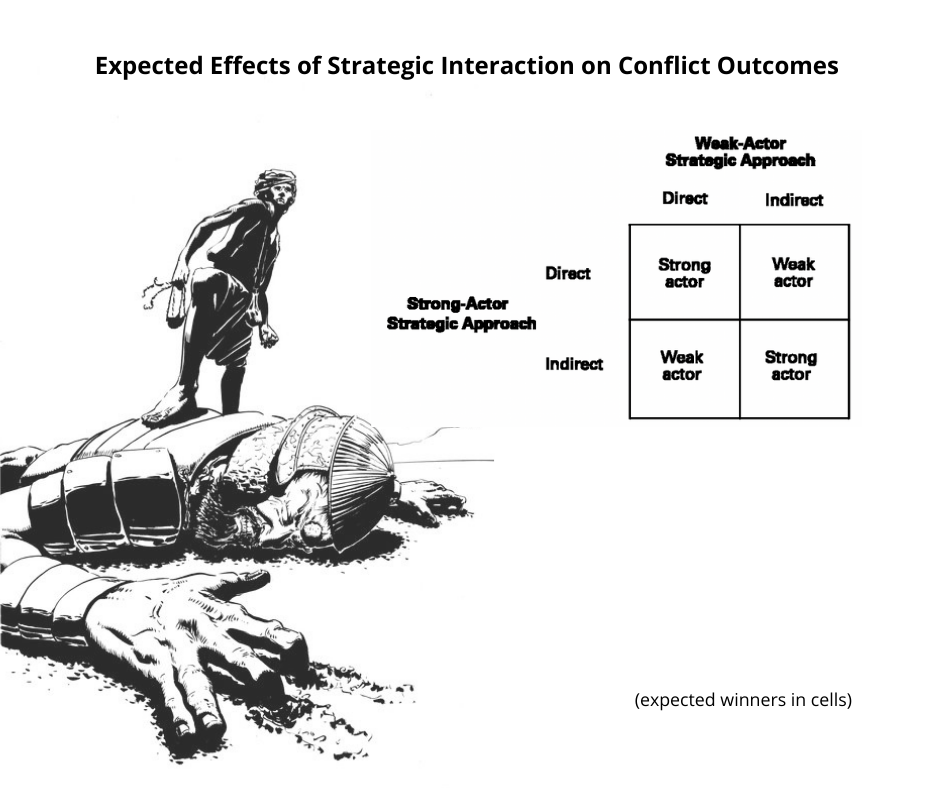
Some time ago I came across an article on the Stanford University website: "How the weak win wars. A theory of asymmetric conflict”. The author was Professor Ivan Arreguín-Toft, who taught conflict strategy at the University of Chicago, Harvard University, Boston University, and the University of Oxford. The topic of defeating a superior opponent has long interested me, mostly for business and sport. But I never expected that right now, in my home country, I would see this theory in action.

It is generally believed that brute force decides everything. The weaker side has no chance, especially if the gap in military power, population and other resources is huge. But as the author of the article proves, the history of asymmetric wars over the past 200 years often shows the opposite. David regularly defeats Goliath, on average, 30 times out of 100. But the most striking thing is that this ratio changes over time. For example, while between 1800 and 1849 the weaker man won only 12% of wars, between 1950 and 1998 the proportion of David's victories gradually rose to 55%. How so?

The author proposes "The Strategic Interaction thesis" according to which it is not brute strength or determination alone that decides victory, as other researchers have pointed out, but rather which strategies interact with each other. In this model, each side has two ideal winning strategies. The stronger side has: 1) Direct Attack and 2) Barbarism. The weaker side has: 1) Direct Defense and 2) Guerrilla Warfare. Direct strategies (attack and defense) target the enemy's armed forces in order to destroy his ability to fight. In turn, indirect strategies aim to destroy the enemy's will to resist. Thus, barbarism targets the enemy's civilians, while guerrilla warfare targets the enemy's soldiers.

The insight is that interaction within a single approach (Direct-Direct or Indirect-Indirect) implies defeat for the weaker side, since nothing compensates for the difference in resources. In such cases, the war ends quickly. In contrast, interacting with the opposite approach (Direct-Indirect or Indirect-Direct) implies victory for the defending side, because Goliath's advantage in strength is neutralized. For example, if the aggressor's army is being fought largely in guerrilla warfare, it becomes difficult for the aggressor to distinguish with whom he is fighting. The growing number of civilian casualties only strengthens the resistance of the defending side.

If, however, the aggressor wants not just to fight the army, but to break the will of the people and for this purpose uses indirect strategies, such as blockades or the strategic bombing of cities, he most often achieves the opposite result. Contrary to the expectations of Hitler and Göring, the German bombing of London only strengthened the determination of the British to fight to the end. Moreover, the facts of the mass killing of civilians become public knowledge both globally, encouraging the Allies to help the defender, and within the aggressor country, motivating its citizens to protest. Most importantly, in both cases (Direct Attack-Guerrilla Warfare and Barbarism-Direct Defense), the war is greatly prolonged, which benefits the weaker side.

The fact is that in asymmetric warfare, time works against the aggressor. Aware of his power, the invader tends to inflate expectations of triumph in himself and everyone around him. If force implies victory, then an overwhelming advantage in strength implies a quick victory. However, as war with a weaker opponent drags on, excessive expectations of success force the aggressor to escalate the use of force in order to meet expectations at all costs or to lose face in shame. The longer the war drags on, the greater the political vulnerability of the aggressor, as the internal pressure on the leader from the masses (in a democracy) or on the dictator from the counterbalancing elite (in an authoritarian country) grows: "The war is lost. We have to leave."

There are many more insights to be gleaned from Professor Arreguín-Toft's article that make it worth reading in the original. For myself I have drawn the following conclusions:

  1. The history of asymmetric warfare over 200 years teaches that Goliath's brute strength is nothing if David uses an asymmetric defense strategy.

  2. Despite the constant outward display of the trappings of indestructibility and strength, Putin's dictatorial regime is extremely politically vulnerable from within.

  3. Ukrainians pay a high price, but each new day of war inexorably brings Russia closer to collapse and Ukraine closer to victory.

Glory to Ukraine!

Sincerely yours,

-Alexander


As a business therapist, I help tech founders with rapid business transformation.


Nothing extra by Alexander Lyadov

A sports group of children and teenagers begins warming up on the tatami. The children are between the ages of eight and fourteen. As they run, they goof around, stumble and wobble. The group is led by a girl who runs differently. Not a single extra movement, straight back, springy steps. You can tell she's been wrestling for at least three years.

In National Geographic movies about hunting predators, you can see the same economy of effort. The movements of lions, leopards and tigers are full of grace and beauty, like a piece of music, in which there is not a single unjustified note. Each element of the "system" is subordinated to the main function. Any redundancy is eliminated at the root.

Each element of the "system" is subordinated to the main function.

When faced with novelty, our interaction is, by definition, inefficient and requires "unjustified" costs. In the research phase, it is even harmful to try to save money. Therefore, crumpled drafts, hypotheses and prototypes should fill the trash can.

However, as knowledge and experience accumulates, the zigzag line should extend into a straight arrow. That's why professionals are easy to recognize by the parsimony of movements and the brevity of phrases. They don't throw energy to the wind. Any deviation from reasonableness causes them almost physical pain.

In our youth we splash the juice of vitality in all directions. In old age, on the contrary, we grudgingly invest every joule of energy. If we learn from life in the right way, then the wisdom in using the resources available to us comes faster than nature reduces them. Thus, in theory, we can become more powerful with each day we live. In this way we master the art of achieving everything without making unnecessary moves. Or rather, everything that really matters in life.

Yours sincerely,

-Alexander


As a business therapist, I help entrepreneurs to take faster tough decisions at the intersection of business and personality. You can check my detailed Linkedin profile. For our introductory call, you can choose a convenient time here.


Reality by Alexander Lyadov

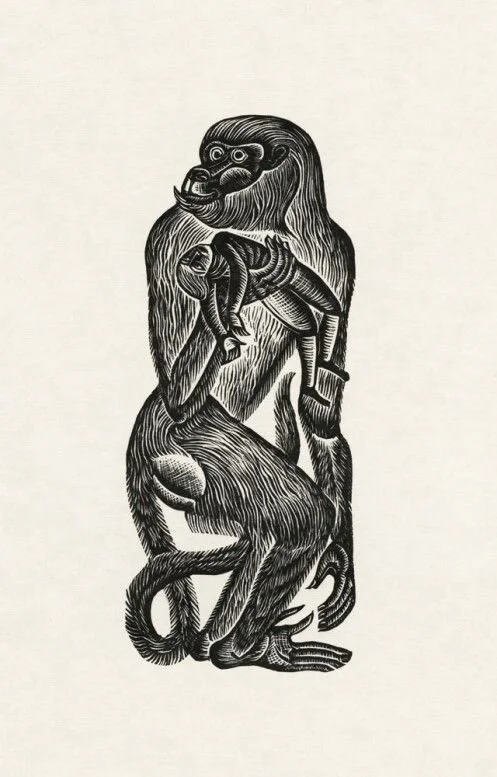
Some stories, though simple, have deep meaning and symbolism. They come to mind again and again in different situations. One of my favorites is about catching wild monkeys in India (see the video from 1912).

A jug is tied to a tree and coveted treats for these primates are placed in it. Attracted by the smell, an animal sticks its paw inside the jug, grabs the food, but can’t get it out anymore. The throat of the jug is wide enough for your palm to fit, but too narrow for a fist to get stuck. The monkey is in a trap, of which it is a part. Seeing the hunters approaching, the monkey screams and tries desperately to pull its paw out. But it cannot simply unclench its hand and lose the treat — that’s above its bend. The pleasure is so close that even the threat of death won’t make the monkey leave it.

The pleasure is so close that even the threat of death won’t make the monkey leave it.

Inside each of us lives such a monkey, which is regularly tempted by delicious offers, deals, promises, and paws into one “jug” after another. And it doesn’t matter whether we are talking about negotiating the hiring of a valuable employee with compensation of a hundred thousand dollars, the sale of our share in a business worth ten million dollars, or a merger deal worth a billion dollars. The essence of negotiations with your opponent, and, more importantly, of internal negotiations with yourself, is the same — it is determined by the answer to the question “What are you willing to sacrifice once you get into a trap?”

Usually in a crisis, in a stalemate situation, our first impulse is to find and blame the villain who made the trap for us. This is the psychology of an unfortunate victim hunted by a hostile outside world. But if we imagine ourselves in the monkey’s shoes, we won’t any longer be able to deny our responsibility for what has happened to us.

The threat of real or symbolic death exacerbates to the utmost the problem of choosing priorities. We have to decide what is truly valuable to us and what is not. To lose “everything” but to save life in return? Or to cling tightly to an adored object, hoping to squeak through by a wonder?

I remember when I was the CEO of a business, one of the hardest moments for me was the departure of some talented employee. Feeling incapable of accepting it, I took titanic efforts to dissuade him/her out of that “mistake”. Looking back at the past, I realize the absurdity of my attempts, as the Buddhists say, to attach legs to a drawn snake (画蛇添足), i.e., to do a completely useless thing. If you and your employee are out of the way, no persuasion and bonuses will fix it. And they only weaken the position of the leader and make the inevitable breakup even more painful.

As for hunters and predators, the irony is that they are not that dangerous. Our worst enemy is ourselves. Why? We try to appropriate for ourselves what does not yet belong to us. In the pursuit of fleeting pleasure, we miss the basic meaning. We confuse the desirable with the necessary and the imaginary with the real. In other words, all this drama is made up, staged and played out in our heads.

The good news is that, as the author of the drama, we are in the perfect position to stop it. There is only one sure way: we must interrupt our pleasure. In order to do that, we will have to part with something very precious. After all, the gods will accept only a generous sacrifice. Metaphorically, it is necessary to chew off one’s paw caught in a trap. As a rule, it is necessary to part with one of the manifestations of pride. That is, an unjustifiably high opinion of oneself, one’s abilities and one’s rights.

There is only one sure way: we must interrupt our pleasure.

Buddhists consider pride to be the poison of the mind. In Orthodoxy and in Islam, pride is the most grievous sin, giving rise to all the others. In the ancient tradition, such impudent behavior is regarded as a challenge to the gods and usually leads to the sudden disappearance of good fortune, and later to divine retribution.

The opposite of pride is humility, that is, a sober vision of self. Humility makes it easier to free yourself from all excess by taming exorbitant passion. As a result, your decisions as a business owner, CEO or investor gain insight, foresight and irreducibility. Why? Reality is a frightening force. Now it’s on your side.

Yours sincerely,

-Alexander


As a business therapist, I help entrepreneurs to take faster tough decisions at the intersection of business and personality. You can check my detailed Linkedin profile. For our introductory call, you can choose a convenient time here.

Willingness to Take by Alexander Lyadov

Za-rei.jpeg
 

Which is more important, the art of healing or immunity? Means of salvation or survival instinct? The accessibility of food or the availability of hunger? These are not abstract questions — they help to prioritize life.

American Brazilian jiu-jitsu (BJJ) coach John Danaher never competed and never was a champion, but he became famous through his work with the MMA fighter Georges St-Pierre and his students’ outstanding success. Despite their youth, they were methodically "ripping" the best fighters in the world.

John has recently released a series of online training courses that have revolutionized BJJ and raised the paradigm of the sport to new heights. Every minute of his video tutorials is packed with wisdom that cannot be found elsewhere. John also generously shares his secrets through free videos and posts.

So I was surprised to find sparks of dissatisfaction with John's "academic" style of presentation and "excessive" terminology in the reviews of John's online courses on the forums. There was a time when John was a postgraduate student in philosophy at Columbia University, and at night he worked as a nightclub bouncer. Probably this paradoxical combination of interests allowed John to rethink fundamentally and enrich this sport.

But some consumers are still not happy. It's not enough for them to get a well-cooked, juicy steak. From John they demand its careful chewing up, dissolving in enzymes and, to the sound of a charming harp, injecting the nutritious mixture right into their esophagus. They want to gain knowledge without any effort.

They want to gain knowledge without any effort.

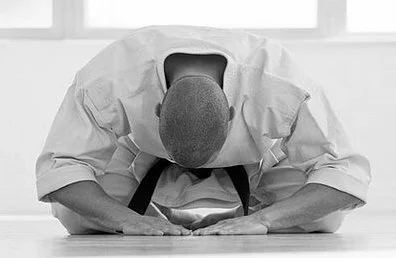
How different it is from the old parable about a young man praying to a martial artist to take him as a pupil! The master refuses three times, but the pupil returns again. Finally, the master allows him to observe classes while doing the dirty work of cleaning the dojo. The pupil eventually becomes his best student, glorifying the master and the martial art.

Of course, the world is full of changes. But some things remain the same. You can't pour water into a full cup. There is no learning without curiosity. There is no recovery without immunity. Only a hungry person will benefit from food. Only the one who is hungry to live can be saved.

People are ready to help you by willingly sharing their experience and knowledge. Much more important, however, is your willingness to take.

Much more important, however, is your willingness to take.

Sincerely yours,

-Alexander


Portraits (24).png


As a business therapist, I help entrepreneurs to take faster tough decisions at the intersection of business and personality. You can check my detailed Linkedin profile. For our introductory call, you can choose a convenient time here.

The Tom Sawyer Method by Alexander Lyadov

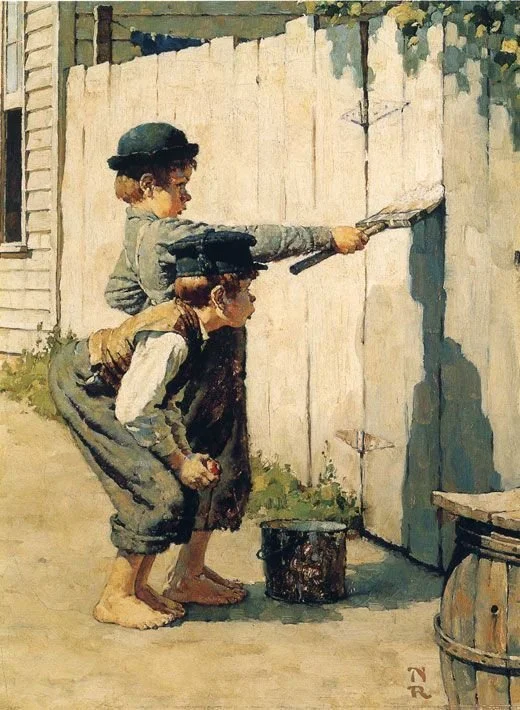
Tom Sayer and his friend are painting the fence by Norman Rockwell

Norman Rockwell


Imagine that you've made a regrettable mistake. Or life bit you and injected poison into your body. Typically, two reactions occur. On the one hand, you can be angry at your own stupidity, torment yourself with the question, "How could you have done that?" and drown in a sea of guilt. On the other hand, you can hate the outside world and the people who caused you discomfort, pain, and loss. In other words, reactive energy is directed inward or outward. Sometimes you can swing like a pendulum between these poles. Both paths lead nowhere and do not bring any benefit. But is there another way?

A bright illustration of the third path can be found in Mark Twain's immortal work. If you remember, Tom Sawyer's aunt punished him for mischief by making him paint a long fence. Tom was desperate because the long-awaited Saturday was packed with games and adventures with other boys. Worse still, Tom felt humiliated by the teasing of the boys, who would undoubtedly take advantage of his vulnerability.

"At this dark and hopeless moment an inspiration burst upon him! Nothing less than a great, magnificent inspiration. He took up his brush and went tranquilly to work." When the first boy Ben appeared and began to taunt him, Tom just continued to "enjoy" his work. When Ben made fun of him, saying that no one likes to whitewash, Tom surprised him by saying, "Like it? Well, I don't see why I oughtn't to like it. Does a boy get a chance to whitewash a fence every day?" From that moment on, everything appeared in a new light. Soon Tom was enjoying his rest in the shade, collecting payment from the boys, who quickly and carefully painted the fence in three coats, and even got an apple as a reward from his astonished aunt.

In the context of psychotherapist Viktor Frankl's logotherapy, Tom's method is called Paradoxical intention. The patients with a specific phobia (fear of dirt, enclosed spaces, etc.) are asked to try their best to sincerely want the thing they fear most. There have been cases where people who had suffered for decades from some severe form of phobia or obsessive idea were cured in just a few weeks. For example, I use this method when I have insomnia. Instead of desperately trying to fall asleep at any cost, I tell myself that I will stay awake all night. But after a short time of such supposed struggle, I inevitably fall asleep.

But the greatest value of Tom's method is to turn any poison into a cure. Instead of blaming oneself or being angry at the world, one can mentally express gratitude to fate for the harsh, but valuable lesson. If we sincerely embrace the role of grateful students, we can shed some of our naivety, resentment, and infantilism. And that means inevitably becoming stronger, smarter, and richer.

Yours sincerely,

-Alexander


Portraits (24).png


As a business therapist, I help entrepreneurs to take faster tough decisions at the intersection of business and personality. You can check my detailed Linkedin profile. For our introductory call, you can choose a convenient time here.

Tokui Waza by Alexander Lyadov

1601624845-huge.jpg

A young athlete and an entrepreneur I know asked me almost simultaneously: “My head is spinning. What should I focus on as an athlete (leader)?” In a certain way, I gave similar advice to both of them.

In Brazilian Jiu-Jitsu, there are probably thousands of techniques that can be used to force an opponent to surrender under the threat of strangulation, pain or fracture. The novice athlete's brain is bursting with a dilemma: what should he do — try to learn all the techniques a little at a time, or concentrate thoroughly on one thing?

Fortunately, there is a simple solution, although it is not spoken about anywhere. It is necessary to study a variety of techniques, but exactly to the extent that you are able to recognize and neutralize them when your opponent is trying to use them against you in a fight. In other words, the ability to build all possible traps is not required — it is just enough to notice them in time and avoid them.

In addition, an athlete needs to invest actively in the development of the so-called "Tokui waza". This is a Japanese term from judo, meaning a favorite technique, and, in our opinion, a crown. We are talking about a technique in which you succeed especially easily and which almost always leads to a successful result.

"Tokui waza" — we are talking about a technique in which you succeed especially easily and which almost always leads to a successful result.

It is not so important why exactly this one you like. Most likely, you are predisposed to it due to the special anatomy of your body or the inclination of your mind. The main thing is that in a fight, other things being equal, you will try to use this particular technique. More precisely, it will "shoot" itself at the right moment. In training, it is literally physically pleasant for you to practice it again and again. Moreover, your favorite technique attracts your attention like a magnet, inspiring you to explore all its possible aspects and nuances.

How can you understand which technique will become your "tokui waza"? You have to watch yourself very sensitively during fights. Sooner or later, you will notice that some technique has worked out well, as if by itself, greatly surprising you and bringing you joy. That's it, this is now an investment zone for your attention and efforts. Collect information about this technique from any source, experiment with it before and after training.

Very soon, even the most experienced wrestlers will know that in certain situations, you are not to be trifled with. You, on the other hand, continue to diligently water what grows on its own. As a rule, one "crown" technique pulls the second one and the third. As a result, a whole bush of favorite techniques grows, allowing a novice athlete to win competitions more often.

This approach helped me to win two gold medals at the European Championships in 2018 and 2019, just three years after starting Brazilian Jiu-Jitsu.

In this sense, business and wrestling are very similar. In the perception of your clients, there is a certain set of "hygienic" factors, without which your company will not be allowed to "play". They are necessary but not sufficient to win. As customer requirements and market conditions change, this hygiene checklist must be constantly checked and updated.

But in order to win the "gold medal" in the competition, your company must have a "crown" its own "tokui waza". The leader should perceive his or her company as a coach perceives a promising athlete — carefully studying his characteristics in order to determine what the student does best. And having found this organic advantage, try to strengthen it and develop it as much as possible.

Yours sincerely,

-Alexander


Portraits (24).png


As a business therapist, I help entrepreneurs to take faster tough decisions at the intersection of business and personality. You can check my detailed Linkedin profile. For our introductory call, you can choose a convenient time here.