Reality by Alexander Lyadov

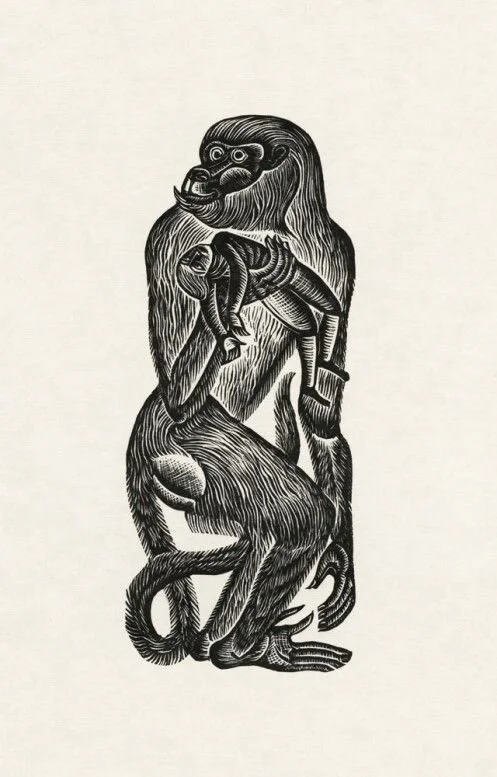
Some stories, though simple, have deep meaning and symbolism. They come to mind again and again in different situations. One of my favorites is about catching wild monkeys in India (see the video from 1912).

A jug is tied to a tree and coveted treats for these primates are placed in it. Attracted by the smell, an animal sticks its paw inside the jug, grabs the food, but can’t get it out anymore. The throat of the jug is wide enough for your palm to fit, but too narrow for a fist to get stuck. The monkey is in a trap, of which it is a part. Seeing the hunters approaching, the monkey screams and tries desperately to pull its paw out. But it cannot simply unclench its hand and lose the treat — that’s above its bend. The pleasure is so close that even the threat of death won’t make the monkey leave it.

The pleasure is so close that even the threat of death won’t make the monkey leave it.

Inside each of us lives such a monkey, which is regularly tempted by delicious offers, deals, promises, and paws into one “jug” after another. And it doesn’t matter whether we are talking about negotiating the hiring of a valuable employee with compensation of a hundred thousand dollars, the sale of our share in a business worth ten million dollars, or a merger deal worth a billion dollars. The essence of negotiations with your opponent, and, more importantly, of internal negotiations with yourself, is the same — it is determined by the answer to the question “What are you willing to sacrifice once you get into a trap?”

Usually in a crisis, in a stalemate situation, our first impulse is to find and blame the villain who made the trap for us. This is the psychology of an unfortunate victim hunted by a hostile outside world. But if we imagine ourselves in the monkey’s shoes, we won’t any longer be able to deny our responsibility for what has happened to us.

The threat of real or symbolic death exacerbates to the utmost the problem of choosing priorities. We have to decide what is truly valuable to us and what is not. To lose “everything” but to save life in return? Or to cling tightly to an adored object, hoping to squeak through by a wonder?

I remember when I was the CEO of a business, one of the hardest moments for me was the departure of some talented employee. Feeling incapable of accepting it, I took titanic efforts to dissuade him/her out of that “mistake”. Looking back at the past, I realize the absurdity of my attempts, as the Buddhists say, to attach legs to a drawn snake (画蛇添足), i.e., to do a completely useless thing. If you and your employee are out of the way, no persuasion and bonuses will fix it. And they only weaken the position of the leader and make the inevitable breakup even more painful.

As for hunters and predators, the irony is that they are not that dangerous. Our worst enemy is ourselves. Why? We try to appropriate for ourselves what does not yet belong to us. In the pursuit of fleeting pleasure, we miss the basic meaning. We confuse the desirable with the necessary and the imaginary with the real. In other words, all this drama is made up, staged and played out in our heads.

The good news is that, as the author of the drama, we are in the perfect position to stop it. There is only one sure way: we must interrupt our pleasure. In order to do that, we will have to part with something very precious. After all, the gods will accept only a generous sacrifice. Metaphorically, it is necessary to chew off one’s paw caught in a trap. As a rule, it is necessary to part with one of the manifestations of pride. That is, an unjustifiably high opinion of oneself, one’s abilities and one’s rights.

There is only one sure way: we must interrupt our pleasure.

Buddhists consider pride to be the poison of the mind. In Orthodoxy and in Islam, pride is the most grievous sin, giving rise to all the others. In the ancient tradition, such impudent behavior is regarded as a challenge to the gods and usually leads to the sudden disappearance of good fortune, and later to divine retribution.

The opposite of pride is humility, that is, a sober vision of self. Humility makes it easier to free yourself from all excess by taming exorbitant passion. As a result, your decisions as a business owner, CEO or investor gain insight, foresight and irreducibility. Why? Reality is a frightening force. Now it’s on your side.

Yours sincerely,

-Alexander


As a business therapist, I help entrepreneurs to take faster tough decisions at the intersection of business and personality. You can check my detailed Linkedin profile. For our introductory call, you can choose a convenient time here.

Willingness to Take by Alexander Lyadov

Za-rei.jpeg
 

Which is more important, the art of healing or immunity? Means of salvation or survival instinct? The accessibility of food or the availability of hunger? These are not abstract questions — they help to prioritize life.

American Brazilian jiu-jitsu (BJJ) coach John Danaher never competed and never was a champion, but he became famous through his work with the MMA fighter Georges St-Pierre and his students’ outstanding success. Despite their youth, they were methodically "ripping" the best fighters in the world.

John has recently released a series of online training courses that have revolutionized BJJ and raised the paradigm of the sport to new heights. Every minute of his video tutorials is packed with wisdom that cannot be found elsewhere. John also generously shares his secrets through free videos and posts.

So I was surprised to find sparks of dissatisfaction with John's "academic" style of presentation and "excessive" terminology in the reviews of John's online courses on the forums. There was a time when John was a postgraduate student in philosophy at Columbia University, and at night he worked as a nightclub bouncer. Probably this paradoxical combination of interests allowed John to rethink fundamentally and enrich this sport.

But some consumers are still not happy. It's not enough for them to get a well-cooked, juicy steak. From John they demand its careful chewing up, dissolving in enzymes and, to the sound of a charming harp, injecting the nutritious mixture right into their esophagus. They want to gain knowledge without any effort.

They want to gain knowledge without any effort.

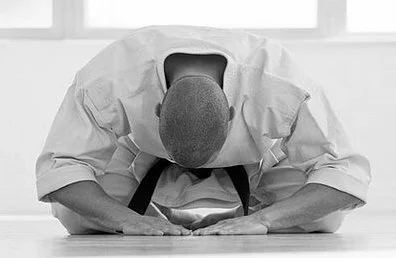
How different it is from the old parable about a young man praying to a martial artist to take him as a pupil! The master refuses three times, but the pupil returns again. Finally, the master allows him to observe classes while doing the dirty work of cleaning the dojo. The pupil eventually becomes his best student, glorifying the master and the martial art.

Of course, the world is full of changes. But some things remain the same. You can't pour water into a full cup. There is no learning without curiosity. There is no recovery without immunity. Only a hungry person will benefit from food. Only the one who is hungry to live can be saved.

People are ready to help you by willingly sharing their experience and knowledge. Much more important, however, is your willingness to take.

Much more important, however, is your willingness to take.

Sincerely yours,

-Alexander


Portraits (24).png


As a business therapist, I help entrepreneurs to take faster tough decisions at the intersection of business and personality. You can check my detailed Linkedin profile. For our introductory call, you can choose a convenient time here.

The Tom Sawyer Method by Alexander Lyadov

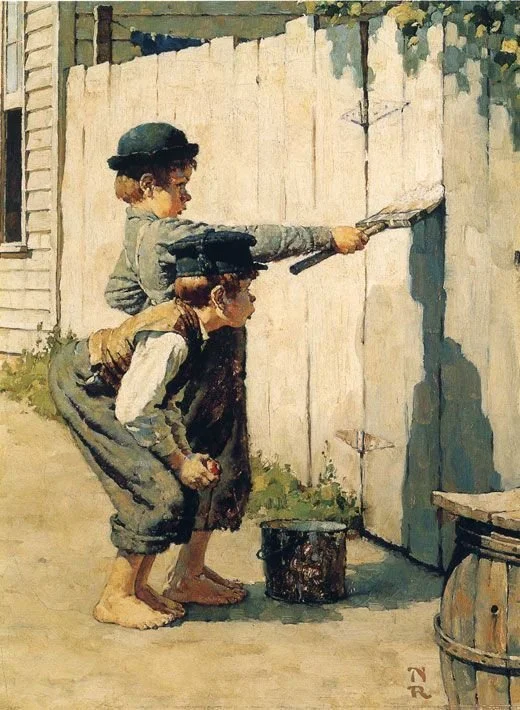
Tom Sayer and his friend are painting the fence by Norman Rockwell

Norman Rockwell


Imagine that you've made a regrettable mistake. Or life bit you and injected poison into your body. Typically, two reactions occur. On the one hand, you can be angry at your own stupidity, torment yourself with the question, "How could you have done that?" and drown in a sea of guilt. On the other hand, you can hate the outside world and the people who caused you discomfort, pain, and loss. In other words, reactive energy is directed inward or outward. Sometimes you can swing like a pendulum between these poles. Both paths lead nowhere and do not bring any benefit. But is there another way?

A bright illustration of the third path can be found in Mark Twain's immortal work. If you remember, Tom Sawyer's aunt punished him for mischief by making him paint a long fence. Tom was desperate because the long-awaited Saturday was packed with games and adventures with other boys. Worse still, Tom felt humiliated by the teasing of the boys, who would undoubtedly take advantage of his vulnerability.

"At this dark and hopeless moment an inspiration burst upon him! Nothing less than a great, magnificent inspiration. He took up his brush and went tranquilly to work." When the first boy Ben appeared and began to taunt him, Tom just continued to "enjoy" his work. When Ben made fun of him, saying that no one likes to whitewash, Tom surprised him by saying, "Like it? Well, I don't see why I oughtn't to like it. Does a boy get a chance to whitewash a fence every day?" From that moment on, everything appeared in a new light. Soon Tom was enjoying his rest in the shade, collecting payment from the boys, who quickly and carefully painted the fence in three coats, and even got an apple as a reward from his astonished aunt.

In the context of psychotherapist Viktor Frankl's logotherapy, Tom's method is called Paradoxical intention. The patients with a specific phobia (fear of dirt, enclosed spaces, etc.) are asked to try their best to sincerely want the thing they fear most. There have been cases where people who had suffered for decades from some severe form of phobia or obsessive idea were cured in just a few weeks. For example, I use this method when I have insomnia. Instead of desperately trying to fall asleep at any cost, I tell myself that I will stay awake all night. But after a short time of such supposed struggle, I inevitably fall asleep.

But the greatest value of Tom's method is to turn any poison into a cure. Instead of blaming oneself or being angry at the world, one can mentally express gratitude to fate for the harsh, but valuable lesson. If we sincerely embrace the role of grateful students, we can shed some of our naivety, resentment, and infantilism. And that means inevitably becoming stronger, smarter, and richer.

Yours sincerely,

-Alexander


Portraits (24).png


As a business therapist, I help entrepreneurs to take faster tough decisions at the intersection of business and personality. You can check my detailed Linkedin profile. For our introductory call, you can choose a convenient time here.


Tokui Waza by Alexander Lyadov

1601624845-huge.jpg

A young athlete and an entrepreneur I know asked me almost simultaneously: “My head is spinning. What should I focus on as an athlete (leader)?” In a certain way, I gave similar advice to both of them.

In Brazilian Jiu-Jitsu, there are probably thousands of techniques that can be used to force an opponent to surrender under the threat of strangulation, pain or fracture. The novice athlete's brain is bursting with a dilemma: what should he do — try to learn all the techniques a little at a time, or concentrate thoroughly on one thing?

Fortunately, there is a simple solution, although it is not spoken about anywhere. It is necessary to study a variety of techniques, but exactly to the extent that you are able to recognize and neutralize them when your opponent is trying to use them against you in a fight. In other words, the ability to build all possible traps is not required — it is just enough to notice them in time and avoid them.

In addition, an athlete needs to invest actively in the development of the so-called "Tokui waza". This is a Japanese term from judo, meaning a favorite technique, and, in our opinion, a crown. We are talking about a technique in which you succeed especially easily and which almost always leads to a successful result.

"Tokui waza" — we are talking about a technique in which you succeed especially easily and which almost always leads to a successful result.

It is not so important why exactly this one you like. Most likely, you are predisposed to it due to the special anatomy of your body or the inclination of your mind. The main thing is that in a fight, other things being equal, you will try to use this particular technique. More precisely, it will "shoot" itself at the right moment. In training, it is literally physically pleasant for you to practice it again and again. Moreover, your favorite technique attracts your attention like a magnet, inspiring you to explore all its possible aspects and nuances.

How can you understand which technique will become your "tokui waza"? You have to watch yourself very sensitively during fights. Sooner or later, you will notice that some technique has worked out well, as if by itself, greatly surprising you and bringing you joy. That's it, this is now an investment zone for your attention and efforts. Collect information about this technique from any source, experiment with it before and after training.

Very soon, even the most experienced wrestlers will know that in certain situations, you are not to be trifled with. You, on the other hand, continue to diligently water what grows on its own. As a rule, one "crown" technique pulls the second one and the third. As a result, a whole bush of favorite techniques grows, allowing a novice athlete to win competitions more often.

This approach helped me to win two gold medals at the European Championships in 2018 and 2019, just three years after starting Brazilian Jiu-Jitsu.

In this sense, business and wrestling are very similar. In the perception of your clients, there is a certain set of "hygienic" factors, without which your company will not be allowed to "play". They are necessary but not sufficient to win. As customer requirements and market conditions change, this hygiene checklist must be constantly checked and updated.

But in order to win the "gold medal" in the competition, your company must have a "crown" its own "tokui waza". The leader should perceive his or her company as a coach perceives a promising athlete — carefully studying his characteristics in order to determine what the student does best. And having found this organic advantage, try to strengthen it and develop it as much as possible.

Yours sincerely,

-Alexander


Portraits (24).png


As a business therapist, I help entrepreneurs to take faster tough decisions at the intersection of business and personality. You can check my detailed Linkedin profile. For our introductory call, you can choose a convenient time here.