
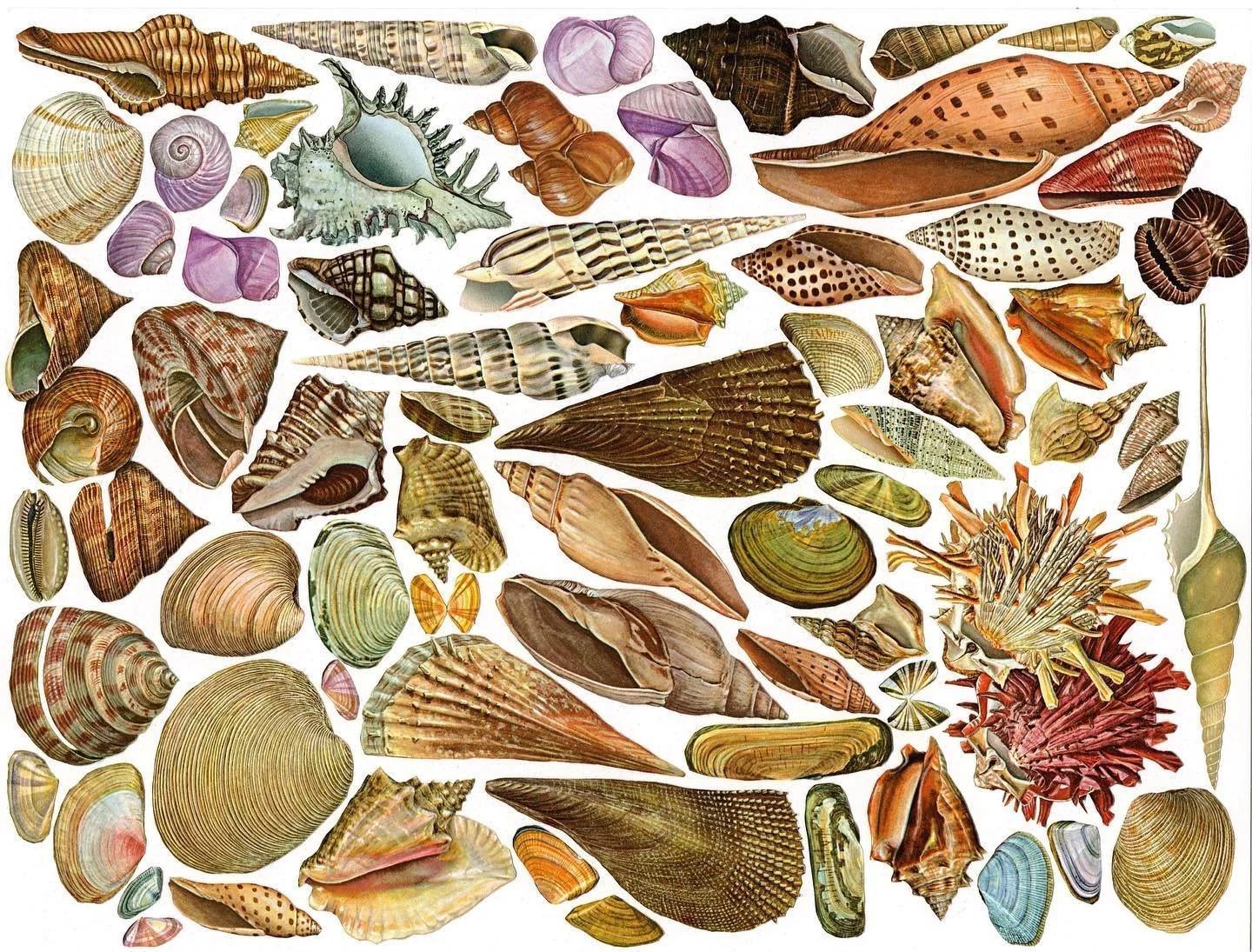
Do you like seashells? Who doesn't? Beautiful and sturdy. Turn them into buttons if you want. Or place one on your dresser.
A shell is the external skeleton of a mollusk, providing both support and protection. After all, a mollusk is an invertebrate.
Figuratively speaking, what you're holding is the mollusk's "skeleton."
The very first whorl of the shell, its apex, forms before the mollusk even hatches from its egg. That's why it's called the embryonic whorl. The last whorl ends at the shell's opening.
A mollusk's shell looks like a cornucopia. A Horn of Plenty.
As long as the mollusk is alive, that "horn" both shelters life and brings forth more of it. The shell is naturally woven into the life of the mollusk, its population, and its environment.
But once the "horn" ends up in your hands, it has already ceased to be abundant. Whatever use it may bring, it will never give rise to new life again.
Outwardly, nothing has changed. The shell is still beautiful, strong, and spacious. It may even seem as though the mollusk is simply sleeping deep inside. You can still hear the ocean in it. Sadly, that's an illusion.
The life of a person, a group, and a society also spirals outward, adding one pearly layer after another. The shell itself is precious; much that is wonderful flows into the world from it.
What matters is not missing the moment when abundance begins to leave the "horn".
This happens too often — because form is tangible, while vitality is implicit and elusively ephemeral.
Don't fix your gaze on the products of life.
Look instead toward their Source.
Sincerely yours,
-Alexander

As a business therapist, I help tech founders quickly solve dilemmas at the intersection of business and personality, and boost company value as a result.
Stuck? Your business grows when you do. I’m your business therapist to guide your shift. See testimonials here. Ready? Book your Catalyst session.