
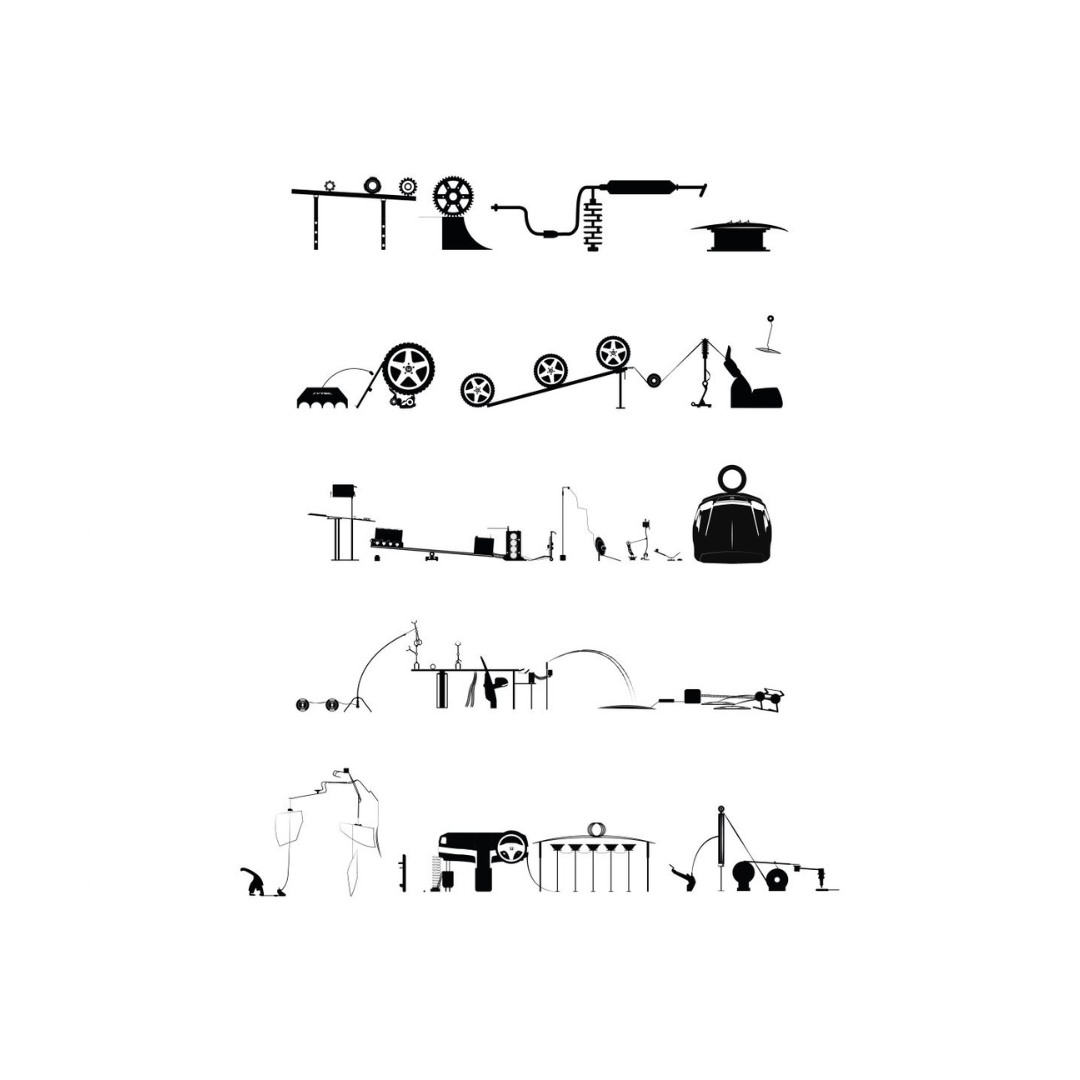
In 2003, Honda dropped a legendary ad for the seventh Accord. Every single part worked together in perfect harmony. The tagline read: "Isn't it a nice when things just work?"
Predictability is what we crave from a car, a drill, a fork.
There’s already more than enough chaos in the world around us. That’s why we value small pockets of order — even if temporary and limited. A jack should hold its weight, not suddenly give way, right?
In that sense, AI is a strange kind of tool. Its potential is undeniably vast — almost infinite. And yet, sometimes when you ask it a simple question, it lies like a psychopath — brazenly, impulsively, shamelessly.
That stings extra because AI nails the tougher riddles with flair. That’s how your trust builds up. Until, one day — bam — the ground gives way beneath your feet.
AI admits: "AI creators understand how neural networks are trained and how their algorithms function, but they don’t fully understand how complex meanings and decisions emerge within the model.
Marie Curie’s notebooks are still radioactive and kept in sealed containers — you can’t even enter the room without a protective suit. Yet she and Pierre used to carry those glowing vials in their pockets, admiring their light in the dark. Sound familiar?
Some people protest experiments on rats and rabbits. But in the grand AI lab, all of humanity plays the guinea pig — while the cries for caution are faint and scattered. At least the sample size is representative.
I wonder which historical analogy fits better — when early humans discovered fire, or plants with DMT?
Yours sincerely,
-Alexander

As a business therapist, I help tech founders quickly solve dilemmas at the intersection of business and personality, and boost company value as a result.
Stuck? Your business grows when you do. I’m your business therapist to guide your shift. See testimonials here. Ready? Book your Catalyst session.