Life without fire by Alexander Lyadov

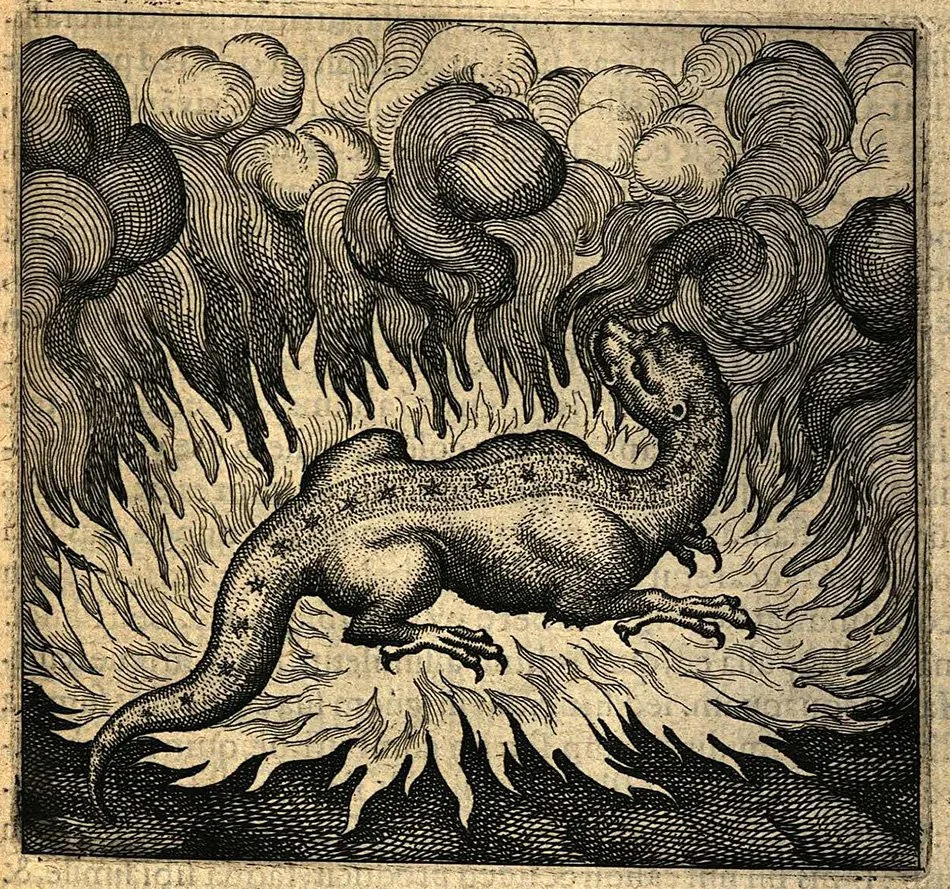
I was once struck by the short story “To Build a Fire” by Jack London. The main character is traveling with his dog through northwestern Canada on a very cold day (-59 °C). One day the traveler falls knee-deep in water. He recalls an old man who warned him that no man should travel alone in the Klondike if the temperature is below -46 °C. Further events illustrate why. I won’t spoil it — the story is too good.

Only a city dweller spoiled by the benefits of civilization could come up with the absurd idea that nature is a kind and affectionate mother. Sitting at a laptop in a cafe or strolling along the paths of a park, it is easy to fall into the illusion that the world around us unconditionally loves us and longs to make us happy. Nothing could be further from the truth. Nature doesn’t care about us. It will bite, trample, and swallow anyone who lets their guard down and is naive about it. Our ancestors understood this and therefore made heroic efforts to fence off its ferocity with a high and reliable “fence”. Our usual parks, gardens and even forests are spaces of pacified chaos, where everything dangerous is etched, domesticated or banished away. Whole generations of people grow up in the “gardens of paradise” of civilization, taking the safety and benevolence of their environment as a given.

So when such a person sees nature as it is — bloodthirsty, unforgiving and unjust — he instantly has an epiphany. The task of “surviving at any cost” becomes central. Only in the safe comfort of the “cave” can one ponder whether nature is mother or stepmother. An encounter with reality can occur at any moment, whether it is an abnormal snow storm in New York, a carelessness in the mountains or the forced landing of a tourist plane in the taiga.

However, the greatest revelation awaits someone who has been convinced of the good nature of all people, especially himself. There is a dark underbelly in every human being that neither he nor those around him are aware of. The encounter of careless naivete with this “beast” leads at best to PTSD. So what to do? Open your eyes wide and voluntarily take the feasible steps to discover the true nature of the world, people, and yourself.

Sincerely yours,

-Alexander


You can help Ukraine defend itself and the World from Russian aggression here.


As a business therapist, I help tech founders quickly solve dilemmas at the intersection of business and personality, and boost company value as a result.



What’s in the bush? by Alexander Lyadov

When a leopard sneaks up on an antelope, it tries to blend into the landscape. Although the prey regularly scans its surroundings, hunger causes it to lower its head into the grass. This gives the predator the opportunity to move even closer. And then a little more. All the way to a devastating attack.

The ability to recognize danger where there seems to be none determines the survivability of a particular animal on the savanna. When the threat is obvious, it’s usually too late. Therefore, the peripheral eye of the antelope does not look for the leopard itself, but for a vague hint of all predators in general. The brain is able to catch an “unnatural” fluctuation of a fragment of the environment to raise its vigilance and freeze. If there are no more strange deviations, the antelope will decide, “False alarm.” Probably a mistake. The predator may have more patience to remain motionless. The animal that is more sensitive in recognizing patterns of abnormal signals here and there will pass on its genes to its offspring.

n this sense, it is easier for animals than for humans, because they fully “trust” the instinct that there is Something in the bushes. We humans put a lot of effort into stabilizing our world and making it as safe as possible. As a result, our vigilance is atrophied and our complacent minds devalue the “primitive” instinct. Until force majeure strikes. One day a cataclysm happens, knocking the ground out from under our feet. Then everyone, against his or her will, enters the first grade. In this school of life, the worldview is rebooted and trust in oneself quickly returns. More precisely, to that unknown part of yourself that sleeps half-awake and whose primary function is to protect you. Over millions of years, this tool has evolved into perfection. Why give up an important part of yourself? Instead of “either-or,” wouldn’t it be better to choose “and-and”?

Yours sincerely,

-Alexander


You can help Ukraine defend itself and the World from Russian aggression here.


As a business therapist, I help tech founders quickly solve dilemmas at the intersection of business and personality, and boost company value as a result.


Are there resources or not? by Alexander Lyadov

“A resource is material which is useful given some knowledge,” said “science communicator” Brett Hall, reflecting on the books of physicist David Deutsch. Take aluminum, for example. It’s a wonderful structural material. But our forefathers couldn’t use it, even though it was always under their feet. In terms of occurrence in the Earth’s crust, it ranks first among metals and third among the elements (Wikipedia). However, there is no reliable information about the production of aluminum until the 19th century. In nature, aluminum, due to its high chemical activity, occurs almost exclusively in the form of compounds. It was mankind’s accumulated knowledge that allowed Danish physicist Hans Ersted to transform worthless matter into a valuable resource in 1825.

But this insight is also applicable on a broader scale, whether micro or macro. For example, to the novice wrestler, every bout looks like a daunting clump of chaotic movements, while the experienced athlete sees an endless stream of opportunities to apply technique #1, 2 or 100. Similarly, the storm of force majeure events throws the top manager into shock and anabiosis. While the entrepreneur immediately shakes off the stress, like a dog after a fight, and begins to figure out how to turn fallen trees and debris into building blocks. Figuratively speaking, the ability to see light where others see only darkness distinguishes a professional in any field — military, engineer, entrepreneur or athlete.

By the way, this is why we should not succumb to the apocalyptic sentiments of those who yell, “Oh, that’s it! Resources are about to run out. Our planet is doomed.” This is the narrow view of people who do not understand the power of creativity and invention. There are innumerable and inexhaustible resources hidden all around us on Earth and in space. Exponential increases in knowledge will gradually open up access to them. We need to trust a little more in the potential that is hidden within us.

Yours sincerely,

-Alexander


You can help Ukraine defend itself and the World from Russian aggression here.


As a business therapist, I help tech founders quickly solve dilemmas at the intersection of business and personality, and boost company value as a result.


Still no transformation? by Alexander Lyadov

Today I did not find the coffee can in its usual place — on the kitchen table. Then I was surprised to find it on the shelf above my head — where we used to keep coffee until six months ago when I said: "Since I make coffee twice a day, let the can be on the table at hand." It would seem that 6 months is enough time to form a new habit, but no, the mind didn't even notice how the old habit took over. This is a trivial example, but I observe a similar phenomenon in business too.

Let’s say the founder has a clear vision of a radical transformation that will take the company from point A to the desired point B. Such a vision is an achievement in itself, since most players in any industry don’t have one. Unfortunately, it is not enough. For company behavior, which means employees, to change significantly, they need to voluntarily “buy” this vision. Which is possible if the vector of their personal development and the vector of the company’s growth coincide, as fellow travelers on some part of the road.

But the very fact that the company needs a reboot confirms that the old “modus operandi” has brought it to a dead end. That is to say, for years a team was formed of those who wanted to or were not against moving toward A. Even if someone secretly dreamed of B, there were only a few of them, and secondly, they had to adapt to the dominant paradigm of A or leave. It is obvious why transformation attempts so often fail - the majority outright rejects them, while the minority yearns for them with all their soul, but the learned inertia of behavior is already too strong. By the way, the founder is also human, and sometimes his actions (A) contradict his intentions (B), as the coffee situation illustrates above.

The only way to reverse institutional inertia is to create “islands of revolution” that will seduce, infect or inspire new behavior in everyone else. How? If you’re interested, I’ll tell you sometime.

Sincerely yours,

-Alexander


You can help Ukraine defend itself and the World from Russian aggression here.


As a business therapist, I help tech founders quickly solve dilemmas at the intersection of business and personality, and boost company value as a result.

Catalyst by Alexander Lyadov

If I were to show you the stacks of drafts and calculate the time I spent trying to solve my dilemmas, you would be horrified, “No way!” At home at my desk, rushing to a meeting, or on vacation while driving, I was trying to get out of yet another web I was stuck in. The process was like the unraveling of koans that a Zen master gives to a disciple. Unlike the monk, I did not attain the Great Satori, but there were tangible, though unexpected, benefits to be gained from years of self-torture.

Firstly, the range of tools I now have significantly expanded, although I did not set such a goal. Second, it has become clear where, when and what tools should and should not be used. Third, it became clear that, paradoxically, Problem = Solution. One easily transmutes into the other, if the necessary and sufficient prerequisites are created or are ripe for that. When in a deadlock, the first impulse is to look outside for the most promising resources in terms of efficiency and guarantees, while it is often enough to change the point of application of forces which are already available.

In fact, the latter is the greatest challenge. After the fact, a person is amazed: “Why did I ignore so obvious things for so long?”. The fact is that changing the angle of view is not so much a question of choosing a tool as it is of parting with hidden beliefs that are extremely dear to us for some reason. And how do we find what our eyes are adamantly unwilling to see? In chemistry, a catalyst is used to speed up a reaction. In business, a specialist (advisor, coach, psychotherapist) or fate (chance, providence, fate) comes in handy to accelerate the transformation of beliefs.

Yours sincerely,

-Alexander


You can help Ukraine defend itself and the World from Russian aggression here.


As a business therapist, I help tech founders quickly solve dilemmas at the intersection of business and personality, and boost company value as a result.


The paradox of change by Alexander Lyadov

Often past achievements become the proverbial golden cage. Especially when the business model generates a stable cash flow. The founder had long understood that it was necessary to, say, develop the American market, but there were a thousand reasons, from not knowing English to operating routines, for not doing anything. Or the company’s development was hindered by a toxic partner, but you didn’t want to exacerbate the relationship. When there is an ambitious vision and no progress, there is dissonance within the founder, manifesting as lack of energy, depression, decision paralysis, conflict, and more.

Because of the war, the founder may find that he is left without assets, customers, and business processes. So the captain, after a shipwreck, looks longingly at the wreckage, nailed to the shore by the wave. But suddenly it dawns on him that it is now that he is truly free. There is nothing else holding him or her back. Fate forces him to break up with a partner, to experiment with a business model, or to end up in the United States. Yes, these changes took him by surprise and happened against his will. But the long-awaited decisions have finally been made, and it is a step forward.

Many religious figures and thinkers have noted that providence does not give us what we want, but what we need. In regard to life in general, it’s hard to accept this overly harsh thought. But in regard to business, it may be true. One founder told me: “I’ve had business disasters before where I thought, ‘This is the end.’ But then, after a while, I would admit, ‘How much this difficult period has made me and the business stronger.

By taking away one thing, reality gives something else in return. By gaining new degrees of freedom, the founder can chart a different route. That means, potentially, to realize his vision in seven years instead of ten, to scale not locally, but globally, so that eventually, in spite of the enemy, to build a prosperous world-scale business with the proud seal “Made In Ukraine”.

Yours sincerely,

-Alexander


You can help Ukraine defend itself and the World from Russian aggression here.


As a business therapist, I help tech founders quickly solve dilemmas at the intersection of business and personality, and boost company value as a result.

How it is by Alexander Lyadov

Regularly I meet cases in which there are two, three or more co-founders of a business between whom a conflict is quietly building up. However, no one in the company, including the client with the request, describes what is happening other than as "some misunderstanding", "there are disagreements" or "something incomprehensible is going on". In relation to the opponent the rhetoric is mixed - mostly polite acknowledgement of qualities useful for business, but through it now and then bursts, resentment, anger and disgust.

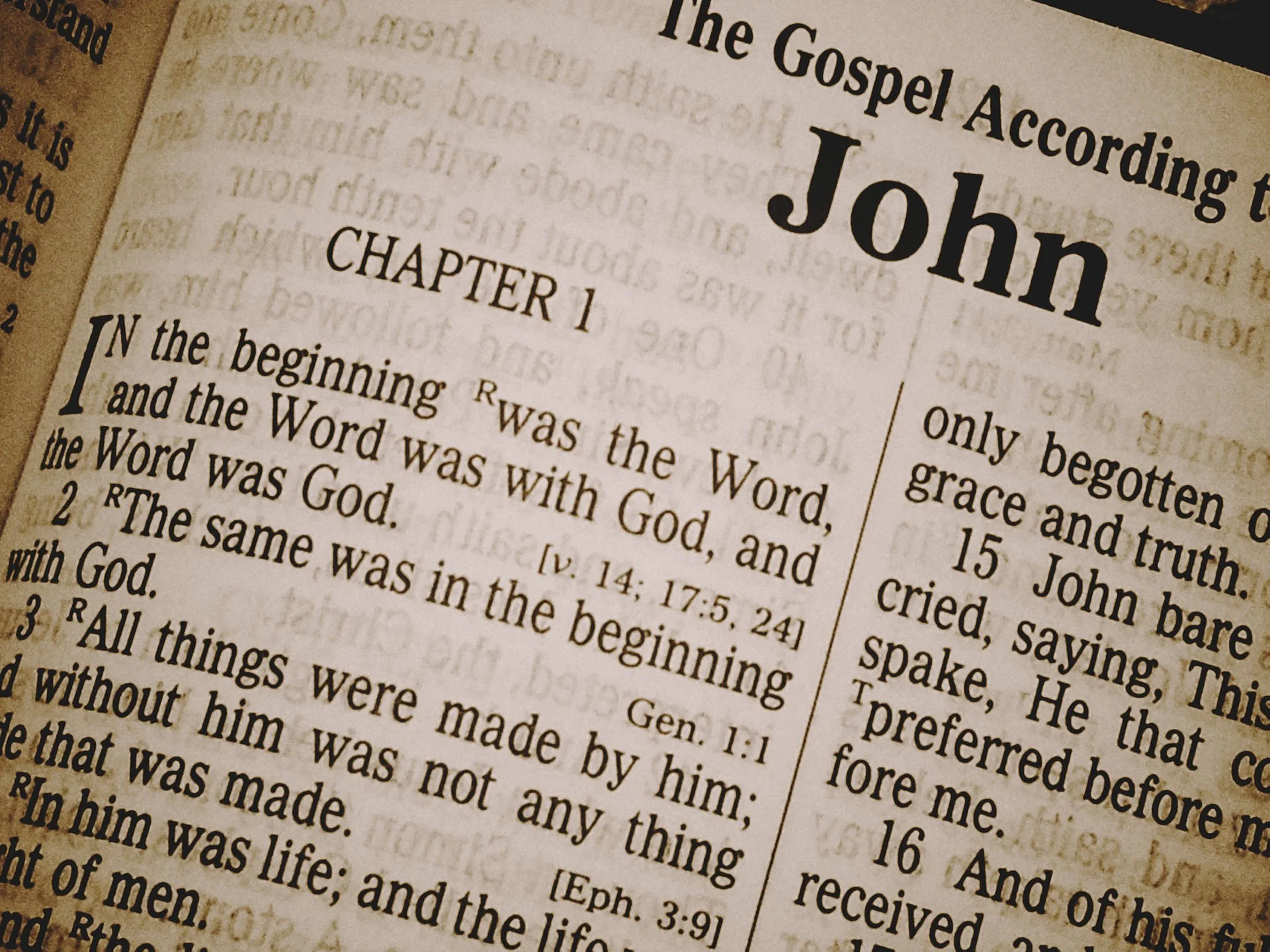
It seems to the client that the root of the problem is a particular person whose behavior is unacceptable. But often it turns out that it is about something else. The historical context seems to force people to act this way and not that way. But to understand this, one must first "get a grip" on the whole phenomenon. Remember how difficult it is to grasp something with your head turned back. Looking at the situation point-blank allows us to separate this phenomenon from the rest and to give it a name. This step in solving the problem seems nominal, but in reality there is nothing more important. It is no coincidence that the first line of John's Gospel is "In the beginning was the Word..." To accurately name something is to make it real by pulling a meaningful thread out of the primordial chaos.

The only condition is that the name of a phenomenon should reflect its true essence, without illusions, as it is. Then a paradox is observed - the problem is not yet solved, but the founder is palpably relieved. First, a vague and therefore frightening problem has taken shape. Secondly, it became clearer where to direct the efforts. This is how a hunter navigates a hot trail that anticipates his prey. Third, what had long matured and tormented the founder inside now lay outside under a microscope. A fascinating exploratory discovery lies ahead of him. An important discovery lies ahead of him. It's a rewarding process anyway.

Sincerely yours,

-Alexander


You can help Ukraine defend itself and the World from Russian aggression here.


As a business therapist, I help tech founders radically increase the value of their companies by accelerating key decisions at the intersection of business and personality.


What to focus on? by Alexander Lyadov

James Ashford, founder of GoProposal, a SaaS proposal service for accounting firms, told a story about the long-running rivalry between the Chinese and U.S. table tennis teams. Tired of losing, the American coach finally asked: “What are we doing wrong?”. To which the Chinese coach replied, “One thing. You keep trying strengthening your weaknesses. And we just strengthening our strengths”. I don’t know if that’s true or not, but it’s an important point. After all, in both business and sports, the topic of “What to focus on?” is often hotly debated.

I support betting on “strength,” that is, a gift, a predisposition, an aptitude. Why? The return on the effort invested is greatest. We tend to like what we do well and vice versa. It’s a spiral that leads upward to Olympus. Whereas the development of traits for which there is no natural inclination, although possible, requires a titanic effort. It’s like training a border collie or a wolf - the former catches the movement of your eyebrow, and giving commands to the latter is like talking to a brick wall.

That’s why, for example, judo has a special term Tokui-waza, which means signature move. Once he notices a technique that comes out organically and easily, the athlete can then grow that acorn into a powerful oak tree. As a result, opponents, even if they know the athlete’s technique, can’t do anything about it. If the gift is an uncut diamond, then Tokui-waza is a Koh-i-Noor diamond.

However, one should not forget about weaknesses at all. They must be strengthened, but only to the “hygienic” level specific to each industry.

Yours sincerely,

-Alexander


You can help Ukraine defend itself and the World from Russian aggression here.


As a business therapist, I help tech founders radically increase the value of their companies by accelerating key decisions at the intersection of business and personality.


Against the odds by Alexander Lyadov

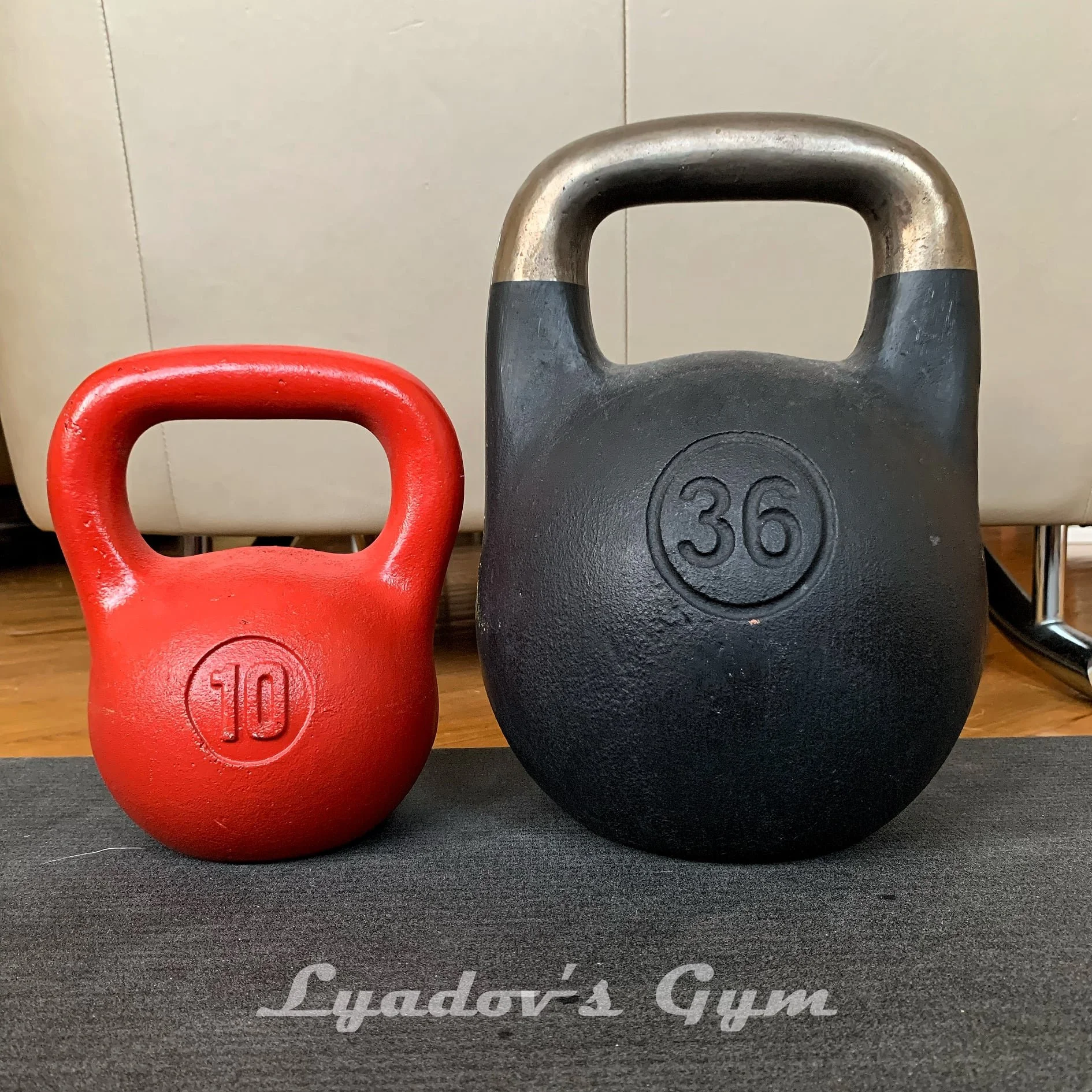
Quite often I meet friends and strangers who say or message me: "You know, thanks to that article of yours, I ended up buying kettlebells. I'm extremely happy about this, because progress is evident".

I wrote the article "Strengthening Quarantine" in March 2020, when the pandemic was unfolding in all its "glory. I wanted to share a simple and in every sense affordable means of preserving health, performance and strength that, despite lockdowns, literally anyone can have. It has now become clear that there can be many reasons for forced isolation. Epidemics, wars, natural disasters - reality never ceases to take us by surprise. However, quarantine, a closed gym or a curfew are not reasons to forget about yourself until life is back to normal. . With just a couple of kettlebells or a set of rubber bands in any room, you can fully exercise your entire body to be more prepared for force majeure and, importantly, to release excess stress.

It's no secret that the body, mind and psyche are fundamentally dependent on each other. By strengthening one, we strengthen the rest. And who knows, maybe having such a "gym" in your corner will make you train harder and more often. Nietzsche would have approved of this — that which has tried to weaken or kill us, eventually, will only make us stronger.

You can read the article "Strengthening Quarantine" here.

Yours sincerely,

-Alexander


You can help Ukraine defend itself and the World from Russian aggression here.


As a business therapist, I help tech founders radically increase the value of their companies by accelerating key decisions at the intersection of business and personality.


Gratitude by Alexander Lyadov

As a business therapist, I help entrepreneurs, my clients. But they also give me a lot in return. First of all, it's the insights we find together in the process of solving their difficult problems. In addition to the dopamine surge, my "scalpel" becomes sharper with each of our sessions.

Secondly, the many cases of companies of all different sizes, fates and industries, unobtrusively weave together into a stunning meta-pattern. This makes the subsequent puzzle solved faster. It turns out that the hundreds of clients I've worked with over the past 25 years, through me, are helping their colleague today.

Third, I draw inspiration from their real-life examples of how things can and should be done, especially in circumstances of overwhelming force. This reinforces my belief in how much a person is resourceful, resilient, and anti-fragile. As a result, I realize that I myself am capable of more. And then I pass on that belief in the superpower hidden in all of us through sessions, podcasts, articles and this newsletter.

Most importantly, clients multiply the Meaning in my life. Client appreciation reminds me that my contribution is definitely there and meaningful. As my grandmother jokingly and lovingly said when I diligently scrubbed the balcony as a child, "A cat wouldn't do that." After all, at a critical moment for entrepreneurs, I was the one who was there. In business, as in boxing or standup, in addition to expertise, timing decides everything.

I am grateful to Natalia Yaromenko, founder of the Beauty Tech Corporation for the wonderful review.

Sincerely yours,

-Alexander


You can help Ukraine defend itself and the World from Russian aggression here.


As a business therapist, I help tech founders radically increase the value of their companies by accelerating key decisions at the intersection of business and personality.


Energy of Void by Alexander Lyadov


Sometimes it happens that there is no energy, absobloodylootely. The simplest task looks like a monolithic Chinese wall. There can be many reasons for this, from stress and overworking to lack of sleep and illness. At this very moment, nothing can be done. To be exact, you can make a shift, but it will be ridiculous in terms of ROI. And most importantly, there is the risk of screwing up the task or injuring yourself.

At times like this, I draw my energy in an unexpected place-where there seems to be nothing. At home, I crawl into my favorite chair, put a sleep mask over my eyes, and turn on the sounds of “Underwater” on the Brain.fm app. Outside, I just look for a quiet corner of the alley, away from passersby and dogs. During day-long transformational sessions with clients, I sequester myself in a far room during a break. My goal is total isolation from the outside world for an encounter with the Void.

Prolonged isolation is known to be guaranteed to drive a person insane. However, like hunger or cold, in microdoses it is miraculous. Is there any other name for the transformation that takes place in just 15 minutes inside me? I come back different, energetic, calm and determined. There was no introspection, no breathing techniques, no sacred mantras - just being in touch with my body. What was going on reminded me of the “Lava lamp” - a decorative lamp that became super-popular in the U.S. in the 1960s (and later in the USSR). Which, by the way, is not surprising, because the bizarre play of paraffin “clouds” resembles the effect of taking psychedelics, in particular LSD. In the same way, fragments of my feelings, thoughts, and sensations arise out of nowhere and disappear into nowhere without a trace. The only constants are the fertile Void and my ability to observe this vortex. Paradoxically, this kind of doing nothing restores my efficiency the best. Will you try it today?

Sincerely yours,

-Alexander


You can help Ukraine defend itself and the World from Russian aggression here.


As a business therapist, I help tech founders radically increase the value of their companies by accelerating key decisions at the intersection of business and personality.


On your terms by Alexander Lyadov

“He learned a long time ago the basic law of survival: make the enemy fight on your terms, not his. These are words from James Clavell’s novel The Noble House, which I read before going to bed. In most aspects of life, you can see how right he is.

For example, exposure therapy is considered one of the most effective techniques in psychotherapy for treating all kinds of phobias, obsessive-compulsive disorder, post-traumatic stress disorder, etc. The essence is that the client comes into contact with the gradually strengthening source of the fear, choosing the workload that is feasible for him or her. And, most importantly, does it voluntarily, that is, not fear assigns the time and place of battle, but the client himself. There is a revolution in the way that power has changed hands. It is not that the client gets used to his fear or that the latter disappears somewhere - no, the client himself becomes bolder. In other words, his ability to act independently increases dramatically.

It doesn’t matter whether the fight is with the external aggressor or the inner fear. What matters is who dictates terms to whom - you or he. It’s never too late to make a “creative U-turn,” for fortunately this is the realm of personal assumptions and beliefs. Of course, “surviving on my terms” requires a preliminary clarification: “What do I really want?” Thus, survival depends directly on a hierarchy of values and personal meaning.

Sincerely yours,

-Alexander


You can help Ukraine defend itself and the World from Russian aggression here.


As a business therapist, I help tech founders radically increase the value of their companies by accelerating key decisions at the intersection of business and personality.


The skill of letting go by Alexander Lyadov

I don't know about you, but I have found it very difficult to let go of my past life. Maybe your business was booming, a wedding was performed, your health was restored, a trip around the world was planned, or, after years of construction, a house was completed. On February 24, much of what we held dear suddenly became distant, indefinable, or even gone. Mentally I understand that it will never be the way it was. But inside, there is still hope that with a little more patience, life will become "normal" again. Moreover, there is a tendency to recreate old habits at every opportunity, like trying to glue a priceless vase from the shards.

Of course, this is a dangerous illusion, I admit. First of all, because for many people, far more intelligent and informed than I am, the war was an unexpected event, accompanied by a shock. And the more unusual the phenomenon, the more the psyche makes an adaptation shift. A complete upgrade of the "operating system" is required so that the new knowledge of reality organically fits into the worldview of society or the individual. A survivor of war in any scenario is bound to become different. And here, in addition to Ukraine, the war affects almost all countries directly or indirectly. So the world is forever and radically changed. How exactly? Time will tell.

The point is that he who has not let go of the past has no future. Just as an experienced hunter does not feed his dogs before going into the woods, so a person should come to a meeting with novelty with an emptiness in his "stomach". I sincerely envy people who find it easy to start anything new. They rush through the jungle of life, jumping, like Mowgli, from one vines to another. Even in wrestling, I spend too much time clinging to an unpromising position, instead of letting it go and moving on. It is very sad, frustrating, and scary to lose what I have right now in my hands. But trying to hold on to the past is even more dangerous-it will go away anyway, while the energy is wasted.

It is extremely tempting to push, force, or seduce myself in some way to catalyze the parting of the old to meet the new. But here, too, I have to admit that this process has a different pace for each person. After all, isn't it one of the lessons of life not to try to speed things up, but at the same time not to hinder what cannot not happen.

Sincerely yours,

-Alexander


You can help Ukraine defend itself and the World from Russian aggression here.


As a business therapist, I help tech founders radically increase the value of their companies by accelerating key decisions at the intersection of business and personality.


The Curse of Brilliance by Alexander Lyadov

I recently learned about a new concept — the Curse of Brilliance. When people analyze what makes them productive and successful, they tend to overemphasize what they have found extremely difficult and downplay the importance of what they were naturally good at. That is, I deify what I’ve sweat and bleed for, but devalue what has sort of worked out itself.

It looks like modesty: “Oh, it’s nothing. You can have it for free. I have a ton of ideas like that”. The problem is that without realizing the specifics of your gift, you can’t become a joker or an ace in any field. The accumulation of experience, skills and knowledge will, at best, allow a hard-working six to grow into an executive jack or a controlled king. To be No. 1, it is not enough to have no weaknesses — one has to be one order of magnitude higher than everyone else in something concrete.

Any natural talents require investment in their faceting. But how to do it, if instead of a Cullinan diamond you see only a trivial mineral? That’s why each of us needs a careful and attentive look from the outside. A child needs a parent, a student needs a mentor, an athlete needs a coach, an entrepreneur needs an advisor or a psychotherapist. Trust in the significant other allows for the “heretical” thought: “Everything I was so desperately searching for, it turns out, has always been in me”.

Sincerely yours,

-Alexander


You can help Ukraine defend itself and the World from Russian aggression here.


As a business therapist, I help tech founders radically increase the value of their companies by accelerating key decisions at the intersection of business and personality.


Reflection by Alexander Lyadov

Sometimes my blue heeler walks into the bathroom while I’m shaving. Looking in the mirror, I see an unfamiliar dog. He looks a lot like mine in size and coloring, but something about him is fundamentally wrong. Immediately, both curiosity and anxiety are awakened. The reflection merely flips the image horizontally. But such a small thing is enough to turn a familiar “object” into a stranger. I see him with new eyes. His coloring and gestures suddenly reveal patterns that I had not noticed before. In banality, novelty opens up to me.

This is why I appreciate the sessions with my therapist. At least once a week I have a chance to get a different perspective on myself. The therapist, like a mirror, “only” flips the picture 180 degrees. What has been seen cannot be unseen. Slowly I begin to change.

In business therapy, my ideal is to help the tech founder get something out of nothing, one out of zero, to find a breakthrough solution at almost no cost. After all, often what we need most has been waiting patiently at our fingertips for a long time.

Sincerely yours,

-Alexander


You can help Ukraine defend itself and the World from Russian aggression here.


As a business therapist, I help tech founders radically increase the value of their companies by accelerating key decisions at the intersection of business and personality.


Horizon by Alexander Lyadov

“It takes 5 years to become a worldwide level,” says John Danaher, considered the No. 1 Brazilian jiu-jitsu coach in the world. John has trained a number of athletes who became kings of the mountain in a short period of time. I heard the same idea from reputable coaches, saying that it’s possible to do almost everything in 3-5 years, in particular, to become one of the global leaders in your discipline. How so?

First of all, a few years is enough time to implement the most daring strategy one way or another. Second, the world is changing rapidly, bringing a host of new opportunities and threats to all. Novelty turns out to be a blessing for one who has a clear long-term vision, compared to one who cannot raise his head above routine. Third, it is not about leadership in anything, but in a carefully chosen and narrowly defined discipline in which the founder is determined to become “Lord of the Rings”. Fourth, the focus of multiple efforts over time cumulatively produces a nonlinear effect. Fifth, the finish line in a few years is still close, so investing energy in a sprint for the founder makes sense.

The war broke most entrepreneurs’ plans. But war cannot take away the intention to evolve, to update a desirable future, and to move methodically toward it. Reality is favorable to those who know what they want. Remember, a local business is only 3 to 5 years away from a global one.

Yours sincerely,

-Alexander


You can help Ukraine defend itself and the World from Russian aggression here.


As a business therapist, I help tech founders radically increase the value of their companies by accelerating key decisions at the intersection of business and personality.


How not to waste yourself? by Alexander Lyadov

Often I see that the entrepreneur sees his body as a mechanism or a tool that is needed to get from point A to point B. In the pursuit of increased efficiency, they use their body to the maximum, trying to minimize downtime. After all, the ideal in business is when an asset, be it a room, a machine, or money, runs nonstop.

There is a problem with an instrumental attitude toward oneself. But not in the sense that this attitude is harmful, but in the sense that the logic of this metaphor should then be taken to its limits. As we know, a technical system is ideal when there is no system and its function is performed by itself. So the question, “How to squeeze the most out of yourself?” is too narrowly focused. The correct question is, “How to achieve more without effort at all?”

No, a genius solution won’t appear all at once. But by having that ideal as a goal, the chances of earning more by working less are much higher. The secret is that the founder’s attention is the most valuable asset. Waste is not a pause or downtime, as many are convinced, but missing out on opportunities to upgrade one’s “tool.” If a pencil could, it would sharpen itself with every stroke. However, man is potentially capable of getting Everything out of Nothing.

Sincerely yours,

-Alexander


You can help Ukraine defend itself and the World from Russian aggression here.


As a business therapist, I help tech founders radically increase the value of their companies by accelerating key decisions at the intersection of business and personality.


Reluctant Entrepreneur by Alexander Lyadov

It is commonly believed that you have to be born an entrepreneur. Either you have the founder’s gene, or you don’t. However, in my 25 years in business, I have often met people who broke this “rule” without knowing it existed.

They had no ambition to change the world or build a billion-dollar business. They were simply forced by difficult circumstances to start doing something unusual for them in the here and now. Rather than questioning whether or not they were ready, these people simply took the step they could every moment. Little by little, the tiny acorn grew into an oak grove with a wide root system, strong trunks, and a dense crown, becoming home to many animals and birds.

I call them reluctant entrepreneurs. They have allowed life to grind them down, revealing in a piece of marble a richness and beauty hidden until now. Reality is able to pleasantly surprise the one who is willing to sacrifice the image of his beloved Self. After all, the lamentation, "Ah, if only I were X, now I would..." covertly coddles the narcissistic part of the personality, protecting it from the risk of disappointment in itself. And the monologue of reluctant entrepreneurs is quite different: "Who am I to know beforehand what I can do? I'd better leave it to Providence, who knows what's best for me".

Yours sincerely,

-Alexander


You can help Ukraine defend itself and the World from Russian aggression here.


As a business therapist, I help tech founders radically increase the value of their companies by accelerating key decisions at the intersection of business and personality.


The paradoxical nature of partnership by Alexander Lyadov

Why is it so challenging to maintain a partnership?

Business requires contrasting qualities to create, sustain and scale it.

There are few individuals who can harmoniously integrate polar qualities within themselves - the ability to establish relationships and think analytically, openness to new ideas and organizational skills, caring for people and being results-oriented, sensitivity to contextual changes, and emotional stability.

It's no wonder that founders instinctively choose business partners who complement them in terms of psychological type, experience, and skills. Firstly, such an alliance helps prevent frustrating mistakes by neutralizing individual blind spots. It's like the difference between holding an object with one hand versus two hands - the gap disappears.

Secondly, both partners are freed from duties abhorrent to their nature. One person can't stand active travel, meetings, and communication with investors, but for another it's as natural as breathing. Optimising processes may cause depression for one partner, while for the other it may cause excitement, like a child opening presents on New Year's Eve.

Most importantly, such a union allows for the creation of a meta-system in terms of complexity, flexibility, and resilience. This gives rise to antifragility, allowing a company to paradoxically derive benefits from everything that destroys others.

But there's a tiny detail that determines whether a partnership will succeed or not. It's an honest answer to the question: "Do you value your partner's contribution as highly as your own?" It seems that the answer is obvious. However, it is precisely what initially creates a partnership that often ends up destroying it. After all, it's not by chance that you lack certain qualities. Often, it means that there is an internal prohibition towards them, causing judgment, aversion, or fear.

It's not surprising that you feel conflicted about people who have what you don't - envy and irritation, admiration and contempt, curiosity and suspicion. Such a partner simultaneously attracts and repels you. Carl Jung quotes medieval alchemists: "In sterquiliniis invenitur," which literally means "In filth, it will be found." It is often translated as: "What you need the most, you will find where you least want to look."

My experience tells me that partnerships succeed when each partner equally:
a) recognizes the necessity of opposite qualities in business,
b) acknowledges his or her own area of deficit,
c) values in the other what they lack themselves.

In essence, a partnership is a test of individual maturity. It means thanking fate that, like yourself, your partner is exactly the way he or she is.

Yours sincerely,

-Alexander

Kyiv, 29.04.2022


You can help Ukraine defend itself and the World from Russian aggression here.


As a business therapist, I help tech founders radically increase the value of their companies by accelerating key decisions at the intersection of business and personality.


Successful Partnership Mechanism - Part I by Alexander Lyadov

Is your business partnership on the verge of collapse?

This simple engineering metaphor might help.

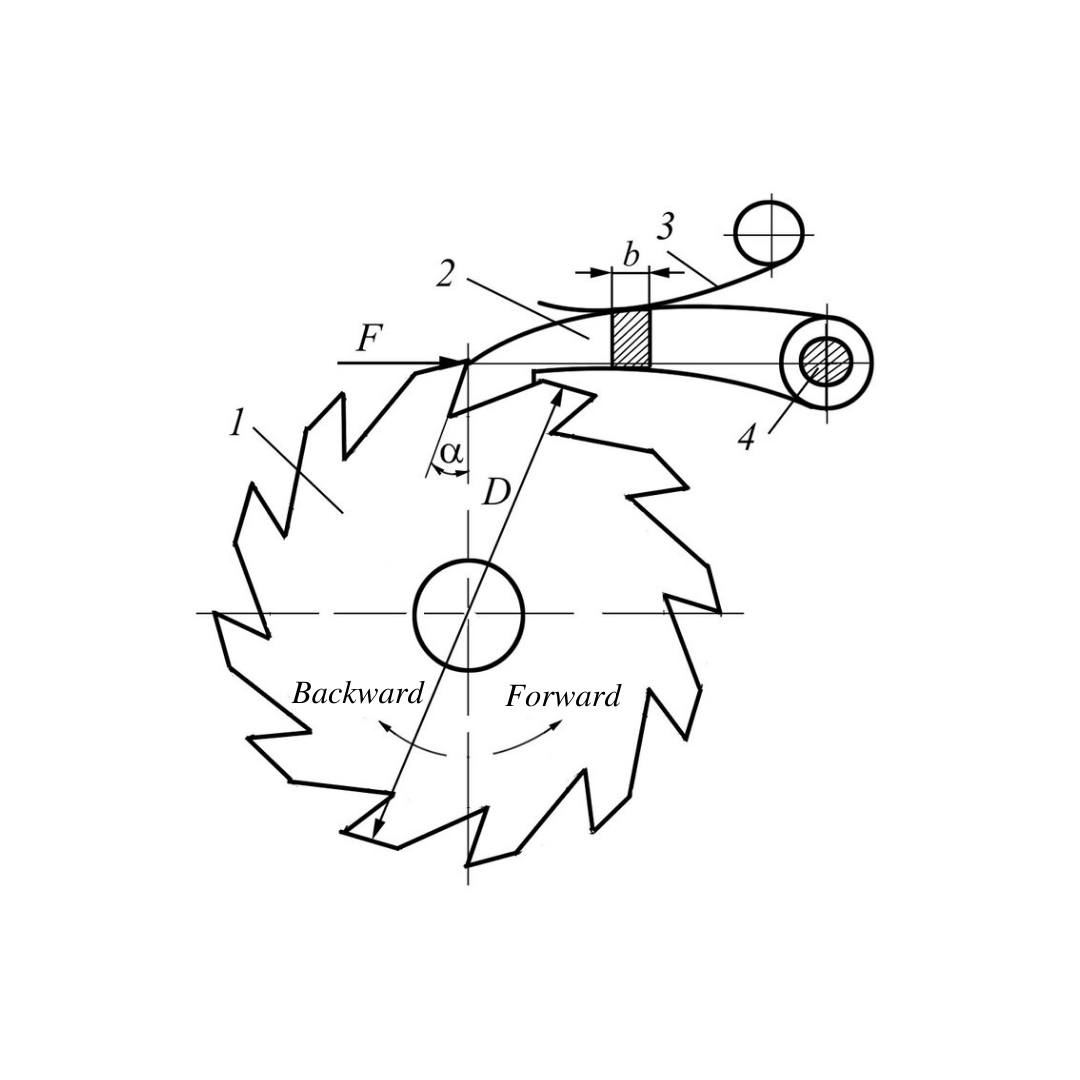
Do you know what a ratchet mechanism is? It consists of a gear wheel and a pawl. The asymmetric teeth of the wheel have a stop on one side. The pawl is pressed against the wheel by a spring or its own weight. Thanks to this design, the wheel rotates exclusively in one direction, reliably preventing any backward movement. The ratchet mechanism is used, for example, in jacks, winches, handcuffs, and bicycles. But it can also be recognized in other areas. For instance, in business.

There are many classifications of human personality types. For our purposes, we can simplistically divide people based on their natural inclination towards two functions - Development and Stabilization. The first function propels the wheel of business forward, while the second function secures achievements, preventing it from rolling back.

Encountering an entrepreneur with both functions equally developed is practically impossible. It's like in the wild, where some animals predominantly lead a daytime lifestyle, while others are nocturnal. It's neither good nor bad. That's just how it is.

From the metaphor of the ratchet mechanism, it is evident that the simultaneous presence of both functions, represented by individuals, is a necessary condition for the functionality of a business. Remove the wheel from the structure, and all rotational movement disappears. But without the pawl, the system ceases to develop progressively. The wheel will rotate chaotically, moving back and forth.

Unfortunately, in real business, things turn out differently. In some companies, there is an excess of fervent activity that yields little in the long run. In others, on the contrary, all processes are organized, polished, and meticulously described, but the business sluggishly drifts like a sailboat in calm weather. This means that one function is hypertrophied, while the other is weak and feeble.

The root cause of such imbalance must be sought in the head of the corporate body. And it doesn't matter how many owners the company has - three, two, or just one. The problem lies in the hidden beliefs and assumptions of the person, of which he or she may not even be aware. I'll hint that it concerns the natural inclination to value what we already have in abundance, and conversely, to devalue what we currently lack. However, this captivating topic deserves a separate post.

Yours sincerely,

-Alexander


You can help Ukraine defend itself and the World from Russian aggression here.


As a business therapist, I help tech founders radically increase the value of their companies by accelerating key decisions at the intersection of business and personality.